SMEs in focus: Denmark’s AM Summit 2025 targets industrial adoption and defence opportunities
Denmark’s AM Summit 2025, held on October 1 alongside the HI Tech & Industry Scandinavia Expo in Herning, offered a clear snapshot of the country’s fast-maturing AM scene. With a new format aimed at production-focused SMEs, the event drew many first-time attendees and sought to strengthen links between AM innovators and traditional manufacturers. Across keynotes and panels, speakers explored the current shift from prototyping to manufacturing that delivers resilience and measurable value. Here, the Danish AM Hub’s Rikke Uldall-Ekman reports on event highlights. [First published in Metal AM Vol. 11 No. 4, Winter 2025 | 15 minute read | View on Issuu | Download PDF]
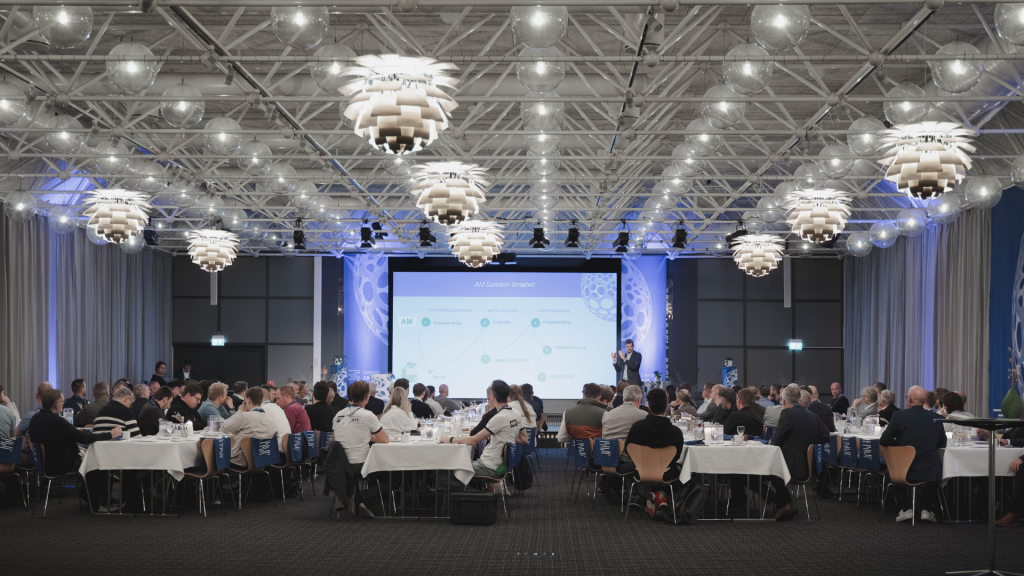
The AM Summit 2025, held on October 1, 2025, in conjunction with HI Tech & Industry Scandinavia at the MCH Messecenter in Herning, offered a timely snapshot of Denmark’s rapidly evolving Additive Manufacturing landscape. While HI Tech & Industry remains Scandinavia’s largest industrial fair, with more than 20,000 visitors across multiple sectors, the spotlight in Herning was firmly on the AM Summit, which this year adopted a more focused format aimed directly at small- and medium-sized manufacturing companies and their decision-makers.
AM Summit has grown in recent years to become the leading Nordic conference on Additive Manufacturing. The 2024 edition, held in Copenhagen, marked a milestone with more than 1,000 participants, three presentation stages, an extensive exhibition area, breakout sessions, a Hackathon, and the AM Impact Award – celebrating outstanding innovation and talent in Danish manufacturing. Building on that success, the 2025 summit adopted a more targeted approach, designed specifically to address the needs and challenges of production-focused SMEs.
The move from Copenhagen to Herning reflects a strategic shift to bring AM closer to Denmark’s industrial heartland. By hosting the summit alongside the country’s largest manufacturing trade fair, the Danish AM Hub sought to ensure that new technologies reached the companies most capable of implementing them.
That shift proved effective, with nearly one-third of the participants at this year’s event being first-time attendees, representing companies and professionals who had never previously attended the AM Summit. This influx of new visitors demonstrated how the new location and focused programme succeeded in expanding the community – bridging the gap between Denmark’s AM innovators and the broader base of traditional manufacturers now beginning to explore the technology’s potential.
Beyond the conference halls, the Danish AM Hub maintained a strong presence on the HI show floor, partnering with the 3D TECH area, which featured leading technology providers, research institutions, service bureaus, and the Danish 3D Printing Championship. The AM Hub’s stand attracted heavy traffic throughout the week, creating a vibrant meeting point for professionals to exchange ideas, explore opportunities, and experience live demonstrations of industrial AM.
The event once again confirmed that Additive Manufacturing in Denmark has moved beyond the experimental phase. While prototyping remains a critical entry point, the focus has shifted towards strategic integration of AM into production, supply chains, and product development.
From insights into high-performance motorsport applications to practical guidance for SMEs, AM Summit 2025 captured the breadth of AM’s industrial potential in Denmark. Just as importantly, it demonstrated how collaboration, innovation, and curiosity are driving the technology’s adoption in real manufacturing settings.
Mapping the Danish AM landscape: Vision and direction
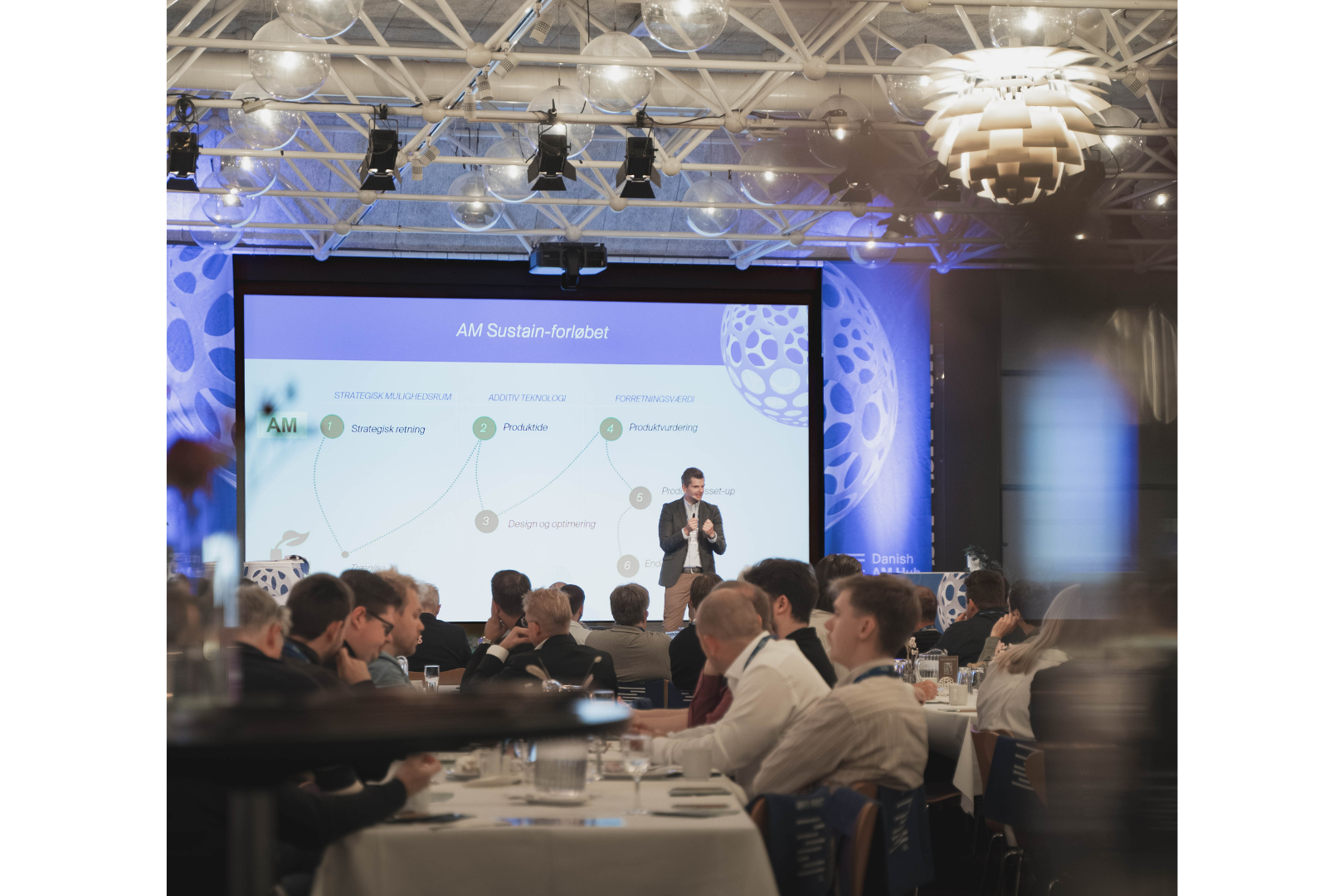
Frank Rosengreen Lorenzen, CEO of the Danish AM Hub, opened the summit with a keynote that set the tone for the day. He presented a comprehensive overview of the current AM ecosystem in Denmark, highlighting its trajectory towards industrial-scale adoption and innovation.
Clear data trends support that trajectory: according to figures compiled by the Danish AM Hub and Statistics Denmark, the share of Danish manufacturing companies using AM has grown from 16% in 2018 to 30% in 2025. The steady rise confirms that AM adoption is no longer limited to research environments or niche sectors, but that it is increasingly becoming part of everyday industrial practice across Denmark. The data also reflects a growing curiosity among SMEs, a trend mirrored by the many first-time participants at this year’s AM Summit.
A central theme of his address was the rapid rise of Artificial Intelligence (AI) in the manufacturing landscape. Lorenzen emphasised that AI should not be regarded as a ‘nice-to-have’ enabler but as a critical tool that must be integrated into AM workflows to remain competitive. AI can support design optimisation, process simulation, and predictive maintenance, helping companies reduce material use, shorten lead times, and improve overall part quality.
Quoting the legendary ice hockey player Wayne Gretzky, “I skate to where the puck is going to be, not where it has been”, Lorenzen framed AM in Denmark as a forward-looking journey. Companies are encouraged to anticipate technological developments and adopt proactive strategies, ensuring they remain at the forefront of innovation rather than being left behind.
Lorenzen also highlighted Denmark’s collaborative approach to AM adoption. The Danish AM Hub serves as the national hub for Additive Manufacturing, with a mission to make Denmark a global leader in sustainable production using AM. The organisation supports companies in reducing waste, material use, transportation, and CO2 emissions, while helping them take the first steps toward strategically integrating Additive Manufacturing into their operations. Among its initiatives, AM Sustain is a tailored programme for Danish companies that are starting or further developing their use of Additive Manufacturing to increase competitiveness and generate sustainable gains.
While Lorenzen introduced the programme during his keynote, its detailed presentation was delivered later by Steffen Schmidt, CTO at Danish AM Hub, who outlined how companies can benefit from structured guidance and practical support. Opening his presentation with the question ‘Why should you 3D print?’, Schmidt provided insight into the benefits of AM adoption and how it can create value across industries, from sustainable construction and the green transition to design, production, and materials use. He emphasised that companies need the right mix of competencies, ranging from design and engineering to process management, in order to capture the full value of AM.
The Danish AM Hub also leverages national clusters, innovation hubs, and knowledge-sharing platforms, giving SMEs access to technical expertise, strategic guidance, and collaborative networks. This ecosystem-oriented strategy enables companies to move beyond experimentation towards measurable value creation, positioning Denmark as one of the few European countries where small- and medium-sized enterprises can effectively scale advanced manufacturing technologies.
Through this combination of national coordination, education, and forward-looking technology adoption, Denmark is establishing a foundation for industrial-scale AM integration, where AI, sustainability, and collaboration converge to drive competitiveness and innovation across the manufacturing sector.
Lessons from the fast lane: Formula 1 insights into AM performance
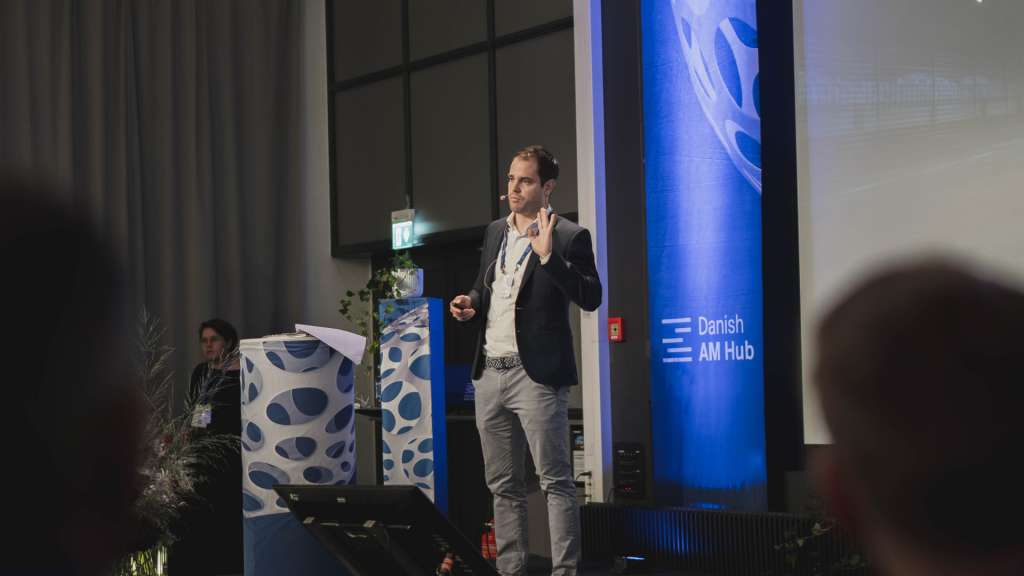
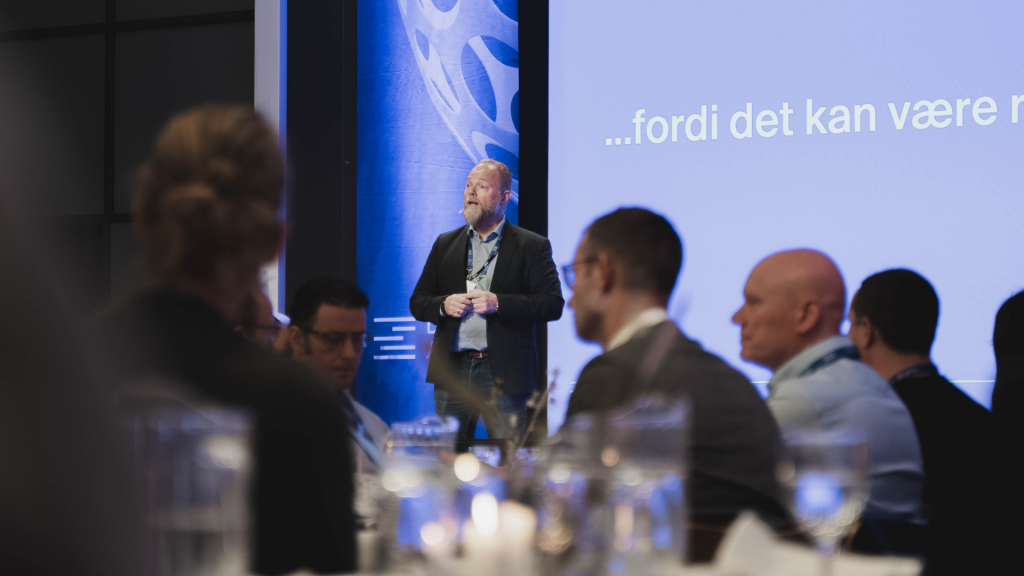
Marco Gehrig, Head of Mechanical and Additive Manufacturing at Sauber Motorsport AG, Switzerland, delivered a keynote titled ‘Pushing AM Performance: Insight from Formula 1,’ drawing parallels between high-performance motorsport and industrial AM. Gehrig traced Sauber’s AM journey from its first applications in 1995 to its current state-of-the-art machine park, highlighting continuous growth and the adoption of metal additive technologies.
The presentation underscored that AM’s value extends far beyond its novelty. It is about performance, speed, and flexibility. Sauber’s AM operation, utilising Laser Beam Powder Bed Fusion of both metals and polymers (PBF-LB/M, PBF-LB/P), Vat Photopolymerisation (e.g. SLA) and material jetting (e.g. PolyJet), produces thousands of parts annually. These range from engine mounts and aerodynamic components to functional connectors and housings. The company’s approach demonstrates how automation, AI integration, and optimised post-processing workflows such as depowdering, finishing, and quality inspection help reduce lead times, increase in-house capacity, and lower costs per part.
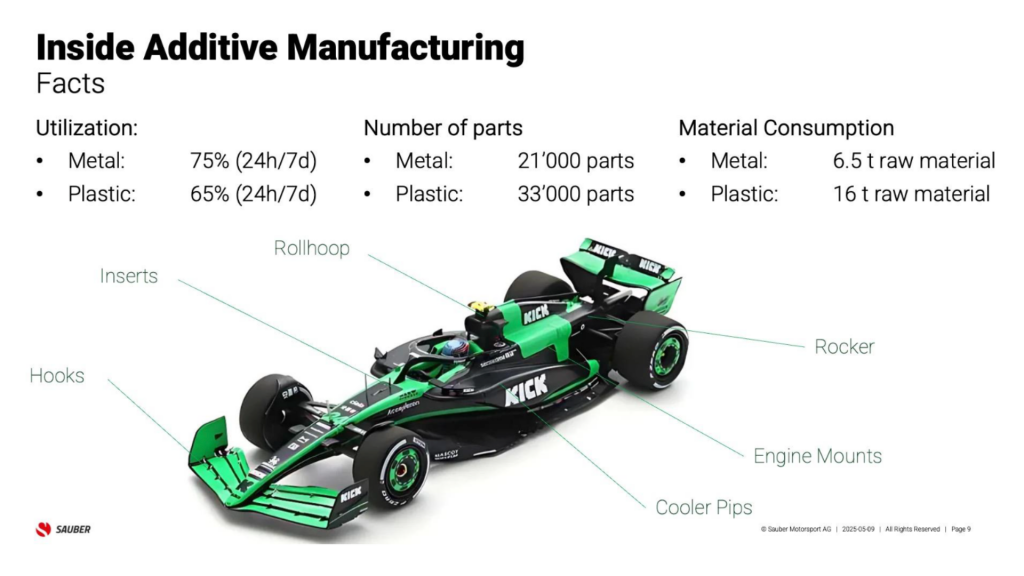
Gehrig stated that Sauber’s use of metal PBF-LB cut lead times by 20% and reduced costs per aluminium part by 10%. These improvements are not just incremental gains; they reflect a strategic use of AM to accelerate product development, optimise materials and enhance overall competitiveness.
For Danish manufacturers, the lessons from Formula 1 are particularly instructive. While most SMEs cannot match the scale or budget of a high-performance racing team, the underlying principles can be applied in smaller contexts. The first is a performance-driven mindset. As Gehrig argues, AM should not be viewed solely as a prototyping tool, but as a lever to improve speed, quality, and flexibility in production. Even modest gains in lead time or part quality can translate into a meaningful competitive edge for smaller firms.
A second lesson lies in integrating processes and automating tasks. By introducing more automated workflows for post-processing, monitoring, and quality control, SMEs can increase capacity and reduce errors without a corresponding rise in labour costs. This is closely connected to a third theme: data-informed decision-making. Continuous measurement and optimisation, similar to the use of telemetry in F1, enables manufacturers to identify bottlenecks, improve material efficiency, and refine their production strategies over time. This is combined with an iterative approach to innovation. Just as F1 teams refine designs from race to race, Danish SMEs can systematically experiment with redesigning parts for AM, testing alternative materials, and exploring new geometries to achieve better performance, lower weight, or improved resource efficiency.
Finally, Gehrig’s examples underscore the importance of strategic resource allocation: AM investment delivers the greatest value when it is clearly aligned with business priorities, whether that is reducing lead time, improving product reliability, or enabling new designs that were previously impossible to manufacture.
Ultimately, the keynote reinforced that AM is not merely a prototyping technology; it can serve as a strategic enabler for operational excellence, agility, and innovation. For Danish SMEs, adopting this performance-oriented approach can translate into tangible competitive advantages, allowing smaller manufacturers to leverage AM not just as a tool, but as a catalyst for transforming their production capabilities.

How Danish companies are strategically embracing Additive Manufacturing
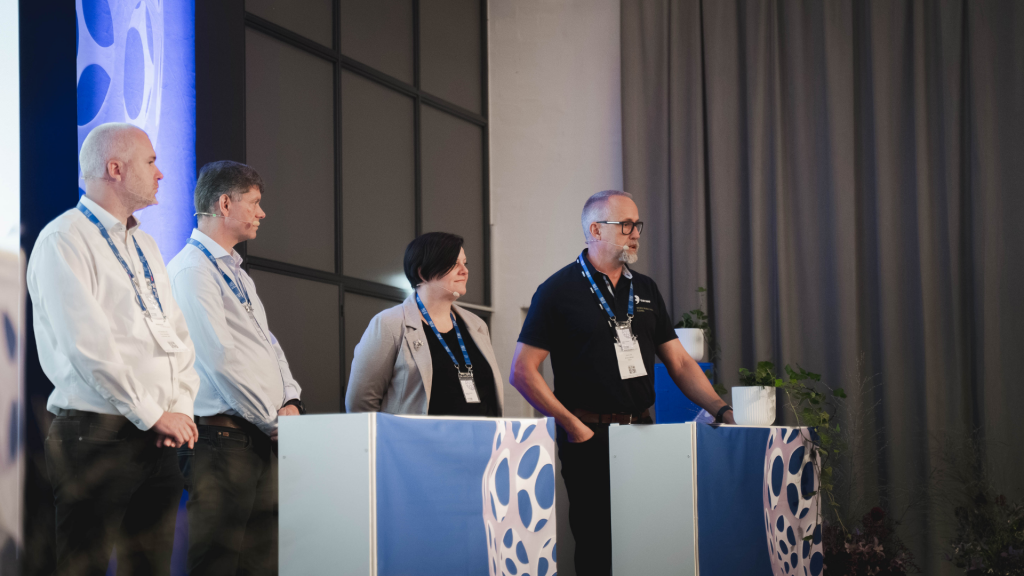
A panel session on the transition from prototype to production emphasised that AM adoption requires more than purchasing AM machines. Panellists from Carmo, Grundfos, KK Wind Solutions, and KC Denmark shared experiences highlighting how AM can reshape product design, business models, supply chains, and manufacturing strategies.
Jørgen D Vestergaard, Director Specialist at KK Wind Solutions, stressed that the true potential of AM lies in rethinking the product itself. “If we can think it, we can print it,” he said, emphasising that design freedom allows companies to optimise parts for weight, material use, and functional performance. The panel emphasised that successful AM adoption involves integrating design, production, and strategic planning, rather than simply replacing traditional components with additively manufactured alternatives.
The discussion also explored how Danish companies are moving from plastic prototyping to metal AM, expanding possibilities for end-use production. This transition is often driven by the need to test functional components, improve performance, or explore new designs that are not feasible with conventional manufacturing. Many SMEs initially use plastics for concept validation and gradually adopt metal AM as they gain expertise and confidence.
Several Danish companies already show how these possibilities can be realised in practice. Carmo A/S has leveraged AM to complement its injection moulding processes, using additively manufactured moulds and components to enable rapid iteration and early testing of product concepts. This allows the company to experiment with designs, shorten development cycles, and reduce material waste – approaches developed in collaboration with the Danish AM Hub. Similarly, KK Wind Solutions has applied AM to develop an aluminium busbar for wind turbines, producing a component that is significantly lighter and optimised for strength and performance. Working with the Danish AM Hub, the company has been able to identify suitable materials, refine the design, and explore geometries that would have been impossible to manufacture using conventional methods.
Taken together, these cases underline several important lessons for Danish SMEs adopting AM. First, design optimisation and material efficiency are central: rethinking parts specifically for AM can reduce weight, material consumption, and assembly complexity. Second, AM adoption is a strategic choice; firms must evaluate whether to invest in in-house equipment or rely on external providers, balancing capability building, scalability, and cost. Third, an iterative learning pathway often proves effective, with many companies beginning with polymer-based applications to gain experience before progressing to metal for functional, high-performance components. Finally, both examples show that workforce and competence development are critical. Skilled staff, structured knowledge transfer, and ongoing training are essential for SMEs to capture the full value of AM, rather than treating it as a standalone technical add-on.
The panel underscored the importance of strategic foresight. Danish companies are discovering that AM adoption is most successful when aligned with broader business objectives, ensuring that technology investments deliver measurable value in terms of competitiveness, efficiency, and sustainability. By combining lessons from high-performance industries with local innovation programmes, Danish SMEs are increasingly able to leverage AM not just for prototyping but as a strategic tool to drive operational excellence and product innovation.
AM supporting defence and national resilience
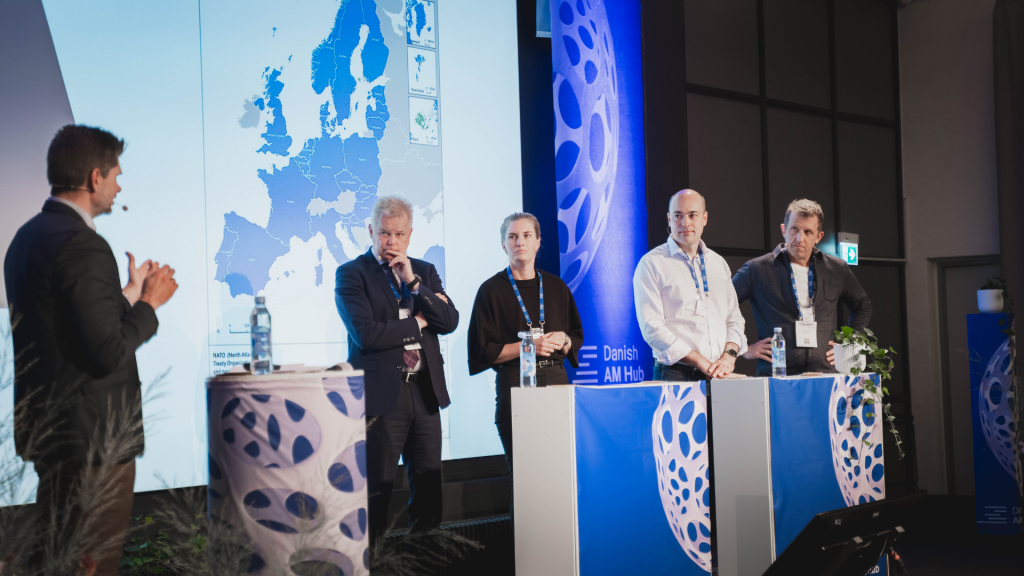
A further panel explored the role of AM in Denmark’s defence and national security sectors, examining how industrial AM can enable resilient production and supply chain security. Panellists discussed opportunities for Danish manufacturers to contribute to defence production, highlighting the potential for rapid prototyping, spare parts production, and customised solutions.
Anders Puck Nielsen, Officer and Military Analyst at the Royal Danish Defence College, provided context on current strategic challenges, emphasising that the evolving geopolitical landscape requires agile and adaptable industrial capabilities. AM offers a mechanism for companies to respond quickly to changing requirements, optimise supply chains, and reduce dependency on international suppliers.
The panel also highlighted that success in defence-related AM adoption depends on more than technology alone. Companies must invest in workforce development, material qualification, and process standardisation to ensure reliability and compliance with stringent defence requirements. Danish manufacturers are thus uniquely positioned to leverage AM for both commercial and strategic applications, combining innovation with national priorities.
The discussion also emphasised the concept of dual-use technologies, where AM solutions developed for defence applications can also create commercial opportunities in civilian industries. By designing processes and products that meet the high standards of military requirements, Danish manufacturers acquire capabilities that can be leveraged in other sectors, thereby enhancing competitiveness and innovation across the board.
Enabling innovation: Knowledge, collaboration, and practical cases
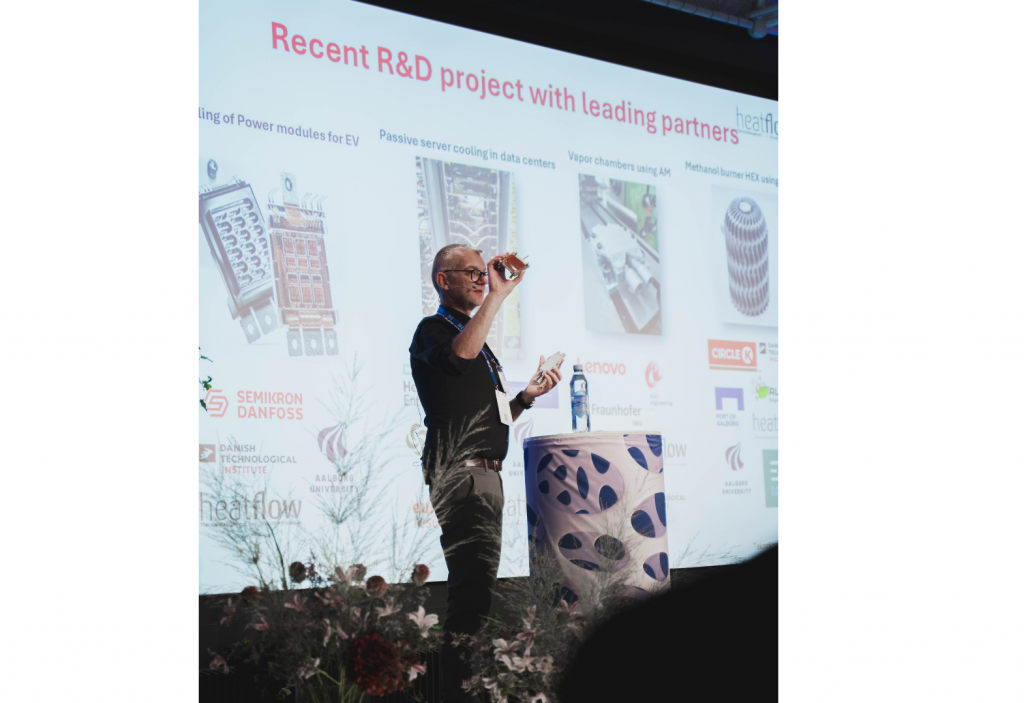
Practical guidance for AM adoption was provided by Jeppe Byskov, Center Manager at the Center for Industrial 3D Printing, Danish Technological Institute. Byskov illustrated the benefits of industrial AM with concrete case studies, such as Heatflow, a project demonstrating how AM can unlock new design possibilities and improve product performance in thermal management applications.
Heatflow faced the challenge of creating an evaporator capable of efficiently dissipating heat from server CPUs, a task that conventional manufacturing could not address effectively. Using AM, in one application example, the team consolidated six components into a single part, optimising geometry, fluid flow, and heat distribution. The final design reduced weight from 299 to 221 g, improved surface area efficiency, and enabled integration into district heating systems, while maintaining performance equivalent to the conventional solution. This highlights how Design for Additive Manufacturing (DfAM) can yield functional, sustainable, and production-ready solutions.
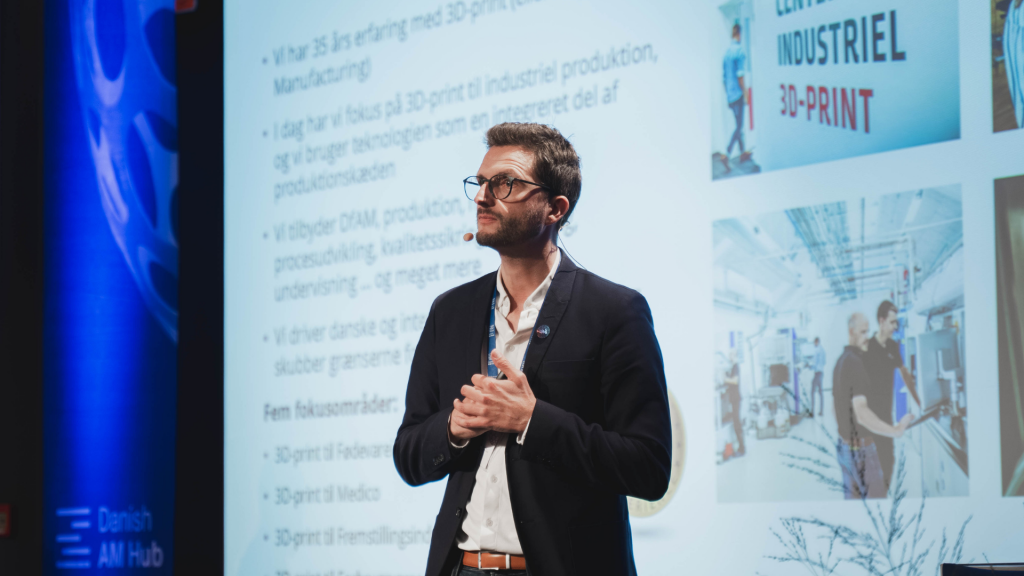
The Danish ecosystem fosters innovation through collaboration among research institutions, technology providers, and end-users, enabling SMEs to transition from proof-of-concept projects to scalable production. Beyond Heatflow, presentations from Mikael Sohlberg, Area Sales Manager at EOS, and Ronnie Manley, Technical Project Manager at Danish Additive Manufacturing Research Center (DAMRC), highlighted additional pathways for industrial adoption. Manley emphasised that AM is not just a technical solution but a strategic enabler, allowing companies to rethink both their products and their production and business processes through design freedom, improved quality control, and efficiency gains. Examples include rapid prototyping, iterative testing, simplified documentation, and cross-departmental collaboration.
These initiatives provide SMEs with access to advanced facilities, expert guidance, and practical case studies, enabling them to adopt AM not as a novelty but as a strategic capability. By bridging hands-on experimentation, iterative learning, and ecosystem collaboration, Denmark continues to establish itself as a testbed for practical, value-driven AM adoption.
Outlook for AM in Denmark
The summit concluded with reflections on the future trajectory of AM in Denmark, emphasising the critical themes of AI, sustainability, and competitiveness.
AI integration is increasingly recognised as a fundamental enabler rather than a revolutionary force. By integrating AI into design, simulation, and production workflows, companies can enhance efficiency, reduce material waste, and improve product performance. However, speakers cautioned that AI’s impact depends on effective implementation rather than hype.
Sustainability emerged as another priority. Danish manufacturers are exploring how AM can reduce material consumption, energy usage, and logistical complexity, supporting both environmental and economic objectives. By combining AM with forward-thinking design practices, companies can achieve resource optimisation and contribute to circular economy goals.
Finally, competitiveness remains the overarching driver. Danish SMEs are leveraging AM to gain flexibility, accelerate innovation, and respond to dynamic market demands. The AM Summit 2025 highlighted that AM is most valuable when integrated into strategic decision-making, design processes, and production planning, rather than treated as an isolated technology.
Frank Rosengreen Lorenzen closed the summit with a call to action: AM is a tool for future competitiveness, and companies must act now to embrace its potential. Denmark’s collaborative ecosystem, forward-looking mindset, and focus on practical implementation position it well to lead in industrial AM adoption across Europe.
AM Summit 2025 demonstrated that AM in Denmark is transitioning from potential to performance. From high-performance motorsport applications to practical guidance for SMEs and strategic insights for defence and national security, the summit showcased the breadth and depth of AM’s impact.
Danish companies are increasingly adopting AM not as an experimental novelty but as a strategic enabler, driving innovation, efficiency, and sustainability. By combining design freedom, advanced technologies, and ecosystem support, Denmark is setting a benchmark for how small- and medium-sized nations can leverage AM to strengthen industrial competitiveness.
As the country looks to the future, the message is clear: Additive Manufacturing is no longer just a promise – it is a practical, value-generating tool that will shape the next generation of Danish production.
References
[1] Danish AM Hub, ‘AM Sustain’, Available at: am-hub.dk/am-sustain/
[2] Danish AM Hub, ‘Carmo A/S – combining AM and injection moulding’, Available at: am-hub.dk/carmo-kombinerer-am-sprojtestobning-game-changer/
[3] Danish AM Hub, ‘Improved product and functionality with 3D printing and sustainability in focus’, Available at: am-hub.dk/kk-wind-baner-vejen-for-fremtidens-vindmoller/
Author
Rikke Uldall-Ekman
Communications and Event Manager
Danish AM Hub
LAST MONTH’S MOST-READ ARTICLES