Inside Nikon’s metal Additive Manufacturing strategy, Part 2: Scaling industrial production in Long Beach
Following our interview with Hamid Zarringhalam in the preceding article, Metal AM travelled to Nikon Advanced Manufacturing’s Long Beach, California facility to examine how the company’s defence-led strategy is being executed in practice. Reporting for Metal AM magazine, Martin McMahon toured the production floors, qualification laboratories and large-format NXG installations supporting U.S. defence programmes, assessing how Nikon is translating capital investment and policy alignment into repeatable process control, production throughput and industrial-scale capability. [First published in Metal AM Vol. 12 No. 1, Spring 2026 | 20 minute read | View on Issuu | Download PDF]
It felt fitting to arrive in Long Beach a year after Nikon Advanced Manufacturing formally opened its facility there. The site offers a practical view of what Nikon means when it calls metal Additive Manufacturing a new growth pillar. This visit followed Metal AM’s first conversation with Hamid Zarringhalam – Corporate Vice President of Nikon Corporation and CEO of both Nikon Advanced Manufacturing and Nikon Ventures Corporation – at Formnext 2025, reported in the preceding article. He stressed that this growth pillar won’t succeed on vision alone; it requires repeatable process performance, applications support, and the operational backbone to serve industrial customers at scale.
This isn’t a story of speculative investment chasing quick returns in a disruptive technology. Huge sums have already been sunk into AM with exactly that aim – and, to many observers, the results still haven’t matched the funding. Nikon is presenting something more deliberate: to build metal AM into a business line alongside its optical solutions and semiconductor processing operations. Zarringhalam says Nikon has already established pillars in those areas, each generating billions of dollars in annual revenue. The ambition, he says, is to make metal AM another close-to-billion-dollar business.
Nikon has assembled capability through a series of moves, including the acquisition of what is now Nikon AM Synergy and the acquisition of SLM Solutions in Germany, together totalling an investment of around $1 billion. The scale is striking, but the more important question is what the investment has delivered: core technologies, market intelligence, and engineering experience, showing up in larger platforms and more process-ready solutions.
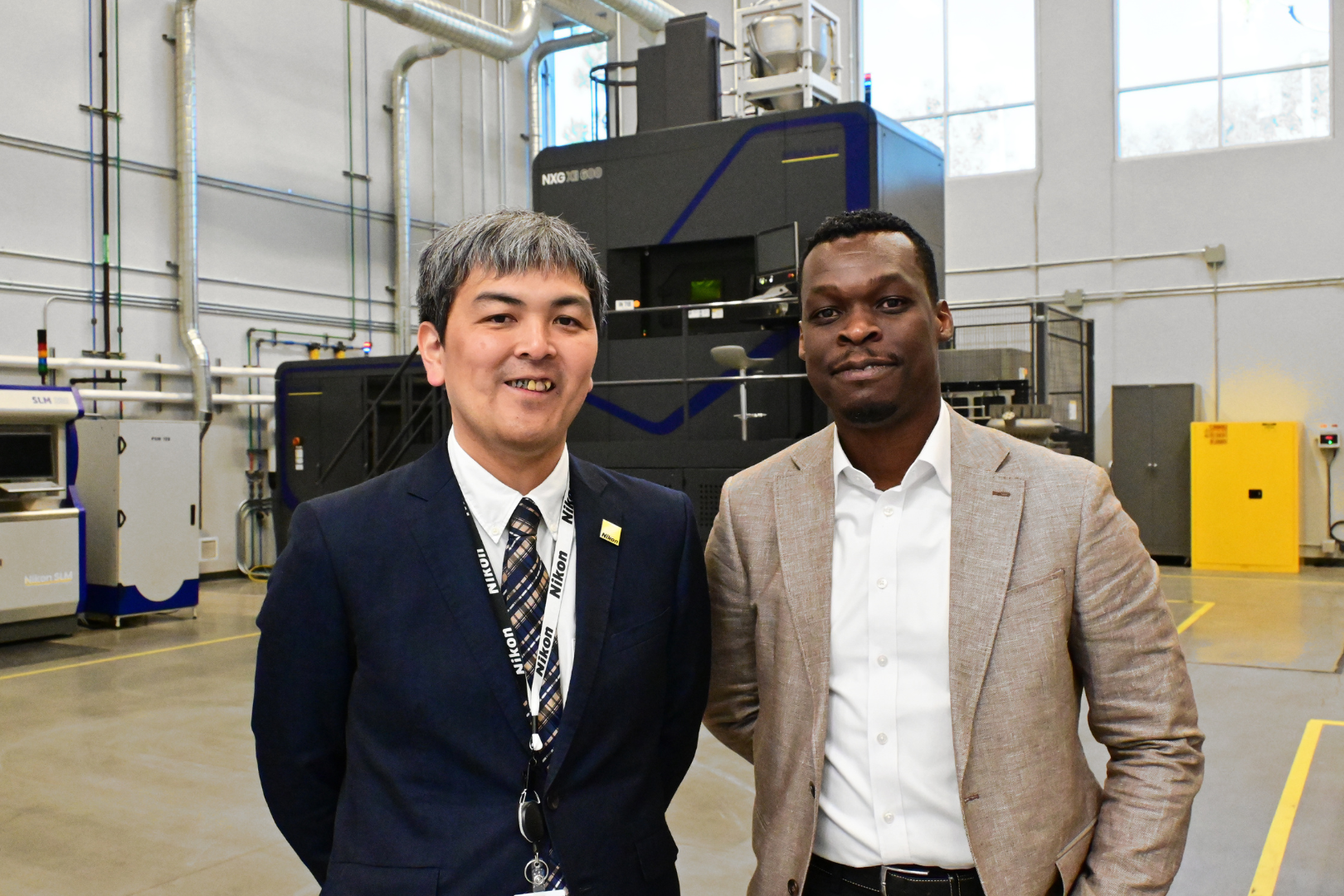
Nikon granted access to discuss the strategy with Zarringhalam, Behrang Poorganji (Vice President of Technology at Nikon Advanced Manufacturing), Nneji Kemakolam (Vice President of Engineering/Products at Nikon SLM Solutions), and Jesse Lea (CEO of Nikon AM Synergy). On the shopfloor, Joshua Forster (Director of Operations for Nikon AM Synergy) acted as tour guide, introducing the relevant teams and systems as we moved through the facility.
Inside the Long Beach facility
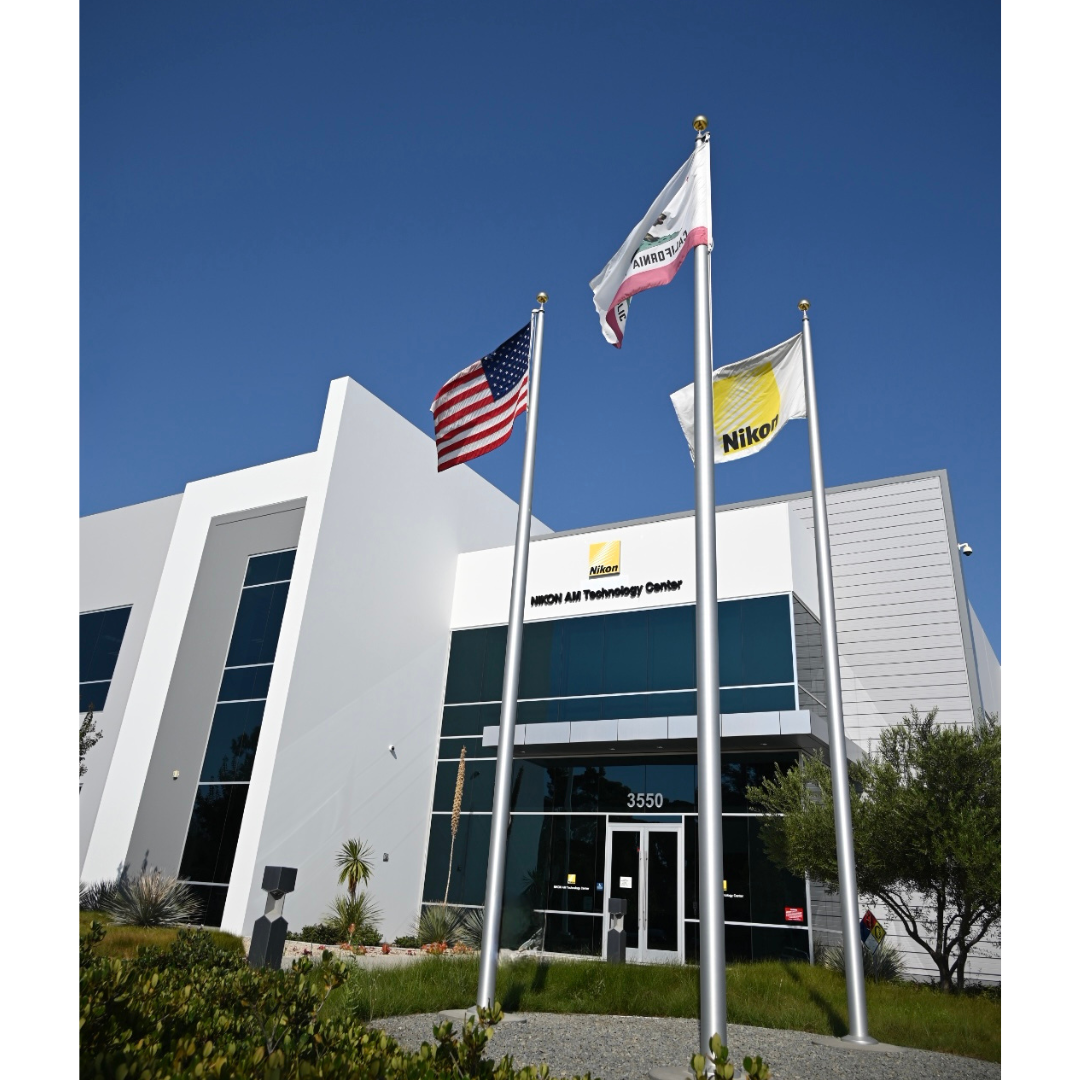
From the outside, there is little to suggest that the building houses some of the world’s most advanced manufacturing capabilities. A small sign at the car park entrance is the only hint that you have arrived at the correct location. Otherwise, it looks like a large industrial unit – unremarkable in an industrial park, much like the many thousands of others. Equally, when entering the building’s reception, it feels understated. Only as you move past the front desk and into the rear of reception do you start to get a feel for technology, particularly Additive Manufacturing.
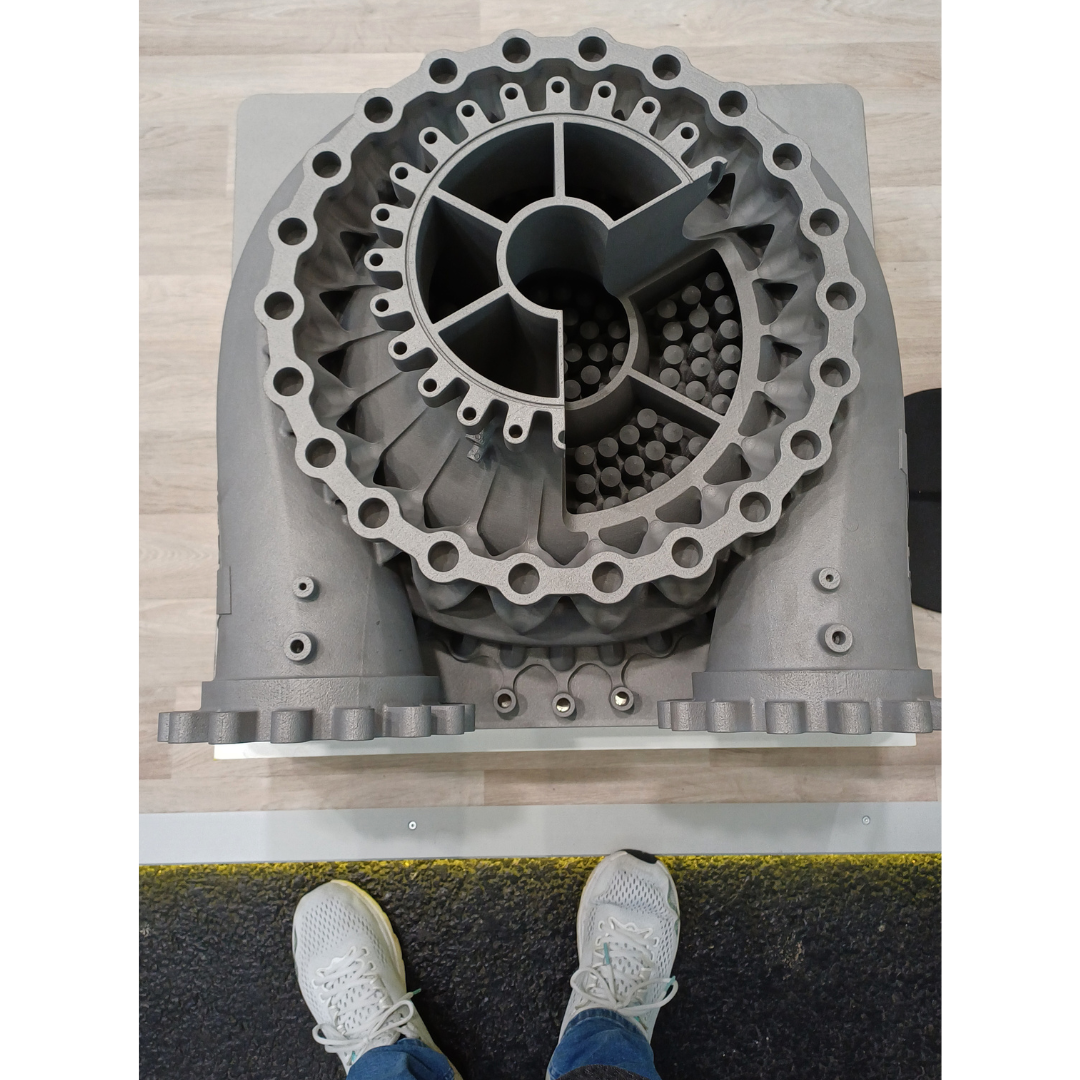
Just like many AM facilities, there are samples of previous work: an almost obligatory space-themed bracket as a centrepiece, alongside a handful of other parts demonstrating fine features and different metals. One display stood out immediately, though: a full-height, 600 mm, near-fully populated build of copper test coupons. I have never seen such an exhibit in a reception area.
It is also an early indicator of intent. Committing to a full-height build is a substantial undertaking, and doing so in difficult materials such as copper alloys is not for the faint-hearted. Putting that build front and centre reads as a deliberate statement: materials development and qualification are being treated seriously here. Even so, the reception hides as much as it reveals. Behind it sit secure bays for controlled access to sensitive programmes, along with large enablement spaces where customers can learn on production-ready hardware rather than through canned demonstrations.
Later, during the tour, I was led past rooms housing confidential projects. Much of the open industrial floor space was screened behind a long wall of graphics; clearly placed to block views from prying eyes. My hosts were unanimous in telling me there was “very cool stuff” going on behind it.
The strategy behind engineering services
Morf3D was a recognised name in metal AM, particularly in the U.S. aerospace and defence sector clustered around the greater Los Angeles area. The company offered design optimisation, serial production, and qualification of flight hardware – capabilities that go beyond machine performance and into the realities of customer adoption.
When Nikon’s investment became public in spring 2021, it surprised the AM community. Why invest in a service provider? In practice, it gave Nikon a way to learn about Laser Beam Powder Bed Fusion (PBF-LB) up close, without first having to create demand for its own machines. Existing relationships with defence primes also reduced commercial risk. Geography mattered too. El Segundo, California, sits within a region with deep aerospace manufacturing activity.
Qualification under one roof
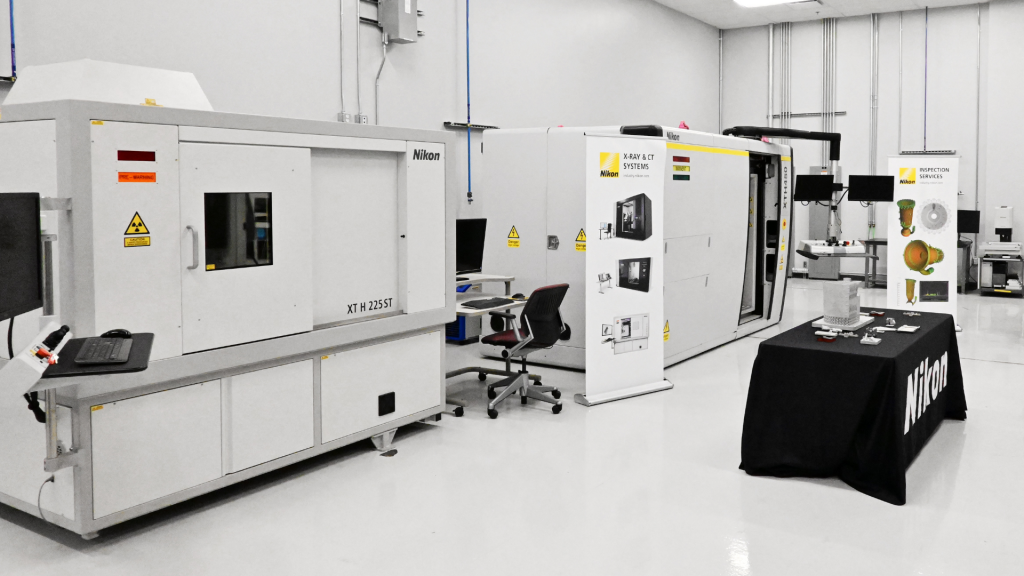
The message throughout the tour was consistent: Nikon is applying its heritage in precision optics and metrology to rigorous materials work and an operational environment designed to qualify parts, support adoption, and scale the process. Walking into a fully equipped testing area, Poorganji explained that many delays occur in the gaps between steps in the end-to-end workflow – particularly when powders or parts must be sent out for measurement and testing as part of qualification. Leveraging Nikon’s metrology heritage, Nikon AM Synergy has integrated much of the measurement, testing, and qualification workflow on-site to reduce inter-step delays.
It’s one of the most complete setups I’ve seen to date. The dedicated space includes a powder analysis room with equipment for particle size distribution (PSD), morphology, composition, flow, and rheology – essential checks for feedstock consistency.
Of course, feedstock quality is only half the story. The quality of the built parts matters just as much, and Nikon hasn’t skimped here either. Poorganji pointed out a very busy tensile testing system in the centre of the test area, with options for elevated-temperature testing and fatigue. Almost ironically, for a company so closely associated with high technology, they machine test coupons on a simple benchtop lathe. But as my host explained, there’s no point spending money for the sake of it – this machine does the job perfectly.
The facility also included the prerequisite Nikon XCT system, along with a number of Nikon optical microscopes (as one would expect from a company with such a pedigree in imaging technology), and a state-of-the-art scanning electron microscope with crystallographic characterisation and micro-chemical analysis capabilities.
Poorganji was clear that this capability is a critical part of Nikon’s investment. Being able to test, measure, and qualify under one roof creates savings in multiple ways. It’s not only the transport costs of shipping coupons or parts out to external labs; it’s the value of speed and decision-making. Having test results within 24 h of a build finishing changes the economics. “That’s the difference – the things that add to the cost are the delays. Because when your machine is idle, your programme is idle, and you’re just burning your overheads,” Poorganji added.
The NXG floor: Powder Bed Fusion at scale
If any proof was needed that the Long Beach site is producing parts on Nikon’s SLM Solutions machines, it came as we reached a room at the end of the long corridor formed by the wall of graphics. Inside were two NXG machines – huge, imposing machines – filling a space that felt surprisingly narrow. We weren’t allowed to linger, and the surprises didn’t stop there.
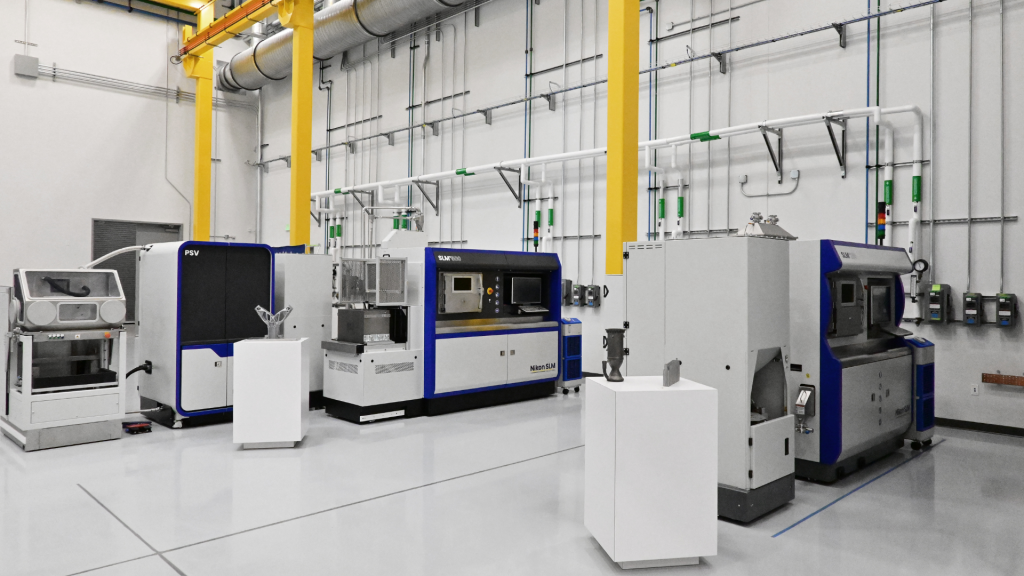
In the next demonstration area, Nikon had arranged the platforms almost like a family: the SLM®280 at the front, the mid-sized SLM®500 behind it (Fig. 4), and the much larger NXG 600E RELOOP at the back (Fig. 5). Seen together in a full installation, the scale difference is unmistakable. The NXG occupied almost the entire end wall of the building and dwarfed the other two machines. This NXG configuration had a 1,500 mm-tall build volume, with the powder feed and optical train towering above everything else.
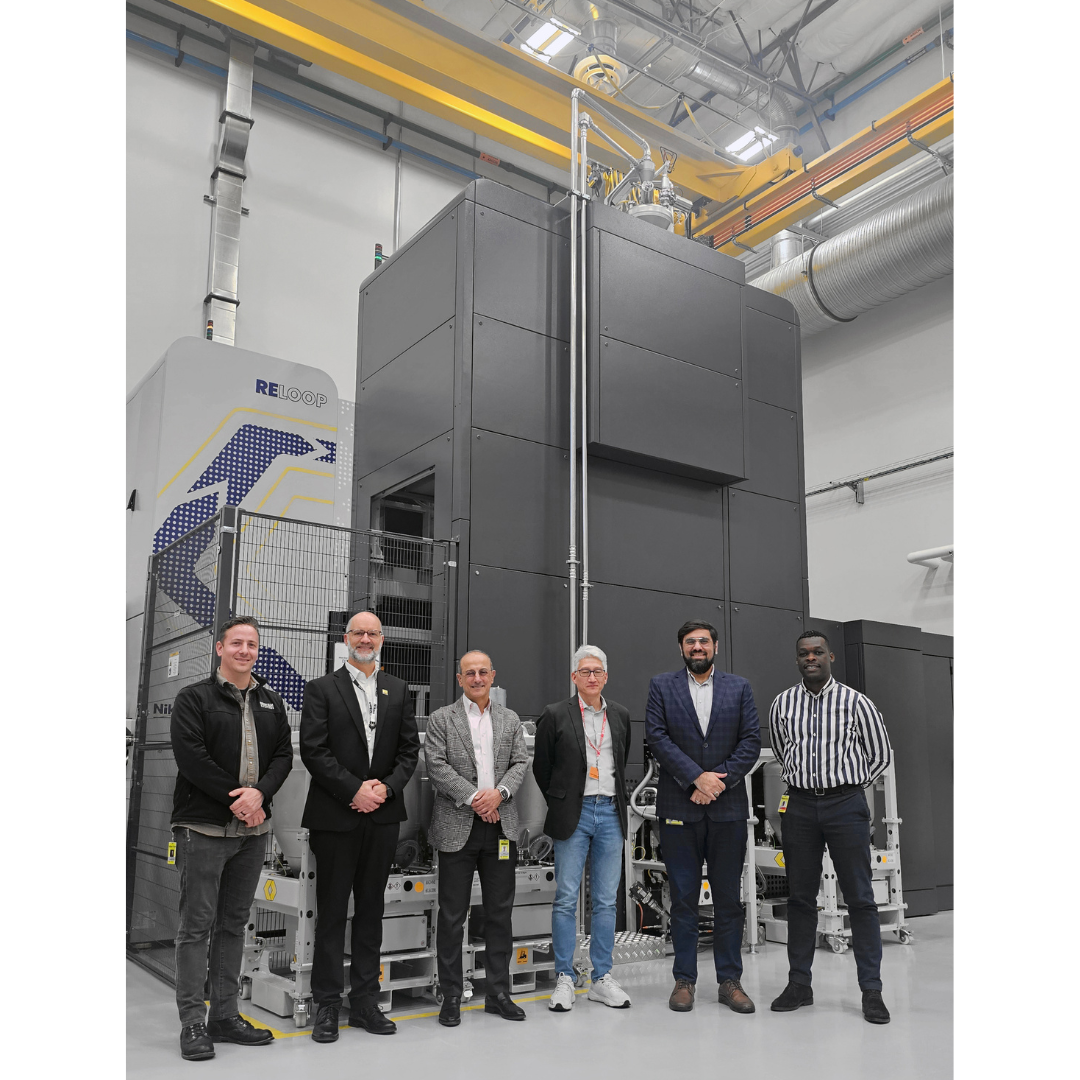
Another NXG machine, with a 600 mm build height chamber, was more or less opposite, separated by a set of roller doors. The intent, I was told, is to comply with safety requirements for management of reactive and non-reactive materials, and thereby allow different powders to be run while reducing the risk of cross-contamination.
Powder handling at scale
I found myself imagining having to fill this machine from the types of small plastic containers that have become endemic across the AM sector. I remembered the days of manually emptying a smaller 250 x 250 mm machine and concluded that changeover would be a complete nightmare for this NXG system. It really would be too if Nikon SLM Solutions hadn’t already thought about this.
Standing next to the NXG 600E system, equally tall and equally imposing, was RELOOP: Nikon SLM Solutions’ own powder recirculation system. RELOOP closes the loop on powder management during the build process and enables lights-out operation – even when using the full height of the NXG 600E’s unusually tall build volume. Forster explained that RELOOP handles in-situ drying, inline sieving, and recirculation, enabling safe top-ups during long builds.
However, managing the powder inside the AM machine is one thing, but getting it out again is a completely different process. Here, as with other system developers, Nikon SLM Solutions has worked with external partners to automate downstream steps. Grenzebach provides an automated exchange process: once a build completes, the hot cylinder can be swapped out for a prepared build chamber, allowing the next job to start. It requires heavy lifting and a crane, but in a relatively short time, the part and substrate can be removed, leaving around 80-90% of the powder. From there, depowdering and recovery are handled by a dedicated Solukon system, while AZO provides the remaining stages of powder recovery, reconditioning, and refilling based on customer configuration. The equipment is substantial and laid out to optimise the process flow.
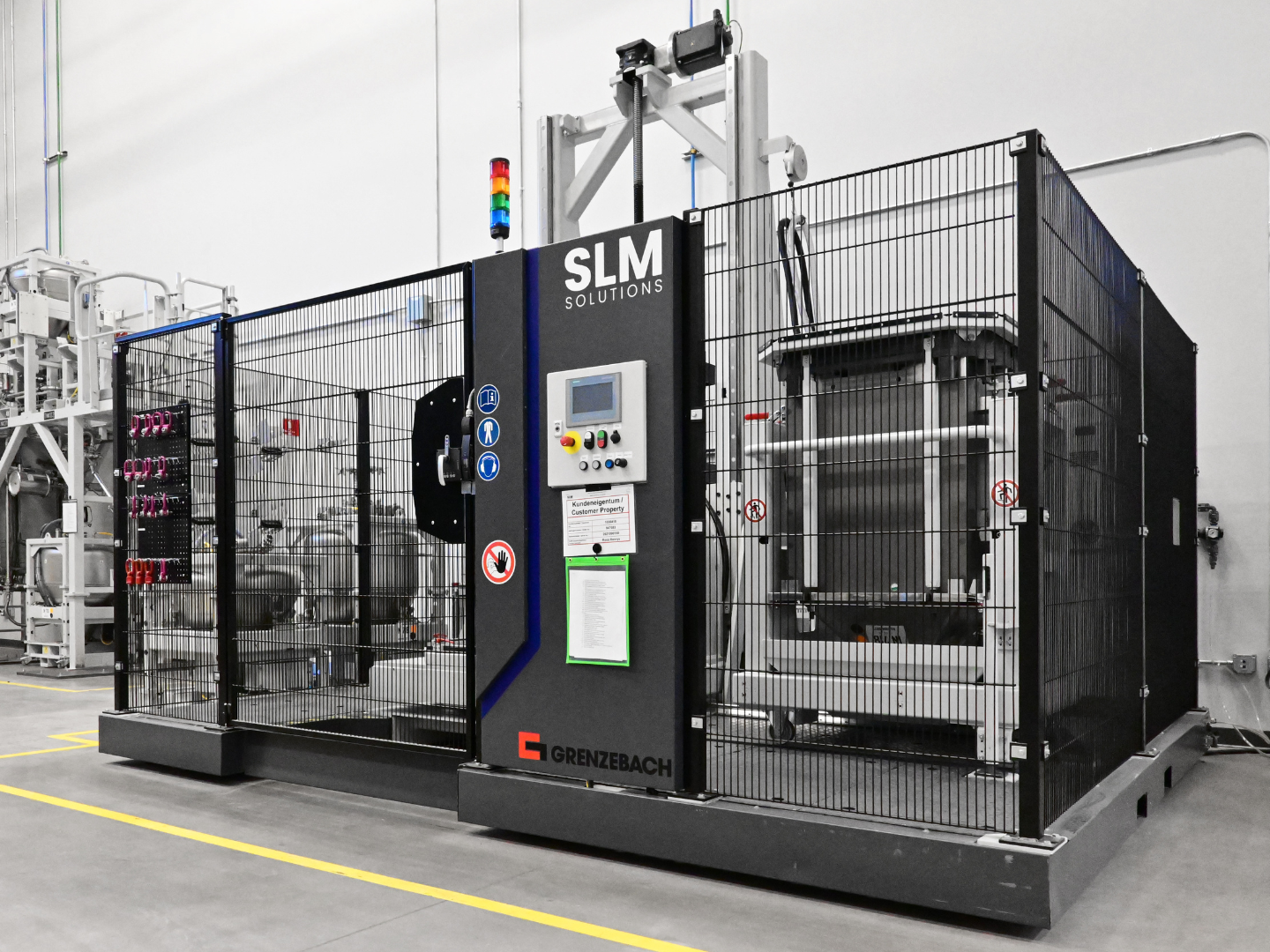
It would be impressive to see this in full swing. Forster seemed genuinely proud, “with our depowdering solutions, we’re able to capture a significantly greater amount of that fine, trapped powder that usually would have been lost in post-process, and reuse it. We have really advanced the number of times we can reuse the powder. We track from lot to lot what powder goes in the machine, and what we’re seeing is that over time – even with dozens of lot numbers mixed in a single machine – we’re still seeing great results.”
That last point matters because it suggests a long-standing constraint – keeping a single lot of powder per build – may be less rigid than many workflows assume. Beyond machine cost, powder consumption and losses are one of the biggest drivers of part cost. So securing feedstock quality, recovering it efficiently, and reusing it reliably is a critical step towards making metal AM a more economic, everyday production solution.

Uptime by design
Despite the scale of the NXG machines, staffing remains lean, to the point that the requirements are no different from those of the smaller machines we have all become accustomed to. Forster explained that Nikon staggers job starts so that a single technician can be responsible for four or more machines at a time. Builds are timed so most finish over the weekend, then follow a Monday-morning routine to turn everything around. He added, though, that because builds can last a couple of weeks, this doesn’t mean multiple turnarounds every Monday; staff are moved onto other tasks, such as support removal and other post-processing steps.
Building the ecosystem
Returning to the conversation with Kemakolam, I asked whether Nikon considered the four separate systems – the NXG, Grenzebach, AZO, and Solukon – to be the core solution for Nikon’s AM process. He responded, “This is a full process now, from print to final component, without powder in it.” Then he became a little more excited, “But this is not us”, pointing at the de-build unit, “and that’s not us”, pointing to the powder handling unit. “As an open architecture platform, we are focused on delivering system solutions based on our customers’ needs. We are able to identify areas of our strengths complemented by our partners’ powers to deliver a complete production solution.”
Some argue that AM system vendors should be responsible for every aspect of the process. Nikon takes a different view: the company analyses the ecosystem and identifies suppliers that can fill gaps in areas where it does not specialise, thereby providing an interface through which a solution can be co-developed. Kemakolam explained in practical terms: “We go to industry greats and partner with them, providing interface requirements. It needs to be able to handle X tonnes, a build envelope of X, Y, Z, and these types of materials. They come up with a solution that we co-develop together.”
Rather interestingly, he added, “Now, they have a solution that they can go to the market and sell to anyone, not just our customers, and they’re welcome to.” Here, he was pointing out that the co-developed solution meets the performance requirements of Nikon’s systems. It is not exclusive, but it is tailored to Nikon’s needs, and the knowledge and expertise gained can be leveraged to develop solutions for other AM applications.
Part depowdering is a different matter, and the conversation continued, “Solukon, on the other hand, is a very interesting partner because of the way we work with them. Whenever we’re developing a new machine, we effectively provide interfaces for our substrate plates to Solukon, and they design a machine around us.” He continued to explain how they, too, have the freedom to sell what they make anywhere in the market, but with a nod to the special relationship between these two companies, he added, “And whenever they size, they’re sizing for whoever is in that landscape, which is why you have the SFM AT1500, and the AT1000.”
Production, not demonstration
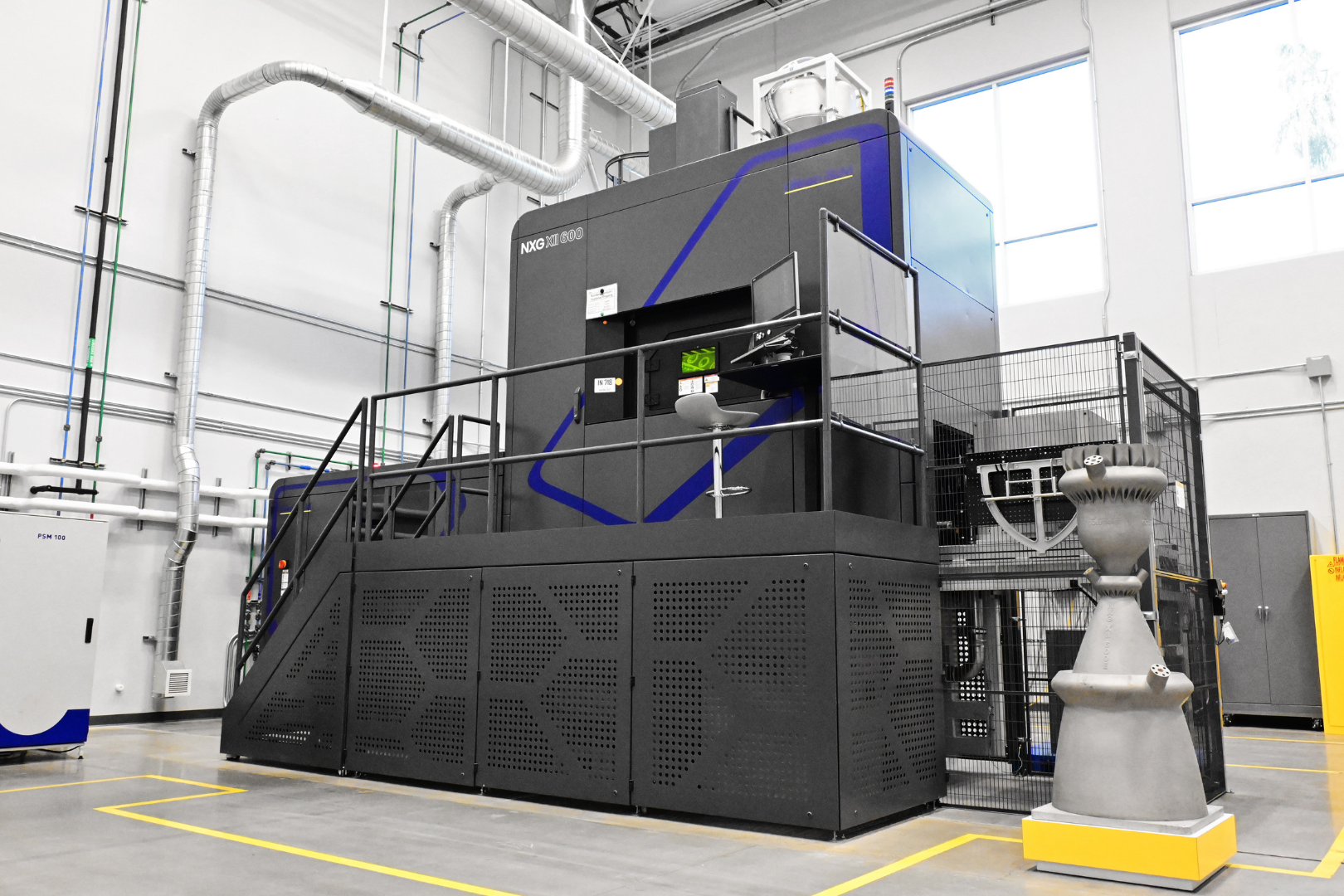
All in all, this site demonstrates PBF-LB at scale and the infrastructure that is required to support it. Interfaces and material flow are designed to keep machines productive, turning large-format PBF-LB into a dependable factory process, and for real customers, not just the best AM showroom.
Zarringhalam, who had let others take most of the spotlight during the tour, stepped in to explain what he believes makes Long Beach different. “What’s unique about what we do here – especially for defence – is that we have a holistic capability that can be used to scale up. Some people are only machine sellers. Some people are only contract manufacturers. We’re not even a contract manufacturer. We have this capability to get defence companies to adopt AM and anchor to our solutions.” These are not just words, either; press releases from the last few months, particularly those involving US Navy-backed work, have reported that a number of NXG machines have been sold into the U.S. He continued, “That is very important for defence, and the customers can deploy that technology here, and some of what you see here are customer-owned assets,” pointing to the large grey domineering machines.
As we moved back towards the front of the building, we paused at the open doors of a large space fitted with a gantry-mounted crane. Poorganji introduced it as “the future Department of War and Services room”, and said the U.S. Navy would fund Nikon AM Synergy to run the system. Working on a new copper-nickel alloy, they will “develop a technical data package, materials data, and then make production parts for ten years.” We discussed what happens if a customer wants to stand up the same capability elsewhere. “A technical data package, the process parameters, and the workflow will be transferred, rather than transferring the machine. This machine will continue making parts. This entire facility is really part of defence industry ethics, very much dedicated.” The expectation is that three to four NXG machines will be fully operational in this services room before too long.
With the NXG floor and its surrounding infrastructure, Long Beach is clearly geared for large-format PBF-LB at scale. But Nikon’s metal AM strategy is not built on Powder Bed Fusion alone.
Directed Energy Deposition: from repair workflow to fine-feature capability
Nikon first formally announced the availability of a metal AM machine in April 2019 with the launch of the Lasermeister 100A. A year later, it introduced Lasermeister 101A, followed by Lasermeister 102A in 2021. These machines were all Directed Energy Deposition (DED) platforms. At that stage, Nikon had no publicly known involvement in PBF-LB.
There was also Japan’s ‘Technology Research Association for Future Additive Manufacturing’ (TRAFAM) project. While Nikon has not formally acknowledged its role, Zarringhalam confirmed that the company was embedded in the programme – exposure that would likely have placed Nikon alongside PBF-LB development efforts, even as it continued advancing its DED portfolio. That steady evolution of Nikon’s DED portfolio brings us to the Lasermeister LM300A.
Earlier in the tour, Forster led me into one of the building’s smaller rooms – though ‘smaller’ is relative. The space was roughly the size of many AM companies’ entire workshop floors. In that room, I met Koki Takeshita, Assistant Director of Nikon Advanced Manufacturing and lead for the company’s DED technology solutions. He introduced the Lasermeister LM300A and SB100 – a combined DED laser workstation and high-resolution 3D scanning system.
Nikon positions the pairing as a near stand-alone repair system, designed to refurbish damaged turbine blades and other high-value components. The SB100 scanning unit generates a three-dimensional model of the part and transfers the data directly to the LM300A. From there, the component can be prepared for Directed Energy Deposition, repaired or augmented under controlled automation and, if required, semi-finished through laser ablation.
The scan-to-repair workflow is impressive in its own right. What elevates the system, however, is the level of feature resolution Nikon is now achieving with DED. Features that once sat firmly within the domain of Laser Beam Powder Bed Fusion (PBF-LB) are becoming possible – and at speed – through fine-beam-controlled DED. I was shown a twin-walled part with exceptionally thin connections. It looked as though it had been pulled directly from a powder bed build. (Some of you may have spotted this at Formnext in November – I had missed it).
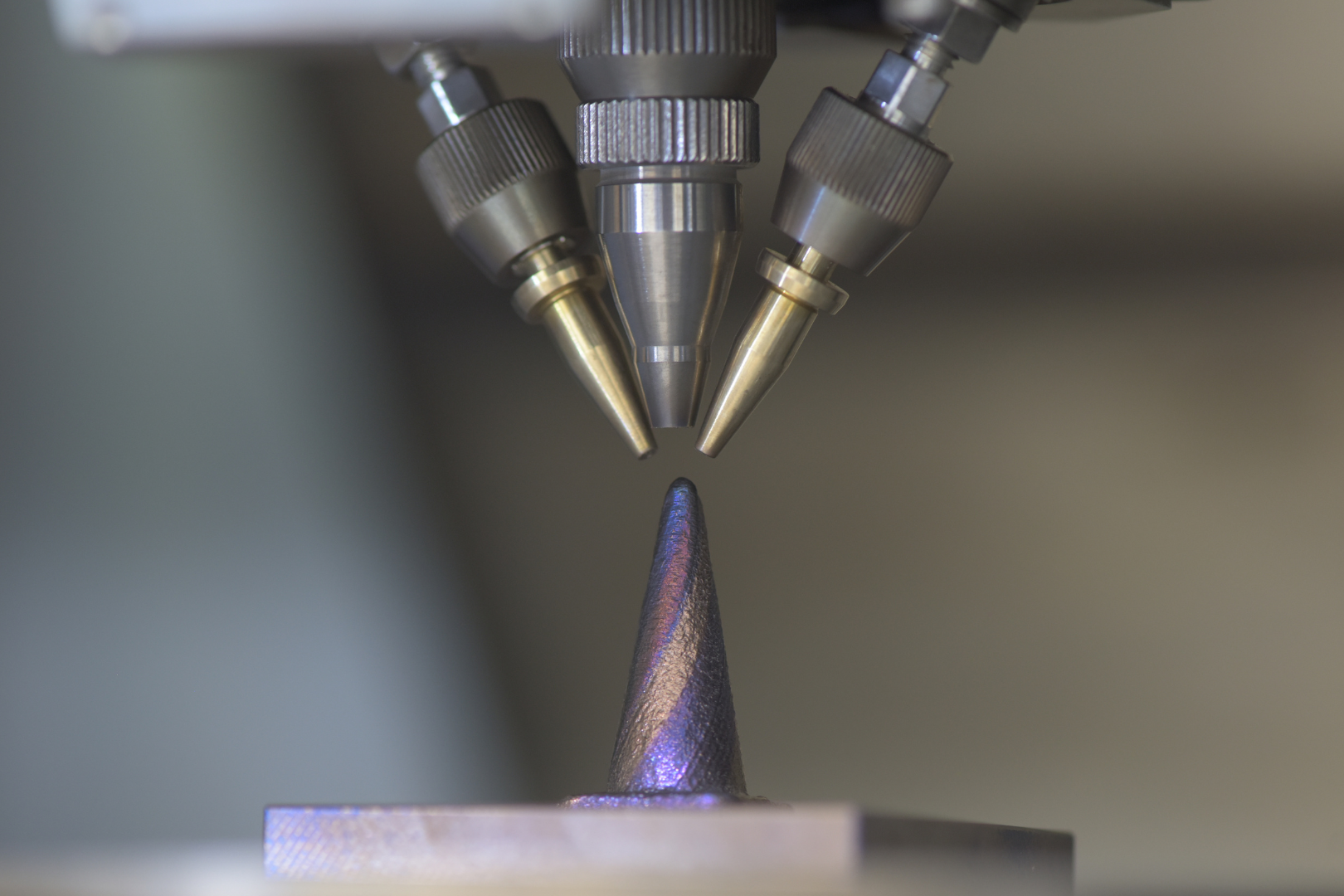
Kemakolam added perspective on what this level of feature resolution could mean: “Looking at these feature resolutions opens a completely different ballgame for the future AM ecosystem. By the time we start manufacturing single-engine rocket components that are very thin with conformal cooling channels, and we’re looking for a method to repair them, we’re not going to stick it back in a PBF machine, right? We’re going to start looking at how you can leverage something like this DED to repair it. I think that’s where the beauty of this comes into play.”
The implication is clear: if DED approaches PBF-LB-level resolution, its role shifts from cladding and heavy repair towards precision augmentation – and, critically, the repair of geometries originally produced via powder bed processes.
It was also during this part of the tour that Zarringhalam alluded to the level of external collaboration behind Nikon’s DED programme. He stopped short of sharing details about DMG Mori’s integration of Lasermeister core technology into its Lasertec systems. The collaboration between the two companies has been publicly discussed before, but this was not the moment for specifics.
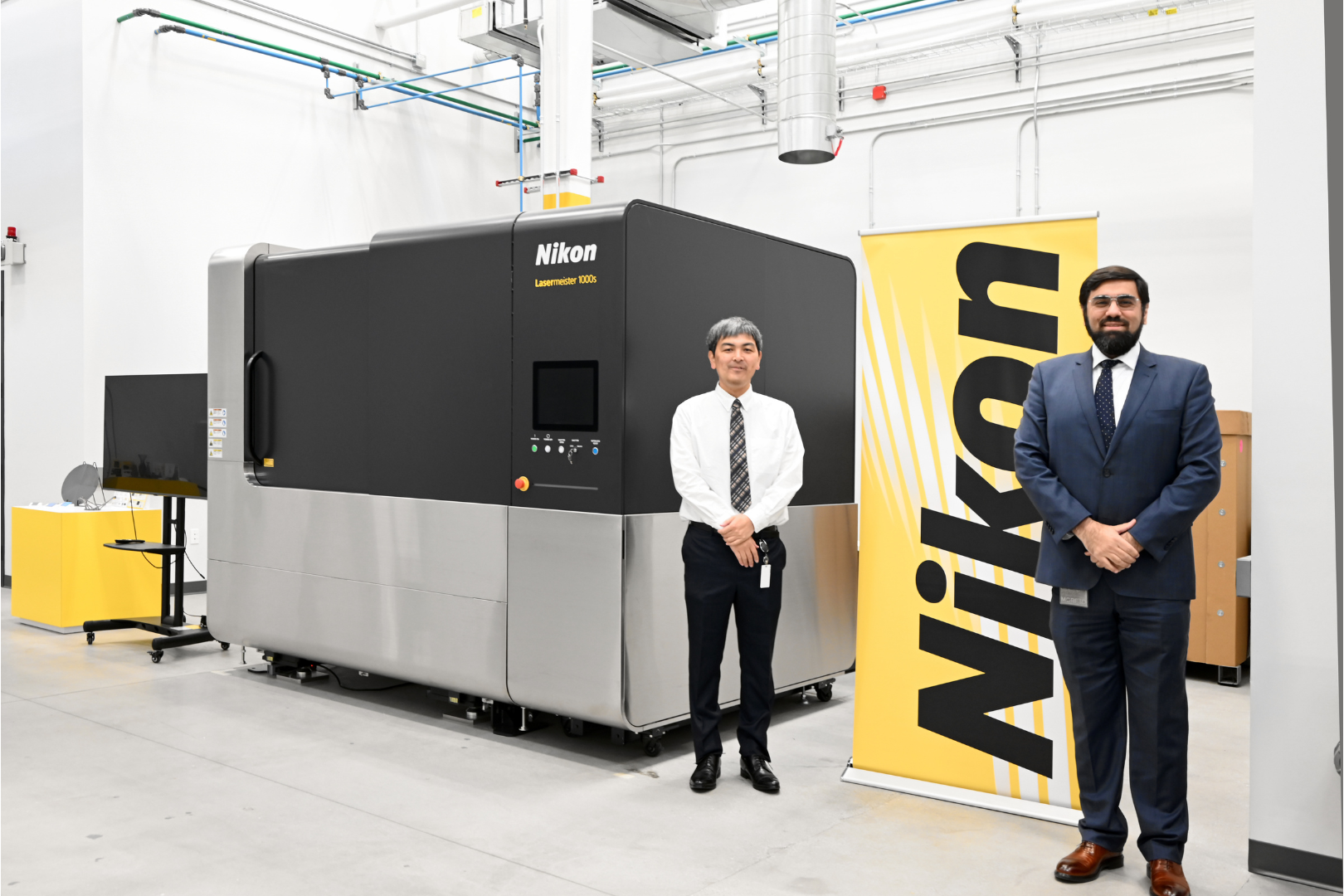
When asked what it is like to work with a leading competitor to help develop and exploit a technology, Zarringhalam responded, “Well, you know, Sony is a customer, a partner, and a competitor of ours in a variety of areas”, with a knowing sideways glance towards the latest DED machine in the Nikon AM portfolio.
The SLM Solutions legacy
What does it really take to change metal Additive Manufacturing from an endless science project into a dependable production process? During a candid lunchtime conversation, Kemakolam explained how the company went from the SLM®280 and SLM®500 to the NXG machines. In his telling, the gains haven’t come from gimmicks. They have come from process monitoring, rigorous data analysis, and operational discipline.
Nikon SLM Solutions insists the SLM®280 and SLM®500 remain central to its machine portfolio. Why? Because AM is built on knowledge, and the installed SLM®280 and SLM®500 fleets have functioned as a real-world data mine from which knowledge and experience have been extracted in order to develop the large NXG machines. Scaling up, in Kemakolam’s view, is safer when you preserve the same underlying process conditions, rather than reinventing them for every new platform.
That doesn’t mean every NXG-led improvement will automatically filter all the way down to, say, the SLM®125. Kemakolam argued that the NXG has shifted the definition of “entry level.” He explained that if the SLM®125 was once considered an entry-level machine for Powder Bed Fusion, it has been replaced by the SLM®280. The 125 has become a lower-budget research machine suitable for university labs. Even so, with plenty of headroom remaining for wider metal AM adoption, he still views the SLM®280 and SLM®500 as foundational: technically and commercially, they are stepping stones for users looking to grow into the NXG over time. However, with additional support and training from Nikon’s team, customers can also adopt an NXG as a first machine. It is an approach we have seen work before: Materials Solutions is a clear example of a business that scaled in exactly that organic way.
Our conversation then drifted to how the industry has, at long last, moved on from the days of ‘print and pray’ towards evidence-based qualification. The full-height build of copper test coupons in the reception area speaks to an adherence to a build-test-analyse regime, and Kemakolam described how full build volume tensile testing to demonstrate uniformity across the chamber – combined with factory and on-site acceptance testing – is now standard for each machine. He emphasised how strongly the company is focused on accumulated data, and how it’s used to deliver optimised, repeatable performance. Crucially, it’s also what enables maintainability: swap a laser or optical component, verify a small set of metrics (power, beam diameter, alignment), and return the machine to production without re-qualifying from scratch.
The scale of the machines is striking, but the more telling detail is the surrounding infrastructure: qualification under one roof, integrated powder handling, disciplined data use, and a willingness to work within an ecosystem. If metal Additive Manufacturing is to become a core business for Nikon, it will be because of those fundamentals.
Author
Martin McMahon
Technical Consultant,
Metal AM magazine
Founder of M A M Solutions
Further information
LAST MONTH’S MOST-READ ARTICLES