Doing more with less: Domin’s evidence-based path to Additive Manufacturing success using maraging steel
Additive Manufacturing’s promise isn’t in ‘printing everything’ – it is in knowing exactly where to apply the technology. At Domin, a UK manufacturer of motion control products, CEO Marcus Pont’s team uses the technology sparingly yet decisively, exploiting AM-enabled innovations and its potential to deliver complex internal geometries. The twist? A focus on steel. Too often overlooked for titanium or aluminium, maraging steel underpins robust, precise, and efficient hydraulic products. Martin McMahon explores the disciplined use of AM as powerful tool: performance first, costs controlled, and selectively delivering impact at scale. [First published in Metal AM Vol. 11 No. 3, Autumn 2025 | 20 minute read | View on Issuu | Download PDF]
Despite years of being labelled a disruptive technology, there is a long held belief that Additive Manufacturing has struggled to deliver impact at scale. Domin, based in Bristol, UK, is working to change that narrative through its highly-efficient approach to applying AM: maximise its impact, minimise its use to where it is needed, and control costs through material selection.
From modest beginnings, the company has grown into a respected and innovative manufacturer of next generation hydraulic technology. Its products, incorporating unique steel components only possible to manufacture by AM, are trusted in the most demanding of applications; proof that performance and profitability can coexist. However, as co-founder and CEO, Marcus Pont, was keen to stress, “Domin is not an Additive Manufacturing company, but it employs AM where it enhances customer value.”
Bristol’s history of ambitious engineering, from iron bridges to complex shipbuilding, provides the backdrop for Domin. Drawing on that tradition, the company set out to reinvent fluid power, treating steel and Additive Manufacturing as tools rather than ends in themselves.
The company was founded in 2012 as Blagdon Actuation Research, named after the village near Bristol where it originated. Its founders, Andrew Collins (now Non-Executive Director) and Pont, had previously worked at the Italian aerospace firm Microtecnica, where they specialised in designing helicopter flight control systems.
In the early days of the business, when faced with a compressed project timeline, they turned to AM – an experience that convinced them of its potential to challenge entrenched approaches in product design and manufacturing. From the outset, Collins and Pont were clear: AM should not be a shortcut to faster prototypes, but a way to build better products.
Before committing to any end market, the team focused on generating evidence around performance, cost, and manufacturability. This early discipline created what they called an ‘evidence factory’; an approach that set Domin apart from early adopters chasing hype rather than proof.

Building the evidence base for AM adoption
Many companies begin their engagement with Additive Manufacturing by submitting a conventional part design to a service provider, trusting the process to succeed. The results are frequently disappointing, guided more by optimism than by evidence. Domin deliberately chose a different approach.
The company’s first encounter with AM came out of necessity: it urgently required a component and turned to titanium and Laser Beam Powder Bed Fusion (PBF-LB). Pont recalls, “The first thing we printed was actually titanium, and I remember getting these parts back and thinking, goodness me, this is actually metal.” That realisation became the first step in a longer journey. Pont stated, “We began with the conviction that Additive Manufacturing could create value in ways the world had not yet seen. Exactly how and where, we didn’t know – but we knew the potential was there.”
With no internal facilities at the time, Domin partnered with 3T RPD (now 3T Additive Manufacturing) to build a systematic understanding of AM metals. Rather than assuming performance, the team asked fundamental questions: How strong are additively manufactured metals in the as-built and heat-treated states? What is their fatigue performance in duty cycles? How do they behave in corrosive environments? And, crucially, what are the cost drivers when scaled to industrial production?
To answer these, Domin and 3T launched a funded research programme in the early 2010s, titled Productionisation of an Additive Manufacture Technology Driven Servo Valve Design. Over nearly two years, they built, heat treated and tested a wide range of samples. The outcome was a clear operating framework: validated wall thicknesses, overhangs, and insights into surface roughness and flow. As Pont summarised, once the limits were known, they created freedom: “Roads give you more freedom than if there weren’t roads. It’s a funny old contradiction.” This evidence-first approach laid the foundation for Domin’s subsequent product development.
Why steel?
At the time, titanium was attracting widespread attention, particularly in aerospace, where weight saving was critical, and 3T was eager to make a name for itself with the material. It was myself representing 3T during those early conversations, and I was prepared to argue strongly for titanium. Domin, however, tested titanium and aluminium before ultimately settling on maraging steel.
Pont explained: “In industries where weight matters, most of a component’s mass comes from material that isn’t removed during machining. In aerospace, for example, only about three percent of a component is actually stressed to its material limit – the remaining ninety-seven percent adds weight without contributing to performance.”
From this insight, Domin developed its AM design principles: use only the material that is needed, and design as close to the limits as possible. In this way, the proportion of material being used effectively rises from about 3% to something nearer 90%. Components no longer needed to carry unnecessary weight, shifting the focus from density alone to specific strength.
Aerospace was considered a lower priority as a first market, due to the long lead times required for product qualification, especially for components containing AM parts. Instead, Domin turned its attention to broader industrial markets, where design freedoms could deliver more immediate impact. Hydraulics presented that opportunity. Most components in the sector had changed little over the decades. Their inefficiencies were widely acknowledged yet broadly accepted, costs for top-performing products were high, and the potential range of applications was vast. It was, in short, an ideal hunting ground. Pont noted, with some humour, that no one in the company had experience in hydraulics at that time; a curious starting point that required a particularly bold approach.
Domin then assessed the performance of different metals in this context. Fatigue quickly emerged as decisive: steel’s fatigue strength-to-weight ratio stood well above aluminium, the material most engineers instinctively considered for weight saving. At the same time, titanium was gaining attention as an alternative. Pont recalled, “It was super close, and we saw that the parts would end up the same weight, whether they were steel or titanium. I think steel just about has the edge, but it’s only a few single percentage points.”
Tribology added another layer to the decision-making process. Steel also behaves predictably under lubrication, whereas titanium tends to be sticky. This stickiness increases friction and reduces efficiency, often requiring coatings or inserts that add cost and risk. The choice of steel therefore brought not only strength and economy but also greater reliability in service.
Cost, however, provided the final and decisive factor. Steel powders have always been significantly less expensive than titanium. Even if fatigue life and specific strength were found to be similar, the economics were poles apart. Steel delivered equivalent performance at a cost that made the product commercially viable.
There was final consideration: stiffness. Modulus is critical when walls must be thin and shapes must remain true under pressure. Thickening aluminium or titanium walls to achieve stiffness inevitably adds weight and volume, often undermining the intended benefit of AM. Steel, by contrast, can provide stiffness at the right thickness while keeping both mass and volume under control. AM then enhanced this choice by allowing wall geometries to be tailored to fluid flow and pressure cycles.
From exploration to the S6 Pro
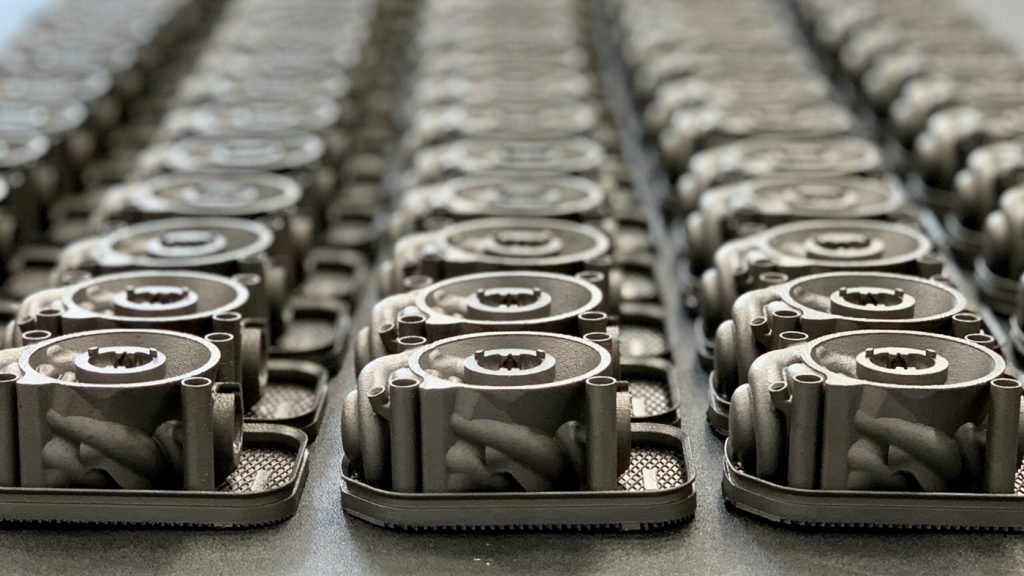
Understanding AM’s potential was one thing; deciding what to make with it was another. Domin entered an exploration phase, designing valves, pumps and actuators despite having no previous experience in hydraulics. Many prototypes were smaller, more efficient and unconventional, produced in collaboration with AM service providers and tested extensively.
Simulation tools guided development, but the team recognised that automated topology optimisation was still limited at that stage – so much depended on engineering judgement. As the work progressed, Domin realised that the real gains came not from redesigning every component for AM, but from focusing on areas such as internal flow where the technology delivered the greatest impact. Conventional manufacturing methods were kept wherever they proved more cost-effective.
Domin also avoided reliance on off-the-shelf solutions. Driven by the belief that cost was king and innovation was essential, the company set about designing and producing almost everything in-house.
Transitioning from exploration to a market-ready product required a clear vision. As Pont put it: “Use only a few hundred grams of printed metal in a device that delivers thousands of pounds in value.” With machine and powder costs still high, profitability depended on minimising the quantity of built material. “We could genuinely make a profit on a product that contains AM parts if it’s only a few hundred grams of metal, and that led to this,” Pont recalled, referencing the compact S6 Pro servo valve launched in 2019.
The S6 Pro contains just three AM parts that are integrated into a conventionally manufactured assembly. The additively manufactured elements enabled complex internal flow paths, unlocking levels of performance that had previously been out of reach.
At the core of Domin’s technological innovation – and fundamental to all of its servo valves – is the matched spool-manifold pairing. The manufacturing process begins with a specialised honing system, the sole non-automated stage in the production line, dedicated to producing manifold bores with sub-micron tolerances. Each bore is subsequently measured using a proprietary mapping rig, after which the corresponding spool’s control edges are ground to within 0.1 µm. This rigorous approach ensures the repeatable hydraulic performance that underpins the reliability and commercial value of Domin’s products.
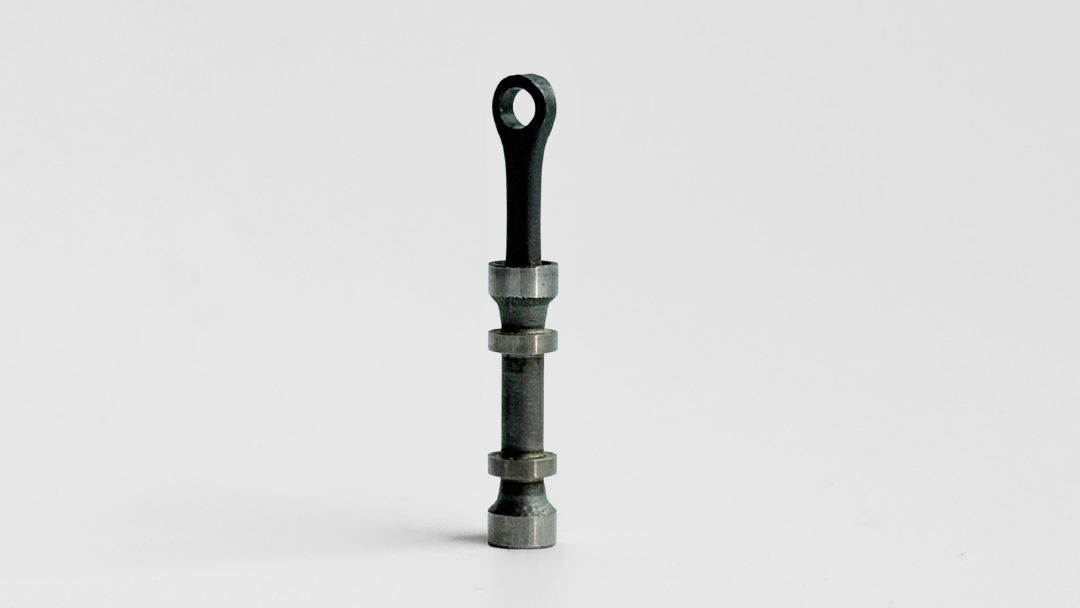
A further notable advancement is the incorporation of an integrated flexure design within the additively manufactured spools (Fig. 5). While specific details remain proprietary, the resulting component leverages the unique advantages of Additive Manufacturing in enabling geometries and functionalities that extend beyond the limits of traditional engineering techniques.
Building a product family
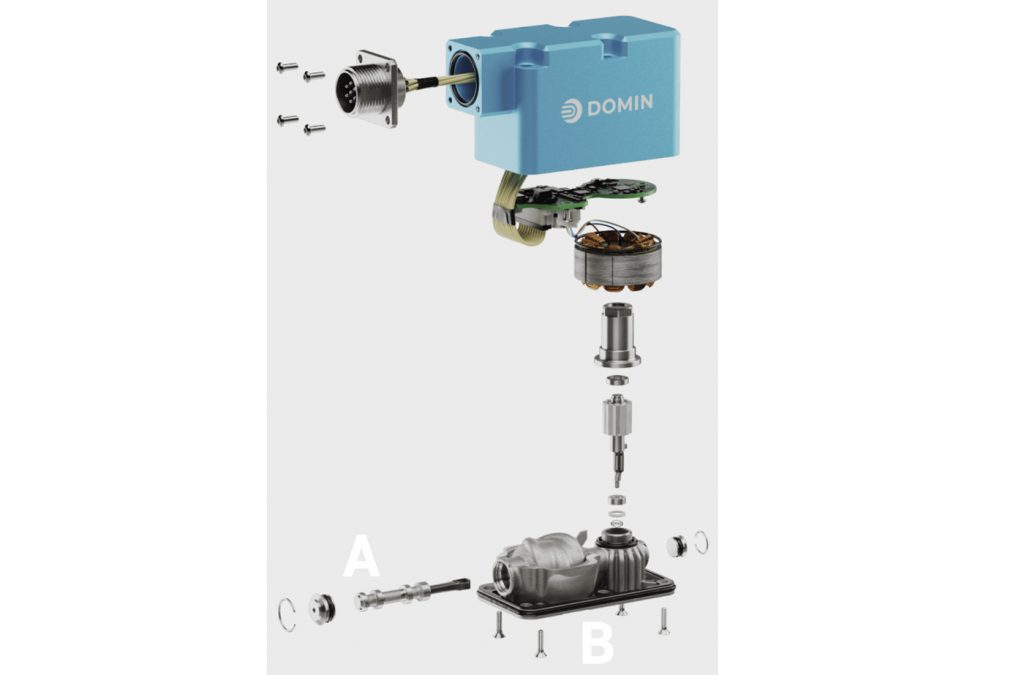
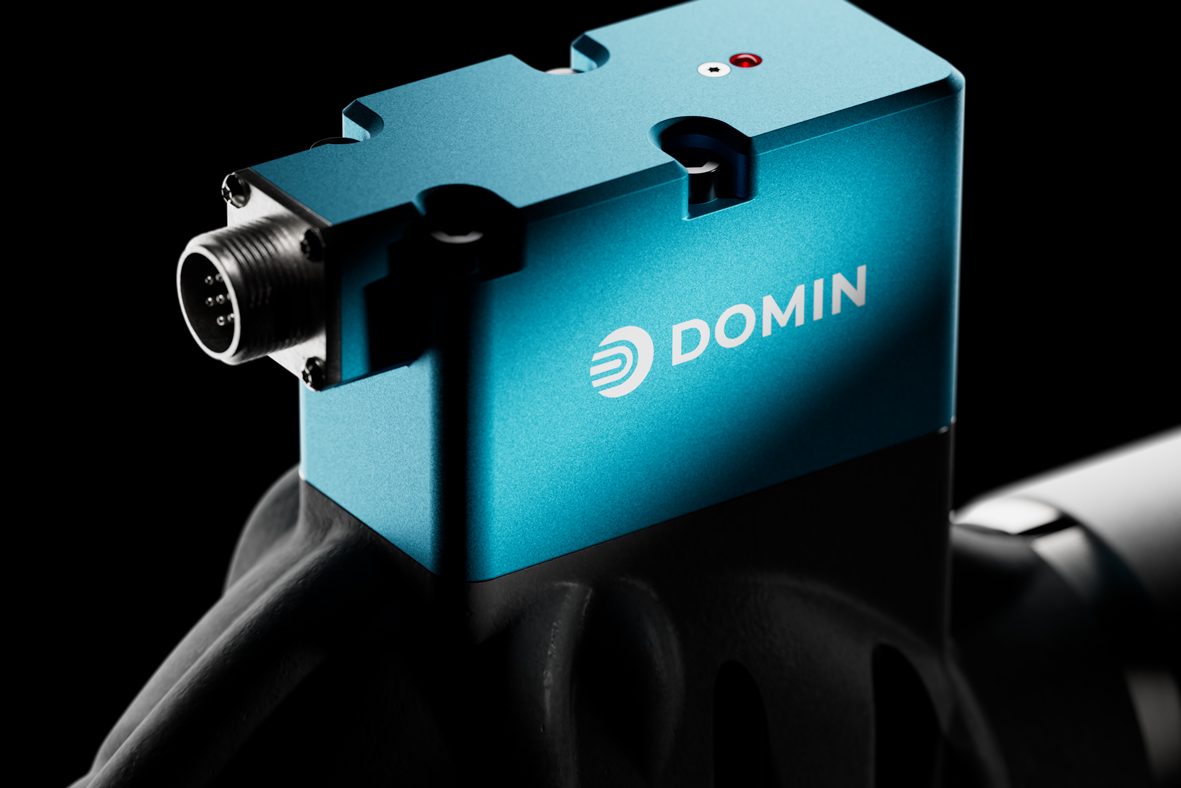
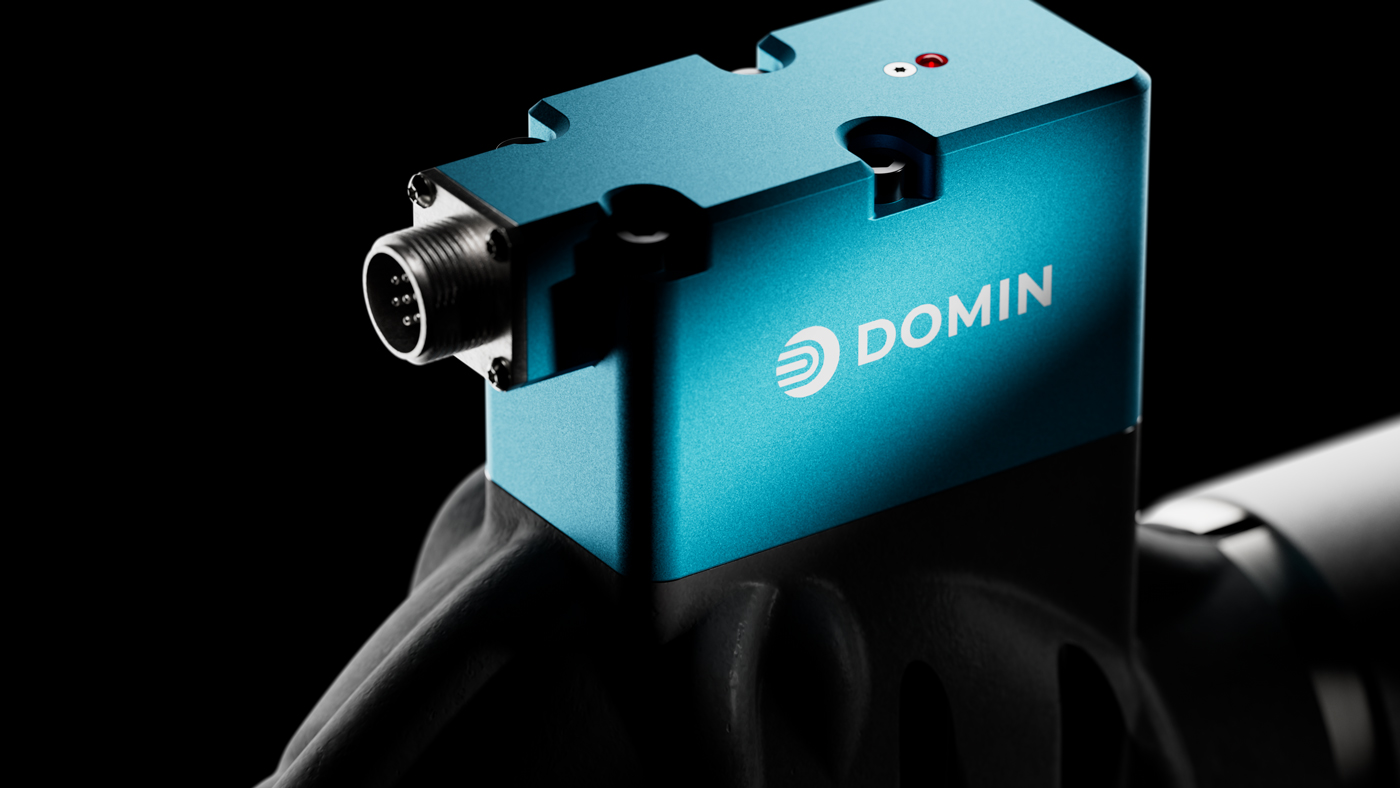
The S6 Pro was the foundation of a family of valves designed to combine compactness, efficiency and manufacturability. Its distinctive blue anodised casing has since become a hallmark of Domin’s products. The smaller S4 Pro integrated two AM parts into an even more compact package, while the larger S10, also with two AM components, offered increased capacity without compromising efficiency – and remained noticeably lighter than conventionally manufactured equivalents of similar scale.
All three models reflected the same guiding principle: AM should only be applied where it delivers measurable value. As Pont emphasised, “If it doesn’t add value, then there’s a good chance we shouldn’t be using it at all.”

Customers adopted these products not because they incorporated AM, but because they solved demanding control problems in smaller, lighter packages and at competitive prices. AM was the enabler, not the selling point.
The company’s big break came in 2021, when a major order from a robotics customer tested Domin’s ability to build, test and support products at volume. Delivering on this contract marked a turning point. The company was no longer just a start-up selling early products, but a hydraulics manufacturer with a clear identity – using Additive Manufacturing as one of several production processes rather than its defining characteristic.
Establishing in-house AM production
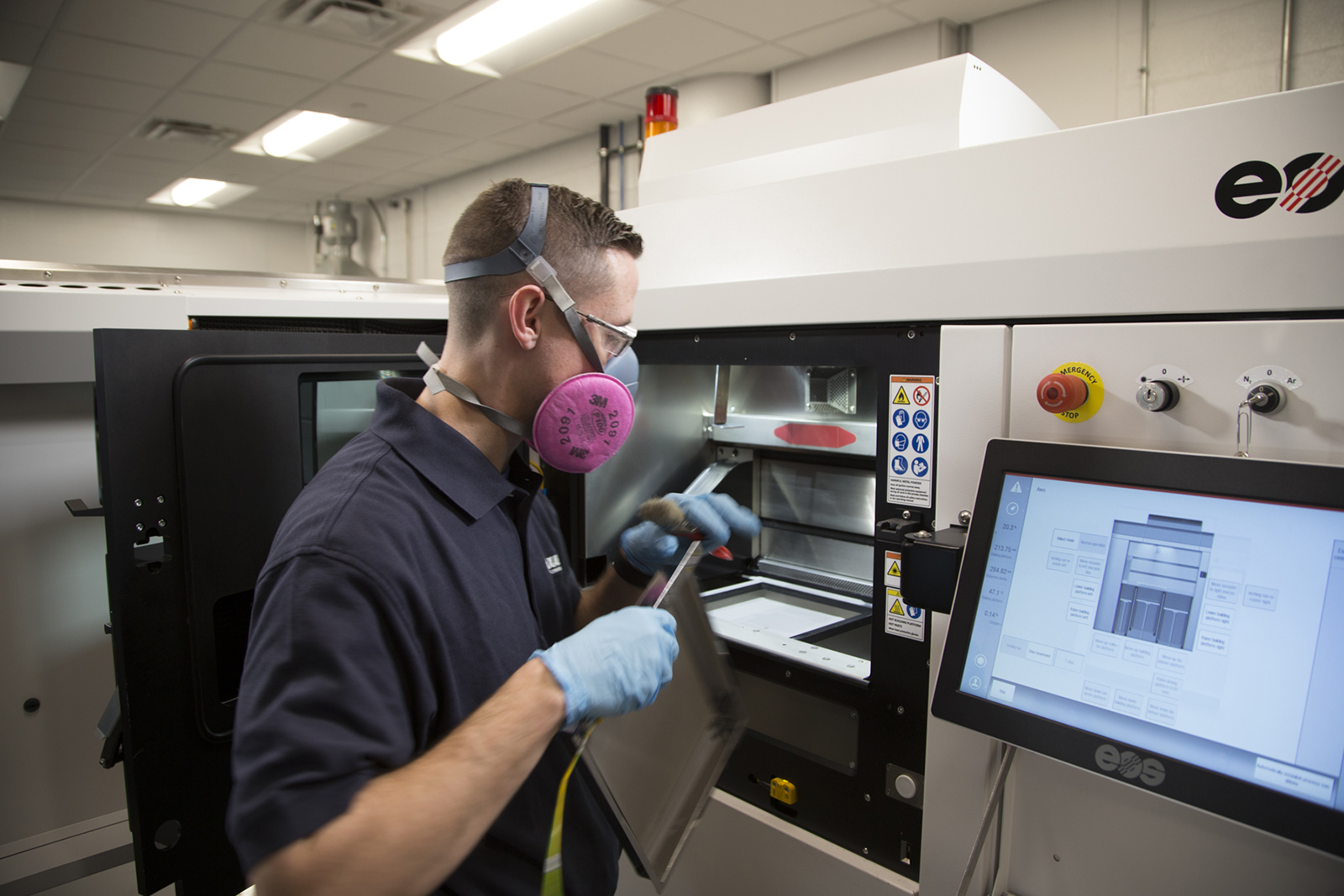
Domin’s later success in scaling production was built on foundations laid years earlier. In 2015, the company installed its first EOS M290 machine, bringing metal AM in-house at a time when most start-ups still relied entirely on service providers. Remarkably, that machine is still in daily use a decade later.
As we stood beside Domin’s first EOS M290, Pont remarked, “The machine runs super well, as you’d expect, as there are no real forces or loads on it, so there’s nothing to wear.” He continued, “This is something industry doesn’t really know yet because AM is so new. It hasn’t really learned the life cycle of equipment. But yes, it works well and we’re using it seven days a week.”
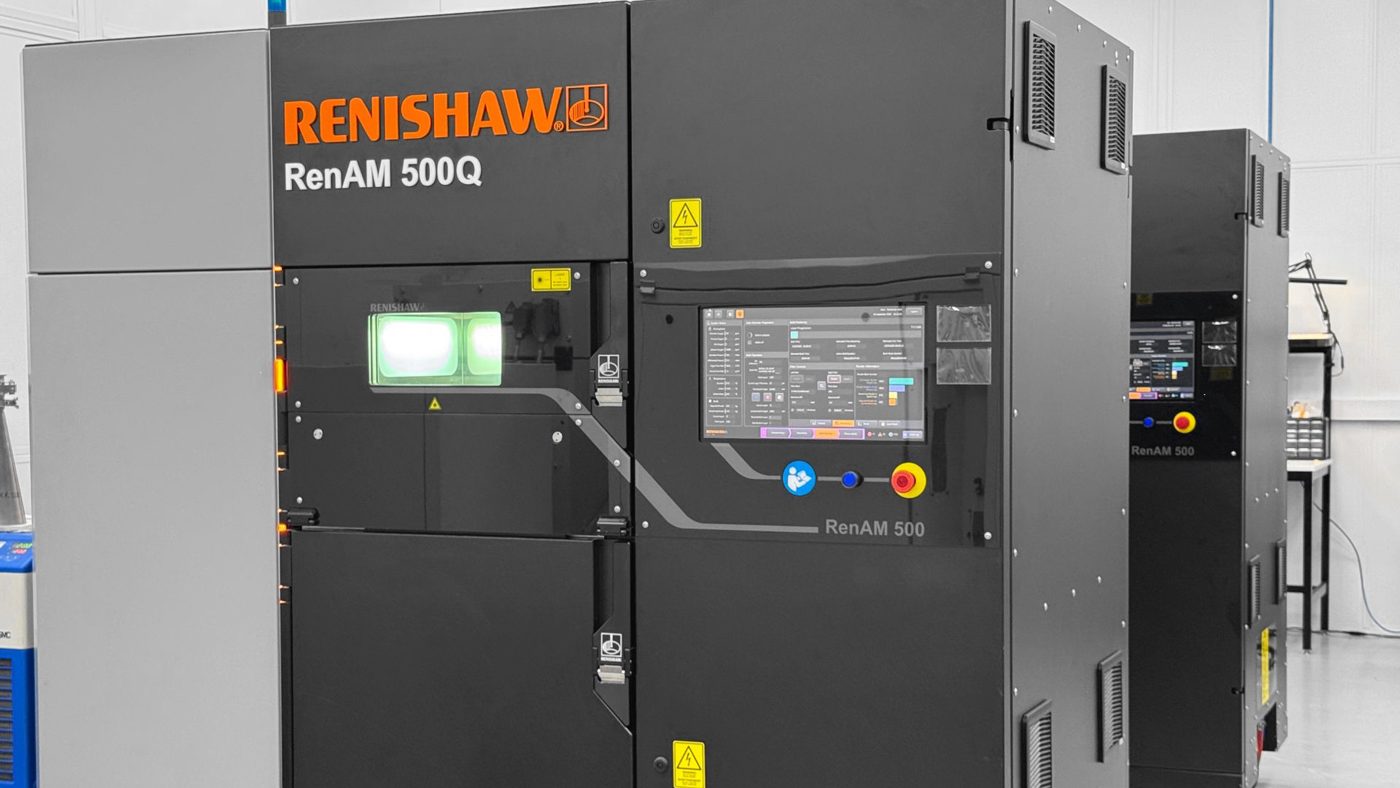
This long service life challenges assumptions that AM equipment quickly becomes obsolete. For Domin, it proved that a modest investment could underpin sustainable, long-term production.
With demand rising, the company expanded capacity, acquiring Renishaw RenAM 500Q machines, including one equipped with Tempus Technology, which accelerates build speed by allowing the laser to work even while the next powder layer is being spread. These machines now run around the clock, with one day a week reserved for R&D, ensuring new product development continues alongside full-scale manufacturing.
Standardising materials and processes
Domin builds exclusively in maraging steel (M300), but without relying on a single supplier. The company has demonstrated that it can work with any source of M300 powder without changing process parameters – a result that directly challenges another of metal AM’s longest-standing assumptions: that every machine-powder pairing requires a unique parameter set. Powder is recycled indefinitely, topped up with virgin feedstock and controlled through sieving, in-process checks and acceptance testing. The result is a stable, repeatable blend.
Perhaps most striking is Domin’s consistency across AM machines from different brands. The company can build the same set of components on an EOS M290 one day and a RenAM 500Q the next, with no detectable performance differences in the finished products. Tens of thousands of AM parts have been produced in this way and shipped to customers worldwide.
For years, engineers have debated whether it was even possible to achieve this level of machine-to-machine consistency. Standards bodies are often stalled over how to prove equivalence or manage risk. Domin has shown that, outside regulated sectors such as aerospace or medical, the industry does not need to wait. It can scale with confidence today.

Streamlining finishing for efficiency
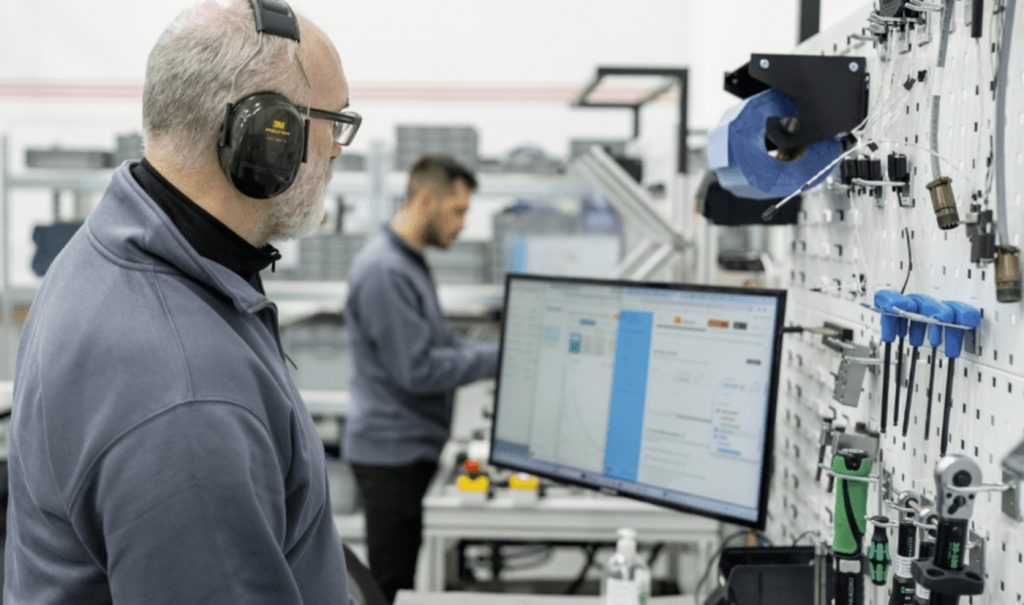
Post-processing and finishing are kept deliberately simple. After in-house heat treatment to a hardness of 52-54 HRC, only steps that add value are performed. Trials confirmed that polishing or sandblasting had no effect on performance, so those operations were eliminated. Internal flow paths are often left as-built, where surface roughness can even improve efficiency.
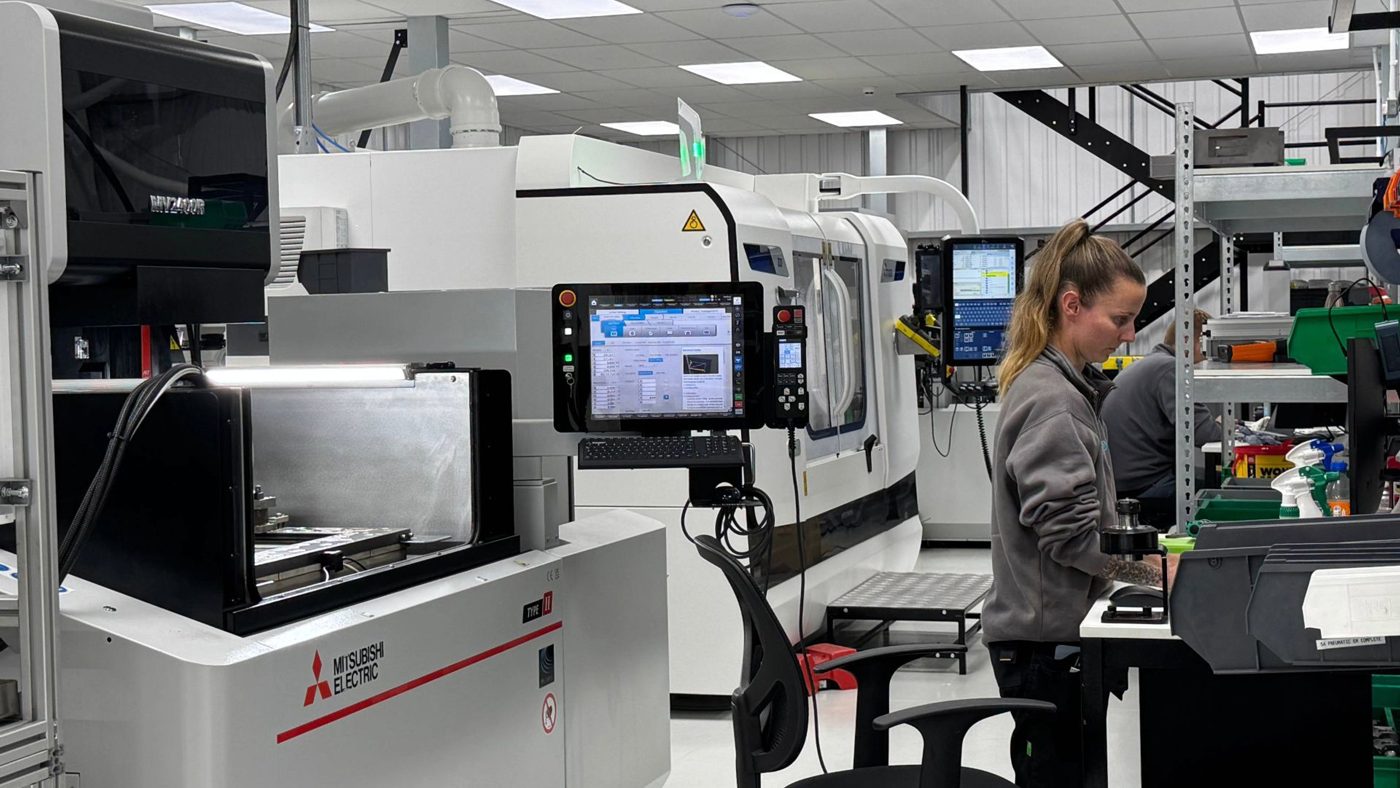
Where machining is required, Domin follows a clear philosophy that Pont summarises as “complexity in the printed, simplicity in the cuts.” Most operations are therefore limited to straight cuts along flats and bores, enabling efficient three axis milling and turning. During the tour, Pont held up a manifold from the S6 Pro to illustrate the principle: “What we can see here is a whole host of complexity in the AM component. But when we look at what gets cut within it, it’s flat lines and circles.”
Parts are released from the build plates using an automated bandsaw and then grouped for machining so both sides can be finished with minimal handling. Throughput is maximised, and manual steps are minimised.
Domin integrates these AM parts seamlessly into its wider production workflow. Products are assembled, calibrated, function-tested and shipped – with around 90% of output heading overseas. Even here, the company’s self-sufficiency stands out: it designs and builds its own test rigs and manufactures its own motors, maintaining tight control over quality and cost.
Domin servo valves in the 2024 America’s Cup
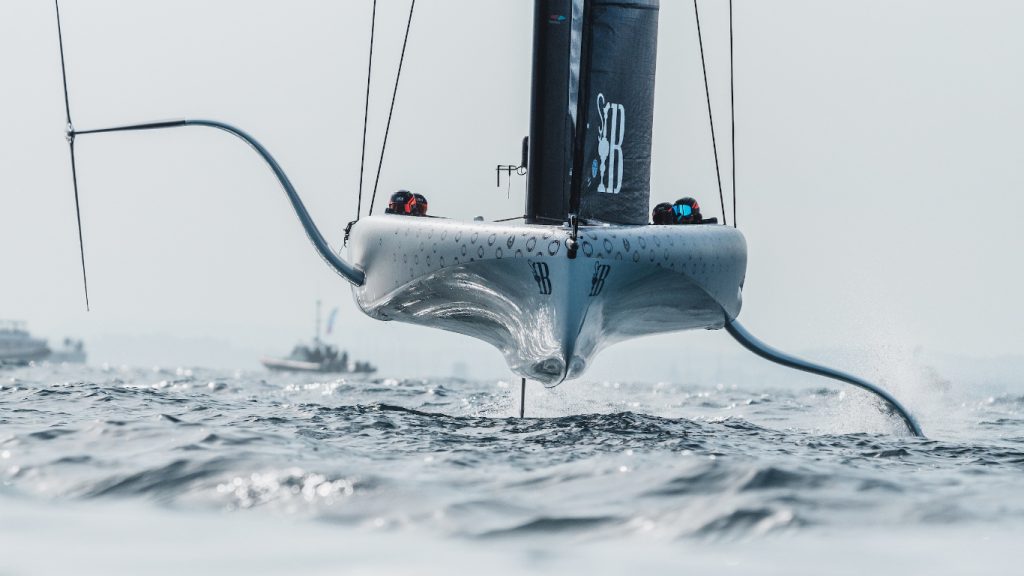
INEOS Britannia, one of six teams that competed in the 2024 America’s Cup, used Domin’s high-performance servo valves to optimise control systems on board its race boat. The valves operated reliably at very high pressure while minimising leakage, enabling weight reduction and efficiency gains that contributed to reduced aerodynamic drag and improved overall performance.
Marcus Pont, CEO, commented at the time: “We are delighted to be working with INEOS Britannia, a team renowned for their excellence and commitment to pushing the boundaries of sailing technology. By supplying them with our high-performance servo valves, we aim to contribute to their pursuit of victory in the America’s Cup.” Sir Ben Ainslie, Team Principal and Skipper, added: “In the world of competitive sailing, every detail counts. Domin’s servo valves offer the precision, responsiveness and reliability required to optimise the control systems of our vessel.”
The partnership also demonstrated Domin’s responsive, customer-focused approach: from supplying replacement valves at short notice to providing data analysis and technical support, the company worked closely with the team to maximise preparation time on the water [1].
Although INEOS Britannia did not win the 2024 America’s Cup, the campaign marked important milestones for Britain: the first British team in sixty years to qualify for the Cup Match and the first in ninety years to score points [2].
Scaling as a manufacturer

By 2019, Domin was still balancing research with early product sales. External investment that year allowed the move into its first dedicated manufacturing units in Pucklechurch, marking the transition from outsourced R&D to fledgling production.
The following year brought disruption as COVID-19 slowed progress, but recovery came quickly. A major robotics order in 2021 tested Domin’s ability to deliver at scale, and the company rose to the challenge.
Since then, output and revenue have doubled each year. High-profile customers, such as the INEOS America’s Cup sailing team, have added global visibility. In the current year, Pont expects between 10,000 and 20,000 AM components to be installed and shipped, with a target of 50,000 next year.
Growth has been matched by investment in capability. Processes have been refined wherever data suggested efficiency gains, always with the aim of reducing costs. Today, Domin’s workflow spans Additive Manufacturing, heat treatment, machining, assembly, and testing, forming a near-continuous process.
Headcount has grown from twenty to well over ninety, with early hires moving into senior roles. In 2020, Simon Jones joined as CTO, professionalising product development and ensuring innovation could scale systematically. Jones was previously Technical Director at HiETA Technologies Ltd, and before that an engineer at Rolls-Royce.
Domin also established a visible presence in central Bristol, creating a headquarters that reflects its ambition and brand identity while its Pucklechurch units drive manufacturing.
Binder Jetting as an alternative to PBF-LB
All of Domin’s current AM parts are built using PBF-LB, which offers the density and mechanical properties needed for high-pressure, long-life hydraulics. However, the company has never regarded PBF-LB as the only solution.
Binder Jetting has also been evaluated, through collaboration with HP Additive Manufacturing using the MetalJet platform. For lower-pressure devices, Pont is confident that Binder Jetting will make economic sense, provided design rules for shrinkage and sintering are managed carefully. It is a pragmatic approach: use the right process for the job, and change tools when the requirements change.
Automotive: AM in next-generation active systems

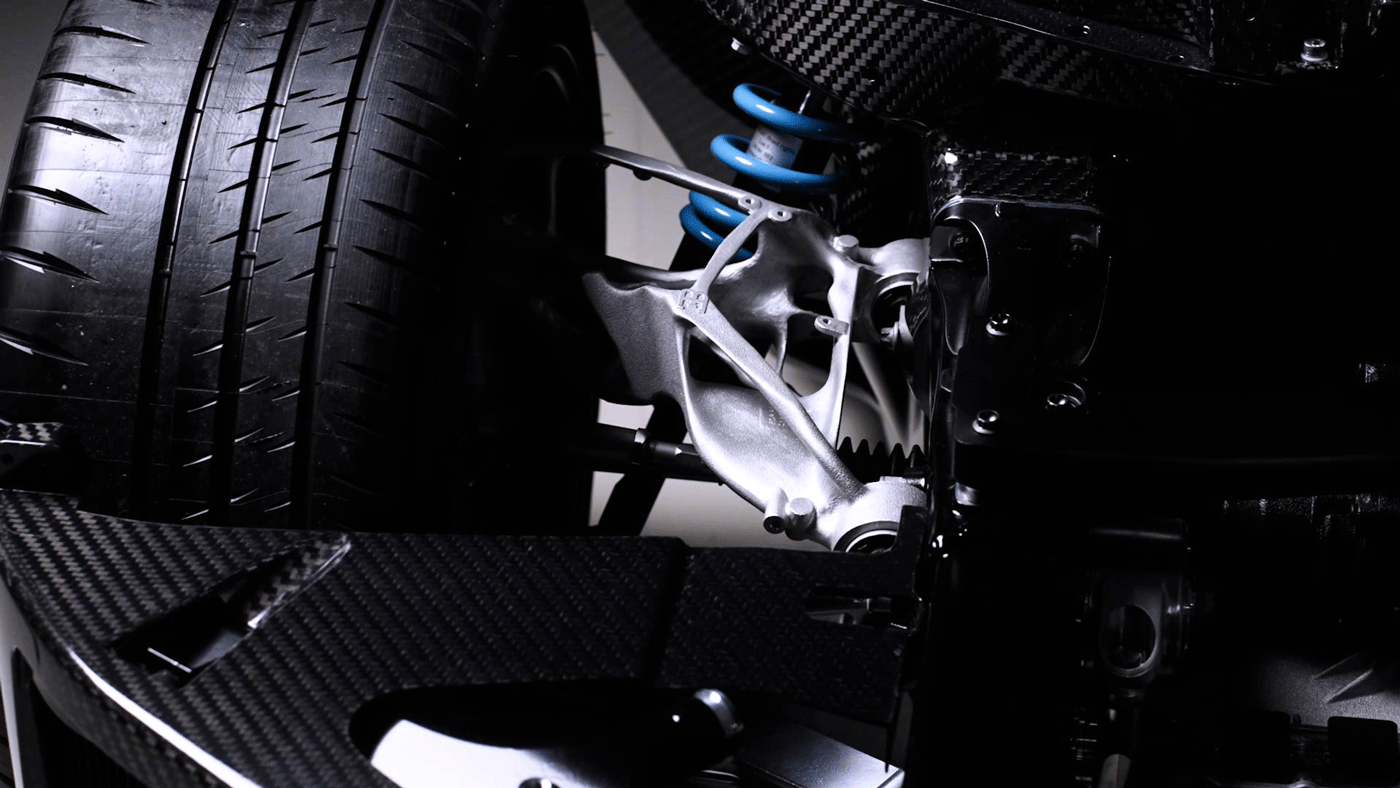
Domin’s ambitions reach beyond industrial applications and into automotive. Two of its factory units house vehicles on which engineers are developing an integrated next-generation active suspension system in collaboration with one of the world’s leading automotive brands. Domin’s design places a self-contained module at each corner of the vehicle. Each unit combines a compact hydraulic manifold, a multi-valve spool, an electric motor-driven pump and nitrogen gas springs.
Lead engineer Matt Allanson explained, “It was all built around the central manifold, which is additively manufactured in-house with complex internal geometries. Interacting through that manifold is the spool valve, which is very similar to what we have in production with our servo valves.” This packaging efficiency – enabled by metal Additive Manufacturing – makes it possible to integrate the system within the space of a conventional suspension assembly.

Already in road testing, early applications are expected in performance and luxury electric vehicles. However, the same technology could also enhance off-road platforms, with longer-term ambitions to scale it into mainstream vehicles.
With automotive markets experiencing rapid transformation, such innovations that further refine handling and comfort will become defining features. By applying AM with a disciplined focus on customer value, Domin is positioning itself to challenge convention and shape the future of vehicle dynamics.
Designing for efficiency and sustainability
Domin’s mission to transform hydraulics extends to environmental impact. Traditional hydraulic systems are notoriously inefficient, losing energy through leakage, friction and pressure drops. Domin addresses these issues at the design level: optimising internal flow paths, reducing sealing surfaces, and minimising unnecessary mass movement. The result is lower energy loss and higher system efficiency.
AM further reduces waste by placing material only where required, eliminating excess stock removal. Part consolidation cuts out fasteners, seals and joints, reducing both material use and assembly effort. With powder recycling and minimal post-processing, the carbon footprint of manufacturing is also reduced.
As Pont puts it: “We want to make things that last longer, do more and use less in doing so.” By combining AM with advanced digital control, Domin delivers systems that consume less energy in operation and help industries reduce emissions – with data to prove the impact.
The road ahead
For Domin, the challenge now is scale. Even the smallest competitors in hydraulics turn over billions, and the company knows it must grow from tens to hundreds of employees, and eventually into thousands, to meet its ambitions.
The strategy remains clear. New processes and alloys will be adopted only when they add value. New machines will be brought in only if they make parts better or at a lower cost. Binder Jetting may find a role in lower-pressure devices; other steels may be introduced once fatigue and corrosion performance are proven.
As Pont frames it, Domin has no interest in being an ‘AM company.’ Instead, it is a manufacturer that uses AM when – and only when – it improves the product for the customer. That pragmatic stance has turned promise into production and laid the foundations for broader change in hydraulics, automotive, and beyond.
Domin’s story shows that Additive Manufacturing does not need to be disruptive in headline-grabbing ways to matter. Its real impact comes when it becomes boring in the best possible way – embedded, proven, and invisible to the customer, but essential to performance and value.
Contact
Domin
33 Colston Ave,
Bristol, UK, BS1 4UA
[email protected]
www.domin.com
Author
Martin McMahon
Technical Consultant, Metal AM magazine, and founder of M A M Solutions
[email protected]
References
[1] Domin, ‘Improving Performance in Partnership with INEOS Britannia’, Available at: https://domin.com/news/domin-servo-valves-for-ineos-britannia/
[2] INEOS Britannia, ‘About’, Available at: https://www.ineos-britannia.com/about/
LAST MONTH’S MOST-READ ARTICLES