Freemelt joins Proxima Fusion’s Alpha Alliance
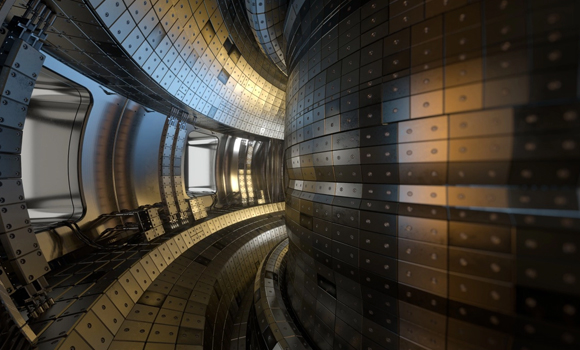
Freemelt AB, based in Mölndal, Sweden, has signed a Memorandum of Understanding (MoU) with Proxima Fusion GmbH, a Germany-based fusion technology company developing next-generation stellarators for commercial fusion energy. Under the agreement, Freemelt joins the Alpha Alliance, a collaboration of industrial companies and research institutes supporting the development of the Alpha stellarator demonstrator.
A stellarator is a device that uses external magnets to confine hot plasma in a doughnut shape for nuclear fusion. According to Proxima Fusion, the Alpha Alliance programme aims to demonstrate net energy production from a stellarator capable of steady-state operation, representing a key milestone on the path towards commercial fusion power.
Freemelt will contribute its expertise in Electron Beam Powder Bed Fusion (PBF-EB) Additive Manufacturing and the manufacture of tungsten components. Initial work will focus on the design, manufacture and validation of plasma-facing components, including parts for the divertor and first wall of the demonstrator.
“Fusion is a strategic focus area for Freemelt, and we are pleased to join the Alpha Alliance together with Proxima Fusion and the other partners,” stated Daniel Gidlund, Chief Executive Officer of Freemelt. “This collaboration further validates Freemelt’s position within the fusion ecosystem and provides an opportunity to contribute our expertise in tungsten manufacturing to one of Europe’s most ambitious fusion programmes.”
Lucio Milanese, co-founder and Chief External Affairs Officer at Proxima Fusion, added, “We are pleased to welcome Freemelt to the Alpha Alliance. Freemelt’s expertise in Additive Manufacturing and tungsten components will be an important contribution to the development of Alpha and our shared ambition to accelerate the path towards commercial fusion energy.”
The MoU establishes a framework for cooperation, with the parties intending to conclude project-specific agreements covering future development work and component deliveries. The partnership is expected to progress through successive phases, including design studies, prototyping, testing and future industrialisation activities.