DISCMAM project validates integrated metal AM and repair workflows for defence
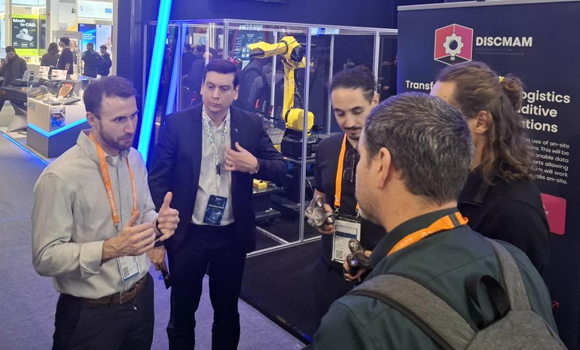
LORTEK, a technology centre headquartered in Ordizia, Spain, has shared a final DISCMAM project video at Formnext 2026 highlighting the latest developments and final achievements of the European Defence Fund-backed DISCMAM project. The video provides an overview of the technologies developed to enable metal Additive Manufacturing and repair closer to the point of need, supported by secure digital communication and remote expertise.
The three-year DISCMAM (Digital Supply Chain for On-Site Maintenance by Additive Manufacturing) project involves nine partners from five European countries and is scheduled to conclude on November 30, 2026. Its objective is to establish secure, remotely assisted manufacturing capabilities that could reduce the logistical challenges associated with maintaining defence equipment in remote or resource-limited environments.

The video highlights the integration and reported validation of two complementary metal Additive Manufacturing technologies: Laser Beam Powder Bed Fusion (PBF-LB) for spare parts production and wire-fed Directed Energy Deposition (DED) for component repair.
Using representative maintenance scenarios developed with the Belgian Ministry of Defence, the consortium developed a cybersecure digital workflow connecting remote technical expertise with on-site manufacturing, repair and quality assessment.
Among the developments presented are semi-automated 3D scanning and geometry recognition tools designed to identify damaged or missing features on components. These are combined with digital tools for generating, simulating and optimising repair toolpaths, reducing the manual intervention required to prepare and execute repair operations.
The video also highlights the development of predictive process models, Digital Twins and sensor-based monitoring systems. Manufacturing data can be used to support process supervision, digital quality assessment and decisions concerning component acceptance. Further developments include secure data exchange and frameworks for managing intellectual property and access to digital part information.

According to the consortium, these technologies have now been integrated and validated in representative environments for both manufacturing and repair applications.
The DED repair workflow was demonstrated at LORTEK’s facilities, integrating scanning, digital process planning, repair execution and remote monitoring. Previous demonstrations included the repair of a Unimog joint shaft using LORTEK’s CIRCLE multi-robot cell and ADAXIS’s AdaOne software platform.
For PBF-LB, the integrated solution was demonstrated using Fieldmade’s portable NOMAD03 machine, incorporating secure data exchange, remote support and data-driven quality assurance to support the production of spare parts closer to where they are required.
The consortium believes these developments could contribute to faster maintenance operations, reduced spare parts inventories and logistics costs, and greater operational readiness. While the video confirms that integrated demonstrations have been completed, it does not provide quantitative performance data or detailed qualification results.
The DISCMAM final project video can be viewed here.