Beyond the ‘digital warehouse’: What’s really driving the Additive Manufacturing of spare parts in 2025
The notion of a digital warehouse encapsulates the potential of cloud-based digital twins, produced locally and on demand by Additive Manufacturing. This approach promises increased efficiency, sustainability, and resilience against trade barriers and logistical disruptions. In the Winter 2021 edition of Metal AM, an initial survey established a baseline of practice in digital spare parts. In this article, Joseph Kowen revisits that foundation, analysing subsequent developments, persistent challenges, and the evolving industrial and geopolitical factors influencing the adoption of additively manufactured spare parts. [First published in Metal AM Vol. 11 No. 3, Autumn 2025 | 25 minute read | View on Issuu | Download PDF]

The term ‘digital warehouse’ is a catchy phrase that conjures the appealing notion of digital twins residing in the cloud, manufactured only when needed. The idea excites the imagination as both efficient and sustainable. Local on-demand production is immune from tariffs and supply chain disruptions, ideas currently much in focus.
In the Winter 2021 edition of Metal AM, we examined the then-current thinking and practice of digital parts. We looked at who was doing what, and the challenge of making the intoxicating promise of the digital inventory concept a reality. It’s time for an update. Our previous article provided a baseline and map of the factors and considerations for spare parts use. It showed cases where additively manufactured spare parts had been successfully used in real-life scenarios. The article also covered companies that specialised in helping clients decide which parts made sense, and in many cases accompanied them through the lengthy and expensive qualification process.
Definitions
When we speak about spare parts in AM, there has been a tendency to conflate two separate but connected topics, so it is worth pausing a moment to elaborate. The broader case of AM spare parts relates to the topic of how the technology will impact transport, logistics, and our industrial system. The question is forward-looking and is designed to examine how AM can offer innovative, sustainable, and efficient strategies for applying a (relatively) new digital manufacturing process to address challenges that traditional supply chain models cannot solve.
Some thinking on this general topic is beginning to percolate. Several start-up companies have started to dabble in new models for providing spare parts in various applications. One example is Replique. Another company in this space is 3D Spark. A definition of the various models that could serve as future AM-driven logistic solutions has been researched by RISE Research Institutes of Sweden, which published a white paper setting out a framework of scenarios for calculating the business value of distributed production, in this case specifically in the automotive industry. The main thrust of this work is how to include value that might ordinarily be missed when thinking about distributed manufacturing compared to conventional and, in general, centralised manufacturing.
A more applied use of the term additively manufactured spare parts is in the context of evaluating the supply of replacement parts for equipment, where the primary objective is to avoid equipment downtime. Common to both topics is a methodology that takes into account all of the factors that could help make the case for AM when compared to traditional solutions.
Opportunity
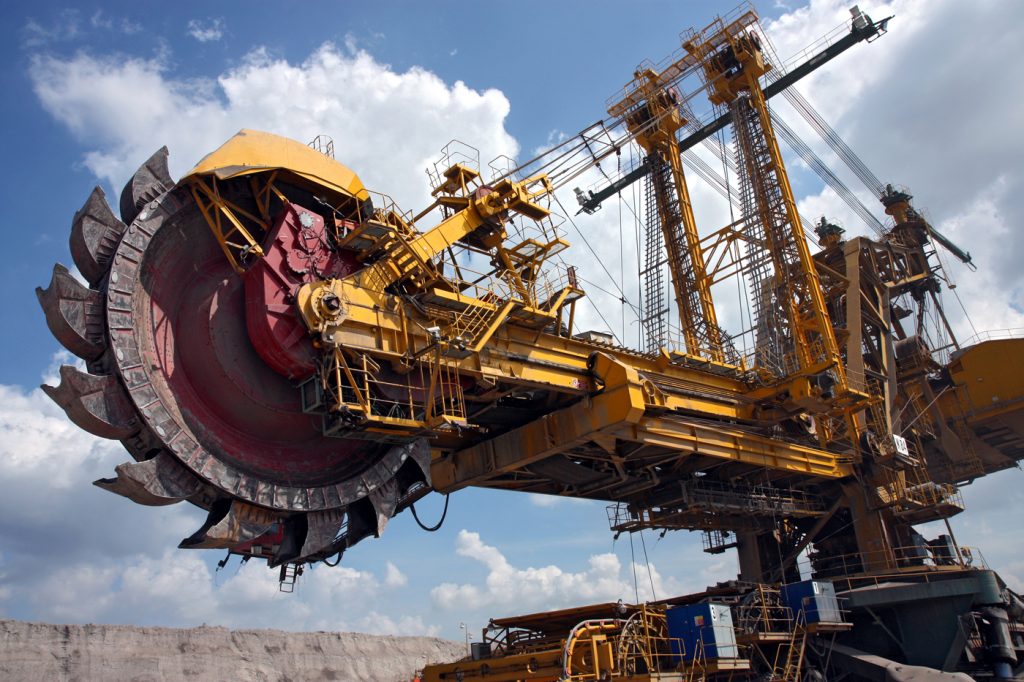
How big is the opportunity? In 2021, we found few studies and sources on the topic that authoritatively gave estimates as to how big the market is. Investors and analysts like to quantify the ‘total addressable market’ (TAM) for a particular product or technology. At the time, we quoted work by French consultancy Theano Advisors that broke down the market for spare parts and came up with a figure for the AM spares market of $173 billion, including both metal and polymer parts. The most relevant of the markets surveyed, using figures for 2018, were the petrochemical ($26.9 billion), mining ($10.7 billion), rail ($7 billion) and shipping ($5.9 billion) industries. Together, this totals $50.5 billion.
As far as could be ascertained by research for this article, no new studies have come up with better or updated figures for the size of the market. Suffice it to say that the numbers are large, and if only a small percentage of this TAM were to be realised, additively manufactured spare parts would constitute a substantial segment within the total size of the AM market, which Wohlers Report 2025 estimated to be $21.9 billion [1]. One could reasonably agree that a new or updated estimate of the spares parts TAM is not a significant figure for our purposes. The size of the market is not what is driving the market for AM spare parts. One could quite reasonably and simply characterise the market as ‘large enough.’
In that case, if the overall market number is not what is attracting entrants into the AM spare parts market, then what are the drivers that are indeed making it increasingly attractive?

Friction
Firstly, the bad news. The most significant source of friction that operates against the use of AM is part qualification, which is a bottleneck through which on-demand spares manufacture must pass. Qualification is, in and of itself, a topic worthy of full and independent analysis and discussion. Efforts are being made to speed up and simplify the qualification process, for example by developing rules for qualifying part families where the commonality between related parts is sufficient to streamline some aspects of qualification.
Being that it is long and expensive, it therefore exerts pressure to select only those parts where the effort of qualification can be applied to spare parts where there is sufficient demand to spread the cost over the total demand for that part and over time. This hurdle is a severe limiting factor inhibiting the spread of the on-demand spare parts model. It is worth mentioning that insofar as spare parts pertain to newer products designed in the digital era, the cost of qualification will be lower. At a minimum, the cost of reverse engineering parts for which digital designs do not exist would be saved.
Even aside from the issue of whether a new manufacturing technology could replace an older technology making the same part, most parts that were designed in concept for manufacture using conventional methods will not always be advantageous to additively manufacture. It is a well-known fact that simply taking a digital design file and building it ‘as is’ will generally not be viable as an additively manufactured part. Improving a design to take advantage of the benefits of AM, such as making it lighter, is a distinct topic worthy of separate attention.
So, for the purposes of this update, we can agree that qualification is a large issue – in fact, it’s the proverbial elephant – unavoidable in all but new scenarios in which parts and business models have been designed in advance to be served by AM. The technical or regulatory aspects of the qualification process are best examined elsewhere and in greater depth.

Trends
Several global trends have emerged that are feeding into the increased potential for digital spare parts.
Sustainability
If four years ago sustainability was a nascent issue that foretold the need for greater consideration of environmental issues in making manufacturing choices, especially in AM, today the issue is relatively more mature in the thinking of many organisations. In the AM industry, the Additive Manufacturing Green Trade Association (AMGTA) has developed a broader presence and plays a vital role in sensitising the segment to the issue of sustainability.
A big part of the work of the AMGTA relates to quantifying the environmental impact of AM processes in and of themselves, and spare parts management is coming more into focus in the debate regarding how to accurately measure the advantages of AM. The organisation was founded in late 2019 and was still young when we previously wrote about spare parts. Its membership and footprint have grown considerably in the past few years.
Changing geopolitical environment
A second trend that must surely play into the discussion on spare parts is a changing geopolitical environment. Recent developments have set in motion discussions on several sub-trends that could be grouped under the geopolitical header.
Strategic self-reliance
Countries are increasingly reviewing their supply chains for both materials and parts and are resisting being overly dependent upon the supply of spare parts from adversarial sources. For strategic reasons, countries want to be as independent as makes sense given their size and location. At a minimum, countries want to be able to source strategic parts and materials from countries with whom they are allied, such as within NATO. But even this has been thrown into question recently as the US begins to question its future in NATO.
The dragon in the room, of course, is China. It instituted export controls earlier in 2025 on some products, such that it is not assured that parts supplied from China today are guaranteed to be readily available in the future, were geopolitical relations to worsen. The highest profile case in point is rare earth minerals. An example closer to the AM community is titanium. China controls a disproportionate share (reportedly above 50%) of the titanium sponge sources worldwide [2].
Military spending
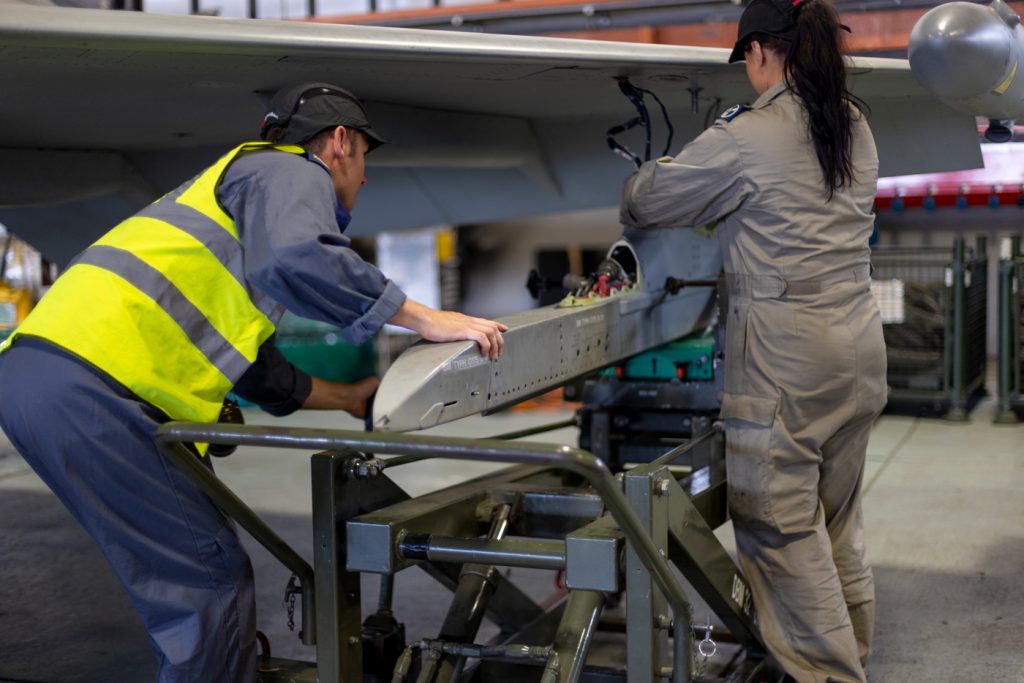
Defence budgets are on the rise. In June 2025, The Economist reported that the rich world is embarking on mass rearmament. NATO members have agreed to raise military spending to 3.5% of GDP. If this target is achieved by 2035, then NATO countries will be spending $800 billion more every year in real terms than they were before Russia invaded Ukraine in 2022 [3].
So, how does an increase in military spending spell success for AM spare parts? Every successful way to prolong the life of old systems delays the need to devote resources for new systems, which tend to be more expensive per unit of firepower. In common defence parlance, the uptime of military systems could be said to be high value for money. Keeping a thirty year old plane flying will be considerably cheaper than buying a new plane.

US tariffs
As if strategic concerns were not sufficient, in the case of the US, tariffs are an additional factor that is driving the US industry to explore local manufacture of metal parts in general, including spare parts. The tariff situation is relatively fluid as to the level of the tariffs, but the message has been clear: some level of tariffs is here for now. Fitch, an economic research and rating agency, estimates that the average US tariff rate on all imports has skyrocketed to 22% in 2025 from just 2.5% in 2024 [4]. The Yale Budget Lab estimates that even with adjustments for countries that have managed to sign new tariff agreements (at the time of writing, just fourteen countries), the current average effective tariff rate is 17.6% [5].
If we zoom in specifically to China, a major source of spare parts for a wide range of industries, the tariff has more than doubled in 2025 compared to 2024. So while from a purely economic perspective importing metal parts from China might still be cheaper in the immediate term than sourcing them in other countries, the uncertainty of the tariff level makes it a priority to seek other sources for these parts at home or closer to home. The strategic message is loud and clear.
A proxy to measure manufacturing capacity for metal parts is to look at foundry capacity. The European Foundry Federation estimates that 49% of global foundry capacity resides in China, while Europe (excluding Russia) and the US together account for only 20%. When juxtaposed with GDP figures for these regions, China is in an even more dominant position. IMF data estimates that China has only a 17% share of global nominal GDP, the US has 27%, and Europe accounts for 25% (including Russia). Translating these figures: If foundry capacity is a proxy for metal parts manufacturing, then Europe and the US suffer from a strategic deficit in their ability to make metal parts [6].
Accounting
A key driver for AM spare parts is economics. If high, costs might constitute a friction factor that slows or distorts the use of AM for spare parts. While the cost issue is by definition a drag on the growth of additively manufactured spare parts use, the salient question is by how much. The answer, it seems, depends on your perspective on how exactly we measure the cost of a spare part.
![Fig. 5 Nearly 50% of all foundry capacity is now located in China [6] (Courtesy European Foundry Federation)](http://www.metal-am.com/wp-content/uploads/sites/4/2025/12/f05-1-1024x634.jpg)
Financial accounting
From a financial accounting perspective, inventory costs are calculated according to accounting standards that follow accepted formulae that we use for measuring the performance of a business in a consistent, comparable and auditable way. A basic framework for finding the accounting cost of inventory would look something like this:
Total purchase costs
Raw materials and any tariffs
+
Conversion costs
Direct labour, machine depreciation, running costs and allocated overheads
+
Storage & related costs
Packaging, conditioning and quality maintenance
This very basic framework might differ according to the specific characteristics of the product in question, such as the ‘shelf’ life of the part, or put another way, the degradability of the product being stored for eventual use.
A deeper understanding of accounting for inventory is best left to accounting professionals. A more important strategic business question is what costs fail to be captured by the accountants, but which nonetheless consist of real costs that deserve broader consideration, and which play a meaningful role in answering the question: Does this or that part make sense to manufacture additively?
Management accounting
Distinct from financial accounting, this type of analysis falls within a field known as ‘management accounting’.
The purpose here is mainly to sensitise non-accounting professionals to factors in their thinking about AM feasibility that may have been ignored. If even one unrecognised or unappreciated factor gives pause to decision makers to reconsider their decision to move even one part to a digital inventory, then this article would have contributed modestly to a more efficient and more sustainable industry, and growth in one of the underappreciated areas of potential in AM.
Economics of on-demand spare parts

Economic or managerial accounting takes into account opportunity costs and hidden costs not easily captured by accounting statements. These would include:
Warehousing and storage costs
These may not be captured in full by accounting statements. For example, it is perfectly legitimate to assign a proportional share of the rental cost of storage space used to house spare parts to the actual part cost. Yet how many firms put this concept into practice, or instead simply assign these costs to general company and administrative expenses?
Insurance costs
Similarly, do companies assign the insurance costs of inventory to the inventory itself, or is the insurance cost simply rolled into a general insurance overhead cost that applies to the entire company at the general or overhead level? Larger companies might be able to separate these costs out by determining that a particular asset is dedicated to the storage of spare parts. Smaller companies might not be able to do so. A memory from a visit to a foundry in Australia comes to mind. An entire 30-metre-high building existed for the sole purpose of housing old patterns, some in an advanced state of disrepair, held for the sole purpose of being able to cast spare parts in the future.
Obsolescence and deterioration
Products fall out of fashion, or are replaced by newer and better products, and this increases the risk of holding old parts, where in an instant their value can be reduced to zero. In some spare parts scenarios, such as in oil and gas or rail, the age of the part is the very reason why AM might actually be preferred due to there being no digital data or no tooling or both. In other situations, inventory and risk management scenarios might be based on more traditional or operational considerations.

Financing costs
What is the cost of burying capital resources in inventories that do little or nothing to generate sales or profits? Holding inventory is, at a minimum, a post-sales strategy designed to maintain relationships with existing customers and bolster the company’s brand and reputation. Sales and maintenance personnel would optimally desire that more than the minimum numbers of each part be available everywhere at all times to keep customers happy. The financial management team’s job is to put manageable limits on a strategy that, if unrestricted, could pose an impossible burden on a business. Sometimes holding stock is a regulatory requirement. Minimising the amount of capital tied up in assets of this kind, is a defensive strategy that can improve profitability and enable the company to use its assets to grow in other ways.
Opportunity cost
This leads to another category of cost that should be taken into account when selecting a strategy of physical or virtual on demand inventory: the opportunity cost of alternatives. It is a factor that is very hard to quantify and is generally industry-dependent or application-driven. Whatever formula business strategists choose to apply to this category of cost, even if they are unwilling to admit that the cost is not a cash value and therefore cannot be managed or assessed in the traditional financial sense, the subject should nonetheless not be swept under the carpet and ignored.
Some case studies have begun to quantify traditional versus additive supply chains. A 2024 simulation study by the Department of Shipping, Trade, and Transport at the University of the Aegean examined a semi-open impeller case and concluded that integrating AM into the supply chain can yield cost and delivery-time advantages under the model’s assumptions [7].
What percentage should we use to put a value on the cost of inventory? The answer to that question would depend on the industry in question, the part, factors such as minimum order quantities and expected annual demand for that part, and cost of capital, among other parameters. For simplicity’s sake, let’s just say that the total cost of holding that part works out to be 20% per part. This means that if the direct manufacturing cost of an on-demand part is $100, then a traditionally manufactured spare part loaded with the hidden costs that we have outlined would have to cost less than $83.33 to be more viable.
Taking the lead in AM spare parts
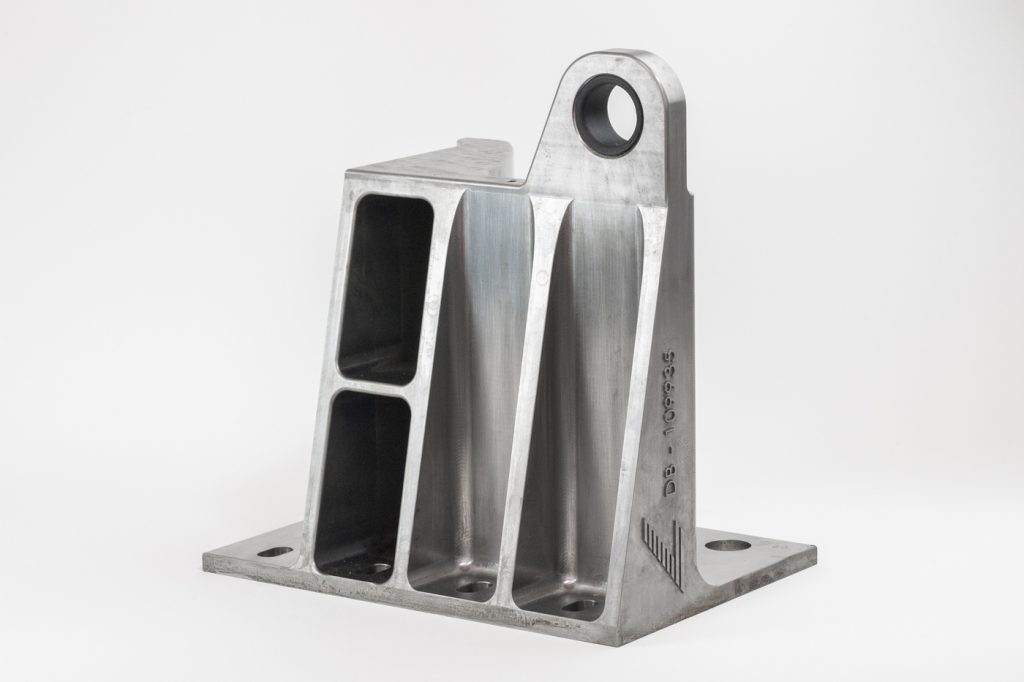
Deutsche Bahn (DB) has been a leading proponent of the use of AM to solve prickly spare parts supply chain issues. Its interest arose out of necessity. For a start, rolling stock lives on the tracks for a long time. In Germany, the company’s flagship intercity high-speed train service was developed in the 1980s. Its first model of high-speed trains (ICE 1) first ran in 1989 and entered service in February 1991. These first trains underwent refurbishment in 2005 and 2019 with the intention of ensuring the service of the equipment through 2030. To put this into perspective, DB operates equipment that is even older than that. The classic Intercity long distance trains began service in 1971.
Between 1989 and 1993, DB commissioned sixty ICE 1 trainsets. Fifty-eight of them are still in service today. Later models of the ICE series of trains also still operate at a high level of serviceability, demonstrating the efforts made by the company to keep its trains on the tracks. To keep all of its equipment running efficiently, DB currently holds spare parts in its warehouses valued at €1.8 billion [8]. The company adopted a strategy of ‘manufacturing on demand’, setting as a target a figure of 10% of what could be additively manufactured on demand.
The question is how such an ambitious goal can be achieved. DB began addressing the issue ten years ago. Stefanie Brickwede, Head of Additive Manufacturing at DB, describes three stages in the process. The first stage is collecting all the cases where spare parts are not available. The next stage is to do a top-down analysis by going through the spare parts listed in the company’s inventory management systems to see which parts are buildable. It can be complicated because often an assembly is listed as being unavailable because one part of the assembly is unavailable. The third stage is to push the railway equipment manufacturers or repairers to help DB additively manufacture the parts.

The economic impact of this work has been considerable. The company estimates, based on its internal assumptions, that since 2019, the AM spare parts programme has saved the company €20 billion. A key advantage is procurement savings since one is freed from the minimum-order quantity trap. AM offers alternatives and injects some reasonableness into a procurement environment where a supplier might not really be interested in making a needed part unless a huge premium is paid. Were it not for the potential availability of AM parts, a shrewd parts supplier is enticed to price the spare based not on the manufacturing cost of the part, taking into account tooling, set up costs and other overheads, but based upon how much can be saved from the avoidance of ‘standstill costs.’
At the heart of this number is the question: What are my losses for each day that a train or other equipment is unable to operate? This is an internal number and would differ based on the industry and the application. In the case of DB, it also includes regulatory factors such as penalties that DB might have to pay for their inability to provide working equipment to regional transport networks for which it is contracted to provide equipment. Some legacy spare parts for which tooling is required could take years to procure.
Brickwede also touches upon a common theme that is relevant to the feasibility of AM spare parts production: The measure of success depends upon who is being measured and what they are being measured on. Engineering teams may not analyse the world the way financial managers do. And even so, some of the economic values used in the calculation depend on the outlook of the manager making the judgment call. What is valuable for one manager might be less valuable for another. The important thing is to engage in a process that raises the assumptions and priorities for discussion and evaluation, and eventually decision making.
And of course, key to it all is that the parts must be qualified before they can be used to repair an operating train. This is the single biggest hurdle that needs to be overcome before DB can move from the identification stage to the implementation stage of a digital spares strategy.
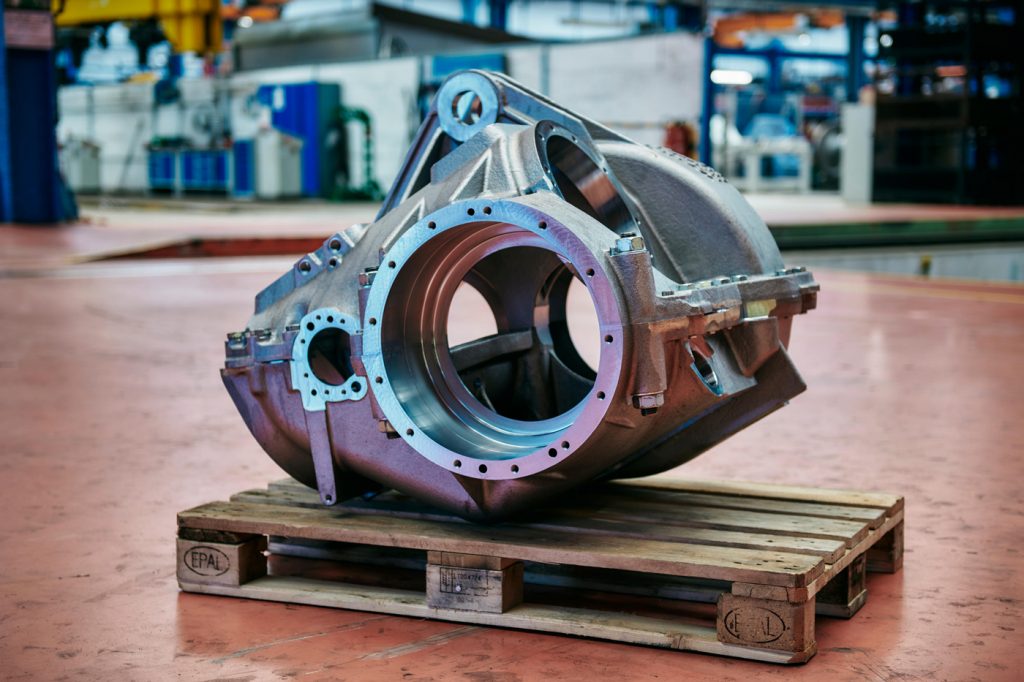
DB has started to look ahead to see what the future might look like for on-demand spare parts. With that in mind, the company now requires that, in principle, 10% of the parts in any new piece of equipment purchased by the company should be AM-ready. That does not include standard parts like nuts and screws. It refers to the kind of parts that inhabit the company’s warehouses for a long time, which means that it includes many metal parts. The idea of pre-designing a train with AM in mind, meaning that spare parts would be digitally available from the design stage, is taking root to some extent. Brickwede notes that Dutch railways, a much smaller company, has become active in requiring design for AM and a future spare parts supply chain to be taken into account from an early stage.
Brickwede reveals that DB is expanding the use of AM sand moulds as a tool to speed up the provision of metal spare parts. The key advantage is the avoidance of a large part of the qualification cost of the part. Since the actual part is made according to the same process that was used for the original part, the metallurgical issues that need to be qualified before PBF-LB parts can replace the legacy process are avoided.
It is important to note here that several companies specialise in this application: ExOne (recently acquired from Desktop Metal by Anzu, an investment firm) and Voxeljet, which just emerged from bankruptcy and received an investment from Anzu. Several Chinese companies also offer sand printing.
Sustainability as a driver for spare parts adoption
Zooming out from the more focused definition of spare parts as uptime improvement, it is worth touching upon some practical perspectives on the more general case of the role that spare parts planning plays in driving the feasibility of AM versus traditional manufacturing. If spare parts were not needed, a straight-up analysis of the feasibility of an AM part would, in many cases, result in the traditional part being preferred. That would limit the part’s advantage to other benefits of Additive Manufacturing, such as weight reduction, complex geometries not achievable with conventional manufacturing, and the elimination of assembly costs. The sustainability issue, which serves to broaden the comparison between traditional or AM parts to include externalities such as inventory and supply chain costs, is a valuable prism to examine the viability of AM more broadly stated.
Sherri Monroe, director of AMGTA, discerns a positive movement in the willingness of companies to broaden the definition of what should be included in the calculation of the true cost of parts. Industry is becoming more sensitive to the internalisation of broader supply chain and environmental issues in calculating the true cost of parts. This is good news for AM because an increasing number of borderline projects will cross the line into the feasibility column. Even so, it is hard to see this trend as being at a major inflection point. To start with, it still very much depends on who is doing the evaluation and from what perspective the problem is being addressed.
Financial managers will see the world differently from technical managers. Monroe recalls a company that was willing to supply spare parts at almost any cost, because the element most valued by the company in question was their commitment, made as a part of its sales process, to ensuring that spare parts would always be available. This policy led to dysfunctional situations where, say, a minimum order quantity of ten parts resulted in the use of one part and the scrapping of nine parts immediately. Perhaps that was good for the reputation and sales of that company, but it was certainly wasteful when viewed holistically.
Monroe believes that the spare parts issue and the broader sustainability calculation suffer from poor marketing, meaning that not enough is being done to communicate all costs associated with a part. She quotes companies as saying that calculating all costs, such as reduced time and inventories, is often not simple. She also believes that users are often reluctant to share their methodologies for calculating all costs, lest it provide their competitors with an insight into their operations and decision-making.
Monroe states that in the final analysis, part-for-part analysis that fails to properly account for all the costs will result in outcomes that favour the status quo over cost models that assign additional savings to on-demand production.
What have we learned?
There is growing awareness of the true value of Additive Manufacturing for spare parts production. Even so, better sharing of the methodologies for applying all costs to the part could improve the uptake of AM. Calculations are not always straightforward, but they are worth the effort. Only a fraction of the potential for AM spare parts is being addressed.
Geopolitical trends are fuelling a closer look at the use of on-demand spare parts manufacture. An increase in military spending will also drive demand to ensure that military systems’ uptime is maximised.
Downtime can be a decisive factor in deciding to adopt a digital spare part strategy for replacement parts. Minimising losses from inoperative equipment can dwarf the often high costs of designing, building and qualifying an AM part.
Looking to the future, on-demand spare parts production will become increasingly prevalent if spare parts and supply chain aspects are taken into account at the conceptualisation stage of a new business or a new business model.
Author
Joseph Kowen
Joseph is an industry analyst and consultant who has been involved in Additive Manufacturing since 1999. He is an Associate Consultant at Wohlers Associates, part of ASTM International’s AM Center of Excellence.
www.linkedin.com/in/joseph-kowen-a5129b3/
References
[1] ASTM, ‘Wohlers Report 2025 shows 9.1% AM industry growth’, Available at: https://www.astm.org/news/press-releases/wohlers-report-2025
[2] SMM, ‘Outlook on China’s Sponge Titanium Market: Export Growth & Competitive Landscape’, Available at: https://news.metal.com/newscontent/103410336/outlook-on-chinas-sponge-titanium-market-export-growth-competitive-landscapesmm-analysis
[3] The Economist, ‘How the defence bonanza will reshape the global economy’, Available at: https://www.economist.com/leaders/2025/06/26/how-the-defence-bonanza-will-reshape-the-global-economy
[4] Reuters, ‘US tariff rate rockets to 22%, highest since 1910, Fitch economist says’, Available at: https://www.reuters.com/markets/us/us-tariff-rate-rockets-22-highest-since-1910-fitch-economist-says-2025-04-02/
[5] The Budget Lab, ‘Trade State of U.S. Tariffs’, Available at: https://budgetlab.yale.edu/research/state-us-tariffs-july-7-2025
[6] European Foundry Federation, ‘The European Foundry Industry at a Glance’, Available at: https://eff-eu.org/statistics/
[7] Kostidi, Evanthia, et al., ‘Revolutionizing the Marine Spare Parts Supply Chain through Additive Manufacturing: A System Dynamics Simulation Case Study’, Journal of Marine Science and Engineering, Available at: https://www.mdpi.com/2077-1312/12/9/1515
[8] EOS, ‘Rethinking the Railway: Stefanie Brickwede – The Multi-Million Dollar Power of AM, Available at: https://www.eos.info/content/blog/rethinking-the-railway

LAST MONTH’S MOST-READ ARTICLES