Additive Manufacturing and European defence: a critical opportunity as the US and China accelerate ahead
As global threats mount, Europe is falling behind the US and China in deploying Additive Manufacturing as a defence capability. While these powers integrate AM to enhance readiness and resilience, Europe risks being outpaced by fragmented efforts and slow adoption. Calum Stewart, former Army Engineering and Logistics Officer and now Director of Defence Programmes at SPEE3D, draws on insights from Maj Gen Ed Dorman (Ret), former Commander of the US Army’s 8th Theater Sustainment Command; Kieron Salter, CEO of the Digital Manufacturing Centre; and Michail Efthymiadis of General Dynamics European Land Systems. [First published in Metal AM Vol. 11 No. 2, Summer 2025 | 20 minute read | View on Issuu | Download PDF]
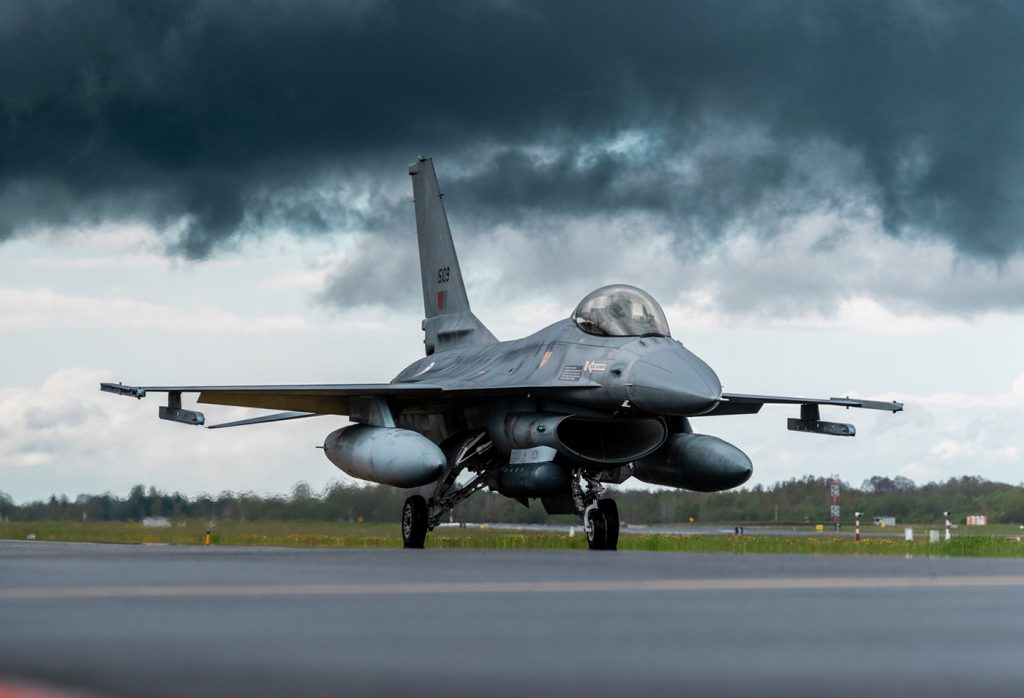
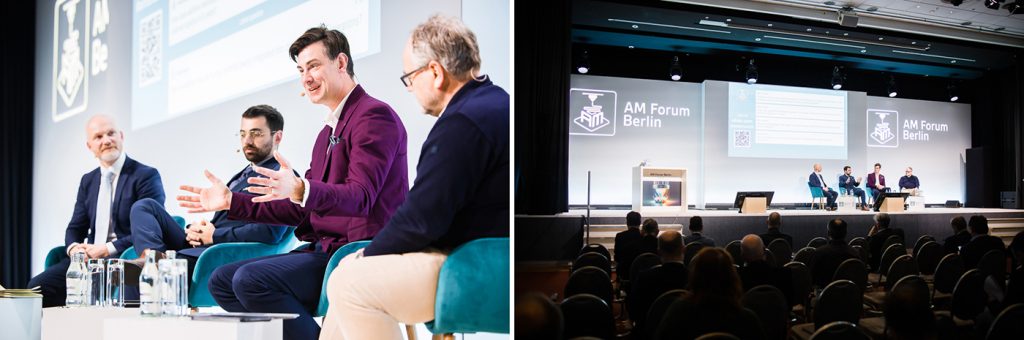
The world today is marked by escalating conflict, and the bear is at the door. As Russia pushes the boundaries of European stability, we must confront a hard truth: deterrence only works if the equipment we rely on is fit to fight. At the recent AM Forum 2025 in Berlin, discussions made clear that while Additive Manufacturing technology is advancing, the required urgency of its integration into defence logistics is lacking. This lack of momentum is alarming. If nations, AM OEMs, and defence primes do not act decisively, NATO will fall behind faster-moving adversaries. Discussing AM’s potential is no longer enough; action is needed to make it a core element of military sustainment and capability-building.
If ‘peace through strength’ is to be the foundation of deterrence, it must be backed by logistic systems capable of withstanding prolonged conflict. As it stands, the current pace of AM adoption in European-based defence falls far short of what the times demand. Simply put, time is running out and our adversaries are moving quicker than us.
The need for military readiness
Nowhere is the urgency of readiness more evident than on Europe’s eastern flank. In Ukraine, the brutal war of attrition has exposed a fundamental vulnerability: Europe and NATO’s ability to sustain prolonged military operations is deeply constrained by conventional supply chains. Whilst, on the other side, Russia’s reliance on vast Soviet-era stockpiles has proven unsustainable – neither side can claim that their logistic systems are what they would wish them to be. Ukraine, by contrast, has had to innovate at speed – integrating commercial manufacturing, distributed production, and advanced repair techniques to bridge the gap between need and availability. They are showing the world just how to do it right.
The Ukraine war is not an isolated case; conflict is intensifying worldwide. In Gaza, a humanitarian catastrophe is paralleled by logistical failures, with military and civilian infrastructure struggling to function amid dwindling resources. In Kashmir, heightened skirmishes between India and Pakistan strain military maintenance capabilities. In the Gulf of Aden, maritime security operations face constant disruption from insurgent attacks, stretching naval logistics. In the Indo-Pacific, rising tensions in Taiwan pose a massive logistical challenge for Western allies, with analysts predicting that any large-scale conflict in the region would exceed current military industrial capacity. And then, as this publication goes to print, the world is watching with one eye open to understand the impact of US involvement in the Israel/Iran war. With so much war across the entire globe, it is hard to believe that Western centralised manufacturing capability would be quick enough to respond.
Compounding this need is the long-term decline of traditional metalworking industries in the West. Once a cornerstone of wartime production, steel production, foundries and forging plants have all significantly diminished over the decades. The US steel industry, for instance, has seen its production capacity cut in half since the 1970s. This decline has left Western militaries in a precarious position, reliant on ageing infrastructure and stretched supply lines to maintain readiness.
If we continue to debate rather than act, we will soon face a harsh reality: our deterrent capabilities will be hollow because our equipment is not combat-ready. While defenders hesitate, aggressors are accelerating. Nations, AM OEMs, and defence primes must recognise that today’s threat environment is defined by persistent, multi-theatre conflict, from material support to Ukraine, to rising tensions in the Indo-Pacific. The clock is ticking for Europe’s defence industry to embrace AM. Delays now mean an inability to defend later.

To understand how Additive Manufacturing is being positioned within modern defence logistics, I spoke with three leaders shaping this transition: Major General Ed Dorman (Ret) former Commander of the US Army’s 8th Theatre Sustainment Command and now with S10 Consulting; Kieron Salter, CEO of the Digital Manufacturing Centre, Silverstone; and Michail Efthymiadis, Head of Product Digital Innovation at General Dynamics European Land Systems, Switzerland.
Their insights will show that AM is vital for faster, more resilient operations. Success means understanding defence procurement rules and meeting strict standards. Defence engineers must see AM’s strengths: on-demand parts, rapid repair, and design freedom; governments need to tackle challenges such as certification, cybersecurity, and skills. Clear policies and strong collaboration are essential to unlock AM’s full potential.
The strategic divide: national vs regional approaches
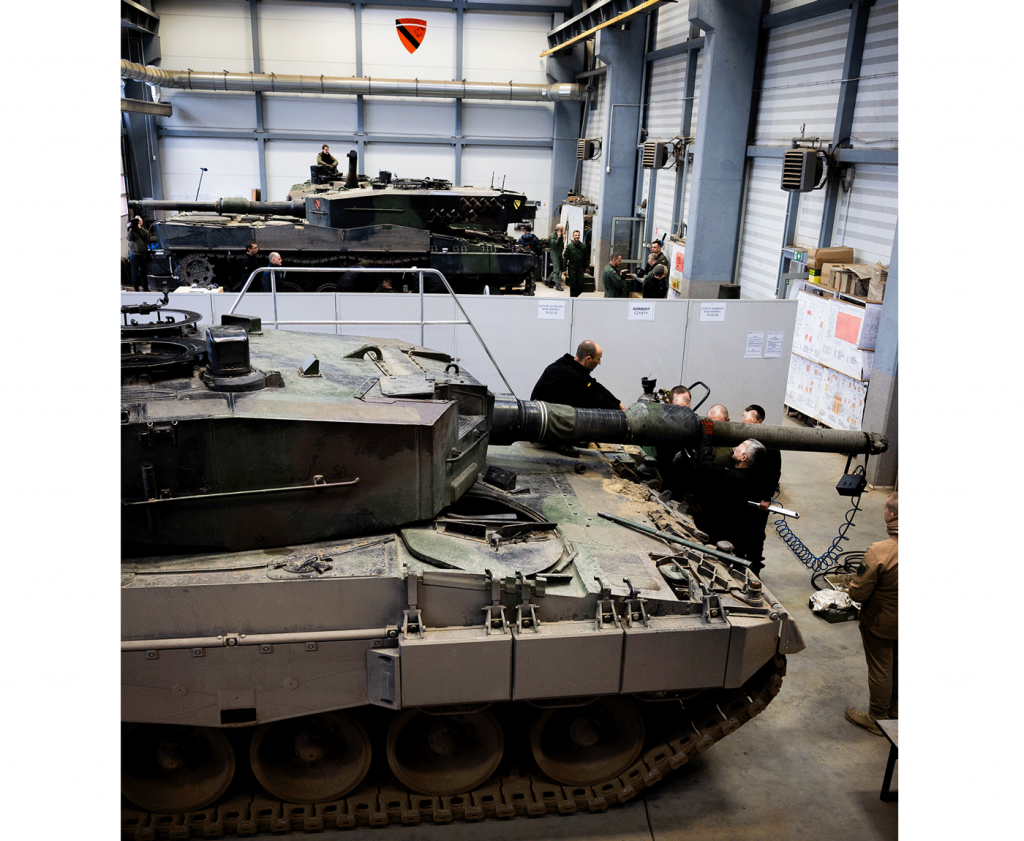
NATO faces a choice that must be made now – we’ve reached what in military parlance we’d call a Decision Point (DP): pursue AM integration through individual national efforts, or work collectively to develop a robust, region-wide action plan. I say plan, because we don’t have the time for more strategy. While national initiatives are essential, they must be harmonised to prevent duplication and inconsistency. The challenge is to balance national interests with the need for a unified European defence capability that is resilient, responsive, and strategically coherent.
The United States offers a model of coordinated, cross-branch integration that is perhaps worth modelling. The latest US Army’s Transformation and Acquisition Reform allocated $35 million specifically to military AM initiatives, signalling a shift from research to operational deployment. The US legislation mandates that AM move from research settings into operational units by 2026, aiming to make advanced manufacturing an integral part of defence logistics. This proactive approach contrasts sharply with NATO’s more cautious, fragmented stance.
The logical solution is to develop a NATO AM plan, aligning investment and standardisation across member states. Such a strategy would ensure effective integration, leverage collective expertise, and streamline the adoption process. Without this coordination, we risk repeating past mistakes of fragmented development, as seen in other critical technologies.
Fulfilling immediate logistical needs through capability

AM’s primary value proposition lies in its ability to deliver parts of consequence directly to the soldier when the regular supply fails. During conflicts such as the war in Ukraine, traditional supply chains have proven insufficient: the constant demand for replacement parts – from vehicle components to field equipment – has outpaced the production capabilities of centralised manufacturing facilities.
Dorman summed up the challenge: “Defence logistics is performing under pressure – adapting rapidly but facing real strain. Today’s environment is defined by persistent, multi-theatre conflict: from supporting Ukraine to sustained competition – which increasingly resembles conflict – in the Indo-Pacific, to NATO’s heightened posture.”
He highlighted that, while logistics systems remain broadly effective, they are increasingly challenged by political pressures, outdated practices, contested environments, extended supply chains, and limited surge capacity. Ideally, each stakeholder could focus on its own area of responsibility, but today’s operational demands require far greater flexibility and coordination.

The most recent and tangible example of this has been the Ukrainian Armed Forces using advanced and digitised manufacturing equipment – including from SPEE3D – to reduce downtime and keep combat vehicles in the fight. But Ukraine had to take time to learn the new capability and to understand that in order to get ‘bang for buck’, the advanced manufacturing capability must be fully integrated into defence-wide frameworks.
This shift toward decentralised, forward production and partner-enabled logistics – exemplified in the US Department of Defense’s Regional Sustainment Framework – places advanced manufacturing at the heart of modern sustainment. “Going forward, we need logistics that are digitally enabled, partner-integrated, and posture-flexible – and advanced manufacturing is central to that future,” explained Dorman. “Digitised manufacturing – especially Additive Manufacturing – enables us to move production closer to the point of need. That’s a game-changer.”
Any strategy focusing on harnessing AM will require a laser-like focus on what ‘AM Defence Capability’ actually means. We will be required to address each of the ‘military capability bricks’ required when creating any military capability, whether that be an advanced manufacturing unit or an F-35 stealth fighter jet. These capability bricks are constant and are:
- Training
- Equipment
- Personnel
- Infrastructure
- Doctrine
- Organisation
- Information
- Logistics
At SPEE3D, we have spent the past five years developing these bricks to ensure that when we serve a military customer, we have addressed their needs associated with each brick. And whilst it isn’t always self-evident as to what each brick requires as a solution, the good news is that, on the whole, AM companies are now able to offer a near full capability – but here’s the catch: we don’t want to! I’ll say that again: whilst we have worked to ensure that our military customers are provided with a solution to each brick, we would much prefer to stay in our own lane as the ‘equipment expert’, and allow other companies to be the experts in training and information for example.
This is where the primes can add value: by bringing together the expert solution providers within our industry to build each brick.
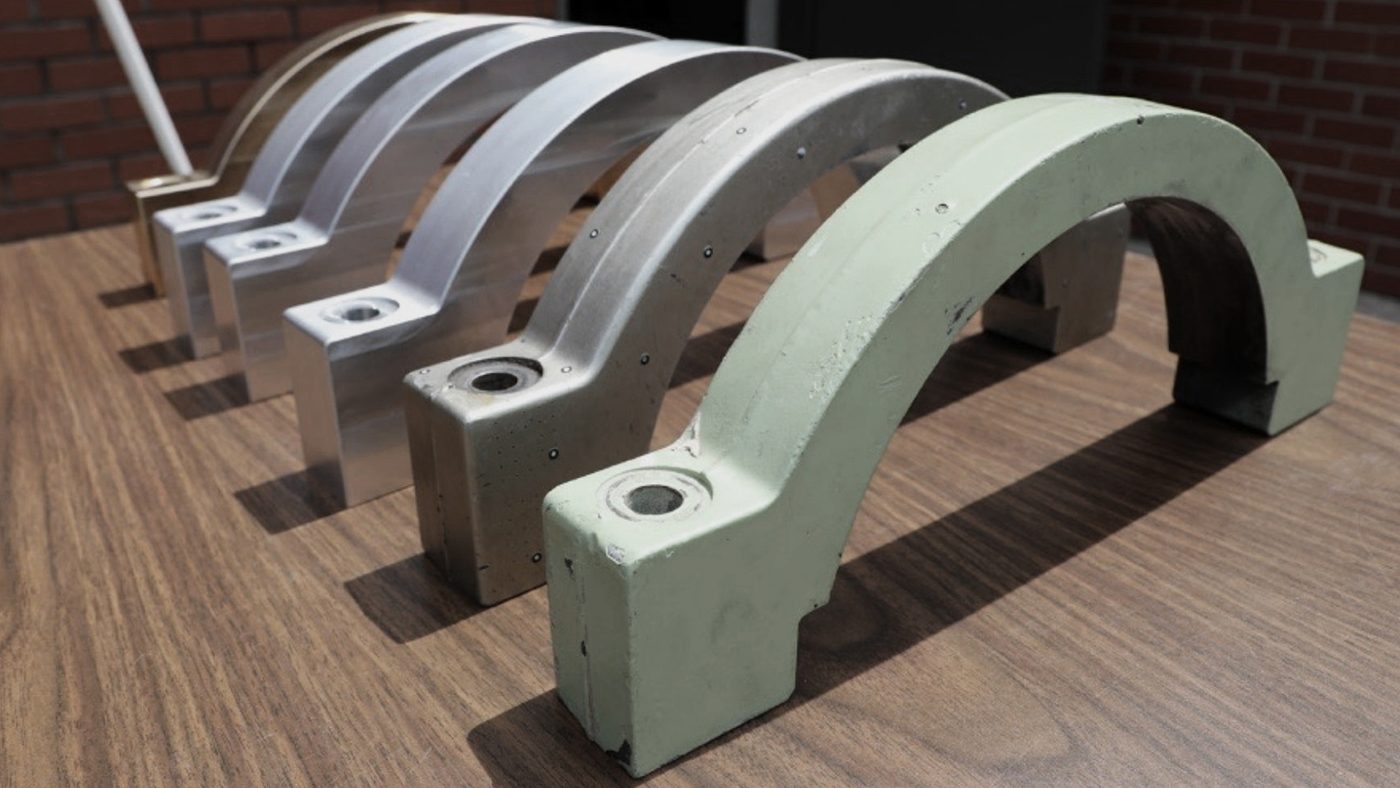
This coordinated, ecosystem-based approach mirrors the qualities that defence customers are increasingly demanding. Dorman stressed, “The defence customer wants speed, resilience, interoperability, and security. They’re looking for solutions that deliver faster than traditional supply chains, work in austere, expeditionary conditions, can scale or surge in conflict, and are cyber-secure and digitally traceable.”
According to Dorman, digitisation enables real-time insight into system health and logistics needs: “Digital twins that model platforms and predict maintenance, and AI-enabled forecasting tools, allow us to anticipate requirements, reduce waste, and optimise throughput – all vital in contested environments.”
Dorman emphasised that to succeed in this environment, AM firms must “engage early on qualification and certification pathways – partner with depots, OEMs, and standards bodies.” He also highlighted the importance of developing dual-use applications that can serve both national and allied force structures, helping “increase interoperability in coalition operations.”
“To improve AM adoption by primes, we must impact system design, provide government incentives, send clear demand signals, support workforce development, and reform the qualification process.” This includes mechanisms such as tax credits, SBIR funding, and procurement strategies that reward digital twin integration and model-based engineering.”

“Defence is willing to pay for solutions that reduce operational risk, shorten sustainment timelines, and improve readiness. It’s not about the cheapest cost – it’s about assured availability in a world where delay can cost lives.”
This approach echoes the expectations of today’s defence customers. “The defence community is looking for partners, not vendors,” Dorman stated. Success in this space requires more than technical expertise – it requires operational understanding and a commitment to delivering outcomes that matter in theatre. AM firms must engage not as suppliers of equipment, but as collaborators capable of addressing mission-critical challenges alongside defence stakeholders.
AM’s role in next-generation defence technologies: building to fight, not just sustain
While Additive Manufacturing’s impact on sustainment and logistics has been widely acknowledged, its potential to transform front-line capability – to build better, faster, more adaptive systems – is still under-realised in defence circles. The future of military readiness depends not just on keeping existing equipment operational, but on integrating AM into the development of the next generation of defence technology.
Kieron Salter stresses the importance of integrating Design for Additive Manufacturing (DfAM) principles from the outset, rather than retrofitting existing designs. Without proactive adoption, he warns, competitors will gain the upper hand. “I think the bit that they’re missing is that it’s not about rapid prototyping – that is one of the benefits. It’s actually a future technology that will unlock future capability.”
I posed the questions “Why AM, what do we wish the MOD understood about the value AM offers, what are the gaps in understanding, and how do we bridge these gaps?” Salter put it plainly: “I think the gap is the message, and the fact that we are hailing Additive Manufacturing as the objective, rather than the solution.”
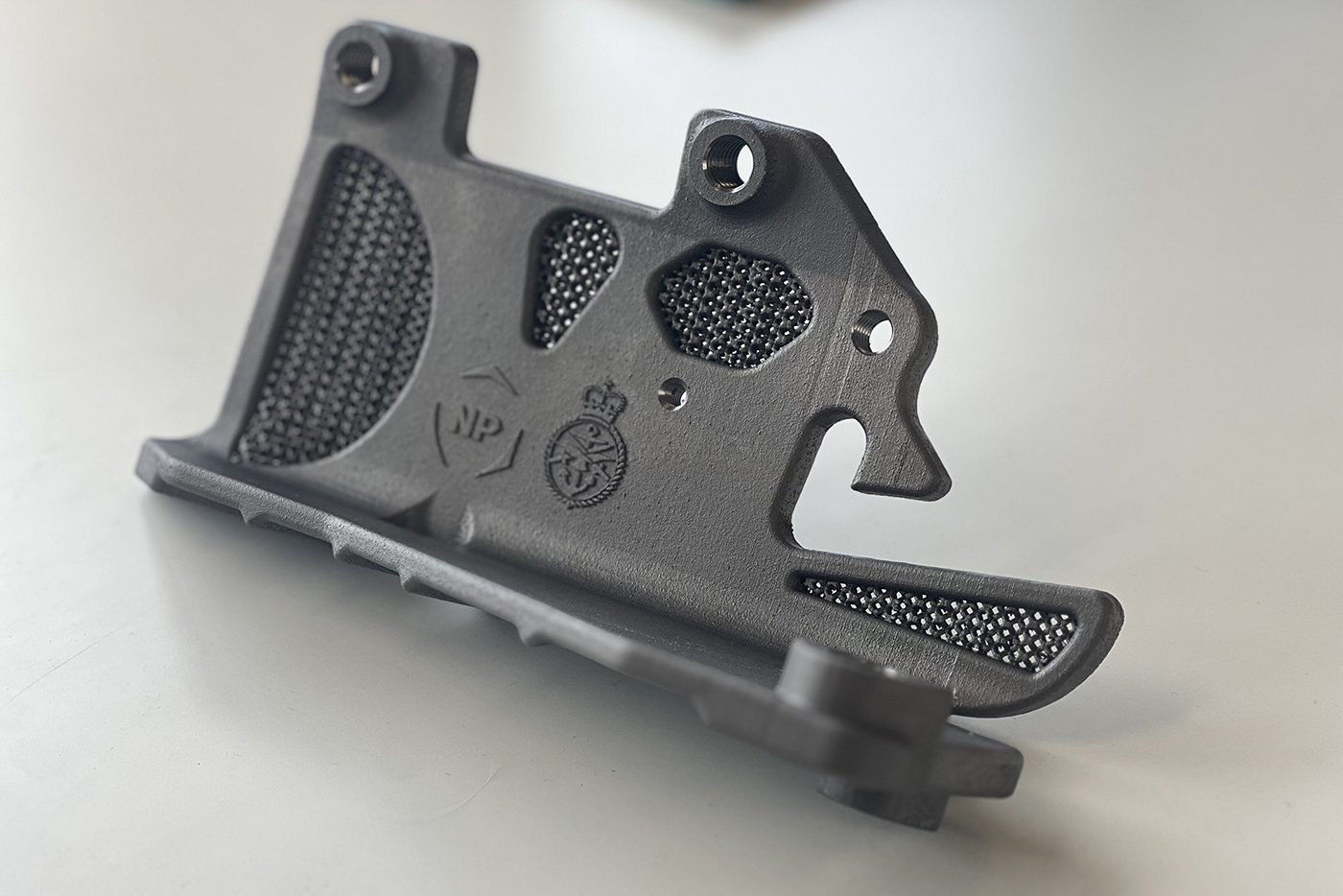
“There’s nobody on the front line or in an actual procurement position saying they need to buy an Additive Manufacturing part. What they’re going to say is I need it quicker. I need it to be more reliable. I need to have a more agile response and be able to adapt more quickly. All those sorts of things – well, those are the things that can only be unlocked with Additive Manufacturing.”
This is why we need outcome-driven thinking at the highest levels. “In the UK, what the Defence Secretary should be doing is mandating the outcomes that are required – outcomes that will mean that only Additive Manufacturing can be a solution,” added Salter. “So, for example, mandating that we improve response times, that we have distributed manufacturing capability, repairability, lightweighting,
sustainability and advanced technology. If those outcomes are mandated, only AM will be able to achieve them, and so that will encourage Additive Manufacturing to get adopted.”
The case is clear: AM is not just about spare parts; it is about designing better, lighter, and more efficient systems from the ground up. Whether it’s drones with improved range and payload capacity or missile engines with enhanced propulsion through complex internal geometries, AM delivers benefits that conventional manufacturing cannot.
However, for this bridge between potential and practice to form, a broader recognition of AM’s capabilities is required, both within government and across the supply chain. “There are two things,” said Salter. “First, what are the real benefits of AM, and what should we be talking about? We should be saying: we need to achieve something, and only AM can do this. Second, there is a growing supply chain of motivated SMEs [Small and Medium-sized Enterprises] that want to help. They’ll need support in terms of visibility of business opportunities, and funding gaps between R&D and production, but we need engagement from the primes, Tier 1s, and government to say ‘we recognise that AM could be a solution for things we need in the future.’”
“AM is already being widely adopted in the defence sector. Many SMEs are utilising it. AM is already a mainstream manufacturing process being deployed.” However, this reality isn’t always reflected in policy or procurement decisions. “I’m a big supporter of the TAMPA programme [2] [a UK Ministry of Defence initiative exploring how AM and other advanced tehnologies can support military readiness and forward-deployed sustainment] and we’ve done some strong work with primes as part of it,” Salter noted. “But the demonstration products emerging from those efforts are still far removed from the real-world applications of drones – or even munitions – that are already being manufactured with AM today. It just needs to be more widely adopted and accepted.”
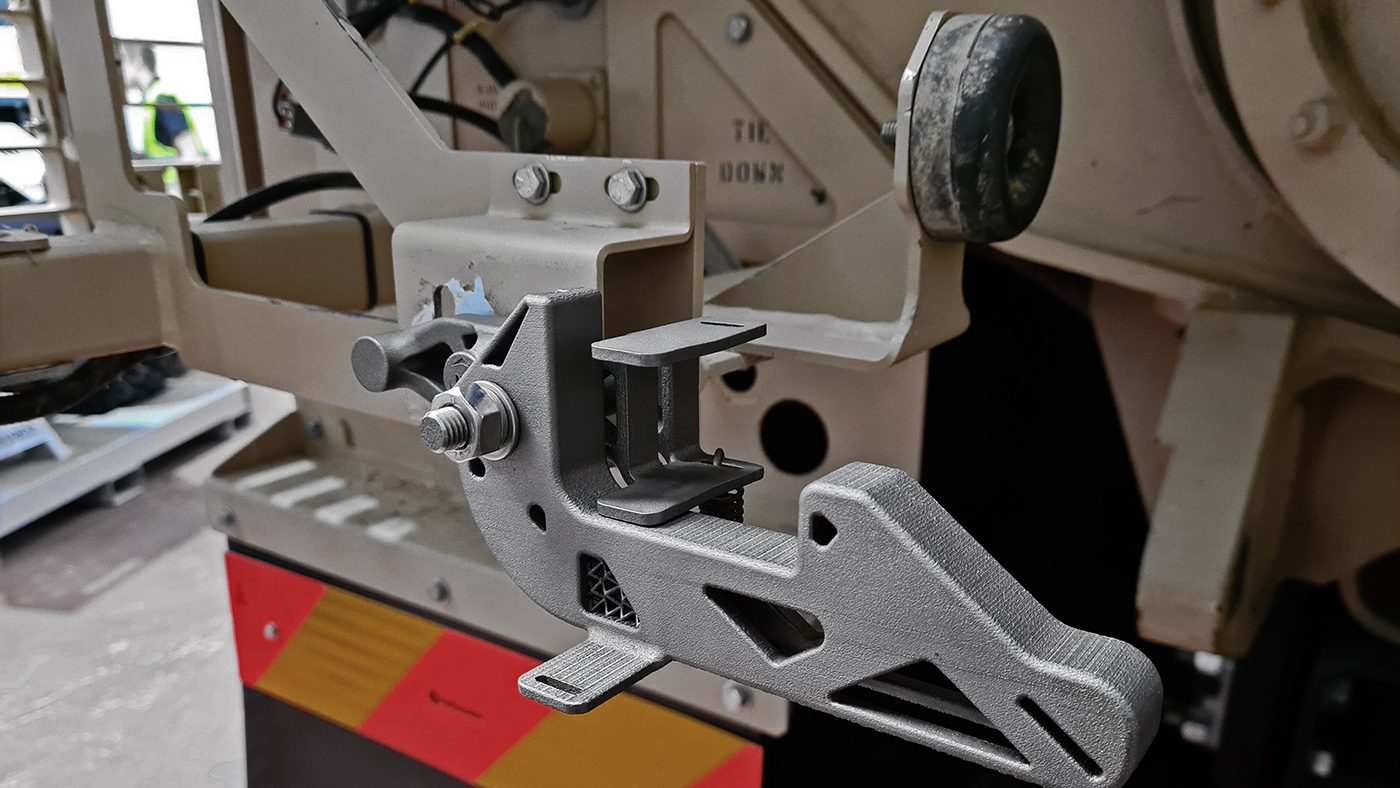
I posed the question, “If you were the Defence Secretary, what would you instruct to happen?” Salter responded, “Firstly, invest in the supply chain. I made this point at an MOD event we held here at the DMC in March, as part of one of the TAMPA project working groups […] All the primes were there; they’re all developing their own capabilities in-house for rapid R&D and developing products that have AM as part of the solution. I said, ‘If you don’t invest in the supply chain now, we won’t be here when you need us.’ Because there’s so much activity in defence – but where’s the money? Where are the contracts?”
This call for action is echoed at the policy level. Fred Thomas, a UK Member of Parliament and member of the House of Commons Defence Select Committee, recently highlighted the need to unlock private capital in order to drive innovation in UK defence. In an interview shared on LinkedIn [1], he explained, “The tech that we need to integrate into our force is not going to be supplied realistically by large companies who deliver multi-year, million-pound platforms.”
Instead, innovation is expected to come from small, venture-backed technology firms capable of rapid development cycles. Thomas added that enabling this shift requires the MOD to demonstrate that it can adopt and integrate technology quickly, sending a clear signal to the market. Only then, he argued, will venture capitalists have the confidence to back the kinds of companies that are developing critical, fast-moving defence technologies.
Recent government initiatives have pledged hundreds of millions to help SMEs access the defence supply chain. Yet, despite these efforts, the practical impact remains limited. “It doesn’t solve the problem, either,” Salter remarked. “Funding is welcome, but where is it going? We’re not asking for handouts – give us work. With real contracts, we can invest in capability and be part of your supply chain when the time comes. Right now, everything is staying in-house.”
Finally, there’s the cultural side of AM adoption – how engineers and designers interact with the technology. Salter reflected: “I remember when I started as an engineer designing parts, if you drew something that couldn’t be manufactured using CNC machines, or fabricated, then you’d get severely told off. Now I’ve got the opposite problem – I can’t get engineers to design things that are complex enough that they benefit from AM and truly exploit its advantages.”
As we look to the future, the message is clear: mandate outcomes, fund capability, and empower the supply chain. Additive Manufacturing must not be treated as an end in itself, but as a critical enabler of a more agile, responsive, and combat-ready defence force. The opportunity now is not simply to sustain what we have, but to design and deliver next-generation systems that meet operational demands with speed, efficiency, and precision. These are the capabilities AM is ready to provide – if we have the will to embed them where they matter most.
The role of defence primes: integrators of AM

If Additive Manufacturing is to fulfil its potential (either for supply chains or DfAM), it must be fully integrated into defence logistics. Defence primes are uniquely positioned to lead this transformation. However, to do so effectively, they must embed AM at the core of their operational strategies.
Companies such as BAE Systems, Lockheed Martin, Raytheon, and General Dynamics already manage complex, multi-tiered supply chains and are trusted as systems integrators for defence. But to realise AM’s full potential, they must go further: embedding it at the core of their operational strategies, from design to field sustainment.
In practical terms, this means defence primes must embed AM across their core logistics operations – from hardware deployment and software interoperability, to training military personnel and securing digital manufacturing threads – acting as both innovators and standard-setters.
Central to enabling this level of responsiveness is the adoption of advanced manufacturing technologies – in particular, Additive Manufacturing – which offer the speed, flexibility and agility required to meet evolving defence needs.Michail Efthymiadis stressed that this shift requires a reframing of primes’ delivery: “At the end of the day, we’re not selling steel on wheels – we’re selling mobility. If we could deliver that without armoured steel, we would. For me, Additive Manufacturing is a way to increase that availability.”
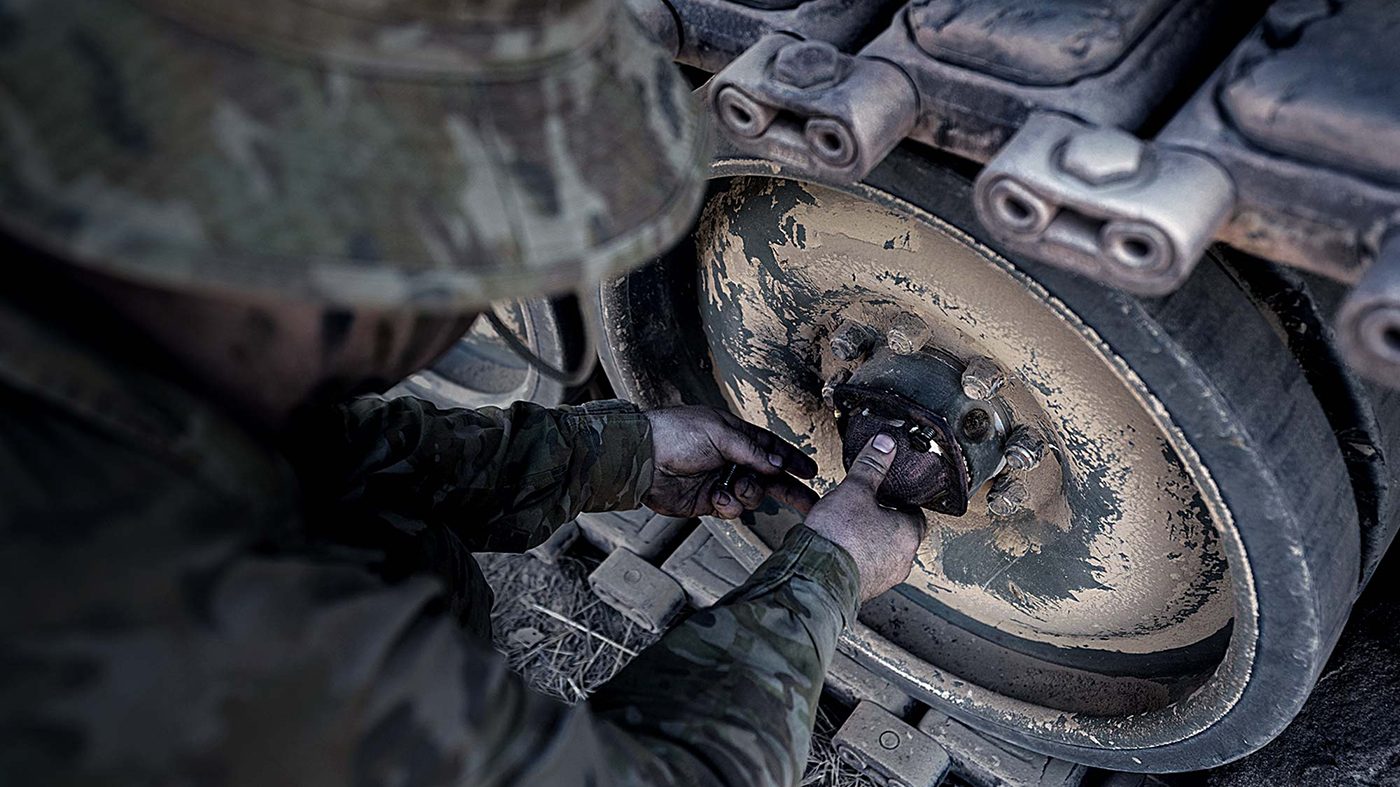
“If you consider AM a product that increases the availability of military mobility, we need to be in a position where we know what exists in the market, we know the whole value chain, and we need to offer solutions, not technology. This means that we still have the role of system integrator for AM.”
For primes, this means stepping up as coordinators of an AM ecosystem, bringing together capabilities across design, production, software, data security and supply chain management. Efthymiadis highlighted this integrative role clearly: “We are in a position where we need to bring all these pieces together and offer it to the customer… a product that stands by itself.”
However, this level of integration depends on a more strategic approach to partnerships and supply chain structure. Efthymiadis believes that AM’s maturity will hinge on the strength of its ecosystem. “Stick to what you’re good at – that’s key as this technology takes hold. As customer requirements become more complex, we need suppliers who specialise. We don’t need ten generalists; we need ten specialists who can work together.”
This collaboration must underpin the next phase of AM in defence. The components exist: the machines, the materials, the software, and the skills. The challenge now is to align them, both strategically and at scale. “All the pieces are there. The only thing left is to combine them together as one package.”
The barriers to integration
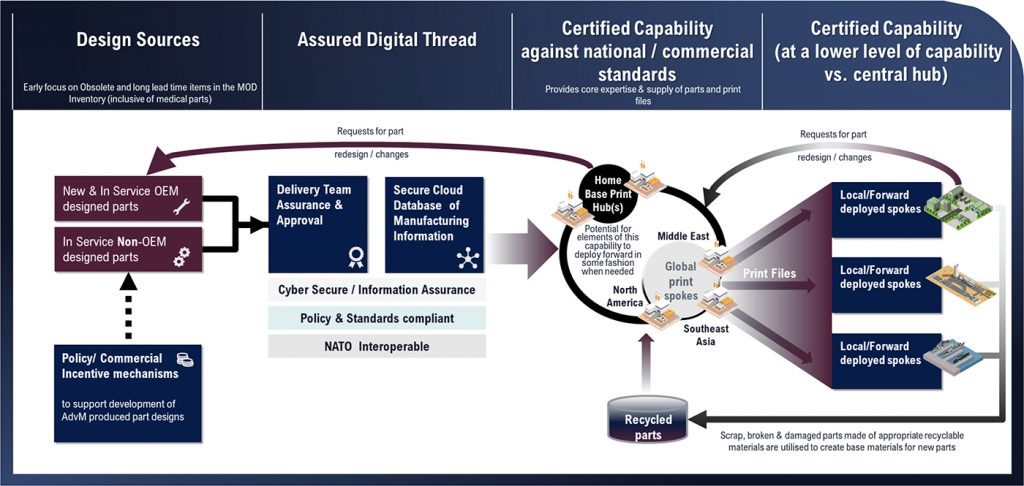
Integrating AM into defence logistics is not without its challenges. Barriers to adoption remain significant: high costs and uncertain return on investment, qualification and certification hurdles, intellectual property and cybersecurity concerns, gaps in digital engineering skills, and the lack of standardised design repositories and data protocols. The recent UK MOD’s Defence Advanced Manufacturing Strategy, published in March 2025, echoes many of these issues, emphasising the need for stronger integration, digital security, and strategic partnerships (Fig. 10).
Intellectual Property Rights and licensing
One of the most persistent challenges in adopting AM for defence is navigating Intellectual Property Rights (IPR). The UK MOD policy document acknowledges this: “IPR is often cited as a blocker to AM. However, as with all types of manufacture, IPR can only prevent the MOD (or third parties working on its behalf) from manufacturing a part when it does not have the necessary rights in any extant patents or designs.”
To overcome this, the MOD emphasises the importance of negotiating contracts that include explicit rights to manufacture critical components through AM. Defence primes must take a proactive stance in securing these rights during the procurement and development phases rather than retroactively addressing issues once they arise.
Interoperability and standardisation
The challenge of integration is often overlooked but remains critical for successful AM integration. The UK MOD’s Project TAMPA revealed that even when the same AM process is used, different machines can produce varying results due to differences in hardware and software configurations. As stated in the MOD strategy, “Different vendors’ machines produce different results, challenging repeatability. This will have a bearing on the design of a future supply network utilising AM.”
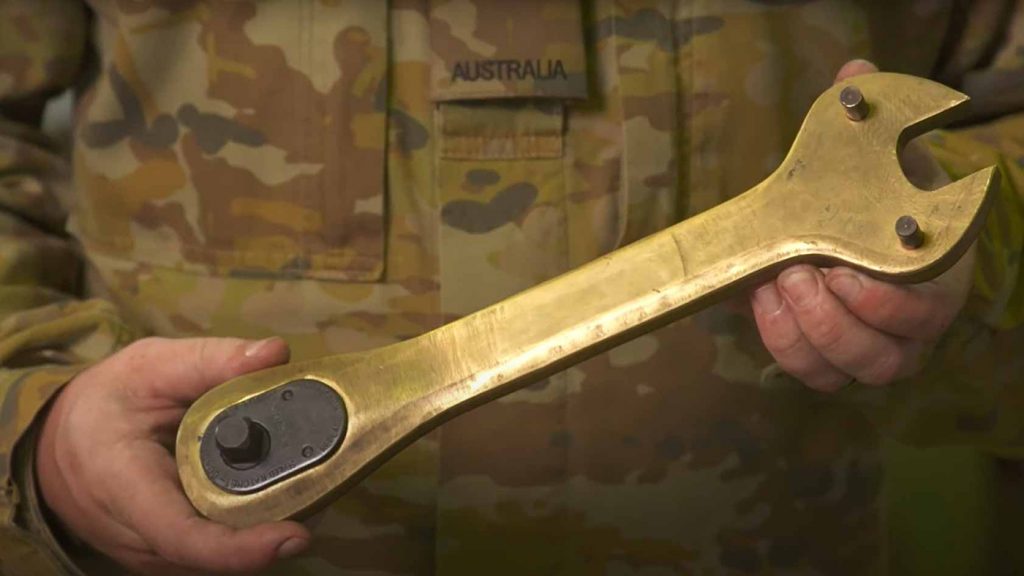
Defence primes must work with AM OEMs to develop standard operating procedures and certification protocols to ensure that parts produced in different locations or on different machines maintain consistent quality. Investing in robust quality assurance systems and leveraging internationally recognised standards (such as ASTM) will be crucial for maintaining operational readiness.
Digital security: safeguarding AM data
The digital nature of AM introduces unique security challenges. The MOD’s Defence Advanced Manufacturing Strategy highlights the need for a secure ‘digital thread’ linking AM production capabilities within defence units to central logistical networks. Without this secure infrastructure, the risks of cyber intrusion or data corruption increase significantly.
As the strategy notes, “There are many solutions being used within industry and developed by nations and allies. It is easy to be distracted by the latest solution being offered, but what is needed is clarity over the design of a supply chain which exploits the advantages of AM.”
To address this, defence primes must collaborate with cybersecurity experts to develop encrypted data transmission methods and secure cloud storage solutions. Establishing a digital inventory with robust access controls will be critical to prevent the unauthorised manipulation of essential design files.
Strategic partnerships: building a unified AM ecosystem
Strategic partnerships are essential for creating a resilient AM ecosystem. The MOD strategy outlines the importance of collaboration between military units, OEMs, and industry leaders. This approach not only fosters innovation but also ensures that military units have the support needed to deploy AM solutions effectively. The document states, “Strategic partnering would see Front Line Commands, MOD units, and agencies team up with relevant industry colleagues to share learning, provide support and potentially develop ‘trusted agent’ status.”
Defence primes must take the lead in forming these partnerships, facilitating knowledge exchange, and ensuring that innovations are rapidly translated into practical applications. By creating a network of certified AM hubs, primes can ensure that production is both scalable and standardised.
Unified voice for the AM industry: collaboration or stagnation
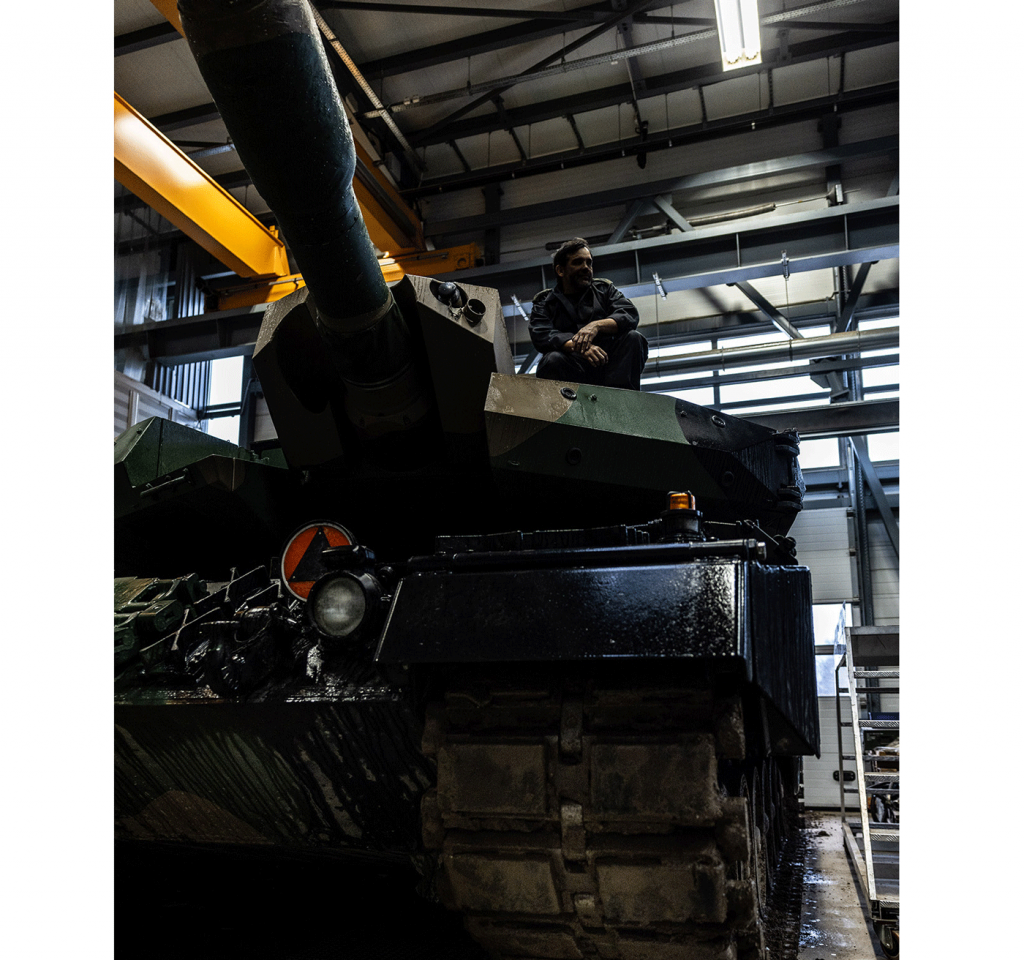
One glaring issue revealed during AM Forum Berlin is the fragmented voice of the AM industry. To influence defence policy and drive adoption, the AM sector must speak as one. Unlike aerospace or automotive industries, which often present collective positions, the AM industry remains disjointed.
To truly drive change, the AM sector needs a clear, unified narrative. This means speaking not just about the technology itself but about its strategic value in defence. Learning from the US and China, the European/NATO AM sector should foster alliances, create advocacy groups, and engage directly with defence policymakers. If we do not unify, we risk being marginalised while competitors build momentum.
Advanced manufacturing firms must prioritise operational validation, robust cybersecurity, and interoperability. Early engagement on qualification pathways, focus on dual-use cases, and alignment with coalition needs will be key to driving adoption. Above all, AM must be framed not just as innovation, but as a strategic enabler of resilient logistics. To succeed, AM adoption needs government backing: clear demand, faster qualification, and skilled people. Defence primes and AM suppliers must now deliver. We cannot afford to hesitate while our adversaries are building capacity. Those who lead now will define the future of military sustainment. Those who hesitate will find themselves outmatched and unprepared.
Author
Calum Stewart
Director of Defence Programmes
SPEE3D
www.spee3d.com
Calum Stewart is a veteran of both the British and Australian Armies, where he served as an Engineering and Logistics Officer. For the past five years, Calum has been the Director of Defence Programmes at SPEE3D, a global leader in metal Additive Manufacturing technology. With a focus on deploying rugged, field-ready AM solutions for defence applications, Calum has been at the forefront of integrating AM into military logistics. His work has been instrumental in supporting defence forces worldwide, from rapid parts production on the battlefield to developing comprehensive training programmes for military engineers.
References
[1] Fred Thomas, Interview on unlocking defence financing, LBC News, June 2025. Shared via LinkedIn. Available at: https://www.linkedin.com/posts/fred-thomas-mp_how-can-we-unlock-defence-financing-yesterday-ugcPost-7335951971423543297-bM30
[2] UK Ministry of Defence, Defence Advanced Manufacturing Strategy, 28 March 2025. Available at: https://www.gov.uk/government/publications/defence-advanced-manufacturing-strategy
Thanks to the following for their time and insight in the preparation of this article
Major General Ed Dorman (Ret)
Major General Ed Dorman (Ret) is Executive VP and COO at S10 Consulting, and Chair of the NDIA Contested Logistics Subcommittee. A former Commander of the US Army’s 8th Theater Sustainment Command and senior logistics leader for US forces across the Middle East and South Asia, he brings deep expertise in contested logistics, large-scale combat sustainment, and defence transformation.
Kieron Salter
Kieron Salter, CEO of the UK’s Digital Manufacturing Centre (DMC), leads the organisation’s drive to integrate Additive Manufacturing into high-performance sectors, including defence. With a background in motorsport engineering and a focus on innovation and agility, Salter has become a prominent advocate for the adoption of AM at the systems level.
Michail Efthymiadis
Michail Efthymiadis, Head of Digital and Product Lifecycle Innovation at General Dynamics European Land Systems, focuses on integrating AM and digital tools into the lifecycle of next-gen land platforms. His work highlights how primes can act as system integrators to realise AM’s full value across the defence ecosystem.
LAST MONTH’S MOST-READ ARTICLES