Inside Wayland Additive: How innovation in electron beam PBF is opening new markets for AM
UK-based Wayland Additive is convinced that, when it comes to metal Additive Manufacturing, Electron Beam Powder Bed Fusion (PBF-EB) has a bright future ahead. Whilst laser-based PBF is the most widely commercialised AM technology, it has inherent limitations that electron beam-based innovations such as Wayland’s NeuBeam process promise to overcome. Rachel Park reports on how the technology could open up the AM market by enabling users of the Calibur3 machine to rapidly develop and commercialise a wider range of industrial materials. [First published in Metal AM Vol. 10 No. 1, Spring 2024 | 15 minute read | View on Issuu | Download PDF]
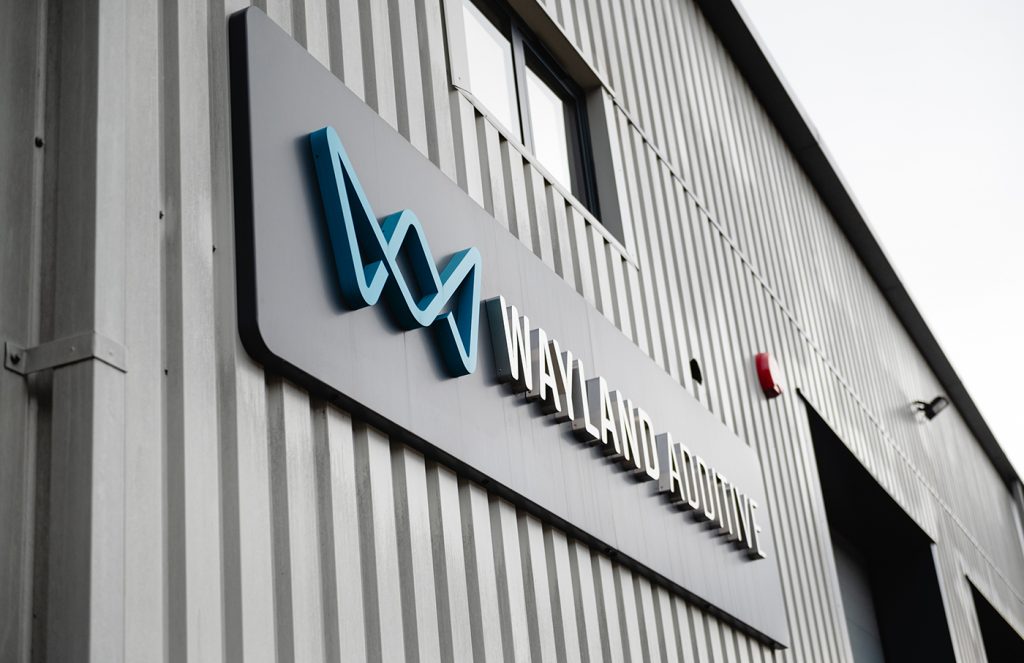
Metal AM magazine has, periodically, considered where Electron Beam Powder Bed Fusion (PBF- EB) processes fit within the metal Additive Manufacturing industry. Specifically, two articles by Joseph Kowen deftly sketched out the landscape in this regard in 2020 and 2022 [1,2]. In the latter article, Kowen concluded, “Progress in PBF-EB is measured but real, though there is much left to be done. The technology and its industrialisation are on track, but the game is long.”
Now, in 2024, Kowen’s conclusion continues to ring true, even as further progress has materialised both from the leader in the field, GE Additive, and a host of commercial newcomers in the field highlighted in the 2022 article, one of these being Wayland Additive.
Recently, Metal AM magazine’s Managing Editor, Nick Williams, and freelance writer Rachel Park visited the company to speak with key personnel about its electron beam metal AM process, NeuBeam, and tour the facility that produces the commercially available Calibur3 machines.
To understand the company’s intent, it is important to get a handle on the unique aspects of its process. For this, Ian Laidler, Chief Technology Officer at Wayland Additive, and the lead scientist who proved the concept of NeuBeam for an Innovate UK-funded project in 2016, is best placed to explain.
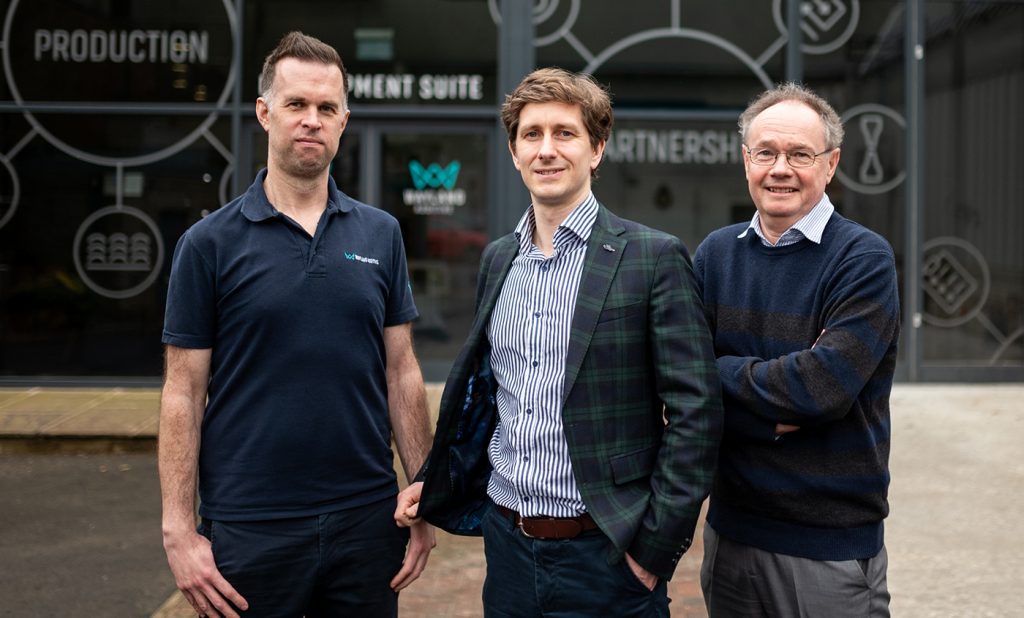
“Electron beams have been used for decades in precision welding, in scanning electron microscopy and the semiconductor industry,” he stated. “The latter is actually my background. When we first looked at how electron beams were deployed for AM, at the time there was only one option, and the lack of stability struck us, exhibited both in the machines and the output with a distinct lack of repeatability from part to part.”
Laidler’s overview of the PBF-EB process, compared with both the original PBF-EB manifestation and with Laser Beam Powder Bed Fusion (PBF-LB), offers an interesting insight into Wayland’s motivation. “Looking at all metal PBF technologies, each of the two competing energy sources – lasers and electron beams – brought their own unique challenges for users looking to achieve successful outcomes. With the PBF-LB process, the machines are certainly more developed, but there are still limitations such as residual thermal stress, process emissions, low productivity, limited part volume and limited process control parameters. All of these restrict the process dynamics and the optimisation options that are available to the user.”

“Today, the OEMs of laser-based AM machines and their customers are turning to materials scientists to develop new materials specifically for the AM process in an attempt to overcome these limitations,” he continued. “Indeed, significant investment is being poured into the industry to try and develop ‘forgiving’ materials in order to get around the issues presented by both processes. This may be one way of solving the problem, but the strategy of relying on bespoke alloys for targeted applications only adds further costs for production applications.”
But let’s return to the over-arching challenge of PBF-EB, powder charging, whereby process stability is immediately compromised.
The physics is important
An electron is one of the fundamental building blocks of all atoms that make up matter. Wayland’s Calibur3 machine – indeed all PBF-EB machines – harness the natural properties of electrons to produce a very high-energy, narrow beam that can melt metal. The most important property of electrons for Wayland is the negative electric charge that each electron carries; this permits the beam to be given very high energy, far in excess of the energy of a single laser in PBF-LB. This beam can scan at mind-boggling speeds and is able to be highly focused.
However, this negative electric charge also presents a problem when the electron beam strikes a bed of metal powder. The outer surface of each metal powder particle has a very thin layer of material that has reacted with the oxygen in the air – this layer is electrically insulating, meaning the electrons stick to the outside of the powder particle. This electron charge build-up on the powder can physically move the powder, thereby leading to a so-called ‘smoke’ event, or a rapid ejection of powder from the stable layer required to produce an AM part.
Obviously, it is not good when a smoke event occurs; the build process is invariably stopped and the AM machine may require a lot of time and attention to get it manufacturing again, reducing productivity considerably. The original PBF-EB process sought to overcome this instability by scanning the beam over the entire powder bed and sintering all of it to make it electrically conductive, thus preventing negative charge build-up, before applying higher temperatures to build the part by fully melting the layers in the specified geometry.
This original process led resultant parts to be caked in sintered powder, requiring intensive post-processing to remove the parts from the partly solidified material encasing them. This additional post-processing step is messy, labour-intensive, and adds further considerable cost to the bottom line of PBF-EB. There is, of course, also a risk of increased material waste.
These challenges, resulting from the inherent nature of electronic charge, have contributed significantly to PBF-EB lagging behind the more commercially successful laser-based metal AM technologies.
Laidler, however, believes that the physics of the electron beam process is actually ideally suited for AM. As a result, the Wayland approach to PBF-EB comes at the challenges from a completely different angle.
A stabilising force in electron beam AM

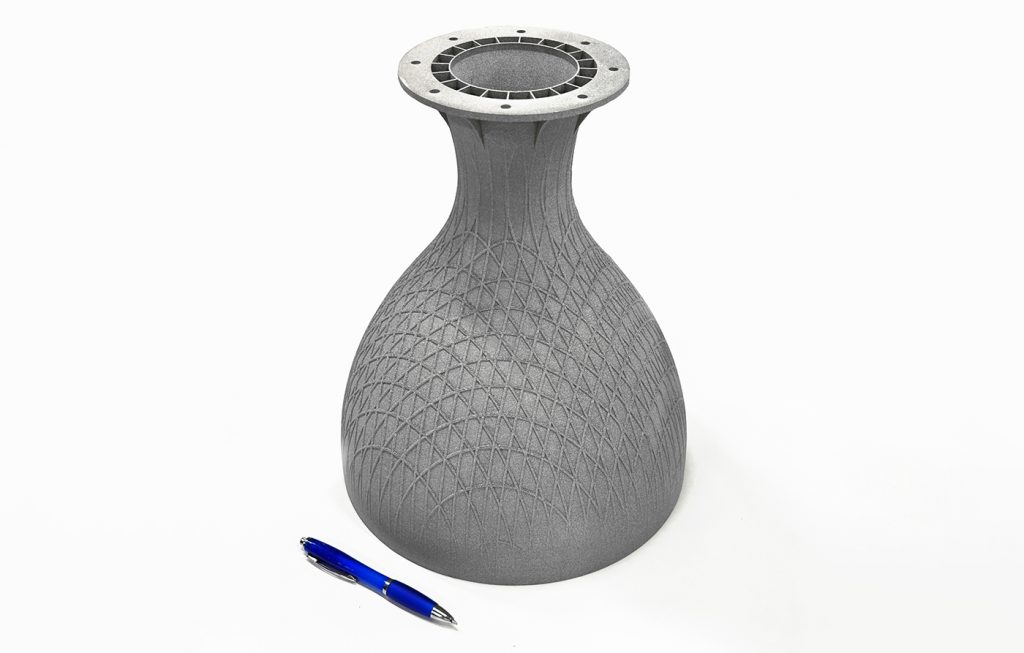
Laidler and his team of physicists developed a way of neutralising the build area by introducing a stream of positively charged ions to the build chamber, under vacuum, to stabilise the process. This neutralised beam process – hence ‘NeuBeam’ – is capable of reaching very high temperatures in a more precise way, meaning it is a ‘hot part’ process, not a ‘hot bed’ process (the latter being how PBF-EB is often negatively characterised). The result is large amounts of free-flowing powder around the parts post-build (Fig. 3).
This offers two major advantages: a light sintering of the powder bed only happens locally to the part, thus resulting in less extensive post-processing, and the ability to process a much wider range of materials, including tool/carbon steels and reflective metals that have traditionally been avoided by laser and electron AM processes. These are both big deals, as anyone using metal AM machines will testify.
Martyn Hussey, Head of New Technologies and one of the founders of Wayland Additive, works alongside Laidler, specifically on the Active Charge Neutralisation approach. Hussey went further in detailing how the physics works. “It cannot be overstated that a metal powder bed is a very poor electrical conductor,” he explained. “By flooding the build chamber with a shower of positively charged inert ions – a technique employed in other fields of commercial scientific instrumentation – the NeuBeam process is able to neutralise the charge on the powder thereby eliminating electron charge induced smoke events.”
This all sounds simple enough in principle but, as ever, the reality was anything but, and required considerable development to arrive at a workable, repeatable and reliable industrial process. This included the need to calibrate for the beam deflection caused by the presence of the argon ions, stated Hussey, who also emphasised the fact that NeuBeam is optimised to use argon rather than helium, the former being a gas that is more plentiful and cheaper.
Will Richardson, Wayland’s Chief Executive Officer, explained, “It’s important to understand that while other industry sectors have validated this technique, no one else anywhere in the AM industry has attempted Active Charge Neutralisation. However, managing the charge was just one part of the equation. The further challenge for our early R&D programme – now achieved – was incorporating this breakthrough into an industrial machine that would build parts reliably.”
He added, “Today, NeuBeam parts are all comparable with the original PBF-EB process in terms of density, fidelity, and surface finish.”
In addition to improved stability and loose powder benefits, other NeuBeam advantages also include a lower impact on powder morphology, lower radiation losses and no post-build heat treatment phase to de-stress the part.
This all means that with NeuBeam it is possible to rapidly develop parameters sets for new materials – on the fly, in some cases. Thus, customers and partners of Wayland can introduce new materials without a long, drawn-out empirical process. Crucially, these include materials that have never (or at least rarely) been attempted with AM, yet have been used for decades in other manufacturing processes.
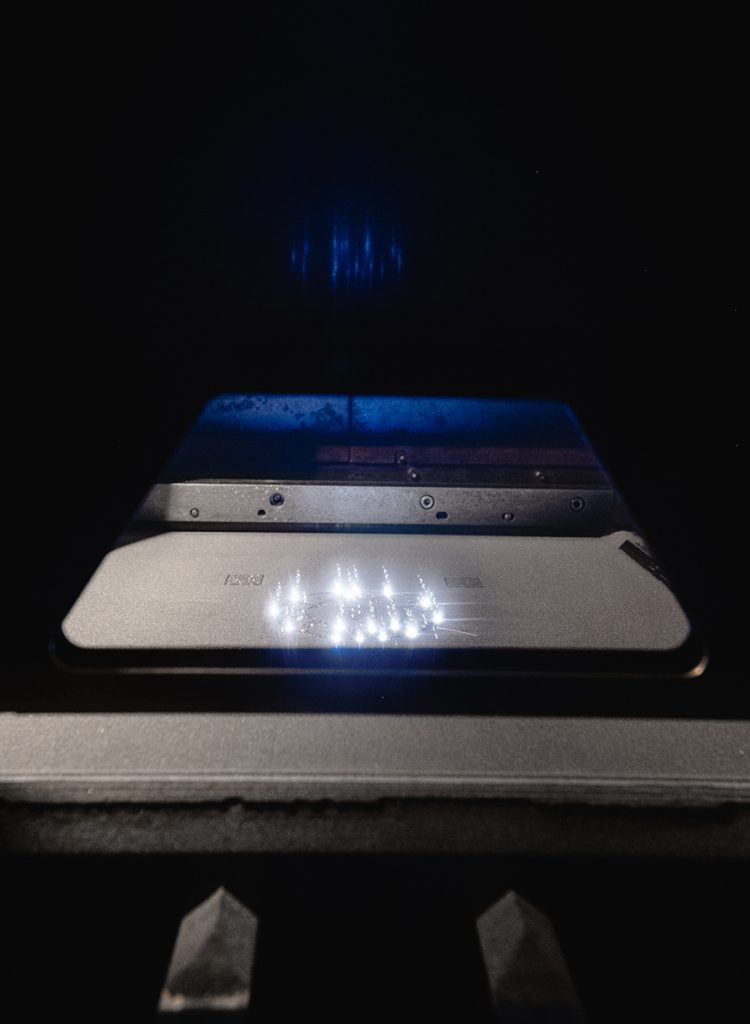
Another positive outcome is that NeuBeam increases productivity. The team gave the example of how it is much faster to build a lattice with an electron beam than it is with a laser. Richardson stated, “An electron beam moves much faster than a single point laser – even if you have four, six or twelve lasers. With NeuBeam, we can have thirty-two to sixty-four simultaneously active melt pools [Fig. 4]. There are no laser metal AM machines that have thirty-two lasers, let alone sixty-four. And they won’t any time soon.”
Opportunities beckon
From the interviews with the team, another distinct attribute of Wayland and its approach to the market became vividly apparent: Wayland is fully aware of the sector and its place within it. When asked about how the company competes with PBF-LB, and the more established PBF-EB machine producers, the response from Peter Hansford, Chief Revenue Officer, was that, “in many ways, we don’t.”
Hansford explained, “Look, the laser metal AM processes are well-established, more mature, they have decades on the PBF-EB process, and so they are more advanced commercially – no one can deny that. The laser machines are very good at what they do with the materials that they have available to them. But directly competing with PBF-LB is not our focus today. Anyone that uses those processes, or is considering using them, knows that they do have limitations – every manufacturing process does, to some degree. What we are doing with NeuBeam is opening up new opportunities to work with unique materials, larger applications, and applications that have, in the past, required the significant use of support structures.”
Richardson went on, “Laser-based metal powder bed AM machines have dedicated markets and a good track record for producing lightweight, high-fidelity components with a high-quality surface finish. That’s well-known, but there are compromises involved. Companies that are using PBF-LB are using metals they can process on them, but they don’t tend to go outside of those bounds because it’s difficult.”

“We’re often asked ‘why would a company use PBF-EB if they’ve got a laser-based machine?’: the answer is that NeuBeam reduces the need for compromise – both with traditional PBF-EB and with lasers. We are opening up new opportunities for existing PBF-EB users, for existing laser users, and for potential new users of metal AM that have steered clear of the technology because of all the challenges involved.”
Early NeuBeam adopters who have invested in a Calibur3 machine have identified new opportunities within their markets. To date, Wayland has sold and installed four machines and the company is on track to sell a further six this year. Hansford points to an impressive sales pipeline with increased sales targets for 2025 and beyond; they are not big numbers, certainly, but the strategy is measured, controlled and intended to support the installed machines while growing the customer base. Hansford explained, “It might be easy to focus on the ‘only four machines,’ but that is four industrial-scale machines installed and producing parts in four different materials. That is unprecedented in this industry, especially for a company that is still considered a start-up.”
“There are names on those six machines [in production] for this year, and conversations going on with regards to 2025,” he continued. “Virtually all of the pipeline customers are talking about different materials and developing original applications with them.”
Investment funding
What Wayland does very well – and, rather unusually, it must be said – is manage expectations both internally and with customers in terms of the process capabilities, the advantages offered, and how the tech is scaling up. Wayland is neither overselling the process nor itself. Rather, with its investors, partners and customers it continues to move forward with pragmatic goals. To date, it has delivered on promises and intends to keep doing that.
This approach has ensured steady expansion and growth by way of revenue generation (through sales and projects) as well as a consistent series of funding rounds. The latest of these rounds was announced in January 2024 with new investments from Parkwalk Advisors, Longwall Ventures and ACF investors, to scale up its operations further and expand its global customer base.
Parkwalk Advisors has supported Wayland since 2021 and invested £2 million as part of this round, which also includes long-term backer Longwall Ventures. With a total of £4.2 million already raised in the round, the company is continuing to talk to other investors that want to help the company build on its success and accelerate its vision. This followed a £4.6 million oversubscribed Series A funding round in April 2023, building on previous funding successes.
A realistic approach
Hansford believes that its realistic approach has contributed to Wayland’s success. “During the last four and a half years, as well as funding, we’ve successfully raised awareness that there is an alternative electron beam technology with new opportunities. We also took an early decision that Calibur3 would be an open platform. Wayland is not a materials supplier, and we are completely open to developing new materials and parameters in partnership with our customers. This means that we are not selling a locked down box that can only run approved materials; the machine is open and flexible, which allows much faster materials R&D.”
The most recent sale was to an unnamed company in continental Europe. That company went on to report to Wayland that it was able to develop a new material parameter set in an eight-week period and is already producing parts with the desired geometry in carbon steel.
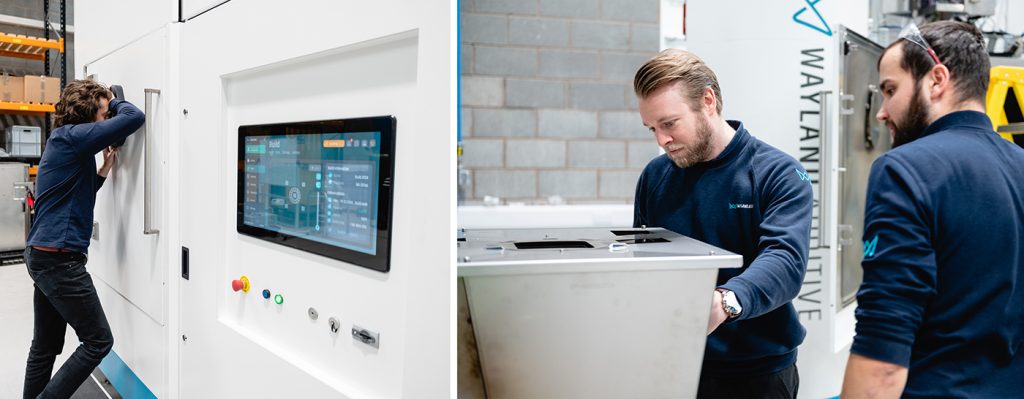
Laidler commented, “We can work with our customers in this way because we believe that our machine offers greater flexibility and stability: this means that we can ‘let our customers loose’ to explore the potential of the technology.”
He continued, “Where we do overlap with laser powder bed machines is with titanium. Existing applications for PBF-LB tend to be smaller parts, with thin walls to cope with residual stresses. Laser processes are great at this type of application – we’re not trying to compete with that. However, NeuBeam can accommodate larger, bulkier titanium parts, and that’s one of our USPs, that’s where we’re also getting interest.”
Asked how they perceive their PBF-EB competitors, specifically the news in the week of our visit that Sheffield University had just taken delivery of a Freemelt PBF-EB machine, the team remained relaxed. “The Freemelt machine is much smaller, priced around the £300,000 mark, and it is probably more suited to that environment,” stated Laider. “Besides, UK universities rarely have access to £1 million in funding for a single platform. Calibur3 is priced that way because it has been built for production.”
Hansford added, “Getting more people working with PBF-EB is only a good thing. Getting an electron beam AM machine into any university is good. Similarly with competition in the market – it’s really positive for PBF-EB to have five or so suppliers. We shouldn’t be concerned with that. We’ll sell on our own technical and commercial merits. It’s about building trust and a relationship to build something together. No one does this lightly, you do it because you have a need. We’re not just a machine manufacturer – we’re a partner.”
Beyond proof of concept
It can, perhaps, be too easy for people outside of the company to categorise Wayland as ‘just another start-up’, with the assumptions that come with that label. Wayland is certainly operating beyond the constraints of a typical start-up that is only four years into its journey. The team was keen to emphasise its dual commercial and core science approach.
Business development and the fundamental science that continue to drive R&D run in parallel across the business today. Even with machines out in the field, R&D continues apace to improve the NeuBeam process further, to open up new material parameter sets quickly and consistently, all while adding value for existing and new customers.
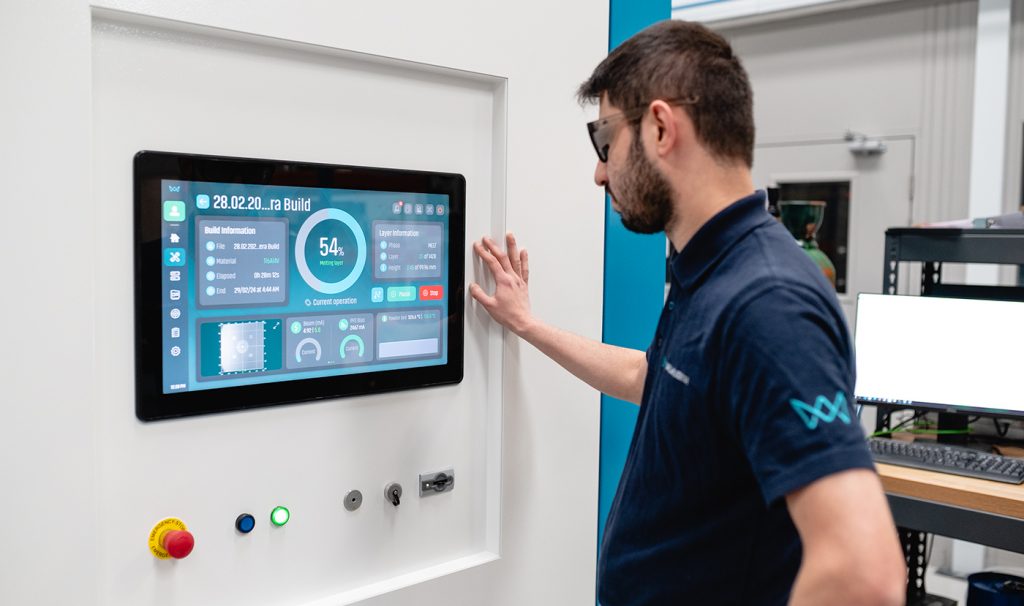
I posited the idea of NeuBeam being a ‘work in progress’ which got an all-round immediate and resolute “No!” from all of the team members present. The successfully working Calibur3 machines in the field were the evidence they used to support this position. It was a strong argument.
When I suggested ‘workable innovation in progress’ the response was more receptive. Laidler ran with it, stating, “Calibur3 works, it works well, but it can still be refined and improved. For example, current R&D is looking at extending the life of components on the machine and improving efficiencies in terms of energy and consumable gases. We are carrying out fundamental plasma physics research that is going to allow us to increase consumable lifetimes by more than 10X over the next couple of years.”
“I think we are original in the industry in that, normally, companies at this stage – four years in – are just launching machines and trying to sell them,” stated Hansford. “We have a proven production process that we are continually improving. We have units sold and installed, we’re getting consistent positive feedback as well as listening to our customers on how they can be better and feeding that back into our R&D. Moving forward, we want our customers to be able to do things that they can’t do today. Our conversations are not about replacing or repeating but rather continuous innovation that allows us to grow into the marketplace.”
Laidler added, “I think our success comes down to a balanced combination of bravery and caution, plus some luck. You need all of them. First to know when to press ahead, second, to know when to push the brakes and reassess, and, well, you always need a bit of luck, too.”
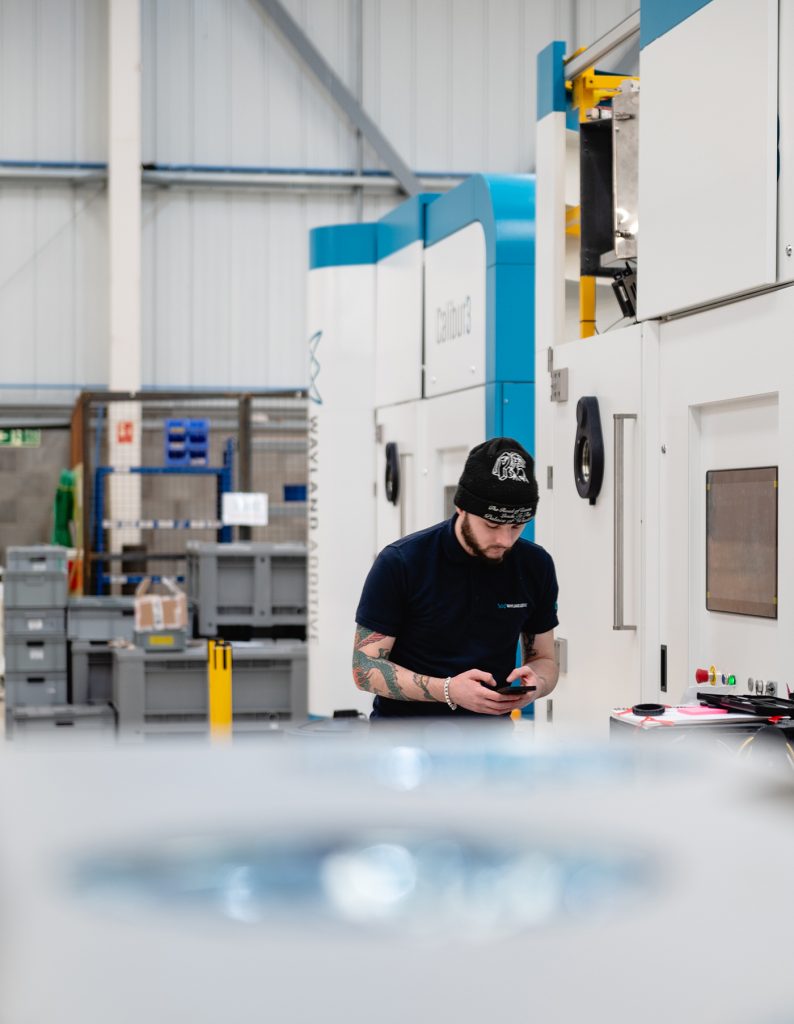
Laidler went on to cite what he believes is one of the key enablers for the successful Wayland approach to R&D. “From the very beginning, we understood the benefits of incorporating in-process monitoring (IPM). Crucially, we developed our own IPM solutions and have intergrated them into our machines to better understand them. The aim being that, at the end of a build, we are able to identify every layer. Then, we put AI around that to identify optimum meltpool conditions, maintain them and ultimately keep the machine at optimum performance. This is turning into an effective USP of Calibur3, in that our users are able to define and characterise their parts with data post-build for verification, adding value for them.”
Company focus today
Wayland has grown and evolved as a company since it was founded as a commercial entity in 2019. At the start, there were fifteen core team members; today there are sixty-seven. Real estate has grown along a similar curve: nestled on a small industrial estate on the outskirts of Huddersfield, the team’s original headquarters in 2019 housed the R&D facilities with room to grow initial production capabilities.
In the four and a half years since, Wayland has extended its operational footprint into four further buildings on the same estate. R&D still resides in the original building, with additional R&D space, corporate offices, a dedicated production hall and a production suite all added.
The production suite is a custom-built facility housing a fully operational Calibur3 machine that can be used for or on behalf of partners to run new projects. Nearby, the production hall is an impressive set-up with a production line producing the next ten Calibur3 machines (Fig. 10).
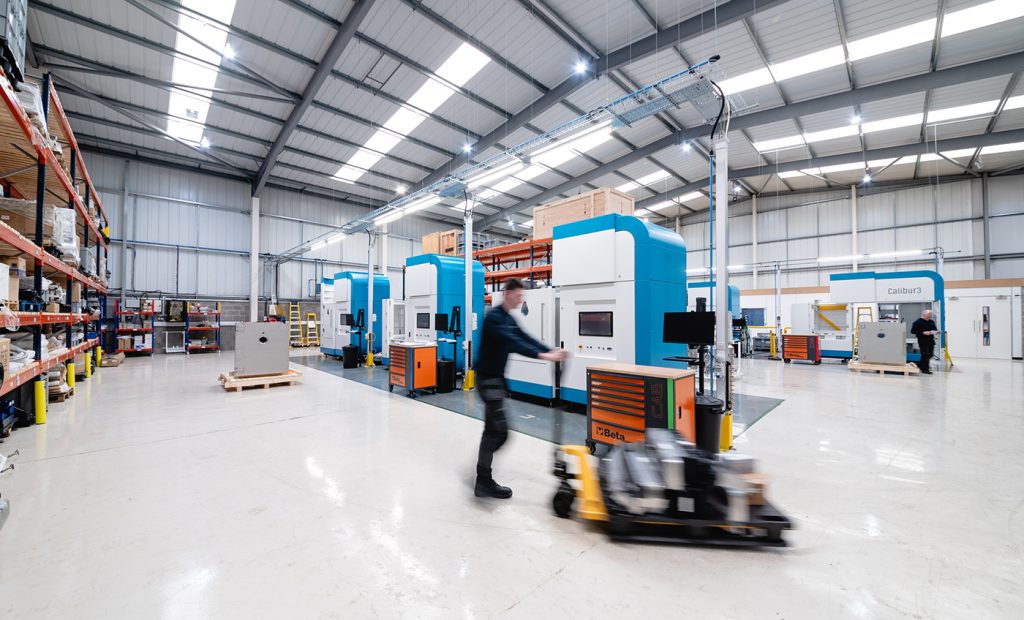
On the tour of the facility, we were introduced to Dan Rushton, Operations Manager at Wayland, who runs the production line logistics. Rushton stated, “We have six machines in production right now catering for orders at various stages of completion; some are approaching final testing and will go out for delivery this year. We have also got a strong parts stockpile with sufficient components for a further four machines this year.”
When asked about the facility itself, Rushton emphasised, “We have made significant investments in facilities and infrastructure over the last two years, more than doubling the size of our production facility as well as adding an inspection and workshop area. I have also overseen the installation of a large carousel where all machine parts are sorted and stored.
Back with the other members of the team in the production suite, which also houses a conference room, Hansford indicated that the Huddersfield location works for the team, who have close ties with research and personnel at the Universities of Huddersfield and Sheffield. For this reason, negotiations have begun to build a new, larger facility that will bring all of Wayland’s operations together under one roof.
In closing, Metal AM magazine’s Nick Williams asked a rather challenging question: Given all this success and potential that we have seen today, will Electron Beam Powder Bed Fusion always be a niche AM technology?
Hansford was quick to take that challenge and provided a potent final thought to close out: “Every technology has its advantages and disadvantages. PBF-EB has dedicated markets that are excited. Yes, it’s been slower to hit higher adoption rates – probably, at least in part, due to lack of competition and lack of innovation. Now it’s moving faster – but it’s never fast enough.
“All metal AM processes are really only just scratching the surface. New applications will continue to emerge as the scope of the technology, software and materials broaden. We are still in the early stages of metal AM, looking for the right size parts and the right materials. And, as ever, even with those identified, the economics have to make sense too.”
Customer profile:
Exergy Solutions focuses on large, high-wear AM parts
In 2021, Wayland Additive announced the first sale of its Calibur3 machine to Exergy Solutions Inc, Calgary, Canada. Exergy Solutions is an engineering consultancy offering end-to-end, fit-for-purpose lab- and pilot-scale equipment for research and innovation. The company operates in Calgary and opened its X-Lab in 2019, offering industrial AM and post-processing solutions, as well as a wireless augmented and virtual reality studio. Exergy works with clients in a variety of sectors including highly-regulated industries such as oil & gas, mining, manufacturing, and R&D.
The purchase by Exergy Solutions was supported by Next Generation Manufacturing Canada (NGen). “NGen’s mission is to support the development of unique, world-leading manufacturing capabilities in Canada,” stated Jayson Myers, CEO, NGen, at the time of the transaction. “It is investments like this that will enable our manufacturers to compete in the global marketplace and deliver the integrated engineering solutions that their customers need.”
Dr Dave Waldbillig, Director of Advanced Manufacturing, Exergy, commented at the time, “The investment in Wayland’s technology means that we can present a compelling solution to our customers’ wear challenges. The partnership combines the high wear resistance and toughness of the Vibenite series of materials from VBN Components, with the larger build volume and speed of the NeuBeam process, and Exergy Solution’s application engineering support.”
“Exergy focuses on developing solutions for high-wear environments where complex geometries and large part sizes are needed for applications across many industry sectors, such as oil & gas, minerals processing, forestry, agriculture, pulp & paper, and power generation, among others. The Calibur3 metal AM system supports innovation for Exergy with its ability to process a wide range of materials in its large build volume, meaning we can focus on large footprint components.”
The Vibenite series of materials used by Exergy were developed by VBN Components, Sweden, and are characterised by the production of components with high fatigue resistance. This is due to the high carbide content, absence of porosity, and full hardness all the way through the component.
“The alliance between Exergy, Wayland, and VBN means that we are able to offer significant customer benefits,” concluded Billy Rideout, Exergy CEO at the time of the announcement. “With support from VBN, Exergy can now supply full-service design, manufacturing, and qualification support for large parts with complex geometries made from materials that are difficult or impossible to machine. This, in turn, means longer component lifetimes, with the entire part (not just specific areas of the part) made from highly wear-resistant materials.”
Customer profile:
Expanding the range of AM applications at EWI
In May 2023, EWI Inc, headquartered in Columbus, Ohio, USA, completed its purchase of a Wayland Additive Calibur3 machine. At the time of the announcement, Mark Barfoot, Director of AM Programs at EWI stated, “At EWI, we identified the NeuBeam process and the Calibur3 system early on and recognised its potential for novel and exacting production applications of AM.”
EWI is an established, independent engineering consultancy with advanced manufacturing technology resources dedicated to production process development and improvement. It has customers in numerous sectors including aerospace and defence, automotive, aviation, energy, consumer electronics, medical devices, industrial products, and heavy equipment.
Wayland will continue to support EWI, in part through a sustainable Mixed Reality (MR) service contract offering. Ron Aman, AM Senior Technology Leader at EWI stated at the time, “The team is very positive about adding Calibur3 to our existing metal AM processes at EWI and the new capability – and capacity – it will add. This system will enable us to extend the range of metal AM applications that we work on with our customers in the US and across the globe. We are also extremely pleased with the option to purchase the advanced MR service contract with Wayland. Their innovative approach to service engineering means that we will have full access to all of the digital assets we need, whenever we need them; as well as being able to call on any Wayland experts in a meaningful way, without having to arrange visits and travel between the UK and the US.”
Wayland’s Peter Hansford, Business Development Director stated at the time, “It is extremely satisfying to see this purchase completed for both EWI and Wayland. This purchase has highlighted the synergies that exist as well as the potential for EWI that Calibur3 affords. EWI is a pioneer with metal AM for advanced manufacturing applications and with the experience and expertise of Ron Aman and his team, I know it is only a matter of time before new and exciting applications emerge.”
Customer profile:
The Royal Air Force targets aircraft spares on-demand

In late 2022, Wayland announced the sale and installation of a Calibur3 machine at the Hilda B Hewlett Centre for Innovation, within No 71 Inspection and Repair (IR) Squadron, which is located at RAF Wittering in Cambridgeshire, UK.
The Hilda B Hewlett Centre for Innovation is the Royal Air Force’s first step into advanced component manufacturing. It is expected that the technology will provide a breakthrough in the RAF’s ability to design and produce its own aircraft spares on demand.
“The sale of our technology to the RAF is exciting for all involved,” stated Will Richardson, CEO at Wayland Additive at the time. For the RAF, spare parts can be produced using the Calibur3 system in days, not months – negating issues related to logistically challenging supply chains – at much lower cost, and without the need to stock an array of off-the-shelf spare parts.”
In addition to Wayland’s Calibur3 AM machine system, the Hilda B Hewlett Centre also has a Nikon XT H 450 scanner, a RenAM 500 metal AM machine from Renishaw, and a Stratasys Fortus 450 polymer AM machine.
Squadron Leader Allen Auchterlonie, Officer Commanding No 71 (IR) Squadron commented, “The aim of the project is for one day, the Royal Air Force to be able to manufacture structural aircraft components on main operating bases, or even in deployed locations. We’ll be able to save money, but more importantly, we won’t have to wait for spares to be delivered and we can get aircraft repaired far more quickly. The opening of this facility is a landmark in this exciting journey.”
71 (IR) Squadron is part of the RAF Support Force, and the previous Commander Support Force, Air Commodore Nick Huntley had commented at the opening of the facility that “Additive Manufacturing offers us enormous potential to repair and modify our aircraft quicker than ever before. Introducing any new capability into the RAF is a serious undertaking and the team at 71 Squadron has gone about this with professionalism and almost obsessive diligence. This is a genuine milestone, a real achievement, and I am proud that this project has been led by the Support Force.”
Contact
Peter Hansford
Chief Revenue Officer
[email protected]
www.waylandadditive.com
Author
Rachel Park
[email protected]
References
[1] Unrealised potential: The story and status of Electron Beam Powder Bed Fusion, Metal AM Vol. 6 No. 2, Summer 2020. Read online: https://bit.ly/4a4pqUr
[2] Growing momentum and broadening recognition: A status update on the rise of Electron Beam PBF, Metal AM Vol. 8 No. 3, Autumn 2022. Read online: https://bit.ly/3V2PFqj
LAST MONTH’S MOST-READ ARTICLES