Phase3D and Rowan partner on metal AM process monitoring
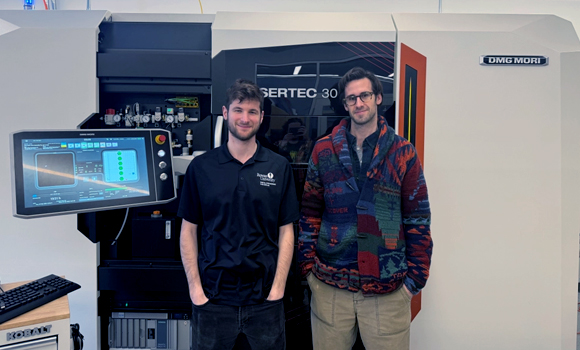
Phase3D, located in Chicago, Illinois, USA, and Rowan University’s Digital Engineering Hub (DEHub), based in Glassboro, New Jersey, have announced a partnership to advance data-driven metal Additive Manufacturing research, education and process confidence.
The collaboration demonstrated its value during the first build completed independently by DEHub’s team following the installation of a DMG MORI LASERTEC 30 SLM Laser Beam Powder Bed Fusion (PBF-LB) Additive Manufacturing machine. Phase3D’s Fringe Inspection technology monitored the build surface layer by layer throughout the process.

Early in the build, an error in the build preparation output caused approximately the first sixty layers to produce only the part contours, omitting the intended infill and support structures.
Such errors can result in defective parts and pose a significant risk to the Additive Manufacturing machine. Transitioning directly from contour-only layers to full infill without the intended support geometry can cause parts to peel, deform, protrude above the powder bed or fail to form correctly. A protruding part can interfere with the recoater, potentially causing further build failures and machine damage. When such an error occurs at the start of a build, operators would typically either cancel the build as a precaution or continue without quantitative evidence of the associated risk.
Rather than terminating the build immediately, DEHub and Phase3D established a clear decision criterion: the build would be stopped if Fringe Inspection height maps detected part protrusion, abnormal swelling, inadequate powder coverage or other evidence that the parts were not forming correctly.
Throughout the transition from contour-only layers to full geometry, the teams monitored the height of exposed melt regions and assessed subsequent powder layers for recoater-related issues. While standard machine monitoring and layer images can indicate that conditions have changed, they do not provide quantitative surface height data. According to the companies, Fringe Inspection delivered calibrated surface measurements that enabled an evidence-based go/no-go decision as the build progressed.
Evidence to continue the build
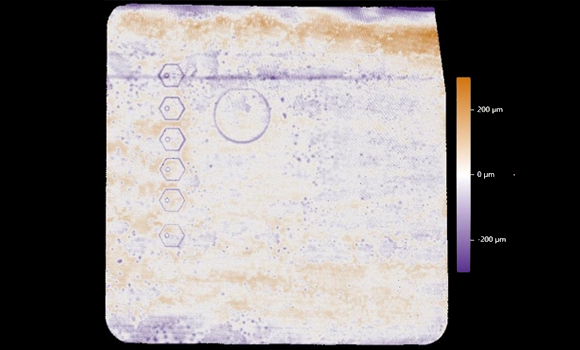
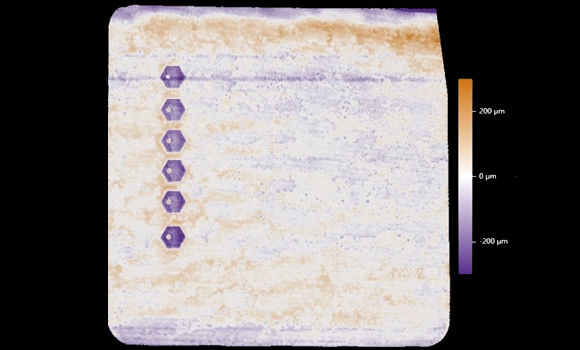
The height maps captured the transition from contour-only layers to the bulk part geometry. According to Phase3D, the measurements showed that the parts continued to build successfully, with no indication of swelling, protrusion or peeling. The powder layers also remained stable, with no evidence of recoater interference.
Based on these measurements, Rowan’s team continued the build to completion.
According to the companies, the monitoring data provided a quantitative basis for continuing the build rather than stopping because of uncertainty or proceeding without objective process information. They stated that, during DEHub’s first independent build on the new machine, Phase3D’s monitoring technology enabled an unexpected process event to be managed using measured build data rather than operator judgment alone.

“Day one is when inspection must prove its value,” explained Niall O’Dowd, PhD, founder and CEO, Phase3D. “This build did not follow the plan, but Rowan did not have to choose between cancelling reflexively and hoping for the best. Fringe Inspection gave the team a measurement-driven basis to continue, without the possibility of a build crash or printer installation delay.”
Research, education, and qualification
According to the partners, their collaboration gives Rowan students and researchers access to calibrated, unit-based heightmaps from the metal Additive Manufacturing process. The teams plan to use those measurements to support process understanding, anomaly detection, qualification research, and hands-on education in data-driven manufacturing.
“Our goal at DEHub is to connect advanced manufacturing with trusted data. This first build showed our students and researchers how real-time, quantitative inspection can support decisions at the moment they matter most,” stated Antonios Kontsos, PhD, Director, DEHub.