Back to the future: A decade of Additive Manufacturing innovation and growth at Materials Solutions
Ten years ago, in the first-ever issue of Metal AM magazine, Materials Solutions was featured as one of the industry’s rising stars. A decade on, with ongoing questions about the wider industry’s progress, we returned to see what the company’s journey reveals. Much has changed, including its acquisition by Siemens Energy (formerly Siemens AG), which fuelled significant growth. Yet the company remains firmly focused on its core expertise: processing nickel-base superalloys for high-temperature applications. Martin McMahon reports on its journey to large-scale series production, including a milestone agreement with Rolls-Royce Civil Aerospace and a major investment in Nikon SLM Solutions’ NXG XII 600 machines. [First published in Metal AM Vol. 11 No. 1, Spring 2025 | 20 minute read | View on Issuu | Download PDF]

Ten years ago, Materials Solutions was featured in the very first issue of this magazine, having established itself as a market leader in the rapidly emerging metal Additive Manufacturing industry. That first article covered the rise and success of what was then a small UK-based AM service provider focused on producing high-performance parts for the aerospace and motorsport sectors using Laser Beam Powder Bed Fusion (PBF-LB) technology.
Founded in 2006, the company quickly established itself as an industry pioneer, installing the first operational EOS M270 machine in the UK. From its humble beginnings on the University of Birmingham campus, the company moved to its first commercial site in Worcester in 2010, by which point it had already expanded to three PBF-LB machines.
By the time Metal AM magazine first profiled Materials Solutions in 2015, the company stood out as having one of the largest independent metal AM capabilities in the world. It operated eight machines from the then-industry leader, EOS, with three more on order the same year. What was particularly remarkable at this stage of the company’s development was that very few businesses had invested so extensively in PBF-LB technology; it was still widely regarded by most industries, including aerospace, as merely a prototyping technology.
Considering that metal AM was still in a somewhat speculative phase, this was a bold move – one that, in hindsight, proved to be a fortunate decision. During this period, the company developed a razor-sharp strategy of focusing exclusively on a specific type of work and specialising in a single group of alloys. This approach has remained a constant for Materials Solutions ever since, with a dedicated focus on manufacturing high-temperature components in nickel-based superalloys for turbine technologies and similar applications.
Where many others struggled or failed, the company leveraged its expertise in metallurgy to succeed with alloys such as Inconel 625, Inconel 718, C263 and Hastelloy X, while also developing solutions for difficult-to-weld alloys like 738, Inconel 939 and CM247LC. The current leadership is absolutely certain that the key to Materials Solutions’ success today lies in this early decision to focus on these alloys.
Fast-forward to the present, and the company has undergone a significant transformation driven by continuous technological advancements, a strategic investment, and an unwavering commitment to quality and innovation.
This article focuses on the key milestones and developments over the past decade, highlighting how Materials Solutions evolved from its prototyping roots into a world-leading production company that is part of a group within – quite literally – an industrial powerhouse.
Acquisition by Siemens Energy
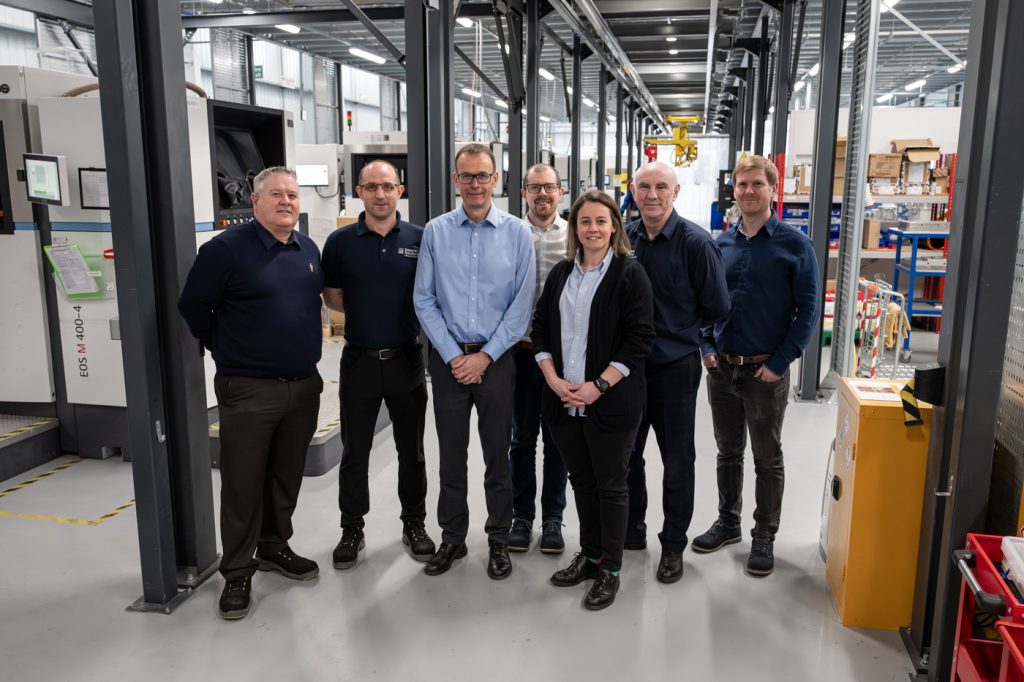
Materials Solutions’ first significant milestone came in 2016, when it received an initial investment from the industry giant Siemens AG, which was, at that time, a single integrated group of businesses. By 2017, an initial 14% stake grew into a complete acquisition, with the company becoming part of the Siemens Gas and Power division – now Siemens Energy following the spin-off in 2020.
To external observers, the swift transition from initial investment to full ownership might have seemed abrupt, especially given the limited understanding of the performance of metal AM parts at the time. Additionally, the aerospace sector, a high-profile market, remained undecided on metal AM’s potential. This move also surprised many who had expected Materials Solutions to deepen its involvement with aerospace rather than potentially shift focus.
What the wider world did not fully understand at the time, however, was that Siemens Gas and Power was already well-versed in metal AM. The decision to select Materials Solutions was, in fact, a highly strategic one. Siemens’ journey into using metal AM began with its development of an industrial AM capability at Finspång in Sweden, where AM was used to overhaul used burner heads. Realising that it was easier to acquire external capability than to expand its existing sites, Siemens ultimately turned to Materials Solutions. As AM began to have a significant and positive impact on its manufacturing capabilities, the company recognised the importance of securing its supply chain in a world where concerns about the stability of global supplies were growing.

The acquisition of Materials Solutions was, therefore, driven by supply chain security as much as by the promise of the technology to improve component and product performance of Siemens Energy’s core offerings, such as industrial gas turbines. On the other side of the coin, the acquisition marked a significant turning point for Materials Solutions: it provided the financial backing and strategic support necessary to scale its operations. What began with an initial investment of £30 million – demonstrating Siemens’ commitment to the growth and development of Materials Solutions – has since been followed by continuous reinvestment. This has fuelled an average year-on-year growth of 25% since 2018.
The acquisition placed Materials Solutions in an enviable position, comparable only to Morris Technologies in the US, acquired by GE in 2012. However, while the acquisition of Morris Technologies was driven purely by internal requirements, Materials Solutions was able to maintain its role as a standalone AM service provider. This ownership model has allowed the company to remain cost-competitive and responsive to market demands while continuing its trajectory of innovation and growth.
This adaptability was particularly evident during the COVID-19 pandemic. The period presented unforeseen challenges across many industries, and Materials Solutions was no exception. Despite the obstacles, the company did not halt production. Instead, it became a vital asset to its parent company, emerging from the pandemic with a revised balance of 60% internal work for Siemens Energy and 40% external work. The company’s ability to meet the supply needs of Siemens Energy during this time was proof of how successfully the parent company had transitioned from conventional production methods to AM.
Following the pandemic, Siemens Energy expanded the number of parts produced via metal AM, further underscoring the strategic importance of Materials Solutions within the Siemens Energy ecosystem. While the volume of performance- and supply-chain-critical components for Siemens Energy has increased, Materials Solutions remains committed to dedicating a significant share of its capacity to external customers in adjacent industries.
Relocation and upgrade to EOS M400-4 machines
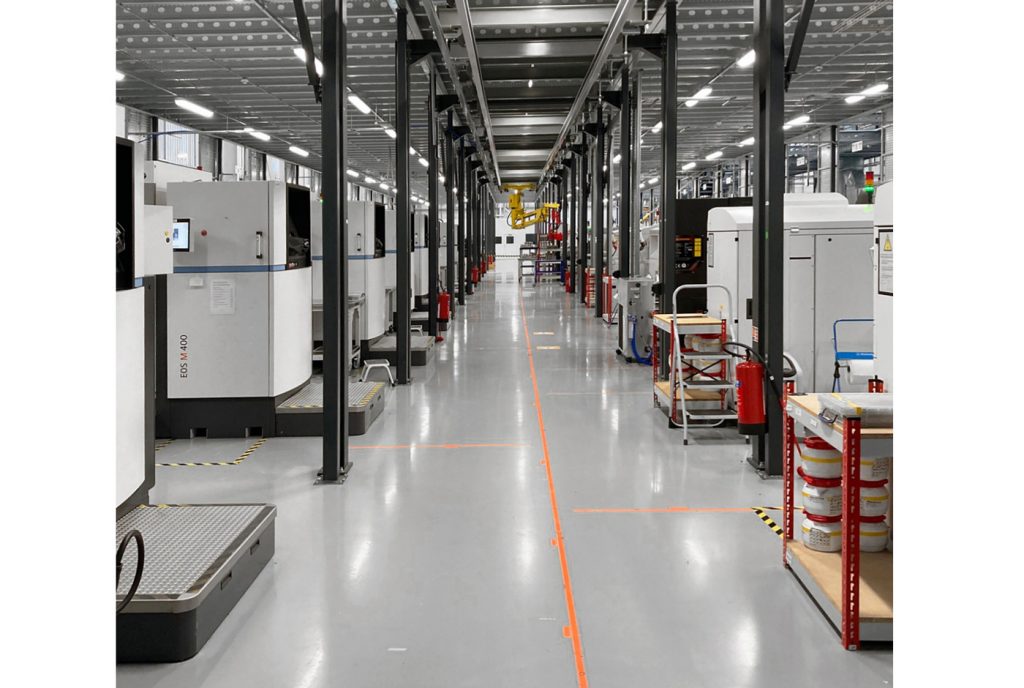
One of the most significant developments over the past decade has been the expansion of Materials Solutions’ facilities and capabilities. In 2018, the company relocated to a purpose-built facility, moving its entire metal AM fleet from the city to a new industrial park to accommodate its growing operations. It was around this time that I made my first visit to Materials Solutions, just before the pandemic. At this juncture, the company was clearing out some of the old and making way for the new – swapping out its remaining EOS M270 machines for M290s.
However, ever the pioneers – and having already carried out some development with the M400 single-laser machines, focusing on performance, repeatability, and cost-effectiveness – it recognised that single-laser machines, particularly those with a limited build area, would be a barrier to further progress. Hence, although the move included both of its existing M400-1 machines, the company ultimately concluded that as well as having the ability to build single, larger parts, it needed the flexibility to manufacture multiple parts simultaneously – something that could only be achieved with multi-laser machines and selected the M400-4 as it’s mid-size production machine of choice.
In the subsequent years, the company began replacing more of its single-laser machines with larger four-laser machines, now all meticulously aligned along one side of the factory. However, it is also worth noting that at the time of the move to the new site, Materials Solutions had already acquired a different type of PBF-LB machine, signalling its shift away from relying solely on one vendor – this machine was already up and running during the official opening. By the time of my first visit, the well-established Renishaw machine had been dedicated to exploring the potential of using alternative materials. I recall that amid a factory full of white EOS machines, this one certainly stood out – but it was all part of the company’s strategy to stay ahead of the game.
A fully integrated production environment
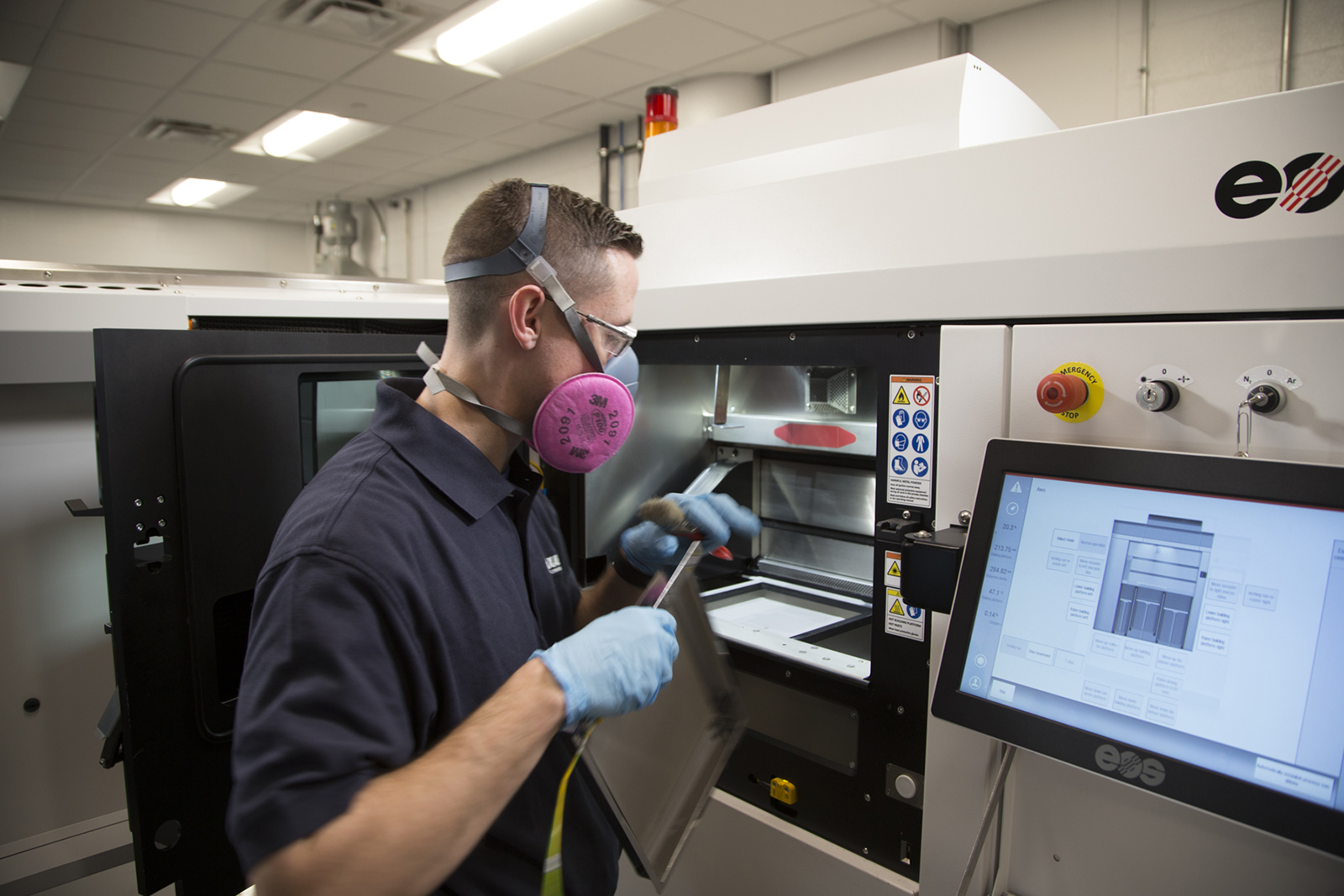
Walking through the doors of Materials Solutions in 2025 was a whole new experience. Although Materials Solutions had previously made an internal split between building and post-processing, the newer layout completely isolates these activities. With a line of thirteen M400s on one side, a further group of seven M290s, two RenAM500Qs, and a Nikon SLM Solutions SLM 500 machine, it absolutely cannot be mistaken for a prototyping job shop.
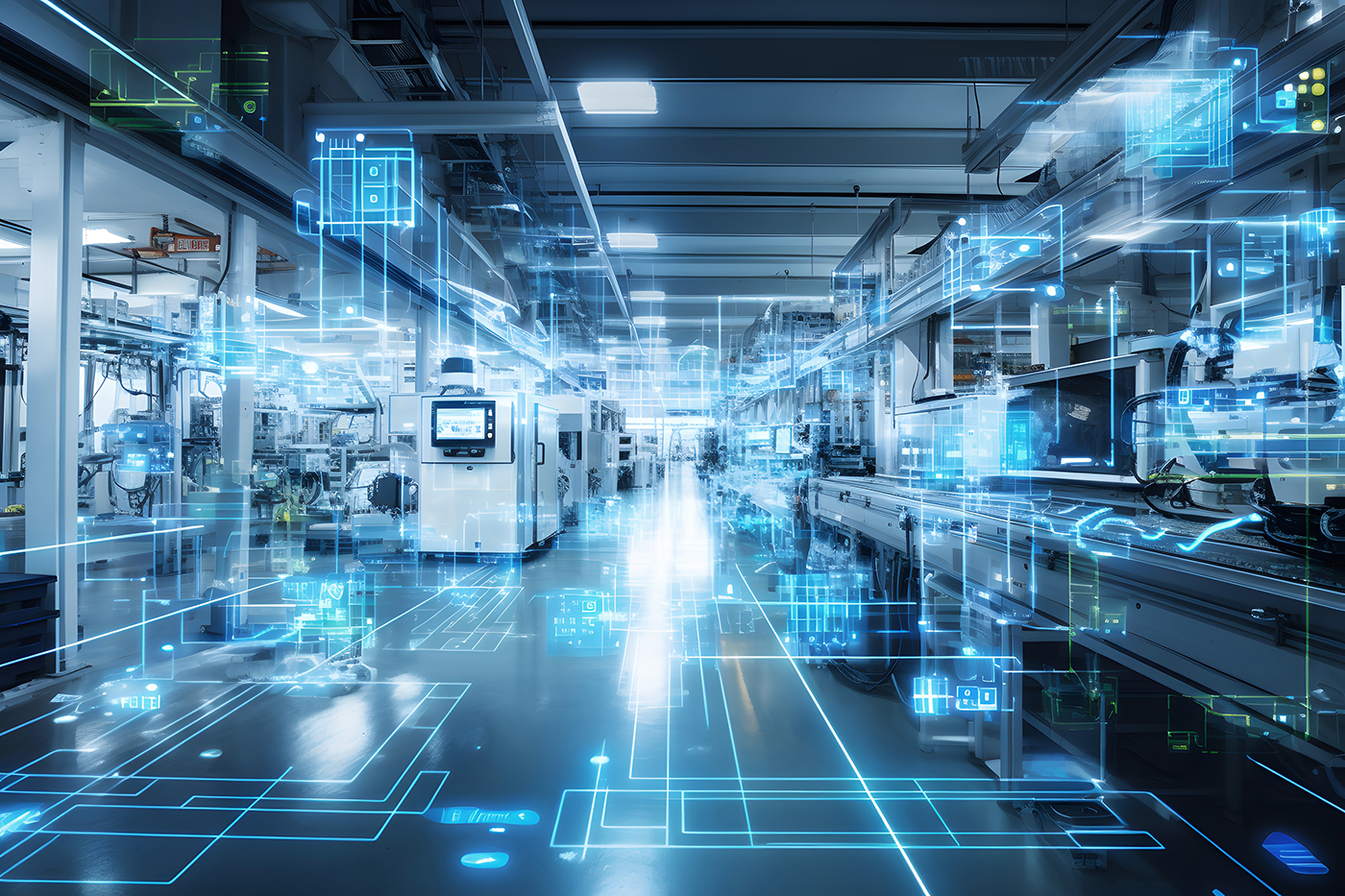
Today’s facility is a fully integrated production environment – all under one roof. It is one of the best I’ve seen to date. Rows of clean, fully operational machines – each with its own dedicated powder supply – create a vibrant, high-efficiency atmosphere. The constant hum and whirring of the machines fill the air with all the activity anyone would expect to see in a modern factory.
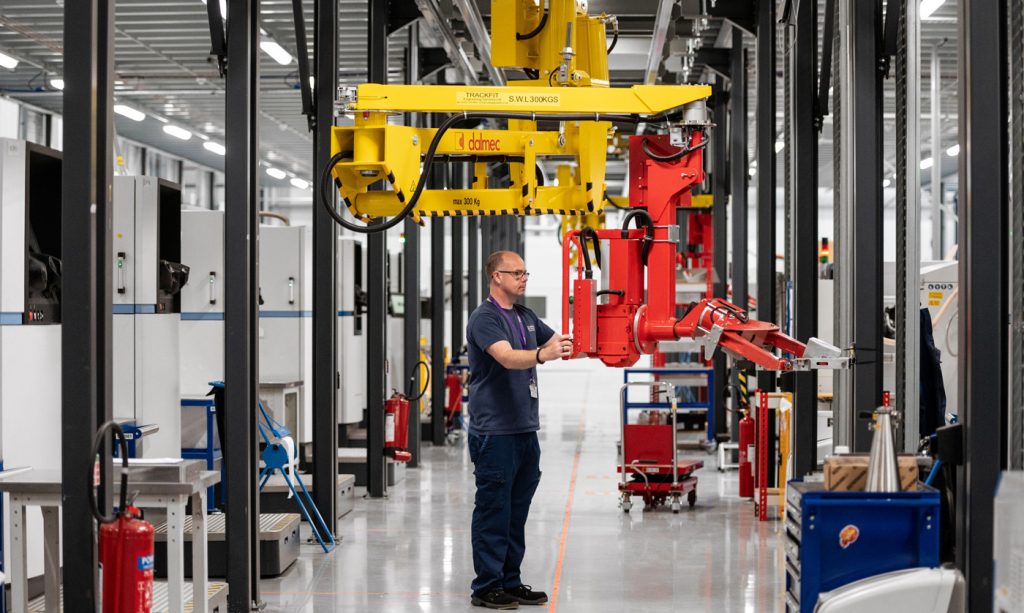
However, there was also a touch of sci-fi. Those familiar with the film Aliens will understand what I mean by a ‘mech-lifter.’ While not quite an exoskeleton, the bright yellow gantry-mounted forked lifting device is a striking presence in front of the AM machines. Acquired to simplify the loading and unloading of these large PBF-LB machines, it’s also reminiscent of the robots used in the automotive sector to move partially-assembled vehicles around a factory.
Scaling upwards with Nikon SLM Solutions NXG XII 600 machines
The most anticipated development is scheduled for May 2025, when Materials Solutions will receive the latest twelve-laser NXG XII 600 machine from Nikon SLM Solutions. The company also plans to install a second NXG XII 600 machine later in the year. During our visit, we were shown a large open section of the factory, where the space for the first machine was neatly marked out with tape, a clear visual clue to the scale of what will soon be delivered.
Of course, the production of very large parts isn’t a novelty exclusive to AM. Anyone who has seen the inside of a large industrial foundry can attest that casting very large and heavy parts is certainly possible. That said, while there are still numerous questions regarding the performance of these gargantuan machines, the decision to invest in such a machine has not been made lightly.

As with others who have mastered PBF-LB, the team at Materials Solutions understands that the most significant factors influencing build, aside from powder quality, are optimising the laser exposure parameters and control of the system key process variables such as laser power, laser focus, process chamber gas flow and multi-laser alignment. As a result, the investment in the NXG XII 600 comes after an extended development period in close collaboration with Nikon SLM Solutions. Gas flow and extraction from the build chamber have kept many up at night due to their impact on build quality, and these concerns are only amplified when you introduce four, eight, or twelve lasers. Months of testing and evaluation were conducted at Nikon SLM Solutions before the decision to acquire the machine was finalised.
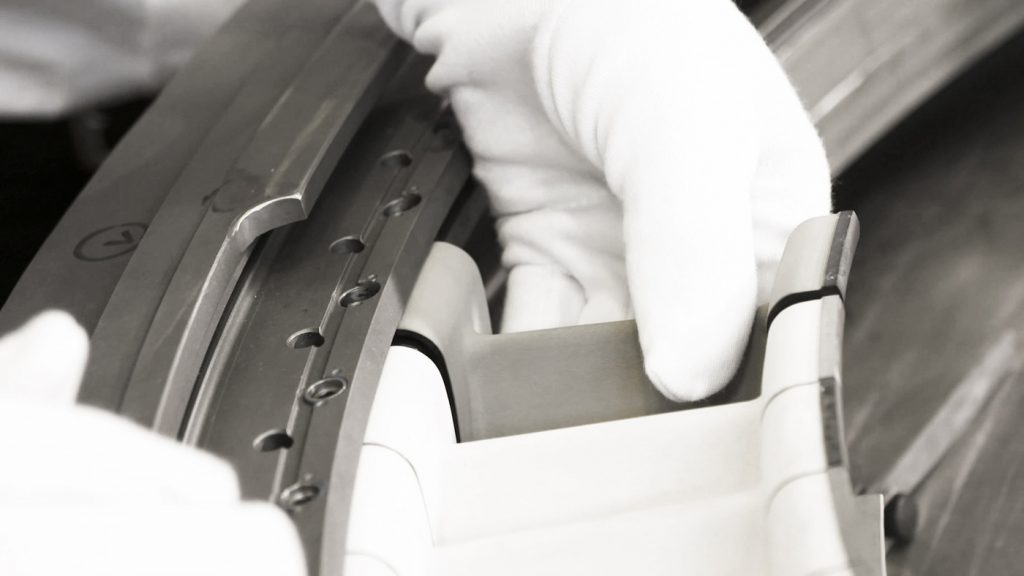
This testing will continue following installation and verification but, once operational in the second half of 2025, the machine will enhance production capabilities in a way never previously considered possible, enabling the production of larger and more complex parts. Trevor Illston, one of the company’s co-founders and its Chief Manufacturing Engineer, expressed confidence that his team will be able to deliver on this without compromising on the company’s well-established standards for quality and repeatability.
The NXG machine will initially produce a very specific power generation part, set to be the first of its kind produced by PBF-LB. Perhaps Metal AM will be allowed to reveal more later in the year, but, for now, we can only confirm it is extraordinarily large and replaces five separately built AM parts – which had already replaced a complicated, multi-stage production and fabrication process. Thanks to AM, Siemens Energy has been able to make substantial improvements. One of the test components, in particular, is eye-poppingly huge by today’s standards in metal AM. Illston commented, “When the machine is fully operational, it will lead to significant reductions in cost and lead time for this very large part whilst significantly improving fuel efficiency and the emissions of Siemens Energy’s most advanced gas turbine.”

A robust portfolio of more than a hundred qualified parts for the energy sector
Achieving true production capability is the goal for nearly all AM service providers, with few aiming to be merely another ‘job shop’. However, many struggle to fully understand what it truly means to be production-ready and what it takes to get there. Materials Solutions is one company that has demonstrated a clear understanding of this challenge and has made significant strides in production over the past ten years.

What began with producing striking showpieces for the aerospace sector and a few parts for motorsport teams has now evolved into a robust portfolio of over a hundred qualified production parts mostly for the energy sector and mainly produced from nickel-based alloys. In the past year alone, the company states it has produced more than 20,000 parts. Nothing could underscore its leadership in the manufacturing world more and highlight the full transition from a prototyping company to a high-throughput production organisation. To some, that number may not seem so high, but in precision engineering, power generation represents a pinnacle. It certainly is comparable to many foundry businesses of high value and complex components.
Moreover, the majority of parts Materials Solutions produces are not the size of the commonly seen widgets and novelties that many use to promote metal Additive Manufacturing, such as keyrings and bottle openers. Instead, many are the size of wine bottles – large wine bottles, too – or could be enclosed by a typical-sized shoebox. Many are much larger still. However, the company has also recognised that smaller build areas are still necessary. The Renishaw RenAM 500Q machine was considered the best fit for this purpose, utilising the multi-laser setup for maximum throughput.
Standards: a different path
As one would imagine, for any business operating within the power generation segment of the energy sector, quality control is a cornerstone of the company’s operations. Yet, while many continue to delay decisions about adopting or using metal AM due to the lack of internationally recognised standards, Materials Solutions and Siemens Energy have developed their own specifications to qualify and control the production of AM components. To accelerate the adoption of AM, Siemens Energy invested in developing material processes and specifications, culminating in an AM materials database to provide the design input data required for critical gas turbine components.
Managing powder supply
In AM, production isn’t just about how many parts it is possible to make; it is about how the process is implemented. In this respect, taking logical steps is something that all companies in the manufacturing sector wishing to grow should do, and Materials Solutions has done just that. Placing sieving units and powder delivery systems on the raised floor above some AM machines is something I’ve been hoping to see for years.
The powder is typically refreshed by blending with virgin powder, which is supplied to the company under a very tightly controlled supply specification. This approach is a very sensible way to ensure maximum utilisation of feedstock materials, while also minimising waste. To further refine this process, rigorous internal analysis and verification are conducted to ensure compliance with these strict specifications. Additionally, the company has its own way of tracing and grading all of the powder in use.
Rolls-Royce agreement marks another major milestone
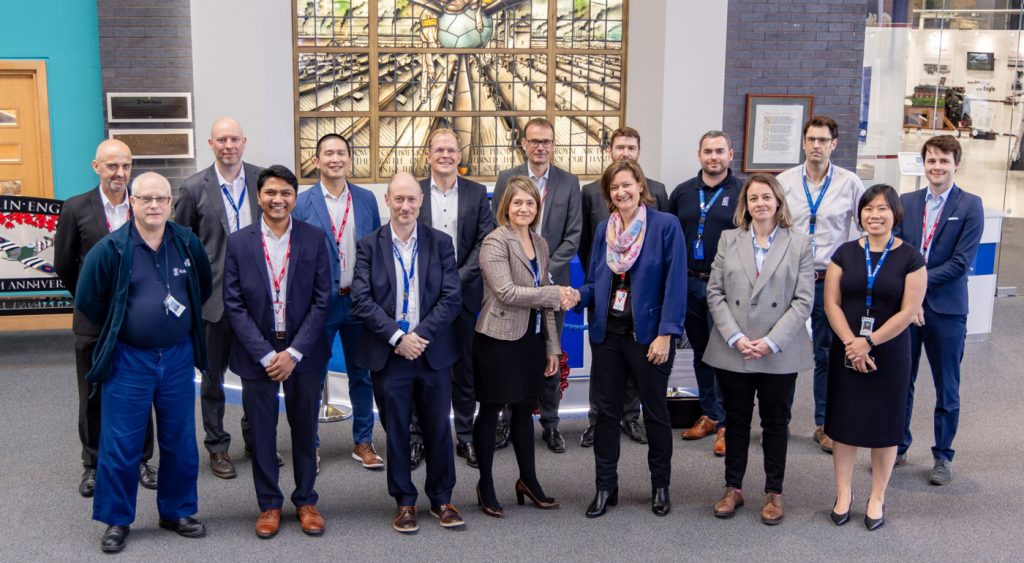
A few weeks before our visit, Materials Solutions signed a collaboration agreement with Rolls-Royce to develop and supply serial production Additive Manufacturing applications for its Civil Aerospace business. The production of flight components for commercial aviation was described as a ‘North Star’ when Materials Solutions was first established, and the success that has been achieved together with Rolls-Royce builds on past collaborations that resulted in non-flight and rig components.
Quan Lac, Vice President of Siemens Energy Additive Manufacturing, stated at the time of the announcement, “With over a decade-long history of working with Rolls-Royce on AM technology and part development we are proud to be selected now by Rolls-Royce to further complement its journey in AM production. It has been a long-standing ambition of our co-founder, Trevor Illston, since the very early days of Materials Solutions to supply production AM parts for flight, so it’s with a great deal of pride that today we can say we are supporting critical power solutions for both land (Siemens Energy) and air.” This marks a major milestone on Materials Solutions’ journey to expand its PBF-LB serial production expertise beyond Siemens Energy stationary gas turbine components.
During our visit, Andy Brooker, Head of UK Sales for Materials Solutions, explained that the company has to be very precise when it comes to working with external customers. With the ethos of Materials Solutions built around serial production, it falls into a niche within AM. Brooker stated, “Our success has stemmed from a clear vision from the beginning and an alignment with the type of projects that go through the factory. This is an important factor when it comes to working with external clients as their ambitions need to align with our core focus. We are built around a high level of engineering, quality control and repeatability.” It’s possible to see from the examples shown here that the company has earned its right to be in this position.
Quality control
For most of the industry, once full-scale production has been achieved, it is possible to work within a process that only requires product sampling for ongoing quality controls. The quality process runs from beginning to end and applies industry standard SPC processes to determine the right level of inspection. Each part is studied to determine the best build strategy, and the company goes to great lengths to qualify each machine for production. No matter how precise an AM machine OEM’s products are, no two machines – even of the same model – are identical. As a result, each AM machine is individually calibrated for optimum performance to ensure parts meet exact material properties.

Every batch of powder is tested to its own very tight specifications, and every build is tested for dimensional tolerance, defects, and material quality. This process is fully documented and repeated across all of Siemens Energy’s AM facilities. Illston’s confidence in the company’s processes was evident when he stated, “We have reached the point where any one of our qualified production parts can be manufactured at any Siemens Energy AM site and achieve the same materials properties.” This is precisely the kind of assurance that anyone in the AM field would want to hear and rely on. As a result, the company now has a vast quantity of data points to demonstrate the stability of its metal AM production process.
Despite all these data, however, I found it extraordinary that the company still performs such thorough inspections. When asked if the company was close to shifting to sampling instead, Illston replied, “We are working towards it, component by component, and have reduced the first inspection plans, but we still have some way to go on the full product spectrum.”
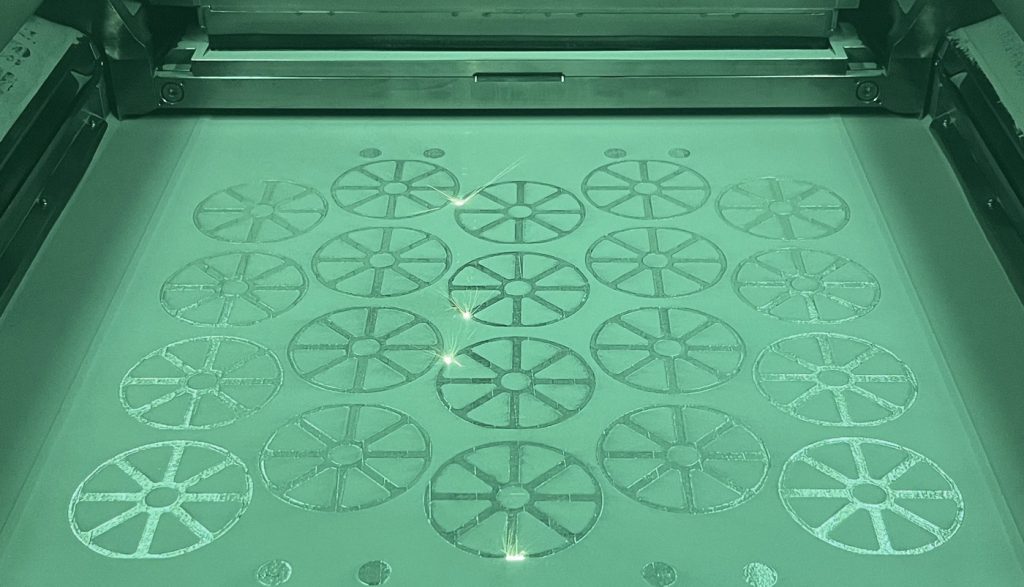
However, there were visible signs that the company must be getting relatively close to that point. Investment in the facilities also includes every aspect of quality assurance. It covers virtually every step of the end-to-end process chain and is neatly displayed on a large display panel monitoring the entire facility. Only heat treatment is carried out externally before parts are returned on the build plates for finishing and complete inspection. For parts with many internal channels and features, complete powder removal is essential, and multiple steps are taken to ensure every single part is clean, clear, and conforms to requirements.
Self-certifying parts is a great way to control costs, and Materials Solutions realised this right from the start. As a result, the company now has everything from seamless integration with Siemens NX for design data to GOM and CMM dimensional measurements, chemical analysis and surface inspection – all within the same facility. Recently, the company has even invested in a large CT scanner.
Talent development and retention
I am always encouraged when I hear about employees who have been with a company for their entire career or who have at least reached a significant milestone. However, within the metal AM world, revisiting a company can sometimes be a new experience every time; the industry sees a lot of career movement, especially when ‘jumping ship’ can be the only way to rise up the career ladder.
In the case of Materials Solutions, one critical factor in its success has been its focus on retaining staff. This emphasis on continuity was part of the rationale behind the initial decision to relocate from Birmingham to Worcester and expand into the current facility. Co-founder Carl Brancher remained with the company until his retirement, providing long-term leadership. Illston is still with the company, contributing to its growth and development. Scarlett Baker, General Manager, shared that she had started as employee number ten in 2016, a testament to her long-standing commitment to the company’s journey.

All too often in the world of advanced manufacturing, there’s a perception that digital manufacturing in particular leads to fewer employment opportunities. However, Materials Solutions strongly counters this belief. The company’s focus on detail and quality requires a lot of human activity, and as the business has grown, so has its workforce, which now totals around ninety-five employees. Many of these employees are ‘homegrown’, with the company taking on apprentices and student work placements, some of which have led to full-time job offers.
This commitment to building a skilled and dedicated workforce has fostered such goodwill that some employees have even sought positions for family members to join the company. This somewhat old-fashioned approach harkens back to the days when parents would bring their children into the trade or workshop. It also underscores that, despite the rise of digital manufacturing, traditional workshop roles are still vital in the metal AM sector.
Environmental impact and sustainability
While a large share of Materials Solutions’ products already help reduce the CO2 emissions of Siemens Energy’s gas turbine fleet through higher efficiency and power output, they will now also help revolutionise the energy sector by addressing the challenges of achieving 100% hydrogen combustion in industrial gas turbines. The ability to produce monolithic designs with complex internal purging and cooling features is crucial for managing the high reactivity and rapid diffusion of hydrogen.
Materials Solutions has recently delivered the first set of hydrogen burners to the HYFLEXPOWER project in France, where – for the first time globally – a Siemens Energy gas turbine is being run on 100% green hydrogen.
Beyond the positive impact of its products in improving efficiency, Materials Solutions is also making strides to continuously enhance the sustainability of its production processes. Based on Siemens Energy’s research and in collaboration with its powder supply base, the company will recycle waste powder and solid support structures into virgin powder.
Outlook
Ten years after Metal AM magazine’s first article, Materials Solutions has evolved from a pioneering prototyping company to a leading industrial producer of critical high-performance components for industrial applications, all while staying relentlessly focused on productivity, repeatability, and material properties.
In an environment where so many decided to wait and see, Materials Solutions remained committed to fully qualifying materials and the PBF-LB process. Now, it is reaping the rewards of its perseverance and forward-thinking approach.
As Materials Solutions looks to the future, it is poised for continued growth, driven by ongoing investments in cutting-edge technologies such as the new large-format PBF-LB machines. Its continued focus on high-temperature applications, notably to support Siemens Energy’s carbon reduction initiatives, positions Materials Solutions as a vital player in the energy sector.
Additionally, with a business-case-driven investment model, the company is benefitting from opportunities nurtured over decades in the aerospace sector, where the advanced AM solutions it has developed are unlocking new applications and improving end-application performance. It sees future growth being driven by decarbonisation and has recognised that AM is an enabling technology for achieving reductions in carbon emissions.
Those seeking proof of whether Additive Manufacturing can enhance performance and significantly improve supply chain resilience, need look no further than Materials Solutions. With its strong track record and forward-looking strategy, the company is well-equipped to lead the AM industry into the next decade and beyond.
Contact
Materials Solutions Limited
Siemens Energy
Gas Services
Additive Manufacturing
SE GS D AM
Worcester Six Business Park
4 Coneybury Road
Worcester WR4 0AD
United Kingdom
[email protected]
www.materialssolutions.co.uk
Author
Dr Martin McMahon
Technical Consultant, Metal AM magazine, and founder of
M A M Solutions
[email protected]
LAST MONTH’S MOST-READ ARTICLES