Additive Manufacturing in US defence logistics: From technical progress to operational capability
Additive Manufacturing is advancing rapidly across the defence sector, but technology alone does not deliver operational advantage. The real challenge is integration – linking machines, materials, data, and logistics into systems that can perform under operational pressure. In this article, MG (Ret.) Edward F Dorman III, former US Army theater sustainment commander and a recognised authority on contested logistics and defence industrial integration, assesses the current state of advanced manufacturing within the United States defence ecosystem and the implications for the future of US military sustainment and manufacturing. [First published in Metal AM Vol. 12 No. 1, Spring 2026 | 15 minute read | View on Issuu | Download PDF]
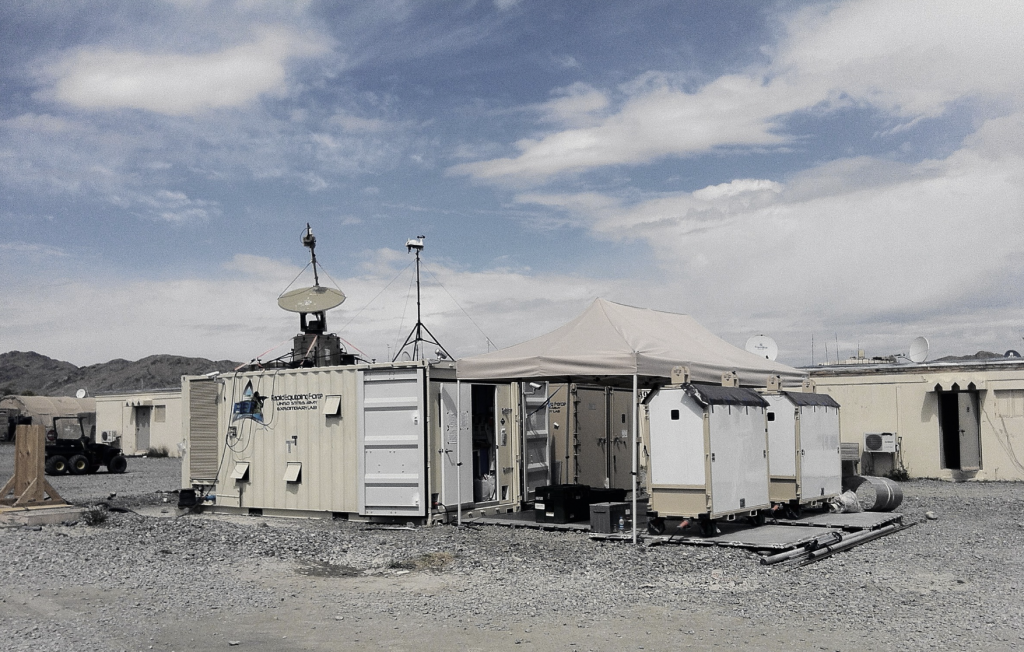
In early February 2026, I attended the Military Additive Manufacturing (MILAM) Symposium in Tampa. The event brought together defence leaders, industry executives, researchers, and technologists focused on the evolving role of advanced manufacturing in national security. My purpose in attending was not to catalogue presentations or individual remarks, but to assess the broader state of play. How mature are we, truly, in integrating advanced manufacturing into defence posture, resilience, and deterrence?
In truth, much of the core technology is already viable. Some elements remain immature, and some claims exceed demonstrated performance, but the decisive gap is not technological – it is architectural. Ultimately, the purpose of this architecture is not manufacturing efficiency alone. It is operational endurance – the ability to adapt supply, repair, and production under contested conditions faster than an adversary can disrupt them. The Department of Defense (DoD) cannot continue purchasing isolated machines without the digital, logistical, inspection, and sustainment frameworks that make them operationally meaningful.
The answer is encouraging, but incomplete. Across the advanced manufacturing ecosystem, technological progress is undeniable. Additive Manufacturing machines are more capable, but they are only one component of a broader production architecture. Cold Spray repair and solid-state deposition are gaining traction. Wire arc processes are becoming more deployable. Subtractive machining, finishing, metrology, and heat treatment remain essential complements. Digital design environments are advancing, and Artificial Intelligence is increasingly integrated into planning and production workflows. The US retains substantial industrial capability across the manufacturing stack. Yet technology alone does not produce deterrence.
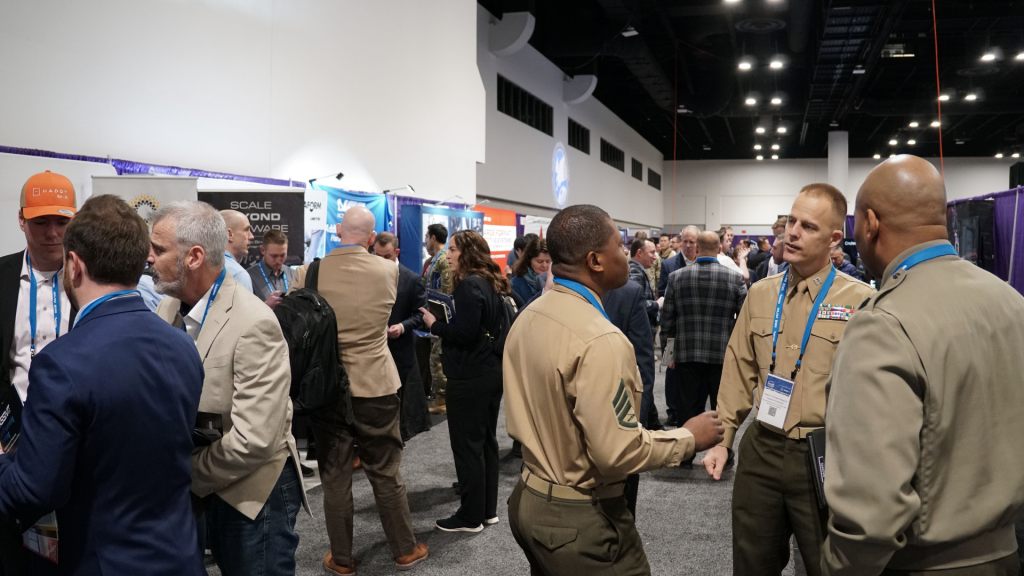
Deterrence emerges when capability is integrated into posture, sustained across time, embedded in doctrine, linked to data, and exercised under stress. In that sense, advanced manufacturing is not merely a production technology; it is part of a broader system for shaping the sustainment battlespace before conflict begins. It emerges when industrial capacity and operational employment are synchronised – not episodic, not demonstrative, but institutionalised.
As one senior leader observed, “The Organic Industrial Base isn’t what you see – it is what it makes.” Deterrence is measured not by machines displayed, but by sustained output under pressure. Assembling impressive pieces is not the same as building a system. Advanced manufacturing must now evolve from a promising collection of machines, materials, and demonstrations into a coherent industrial and operational architecture. That architecture must function across the competition continuum – from steady-state competition through crisis and, if required, conflict.
This is not an abstract concern. Our adversaries are not waiting for perfection. They are adapting, experimenting, iterating, and scaling – particularly in integrating industrial capacity with operational needs.
In contrast, our system often avoids the language of industrial failure. Programs that do not achieve intended return on investment are extended, re-scoped, or relabelled. Facilities are assumed viable because they exist. Capacity is presumed resilient because it is funded. Yet deterrence is not strengthened by budget lines – it is strengthened by output under stress.
The strategic question before us is therefore straightforward: Will advanced manufacturing remain a collection of technical achievements? The US has already demonstrated remarkable innovation in this domain. The question now is not whether we can innovate – we can. It is whether we will integrate those gains into a durable pillar of national industrial deterrence.

The state of play: real progress, and persistent friction
Capability is maturing faster than adoption
If you step back from individual technologies and look across the defence advanced manufacturing landscape, the most honest characterisation today is this: we are advancing rapidly in capability, but unevenly in adoption. The tools are improving; the system that must absorb them is not keeping pace.
On the progress side, several trends are clearly moving in the right direction. First, the technology baseline continues to mature. Machines are more reliable, repeatable, and capable across a broader range of materials. Post-processing and inspection pathways are becoming more standardised. Repair technologies such as Cold Spray and related solid-state deposition methods are demonstrating tangible value, particularly when traditional supply chains cannot deliver on time. Polymer AM – often overlooked in metal AM discussions – delivers outsized readiness benefits through adaptive tooling and fixtures, and through rapid replacement of non-critical components.
Beyond additive: the full manufacturing stack
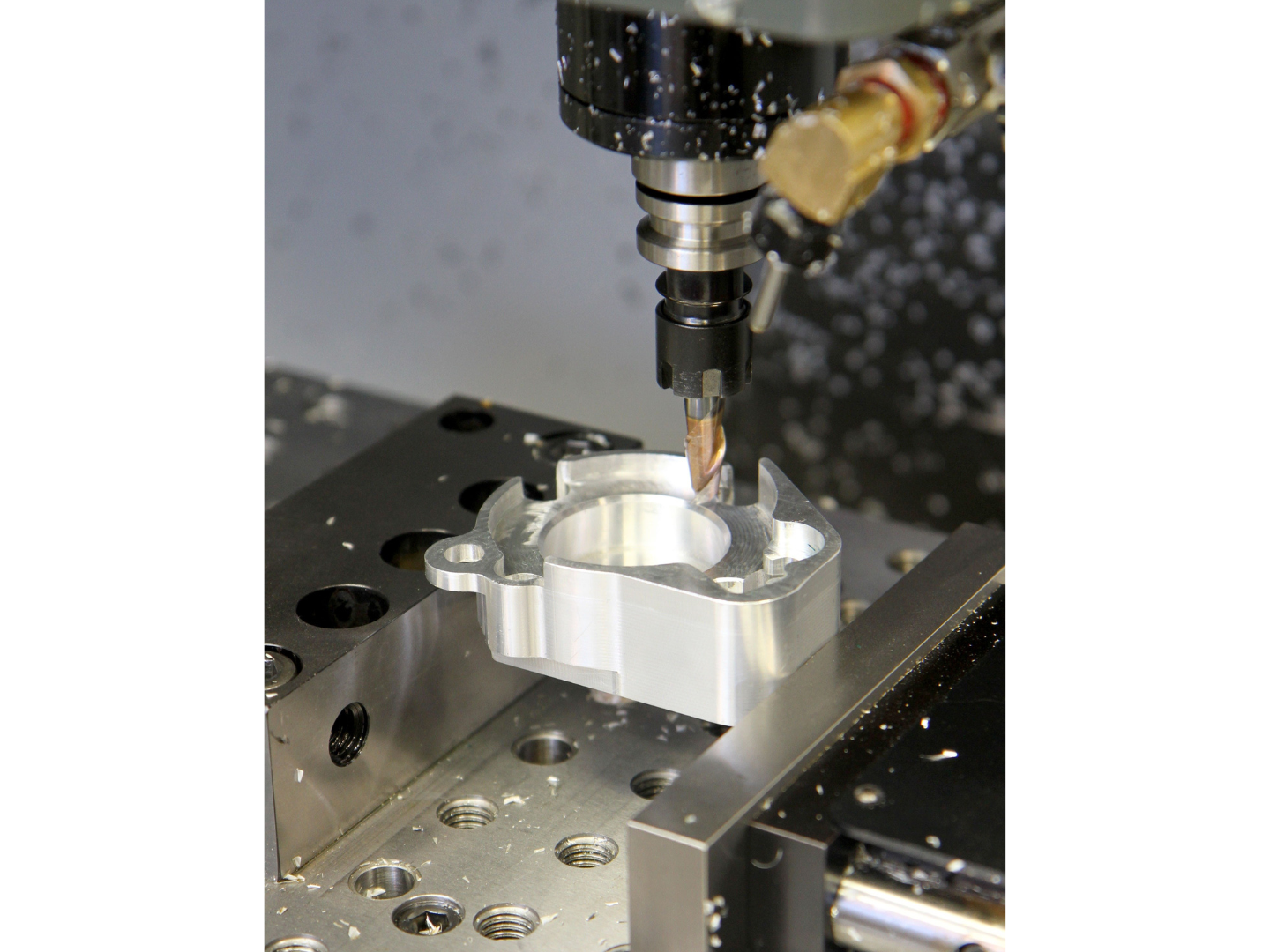
Second, advanced manufacturing must mean more than additive alone. Additive and subtractive are not competing philosophies; they are complementary production modes within a broader manufacturing stack. If the objective is operational availability and endurance, then the conversation must include machining, finishing, heat treatment, metrology, surface treatments, and inspection – as an integrated value stream rather than a single machine solution.
Resilience is the strategic effect
Third, momentum is building around a critical insight: manufacturing is not only production – it is resilience. In contested environments, the ability to create, repair, and substitute locally is a form of operational flexibility. It is also a form of strategic signalling. When a force can sustain itself longer than an adversary expects, it changes the adversary’s calculus.
Institutional friction: qualification, authority, workforce
But progress does not automatically translate into institutional capability. In many places, Additive Manufacturing remains a pilot effort or shop-level initiative rather than a fully integrated component of sustainment design and execution.

Qualification timelines often remain misaligned with operational urgency. When process cycles stretch into months, the practical value of field production diminishes. Risk management is unevenly applied, sometimes pushing decision authority downward rather than embedding structured testing and standards upstream.
Workforce continuity also remains fragile. Advanced manufacturing skills are perishable. Rotational systems frequently move trained personnel before they build depth, and equipment usage rates may not sustain proficiency. Capability at the edge requires training models that assume churn and systems that are intuitive enough to reduce cognitive burden under stress.
Architecture beats hardware
Finally, industry engagement still leans too heavily toward the machine itself, rather than the architecture that makes it operationally meaningful. The future will not be won by the best AM machine. The most integrated production-and-sustainment architecture will win it.
Operationalisation vs demonstration: moving beyond the ‘pilot phase’
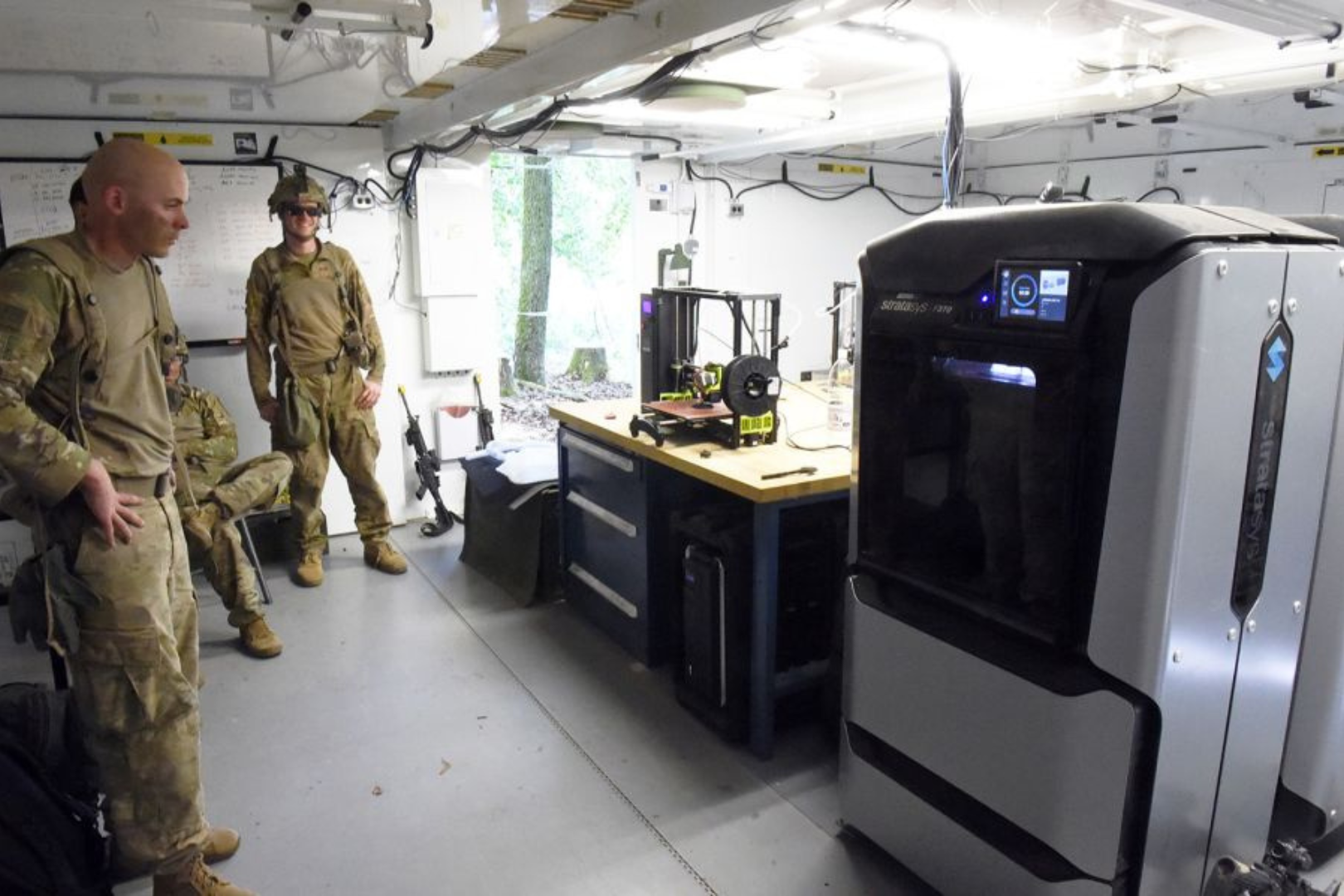
One of the clearest observations across the advanced manufacturing landscape is that the US is exceptionally good at demonstration, but less disciplined at institutionalisation. Demonstrations generate excitement. They prove what is technically possible. They attract leadership attention and unlock early funding. But demonstration alone does not create enduring capability.
In many defence environments, Additive Manufacturing still sits adjacent to readiness rather than inside the sustainment enterprise. Institutionalisation requires alignment between doctrine, force design, and operational delivery mechanisms such as depot capabilities, Army Materiel Command authorities, and forward sustainment units. It is not enough to include these tools in training curricula or brigade tables of organisation if the surrounding systems cannot absorb them.

Operationalisation requires more than machines. It demands deliberate integration into logistics systems, acquisition pathways, workforce models, and planning assumptions. It requires secure digital file movement across echelons, rapid inspection protocols, and maintenance systems configured to recognise distributed production as legitimate supply.
Recent conflicts reinforce this reality. The war in Ukraine illustrates not geography, but adaptation speed. Systems are redesigned and fielded in weeks. Tactical feedback loops are compressed. When vulnerabilities appear, iterations follow quickly. In that environment, manufacturing flexibility is not optional. But flexibility under pressure only exists when digital infrastructure, materials, inspection, and repair capabilities are aligned in advance. It does not materialise once a crisis begins.
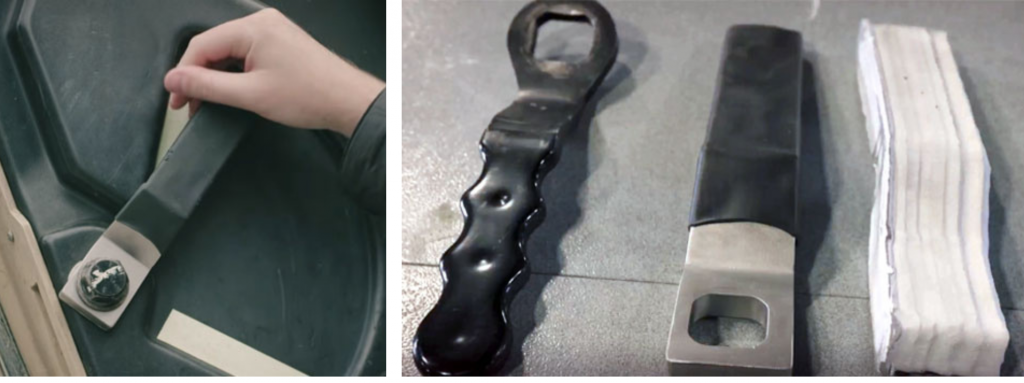
The US possesses world-class research and manufacturing capability. What it does not yet consistently possess is a seamless bridge from laboratory success to fielded permanence. The problem is endurance under stress. In contested environments, units cannot wait months for qualification, nor can they rely on supply chains that may be disrupted.
A mobile additive capability has limited value if it cannot be sustained. The same is true of an additively manufactured part stalled by procedural delay, or distributed production that enterprise systems are unable to validate. The next phase must move from proof of concept to proof of endurance.

Industrial sustainability: a strategic warning to industry
If there is one message that must be delivered clearly to the advanced manufacturing industry, it is this: the long-term viability of defence-focused firms will depend less on machine performance and more on systemic integration. But integration is not solely an industry burden. The DoD must also align acquisition authorities, qualification models, and sustainment policies to absorb these capabilities at an operational scale.
The current environment rewards innovation, speed, and bold material claims. But defence markets are not venture markets. They are endurance markets. Companies that cannot survive the integration phase will not survive at all.
Across industry conversations, a structural tension persists. Defence demand signals often reward initial procurement more clearly than long-term integration. Firms compete to place capability; far fewer are incentivised to design for sustainment, interoperability, and lifecycle accountability from the outset.
Not a hardware sale: an integration contract
A machine placed into service is only the beginning of the responsibility chain – training, sustainment, inspection, cybersecurity, file governance, material logistics, and data traceability. When those elements are treated as follow-on considerations rather than core design requirements, integration stalls.
Defence demand signals are inherently dynamic. Budgets evolve. Priorities adjust. Programs accelerate and, at times, pause as requirements mature. Firms that anchor exclusively to episodic procurement cycles expose themselves to instability – but those that design for dual-use integration, diversified markets, and interoperable ecosystems position themselves for durability. Dual-use capability is not merely a growth strategy. It is a resilience strategy – for both industry and the defence enterprise. Durable firms will align their commercial and defence portfolios, invest in workforce depth, and participate in standards development rather than remain passive recipients of requirements.
Advanced manufacturing is a system-of-systems domain. No single firm provides the entire stack. The future will favour interoperable partnerships.
If industry doesn’t shape the rules, the rules will shape industry
Policy engagement also requires recalibration. The National Defense Authorization Act (NDAA) is not an abstract congressional document. It shapes funding priorities, standards direction, and integration incentives. Firms that do not provide informed, disciplined input risk allowing others to define frameworks that may constrain rather than enable innovation.
Engagement should focus less on procurement line items and more on structural enablers: streamlined qualification pathways, digital thread standards, distributed production authorities, cybersecurity harmonisation, and balanced intellectual property protections aligned with operational needs.
There is also a more complicated truth. Adversaries do not treat manufacturing as a niche vertical. They treat it as a strategic capacity. Nations that prioritise industrial mobilisation invest in production infrastructure as posture – not as product. If US firms treat defence advanced manufacturing as a temporary opportunity rather than a strategic domain, they risk ceding influence to competitors who see integration as power.
Industrial sustainability will require disciplined collaboration and long-term commitment to integration. The firms that endure will think in decades, not quarters (Fig. 6)
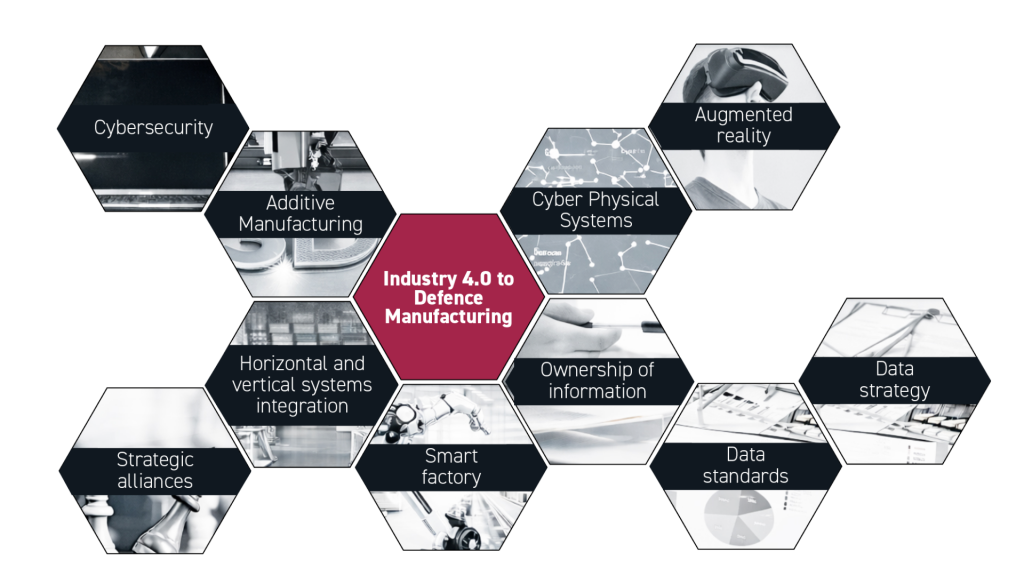
AI-enabled additive sustainment architecture: what is required
For AI-integrated manufacturing to move from concept to capability, five components must converge:
- Digital Thread Integrity – secure, authenticated part files linked to lifecycle data
- Real-Time Logistics Integration – inventory and readiness data feeding decision engines
- Distributed Certification Models – tiered standards aligned to risk
- Remote Inspection & Reachback – AI-assisted metrology with human validation
- Cyber-Hardened Infrastructure – protection against digital compromise
Without these pillars, ‘AI-enabled sustainment’ remains marketing language. With them, it becomes a strategic advantage.
Holistic integrated manufacturing: static, mobile, and AI-enabled sustainment architecture
If advanced manufacturing is to become a pillar of deterrence rather than a tactical novelty, it must be designed as an integrated architecture – not assembled as a collection of machines. That architecture should be modelled, simulated, and stress-tested in the digital environment before capital investments are made. Digital engineering and operational modelling can expose integration gaps, qualification friction, and sustainment bottlenecks early – increasing the probability that equipment purchases translate into operational capability rather than stranded assets.
Operational flexibility does not emerge from isolated nodes. It emerges from connectivity. Strategic hubs provide scale and certification authority. Regional nodes provide responsiveness. Tactical (‘Mobile’) units provide adaptation under pressure. The decisive factor is digital synchronisation.
AI-enabled logistics architecture becomes the connective tissue. A mature sustainment system would integrate real-time unit stock status, predictive maintenance data, and qualified digital files into a decision engine capable of determining whether a part should be drawn from inventory, rerouted from another unit, produced regionally, or additively manufactured locally. Inspection data, certification tier, material availability, and energy constraints would inform that decision. Outputs would feed back into enterprise systems, improving forecasting and readiness modelling.
Digital synchronisation is the difference between scale and fragmentation
True integration must account for secure digital file management, lifecycle traceability, remote inspection capability, and cyber-hardened infrastructure. These are not constraints – they are enablers of scale.
Distributed production without synchronised data becomes fragmented. Digital synchronisation without production capacity becomes an illusion. But when data integrity and production capability are aligned, distributed manufacturing becomes a force multiplier – resilient, adaptive, and credible under stress.
When linked properly, this layered architecture strengthens industrial interdependence. Demand signals become clearer. Production surges can be anticipated. Material suppliers gain visibility. Manufacturing transitions from episodic response to an adaptive network.
That transition will not occur automatically. It requires interoperability standards, aligned qualification models, and deliberate investment from both government and industry (Fig. 7).
Competitive reality: adversaries are optimising for adaptation
It is tempting – and politically convenient – to assume that the US maintains a decisive advantage in advanced manufacturing, supported by strong research institutions, industrial capability, and technical expertise. Our competitors are not trying to out-innovate us in isolation. They are attempting to out-adapt us in contested, resource-constrained operational environments. Ukraine offers a sobering example – not for replication, but as an indication of how rapidly industrial and operational requirements can converge in conflict. The conflict has highlighted several features of this environment:
- Design-to-field iteration cycles measured in weeks
- Distributed drone and component production
- Field-expedient repair and rapid modification
- Tight feedback loops between operators and manufacturing nodes
- Agile use of commercial technologies under pressure
The lesson is not that Additive Manufacturing alone wins wars. It is that industrial agility now shapes operational tempo. Meanwhile, in the Indo-Pacific, China pursues scale and integration deliberately. It dominates global shipbuilding capacity, controls significant critical mineral processing, and aligns civil and military production under centralised direction. Its model compresses the friction between research, investment, and defence output.
The US model is different: it is market-driven, congressionally appropriated, and procedurally governed. That model offers important strengths, but also structural drag. Adversaries examine qualification timelines, industrial concentration points, cyber vulnerabilities, and supply chain dependencies. Disruption need not be kinetic; it can be digital, economic, or informational. Modern competition includes cyber intrusion into industrial systems, intellectual property theft, critical-mineral leverage, digital file manipulation, and infrastructure targeting. It is persistent and cumulative.
The risk is not sudden collapse but gradual erosion. If adversaries can iterate in weeks while ours require months; if they can retool rapidly while we remain constrained by slower processes; if they manage industrial risk while we default to delay, advantage shifts, quietly but steadily. Our adaptation speed must outpace adversary integration speed.
Advanced manufacturing alone will not determine conflict outcomes. But it will influence endurance, resilience, and operational tempo. Industrial deterrence depends not on rhetoric, but on visible, credible, integrated manufacturing capability.
Industrial deterrence across the competition continuum
Deterrence is often misunderstood as something that emerges only in a crisis. In reality, deterrence is cumulative. It is shaped during competition, tested in crisis, and validated – or disproven – in conflict. Advanced manufacturing operates across all three.
Across the competition continuum, industrial capability has distinct roles: in competition it can reinforce credibility, in crisis it can demonstrate responsiveness, and in conflict it helps sustain operations. Modern rivalry unfolds across this continuum daily. Adversaries probe supply chains, test cyber defences, map industrial dependencies, and study adaptation speed. Industrial deterrence at this stage is less about rhetoric and more about visible resilience. That requires:
- Distributed manufacturing capacity.
- Secure digital design repositories.
- Integrated logistics visibility.
- Supply chain diversification.
- Clear surge pathways.
If alignment between the industry and the DoD begins only in a crisis, deterrence is already weakened. In a crisis, the questions become sharper:
- Can production accelerate without restarting qualification cycles?
- Can design modifications propagate securely across units?
- Can manufacturing nodes operate in contested environments?
- Can industrial partners surge sustainably?
Investments made during competition shape performance in crisis and conflict. Once conflict begins, the key issue is industrial endurance: the ability to replace attrition quickly, repair forward, adapt designs in response to battlefield feedback, and maintain digital integrity under cyber pressure. The side that does this more effectively will hold a clear operational advantage.
Industry’s role spans the entire continuum. Too often, engagement focuses on peak production during declared war. But strategic positioning in advanced manufacturing requires integration long before crisis: digital standards, interoperable systems, shared data frameworks, workforce continuity, and sustained policy engagement. Firms that focus narrowly on product wins risk strategic marginalisation. Those that integrate across complementary technologies and align with broader sustainment architecture become enduring partners.
The DoD cannot create this architecture alone. Industry cannot sustain it alone. Industrial deterrence across the competition continuum demands shared responsibility – disciplined, transparent, and accountable.
From promise to discipline: an unmistakable call to action
Attending early-2026 defence and industry discussions reinforced two truths: the innovation is real – and so is the integration gap. We are building remarkable capabilities. But deterrence will not be secured by isolated brilliance. It will be secured by disciplined integration.
Industrial deterrence demands measurable performance:
- Reduced qualification cycle times.
- Faster design-to-field iteration.
- Forward repair effectiveness.
- Secure digital file integrity.
- Surge elasticity without financial collapse.
- Interoperable ecosystems across firms.
The DoD must continue to reform qualification pathways, enable structured risk acceptance, and align acquisition with operational urgency. Industry must move beyond machine sales towards integrated capability: hardware, feedstock, software, AI, cybersecurity, and sustainment delivered as a coherent system.
Our competitors are studying timelines, dependencies, and industrial weak points. Complacency is not an option. Deterrence is not secured by isolated moments of innovation, but by consistent, resilient industrial performance. The path exists. The technology exists. What remains is disciplined execution.
Author
Edward F Dorman
[email protected]
www.linkedin.com/in/edward-f-dorman-iii-04029b13/
MG (Ret.) Edward F Dorman III is a former US Army theater sustainment commander and currently serves as a senior advisor on global sustainment, contested logistics, and offensive supply chain operations. He works at the intersection of defence industrial integration, expeditionary logistics, and strategic deterrence.
LAST MONTH’S MOST-READ ARTICLES