ValCUN’s MMD: A robust, wire-based aluminium AM technology for defence and industrial applications
ValCUN’s Molten Metal Deposition (MMD) technology is a wire-based Additive Manufacturing solution designed to improve deployability and cost efficiency in aluminium part production. While applicable across various industrial sectors, it is also being explored for defence applications due to its potential for in-field manufacturing. With its inherent robustness, and the elimination of powder handling, MMD offers a deployable, user-friendly solution for producing critical parts in remote or demanding environments, as well as for seamless integration into industrial production settings. [First published in Metal AM Vol. 11 No. 1, Spring 2025 | 10 minute read | View on Issuu | Download PDF]
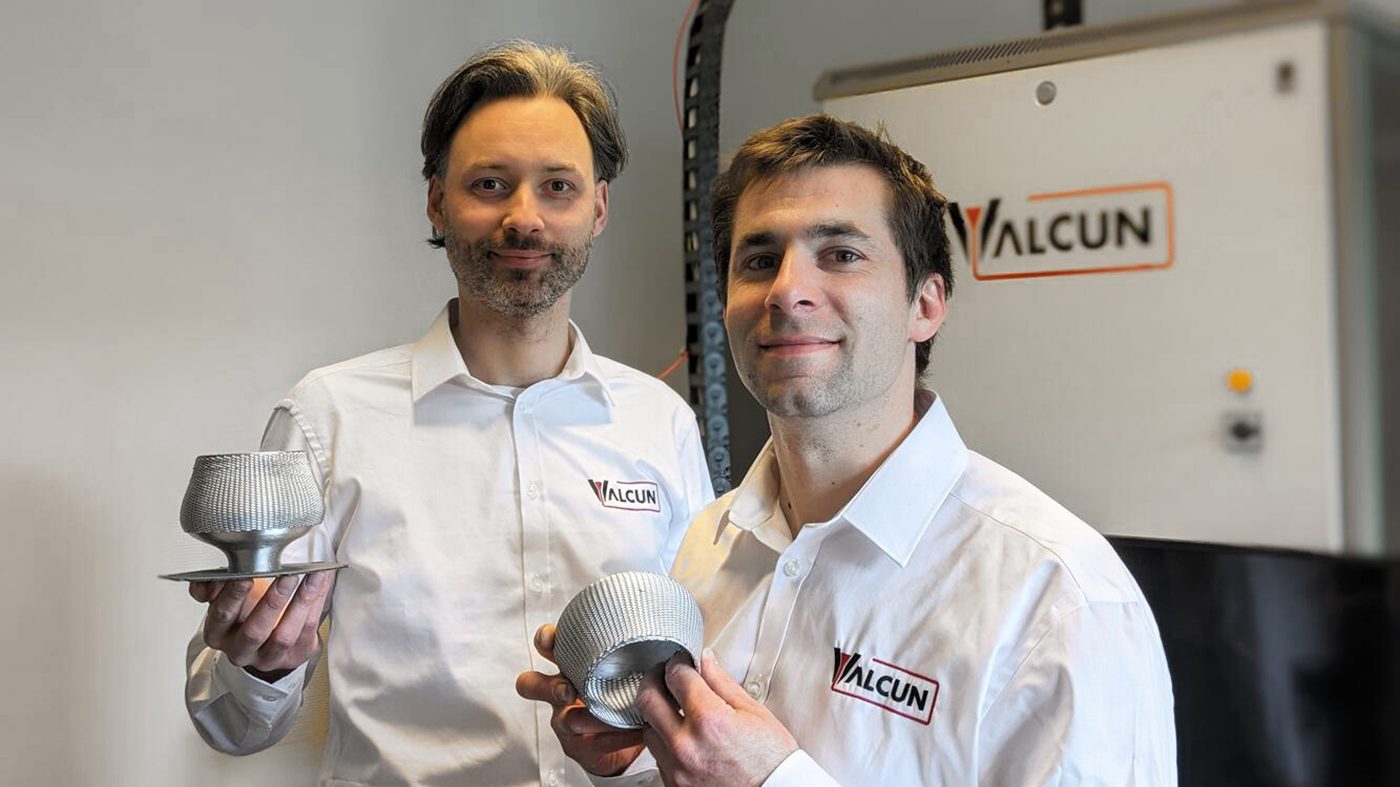
ValCUN, headquartered in Ghent, Belgium, believes that reducing cost and process complexity is key to driving the wider adoption of the Additive Manufacturing of aluminium. As aluminium is one of the most widely used materials in manufacturing, ValCUN has focused on developing an AM technology that is both efficient and cost-effective, enabling it to compete directly with conventional aluminium processing technologies.
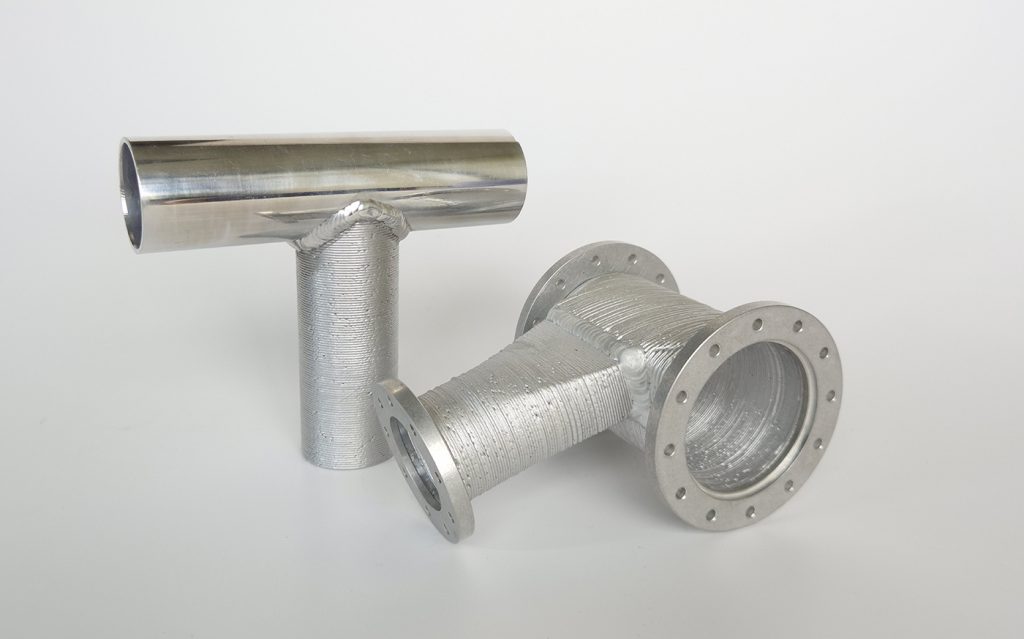
The company’s solution is its patented Molten Metal Deposition (MMD) technology, which is deployed through its Minerva AM machine. What sets MMD apart is its method of directly depositing molten metal. Inspired by Fused Filament Fabrication (FFF), which is commonly used for polymer-based AM, MMD adapts this approach to metal by replacing the polymer filament with metal wire feedstock. The wire is melted in a heating chamber and deposited through a nozzle, building parts layer by layer. Additionally, using wire feedstock addresses challenges related to handling, safety, and material costs while maintaining AM’s geometric flexibility and simplifying post-processing.
ValCUN’s focus on aluminium is driven by the metal’s wide popularity – it is the second-most used metal in the world and makes up around 25% of the global spare parts market. Traditionally, metal AM adoption has been dominated by materials such as stainless steel and titanium. Aluminium, however, has faced slower adoption using conventional AM technologies such as Laser Beam Powder Bed Fusion (PBF-LB) and Binder Jetting (BJT). These powder-based methods often face limitations in alloy selection, as well as issues with safety, material cost, and complex processing, all of which hinder the development of technically or commercially viable applications.
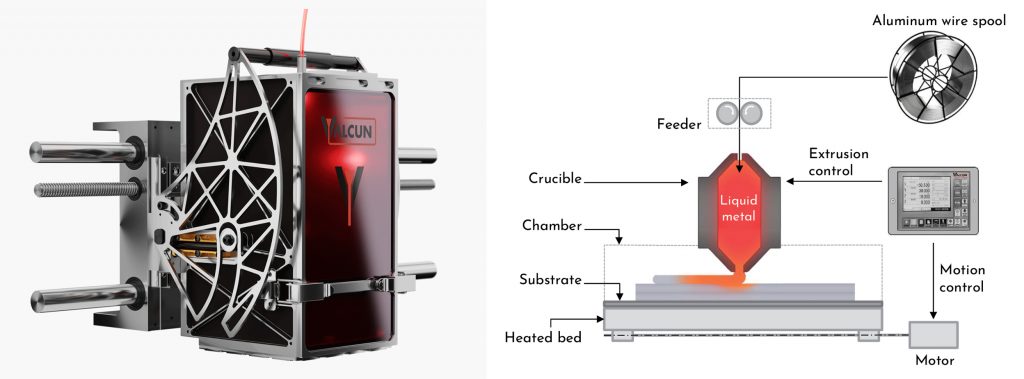
By directly depositing aluminium alloys using wire, challenges associated with powder handling, laser absorption in PBF-LB, and oxide formation are eliminated. Aluminium’s lower melting temperatures, of course, make it easier to process in wire form, and the company is working with well-known aluminium alloys, such as the 6000 and 7000 series.
ValCUN believes that the underutilisation of aluminium in the AM industry presents it with a significant opportunity to capitalise on growing markets in sectors such as aerospace, automotive, and defence. Jonas Galle, CEO and co-founder of ValCUN, stated, “AM is still not mainstream in manufacturing, accounting for less than 1% of the market. Countless government and commercial organisations are investing heavily in identifying the right technology platforms to reduce lead times, get to market faster and secure the supply. However, along with a shortage of AM specialists in the labour market, deployment challenges, safety concerns, materials costs, and other factors have to be addressed in order for AM to scale up in production.”
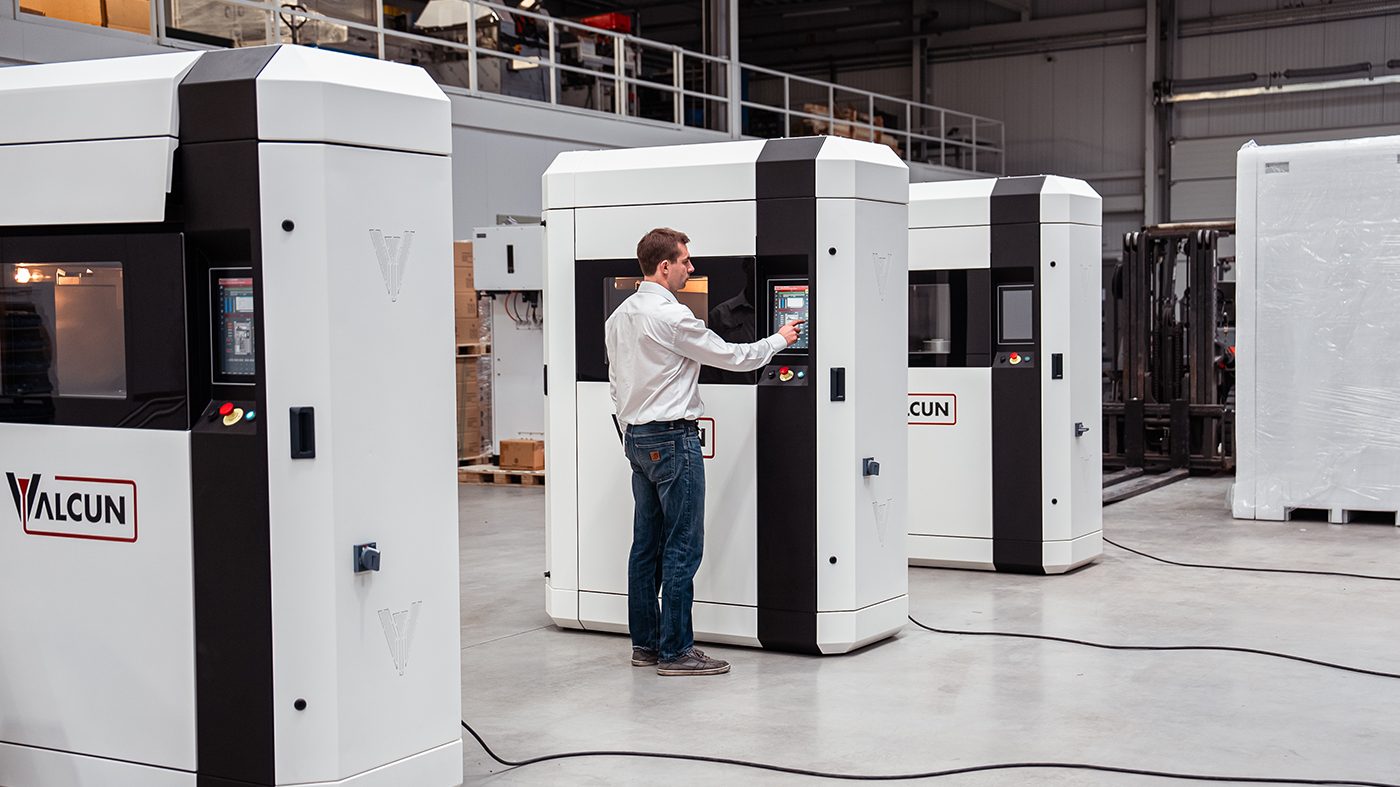
Jan De Pauw, co-founder & CTO, continued, “Thankfully, the metal AM industry is changing its approach from one of being a disruptive technology to one that offers integrated solutions, and at ValCUN, with our MMD technology, we are addressing these challenges head-on with a solution for the production of aluminium parts on-demand, when you need them, and where you need them, with a cost-effective, easy-to-deploy and easy-to-use solution. We believe that our technology is the easiest on the market to deploy and operate for metal parts production.” He concluded: “Quite simply, we offer a unique no-powder aluminium AM solution that is user-friendly and has a low barrier to adoption.”
Returning to the issue of AM’s labour challenge, Galle stated, “Today, most metal AM technologies are difficult from a user perspective. AM is all too often new to organisations, and a high level of training is required for the most well-known processes, making AM complex to integrate into manufacturing. Companies often struggle to find the right skill sets for employees. These barriers diminish the economic value that metal AM can offer. Our solution reduces these barriers, making AM economically viable for a much wider range of industrial applications.”
Deployable manufacturing: defence
Across the globe, as a result of many live conflicts, defence and security organisations are scaling up investments. This is evident in the AM market, where adoption is increasing. However, adoption is not progressing as quickly as many people would like, with rigorous safety requirements, limited deployability, and part qualification and material certification being lengthy processes.
De Pauw stated, “We are in the early stages of working with several defence organisations to explore the benefits of this deployable technology for use in the field. Today’s modern warfare is ever-changing, with a need for quick, effective and affordable AM solutions for part repair and replacement.”
“Deploying AM capabilities in harsh environments demands portable/deployable solutions, robust supply chains, and adaptability to diverse operational conditions, enabling forward-deployed units to produce critical parts on demand – a key message from the recent MILAM event held in Florida. Armies and, indeed, navies around the globe are now engaged with AM manufacturers to mobilise the technology so that it can work in the field as a tactically and agile deployed asset.”
ValCUN’s MMD technology aims to address these needs, offering a straightforward, deployable, and low-complexity solution that can operate in challenging environments. As De Pauw concluded, “Here, of course, a robust and lower-complexity technology can win.”
Industrial applications using MMD
There has been an increasing focus on where AM can offer tangible solutions for industrial manufacturers, particularly in areas such as reducing costs, improving efficiency, and enhancing production uptime. More recently, there has been a shift toward integrating AM into existing manufacturing processes rather than attempting to replace them altogether.
ValCUN aims to bridge the gap between conventional manufacturing methods and the advanced capabilities of AM. The company’s technology is particularly well-suited to the production of complex geometries, near-net shapes, shell structures and lattice structures, as well as components that require aluminium’s heat conductivity. Additionally, ValCUN is exploring the potential of hybrid manufacturing, integrating subtractive and additive methods to broaden the scope of applications, as well as printing on top of existing parts.

MMD has proven itself to be ideal for small to medium-sized batches of thermal management solutions. These can include heat exchangers (for example, in electric vehicles), power electronics, data centres, and high-end computing. The technology enables economically viable production of efficient and reliable heat exchangers with specialised meshes and infills, all optimised for effective heat extraction.
Case study: MMD-produced data centre ventilation
One notable example of ValCUN’s success comes from a recent collaboration with a prominent global HVAC manufacturer. This company, with a turnover exceeding $1.2 billion, faced challenges in optimising fan blades for its data centre cooling systems. The company had been relying on conventional manufacturing technologies that limit fan efficiency, directly contributing to higher energy consumption.
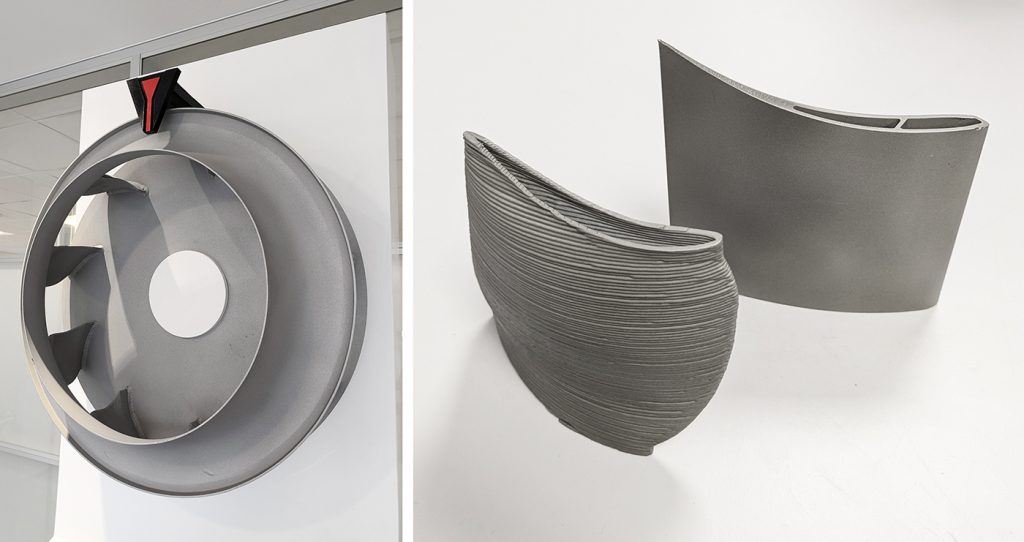
By adopting ValCUN’s MMD technology, the company was able to produce optimised fan blades with an improved design, achieving a 10% increase in blade efficiency (Fig. 4). This improvement is calculated to generate over $6 million in annual electricity savings across 7,000 fans in more than ten data centres. The ability to produce highly efficient, cost-effective parts with minimal post-processing represents a significant benefit for manufacturers in industries requiring high-performance components.
ValCUN pushes towards in-space manufacturing with MMD
ValCUN’s team has ambitions to see its technology used in space. While some metal AM technologies face limitations due to gravity and safety restrictions, ValCUN’s MMD technology shows promise in overcoming these challenges. With support from the European Space Agency (ESA), the company successfully demonstrated aluminium printing in an inverted position (Fig. 6). This marks a significant step towards manufacturing in low-gravity environments, such as space, and also highlights ValCUN’s ability to perform multi-axis printing on Earth.
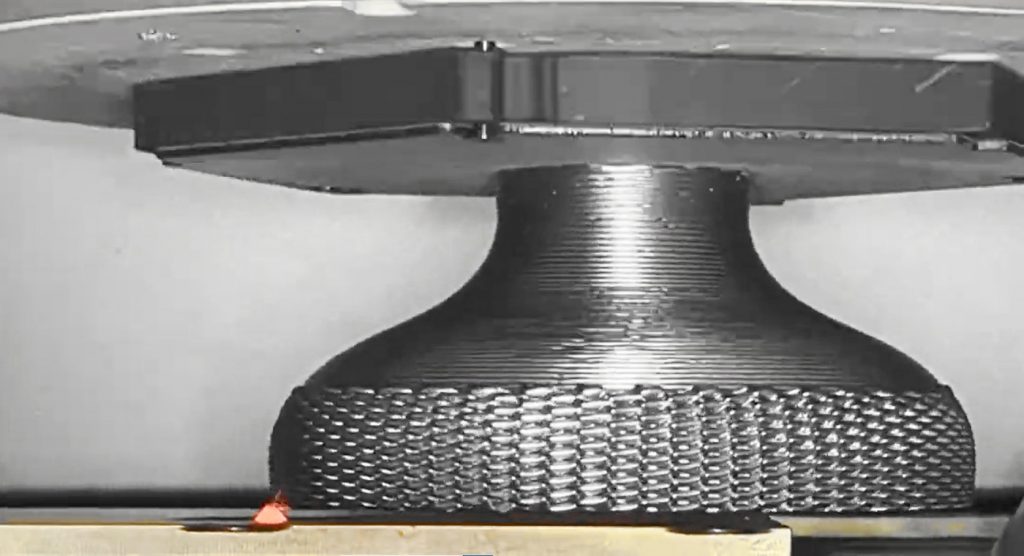
This achievement demonstrates the adaptability and scalability of MMD technology, with its potential to produce large, lightweight, high-performance aluminium components for aerospace, defence, and industrial applications using robotic systems. Looking ahead, ValCUN is continuing to refine its technology for high-strength aluminium alloys and preparing for space condition testing, with the aim of advancing in-space manufacturing capabilities and further expanding the scope of additive production.
Looking to the future
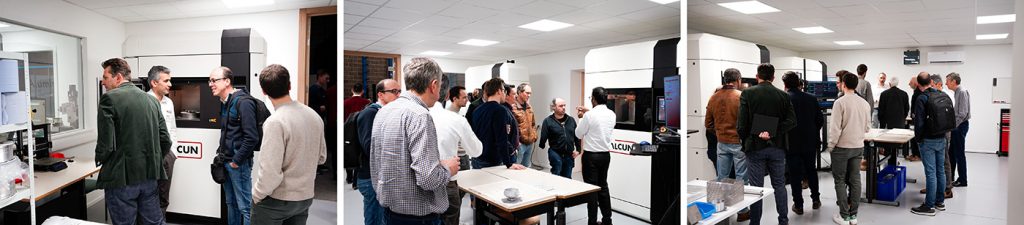
ValCUN’s growth is supported by backing from the European Space Agency (ESA), the European Union, and the Flemish government. Collaborative projects with organisations such as LEVITAD (Defence), 3DoP (3D Printing Optimised Production), DIAMETER, and Green AM are further expanding the scope of MMD technology. The company’s relocation to larger premises in Ghent reflects its increasing success and, in the near future, it plans to diversify its material portfolio to include metals such as magnesium and copper in response to growing customer demand.
“We are excited to announce the shipment of our first metal AM machine orders to the US,” said Galle. “Customers are stressing the need for an easy-to-use, easy-to-deploy solution that reduces post-processing and time-to-part while remaining cost-effective. MMD technology delivers this, and we are looking forward to supporting our customers in their metal AM utilisation.”
With continued R&D and a growing customer base, ValCUN is well-positioned to advance aluminium AM technology and contribute to the industry’s future.
Contact
Jonas Galle
Co-founder & CEO
[email protected]
www.valcun.be
ValCUN
Langerbruggestraat, 33
Gent, 9041
Belgium
LAST MONTH’S MOST-READ ARTICLES