Wire-based Directed Energy Deposition in large-scale metal Additive Manufacturing: Choosing the right process
Wire-based Directed Energy Deposition (DED) is becoming one of the most practical routes for manufacturing large metal components, offering higher deposition rates and better material utilisation than many powder-based Additive Manufacturing processes. Yet wire-based DED is not a single technology category. Laser, electron beam, and arc-based systems each present different trade-offs in precision, productivity, thermal control, and industrial practicality. In this article, WAAM3D examines how these process families compare and why newer dual-wire approaches are expanding the industrial potential of large-scale metal AM. [First published in Metal AM Vol. 12 No. 1, Spring 2026 | 25 minute read | View on Issuu | Download PDF]
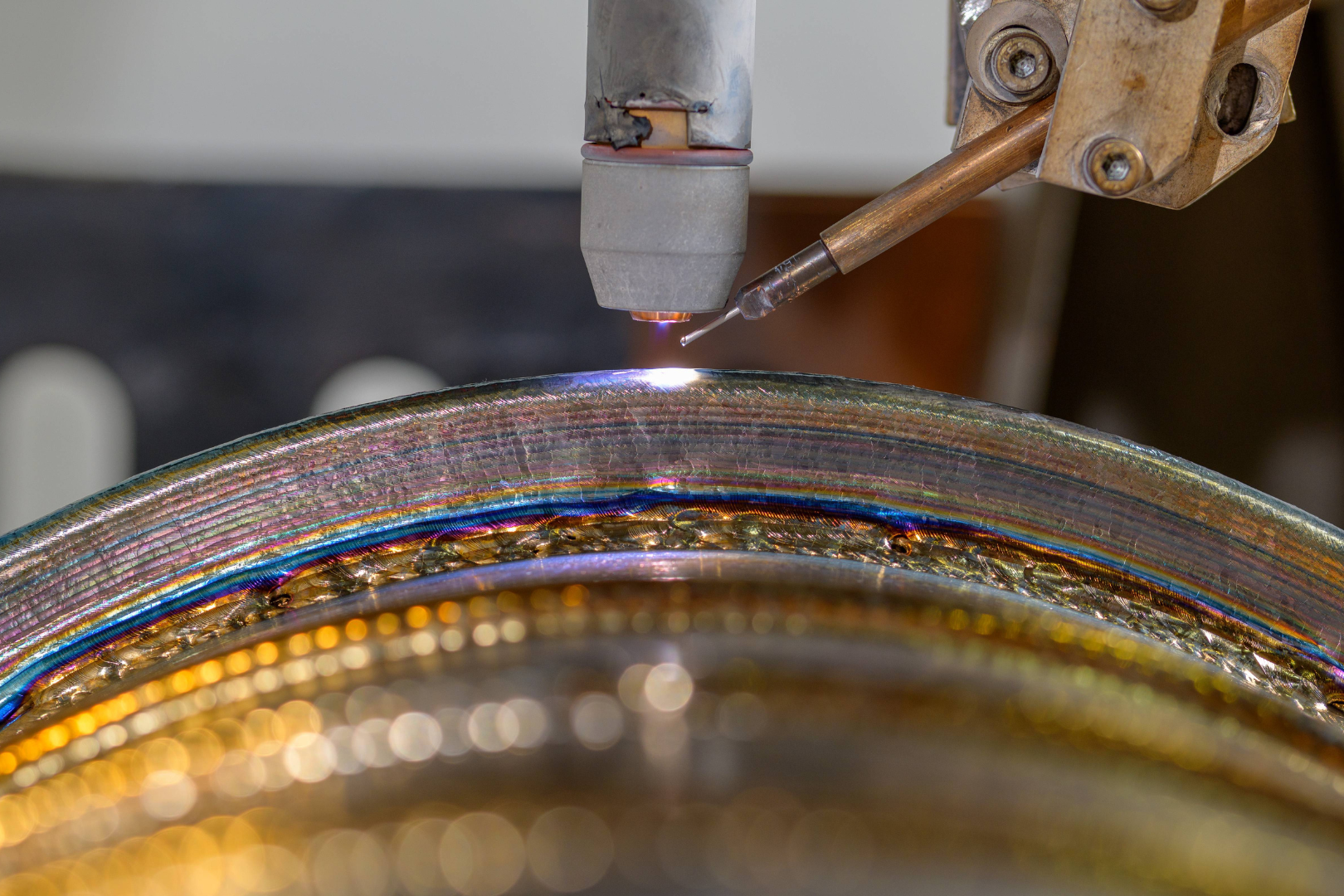
Large metal components remain among the most challenging products to manufacture efficiently using conventional routes. Aerospace structures, energy components, mining equipment, and defence systems are often produced from forgings, castings, or thick plate, followed by extensive machining. For many of these parts, a substantial proportion of the starting material is removed before the final geometry is reached. The result is long lead times, high buy-to-fly ratios, significant material waste, and high manufacturing costs, especially when the alloy itself is expensive.
Due to geopolitical tensions, supply chains have been severely restricted. In many instances, these capabilities are no longer available in numerous countries. Finally, there is just not enough capacity to supply demand in sectors such as aerospace, where there is a huge backlog of orders, and defence, where production levels need to be rapidly scaled up. Wire-based Directed Energy Deposition (DED) is one of the few technologies capable of meeting this demand.
By feeding a continuous metal wire into a high-energy heat source and depositing material layer by layer, wire-based DED can build parts weighing tens or even hundreds of kilograms at deposition rates substantially higher than most powder-based Additive Manufacturing technologies. The approach also benefits from relatively simple feedstock handling and good material utilisation.
This combination of productivity and practicality is driving growing interest across aerospace, space, energy, maritime, mining, and heavy industry. However, wire-based DED is not a single process. Laser, electron beam, and electric arc-based processes all offer different balances of precision, deposition rate, process stability, and material compatibility.
For companies evaluating wire-based Additive Manufacturing, the key question is therefore not simply whether wire-based DED is attractive, but which specific process is best suited to a given application. That decision depends on more than deposition rate and ease of use alone. Component size, alloy type, required microstructure, geometric complexity, surface-finish expectations, and the level of industrial practicality required for production all matter.
This article reviews the major families of wire-based DED processes and discusses how their characteristics influence productivity, process control, and industrial suitability. It also examines how dual-wire arc processes are expanding the operating window of wire-based Additive Manufacturing by increasing deposition efficiency and improving control over the relationship between material input and energy input.

Why process selection matters
Although all wire-based DED processes follow the same basic principle of depositing molten metal from a wire feedstock, the way energy and material are introduced varies significantly. These differences strongly influence process efficiency, thermal behaviour, build quality, and the range of applications that can be addressed successfully.
From a manufacturing perspective, three aspects are especially important. The first is process stability. Stable metal transfer and predictable melt-pool behaviour are essential if a build is to proceed without spatter, interruptions, uncontrolled droplet formation, or geometric errors. The second is geometric control. Layer height, bead width, contact angle, and local fusion behaviour all need to remain predictable if the process is to deliver near-net-shape parts with manageable finishing requirements. The third is thermal management. Cooling rate, reheating cycles, dilution (excessive alloying or penetration into the underlying substrate), and heat accumulation determine the microstructure and, therefore, the mechanical properties of the final component.
A good wire-based DED process must therefore do more than melt wire quickly. It must balance deposition rate, energy efficiency, metallurgical control, and industrial robustness. Some processes prioritise precision and surface quality. Others prioritise productivity for very large structures. Some offer broad control over energy and material input, while others couple the two together in ways that simplify the hardware but reduce process flexibility.
This is why process selection matters so much in practice. The ‘best’ technology for a high-value titanium aerospace structure is unlikely to be the same as the best technology for a 200 kg steel component in mining or energy.
Overview of major wire‑based DED process families
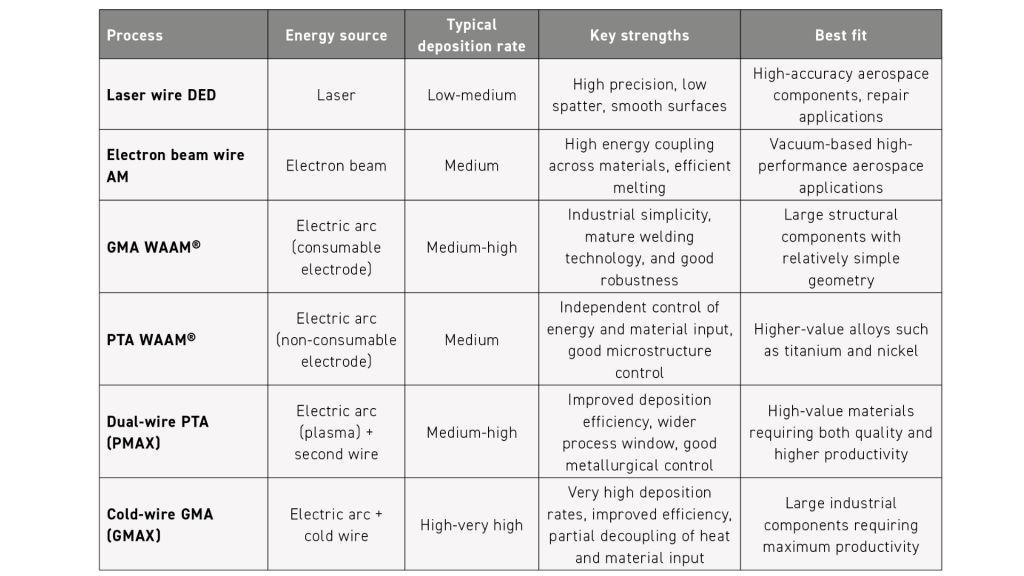
Wire-based DED machines are primarily distinguished by two design choices: the energy source used to melt the wire and the method of introducing the wire into the process. The most widely used energy sources are lasers, electron beams, and electric arcs. The wire can be delivered either coaxially with the energy source or off-axis relative to it.
In coaxial arrangements, the wire is introduced along, or very close to, the axis of the heat source. This simplifies path planning because the process is more omnidirectional. In off-axis systems, the wire is introduced from the front. This provides a much higher degree of independence between energy delivery and material feeding, but it generally requires more careful control of wire position and more sophisticated path planning.
Across all families, industrial wire-based DED machines are usually integrated with robotic or CNC motion platforms and use shielding gas to protect the molten metal from oxidation. Depending on the process, the system may also incorporate temperature monitoring, melt-pool sensing, height control, seam tracking, and closed-loop adjustment of travel speed or process parameters.
Laser/wire DED
Laser-based wire DED uses a focused laser beam to generate a melt pool on the substrate and to melt the incoming wire. One of the principal attractions of the process is the precise control that lasers provide over energy delivery. This allows for relatively smooth deposits with low spatter and good dimensional definition. For applications that value accuracy, fine heat-source control, and good surface quality, laser-based machines can be highly attractive.
In many laser wire processes, material transfer occurs through surface-tension-driven transfer, with the wire feeding into the front or edge of the melt pool. Because there is no arc force to detach droplets, the process can be very clean when conditions are well controlled. However, it is also sensitive. Wire position relative to the melt pool is critical, and the tolerance to layer-height variation can be limited. Small changes in standoff, local geometry, or wire position can therefore more easily disturb the process than in some arc-based machines.
A second key challenge is coupling efficiency between the laser and the material. Some alloys, especially titanium, absorb laser energy reasonably well and are therefore well suited to the process. Others, including aluminium and copper, reflect a large proportion of the incident energy, particularly at common infrared wavelengths [3]. This can reduce process efficiency, constrain deposition rate, and increase sensitivity to surface conditions. Even within the same alloy family, different wire surface finishes can influence absorption and therefore process behaviour.
For these reasons, laser/wire DED is often best suited to applications where precision and surface quality are more important than maximum deposition rate, and where the alloy is favourable from an absorption standpoint. It can be an excellent choice for certain aerospace parts and repair applications, but it is generally less compelling when the main objective is to deposit large volumes of material as quickly as possible.
Electron beam/wire DED
Electron beam/wire DED shares some of the advantages of laser-based deposition while changing the underlying physics of energy delivery. Instead of a laser beam, a focused beam of high-energy electrons is used to melt the wire and substrate. Electron beams offer high energy density and generally achieve strong absorption across a wide range of materials [4].
The major trade-off is that the process must operate in a vacuum. This requirement adds substantial system complexity and cost, and it limits the size and throughput of the machine. Thermal management can also become challenging during long builds, particularly for large structures where heat accumulation may be difficult to dissipate.
Another practical issue is that the vacuum environment and high temperatures can encourage evaporation or loss of volatile alloying elements. In some cases, this means that feedstock composition or process strategy must be adjusted to achieve the desired final chemistry. Electron beam-based machines are therefore most attractive where their advantages clearly justify the vacuum environment – for example, in selected aerospace applications or niche high-performance components.
Wire/arc DED
Electric arc-based wire-DED processes, sometimes referred to as Wire Arc Additive Manufacturing (WAAM®) [5], are among the most widely used approaches for large-scale metal Additive Manufacturing because they build on mature welding technology, use readily available wire feedstock, and can achieve attractive deposition rates with industrially robust equipment.
Wire/arc DED processes can be divided into two broad categories (Fig. 3). In consumable-electrode processes, the wire itself forms part of the electrical circuit and is melted by the arc. Gas Metal Arc (GMA) processes fall into this category and represent the most common route for many industrial users because the underlying power sources and wire-feeding systems are derived from conventional welding. In non-consumable-electrode processes, the arc is generated independently of the wire feed, typically using a tungsten electrode. Gas Tungsten Arc (GTA) and Plasma Transferred Arc (PTA) processes fall into this second category.
![Fig. 3 Schematic comparison of consumable- and non-consumable-electrode wire/arc DED processes. Adapted from [1]](http://www.metal-am.com/wp-content/uploads/sites/4/2026/04/f3-8-e1776168785730-1024x484.png)
The distinction is important because it affects how independent energy and material input can be controlled. In a consumable-electrode process, increasing the wire feed speed also increases current and therefore energy input. In a non-consumable-electrode process, wire feed and arc energy can be adjusted independently. This difference has major consequences for process flexibility, thermal control, and the ability to handle changing component geometry.
Consumable-electrodes: strengths and limitations
Conventional GMA-based wire/arc DED is attractive because it is practical, scalable, and relatively easy to integrate into industrial manufacturing machines. Coaxial wire feeding simplifies path planning, and commercially available power sources offer a wide range of pre-programmed waveforms and synergic lines for established materials. For many users, this makes GMA the most accessible starting point.
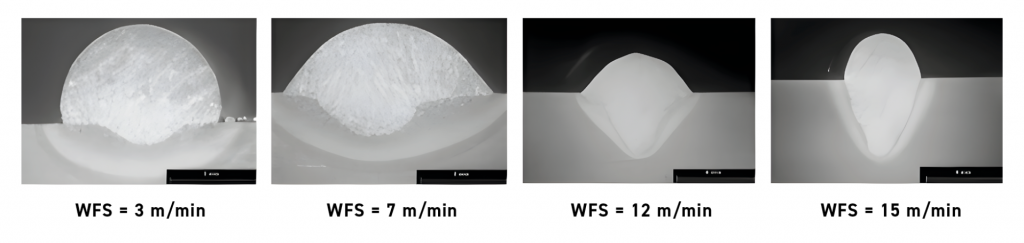
However, the same architecture that makes the process simple also imposes a fundamental limitation: material input and energy input are inherently coupled [6]. Increasing wire feed speed raises current and arc power, so any attempt to increase productivity also increases the energy entering the substrate and previously deposited material. This can lead to greater penetration, higher dilution, more remelting, and stronger reheating of earlier layers. For simple walls, cylinders, or very large structures, this may be manageable. For components with changing wall thickness, intersections, local mass variations, or complex heat-flow conditions, it becomes more difficult to maintain consistent geometry and microstructure.
These thermal effects can also constrain the maximum practical deposition rate. In welding, a large amount of energy going into the substrate is beneficial because fusion is the objective. In AM, excessive substrate heating is often undesirable because it causes heat buildup, geometric instability, and unnecessary remelting of already deposited material (Fig. 4). As a result, conventional GMA-based wire/arc DED often operates within a practical current range of 200-300 A rather than simply pushing wire feed speed ever higher.
Non-consumable-electrodes
Non-consumable-electrode processes address some of these challenges by separating the arc source from the wire feed. In these machines, the arc is formed using a non-consumable electrode, usually tungsten, while the wire is introduced independently into the arc or melt pool. This gives the process engineer greater control because energy input and material feed rate can be adjusted separately.
Three broad metal-transfer modes can occur: continuous surface-tension transfer, free droplet transfer, and droplet surface-tension transfer. Of these, droplet surface-tension transfer is often preferred because it combines efficient wire melting in the energy source with relatively stable, low-spatter transfer into the melt pool. Because energy is delivered continuously rather than through highly tailored waveform control, the process is more transferable across a wider range of materials.
Among the non-consumable-electrode routes, Plasma Transferred Arc (PTA) is often preferred over GTA for Additive Manufacturing. PTA provides a more constricted, stable arc, along with a longer standoff distance between the electrode and the workpiece. This can improve access for wire delivery and process monitoring, while increasing tolerance to some geometric variations. However, PTA is not without limits: arc pressure and process stability must still be carefully managed, and high current can introduce risks, such as excessive local penetration or keyholing if the process is not well balanced.
Overall, non-consumable-electrode wire/arc DED is especially attractive where the user wants stronger control over bead shape, thermal input, and microstructure, particularly for higher-value materials such as titanium and nickel alloys.
Why deposition efficiency matters
The economic promise of wire-DED is closely linked to deposition efficiency. Large components only become compelling additive candidates if substantial volumes of material can be deposited at high rates without losing control of shape or material quality. In practical terms, this means that as much of the input energy as possible should be used to melt new wire rather than unnecessarily reheating the substrate and previously deposited layers.
This is an important distinction between welding and AM. In welding, deep fusion into the substrate is usually a positive. In Additive Manufacturing, excessive energy entering the already-built structure often creates problems: remelting, dilution, large heat-affected zones, longer interpass cooling times, and an increased risk of distortion or local geometric collapse. The challenge is therefore not just to add more energy, but to increase the fraction of that energy that is productively used to melt incoming material.
Many attempts to solve this problem have involved additional electrodes, multiple power sources, or more complex hardware arrangements designed to redirect heat away from the substrate [6]. While technically interesting, such solutions often add significant cost and complexity. A more elegant approach is to increase the amount of wire being melted by the existing heat source without proportionally increasing power. This is where dual-wire strategies become particularly powerful.
Dual-wire plasma transferred arc (PMAX)
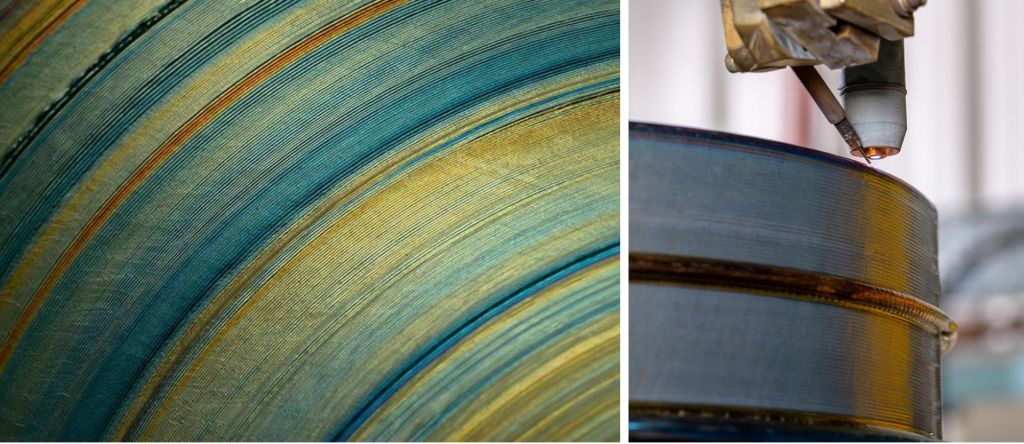
WAAM3D’s PMAX process implements a dual-wire plasma transferred arc (PTA) configuration designed to improve deposition efficiency and productivity while maintaining precise control of bead geometry and metallurgy. In this approach, a second wire is introduced alongside the primary wire into the plasma arc, as shown in Fig. 5. The additional wire absorbs energy that would otherwise enter the melt pool and substrate, increasing deposition efficiency and therefore increasing the amount of material deposited for a given power input [7]. In practice, this can significantly increase the deposition rate while retaining the key advantage of PTA: independent control of material input and arc energy.
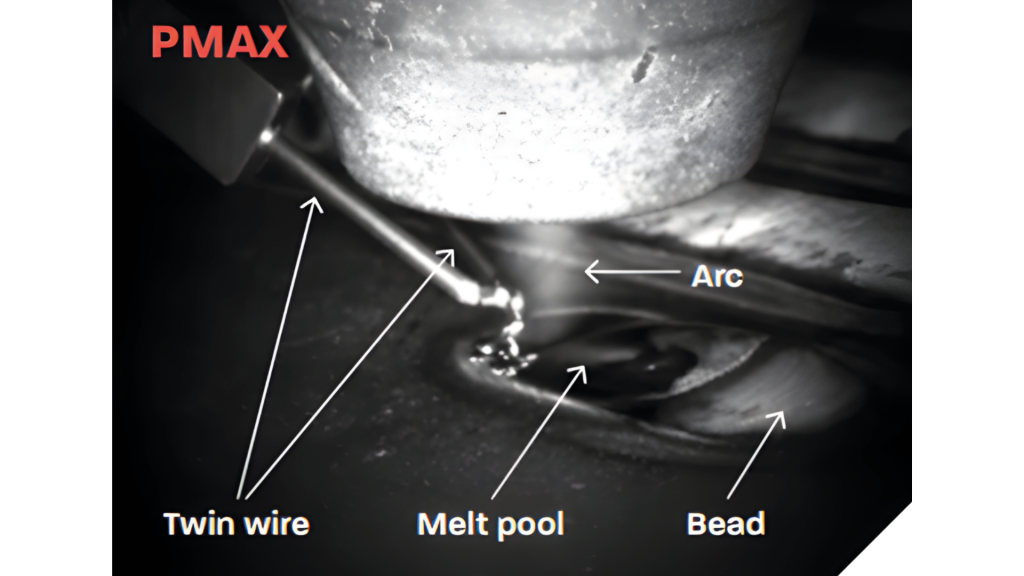
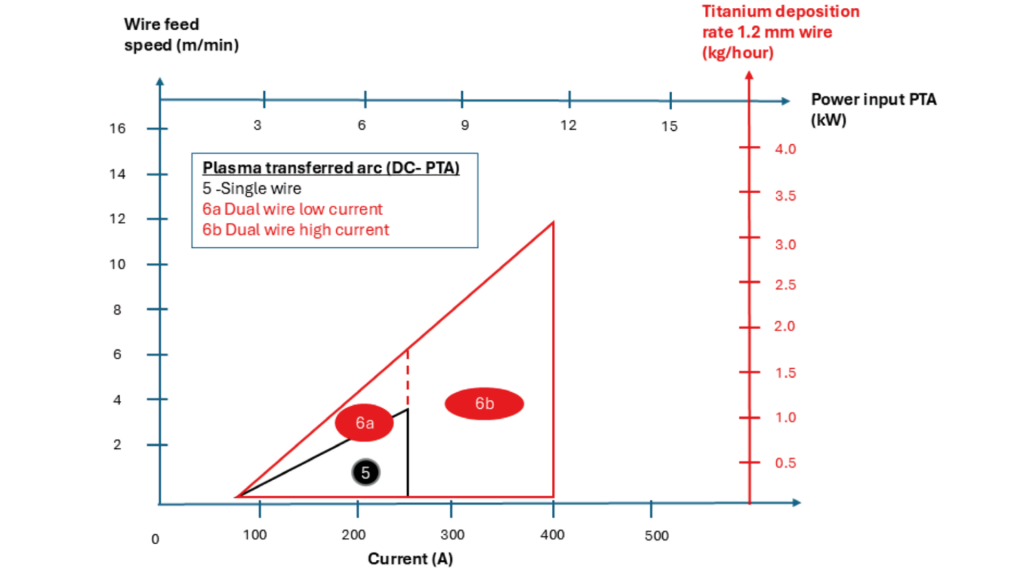
The second wire brings another important benefit. By partially screening the melt pool from direct arc pressure, it can reduce the tendency toward keyholing and allow the process to operate at higher current, from 250 A to 400 A or more. This expands the operating window and makes it easier to use the process at elevated productivity while preserving stability. As shown in Fig. 6, for titanium alloys, deposition rates can increase from around 1 kg/h in conventional single-wire PTA to >3 kg/h in dual-wire configurations, depending on the alloy and process settings.
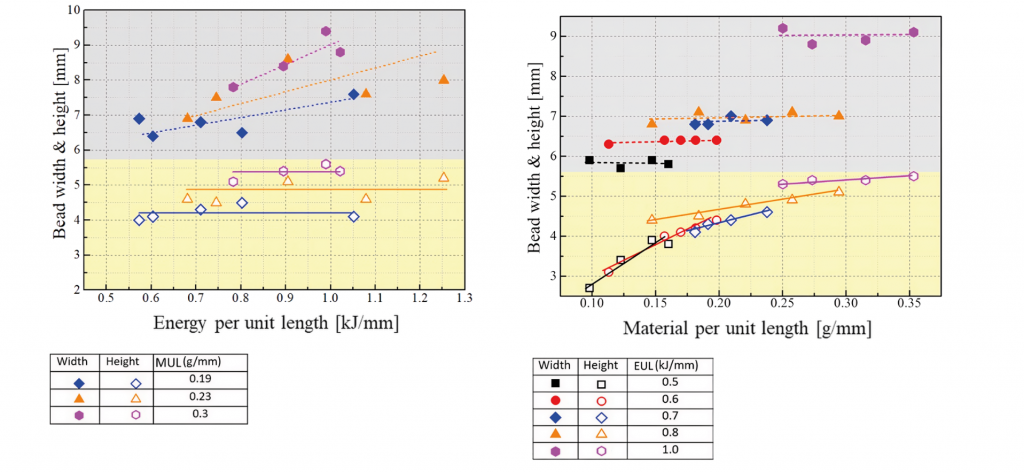
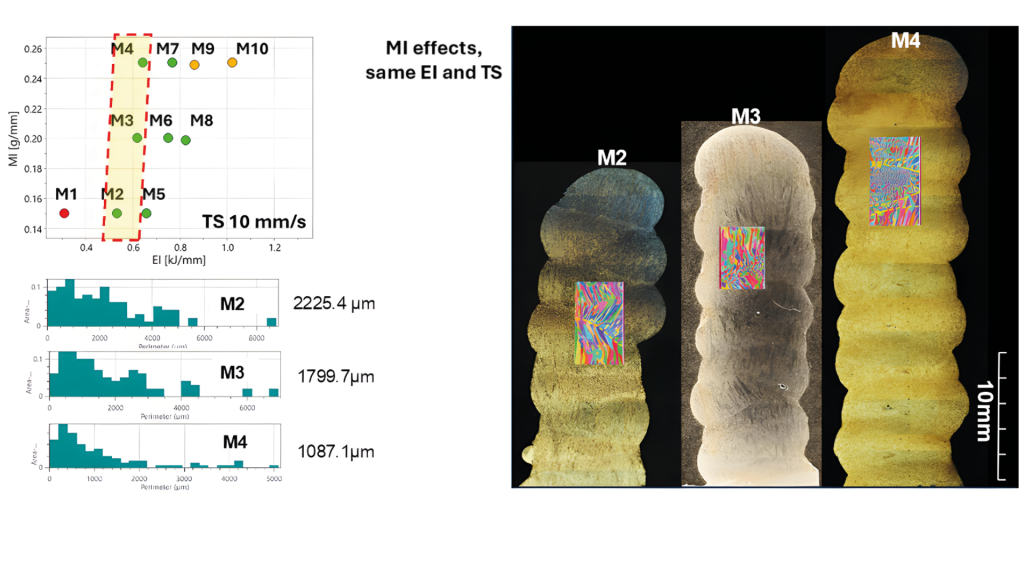
Because energy and material can still be adjusted independently, PMAX-type processes provide strong control over bead geometry and thermal history. Width responds primarily to energy input, while layer height is influenced strongly by material input. This gives the process engineer a useful set of levers for tailoring deposit shape to the application (Fig. 7). Just as importantly, microstructure can also be influenced. By adjusting the balance between energy and material input, it is possible to move between more columnar and more equiaxed solidification structures, which have implications for anisotropy and final mechanical performance (Fig. 7).
![Fig. 7 Influence of energy and material input on bead geometry (top) and microstructure (bottom) [8]](http://www.metal-am.com/wp-content/uploads/sites/4/2026/04/f7-9-1024x576.png)
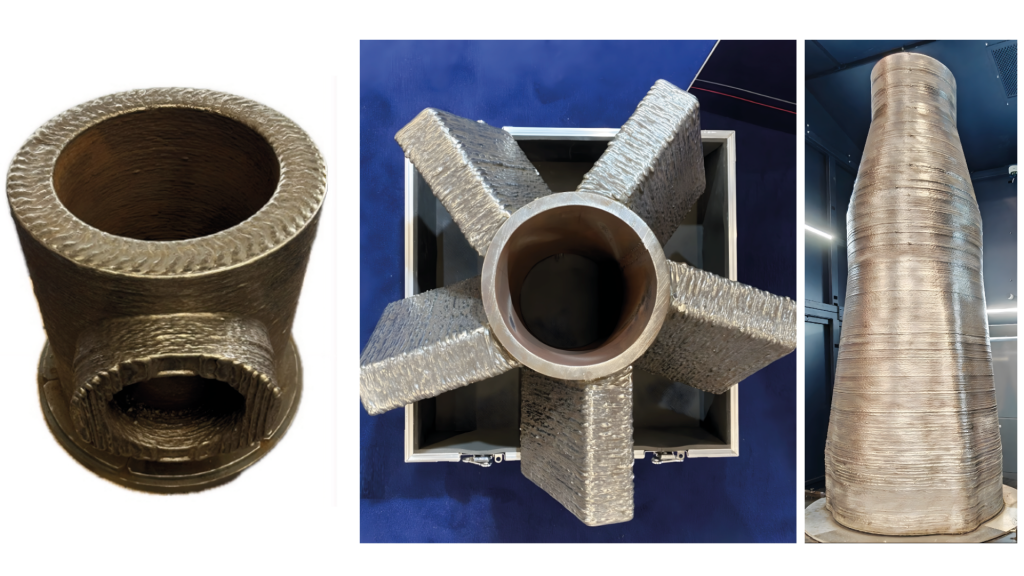
These characteristics make dual-wire PTA particularly attractive for high-value applications where component quality and metallurgical control matter as much as productivity. Titanium and nickel-alloy aerospace structures are obvious candidates, but the process is also interesting for high-purity copper and for demanding energy-sector components where process stability and property consistency are critical (example parts shown in Fig. 8).
![Fig. 7 Influence of energy and material input on bead geometry (top) and microstructure (bottom) [8]](http://www.metal-am.com/wp-content/uploads/sites/4/2026/04/f8-5-e1776169005589-1024x219.png)
A further advantage of the dual-wire PTA approach is the opportunity to introduce two different wire materials into the same process zone. Because the current is carried by the plasma arc rather than by the wires themselves, the two wires do not have to be identical. Their feed rates can be adjusted to control the ratio of the materials entering the deposit.
This opens the door to a range of advanced manufacturing strategies (examples shown in Fig. 9). The most obvious is the production of functionally graded structures, in which composition varies gradually through the thickness or along a part. Dual-wire PTA can also support local alloy modification, dissimilar-material transitions, and the production of compositions that may not be commercially available as single wires. For manufacturers interested in material grading, corrosion-resistant overlays, or tailored local properties, this flexibility is highly valuable.
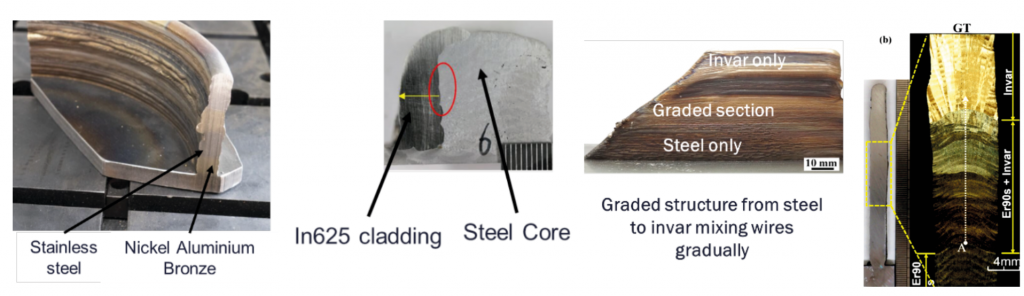
From an industrial perspective, this is an important reminder that the most interesting process innovations in wire-based DED are not just about speed. They are also about extending the design space – geometrically, thermally, and chemically.
Dual-wire Gas Metal Arc (GMAX / CW-GMA)
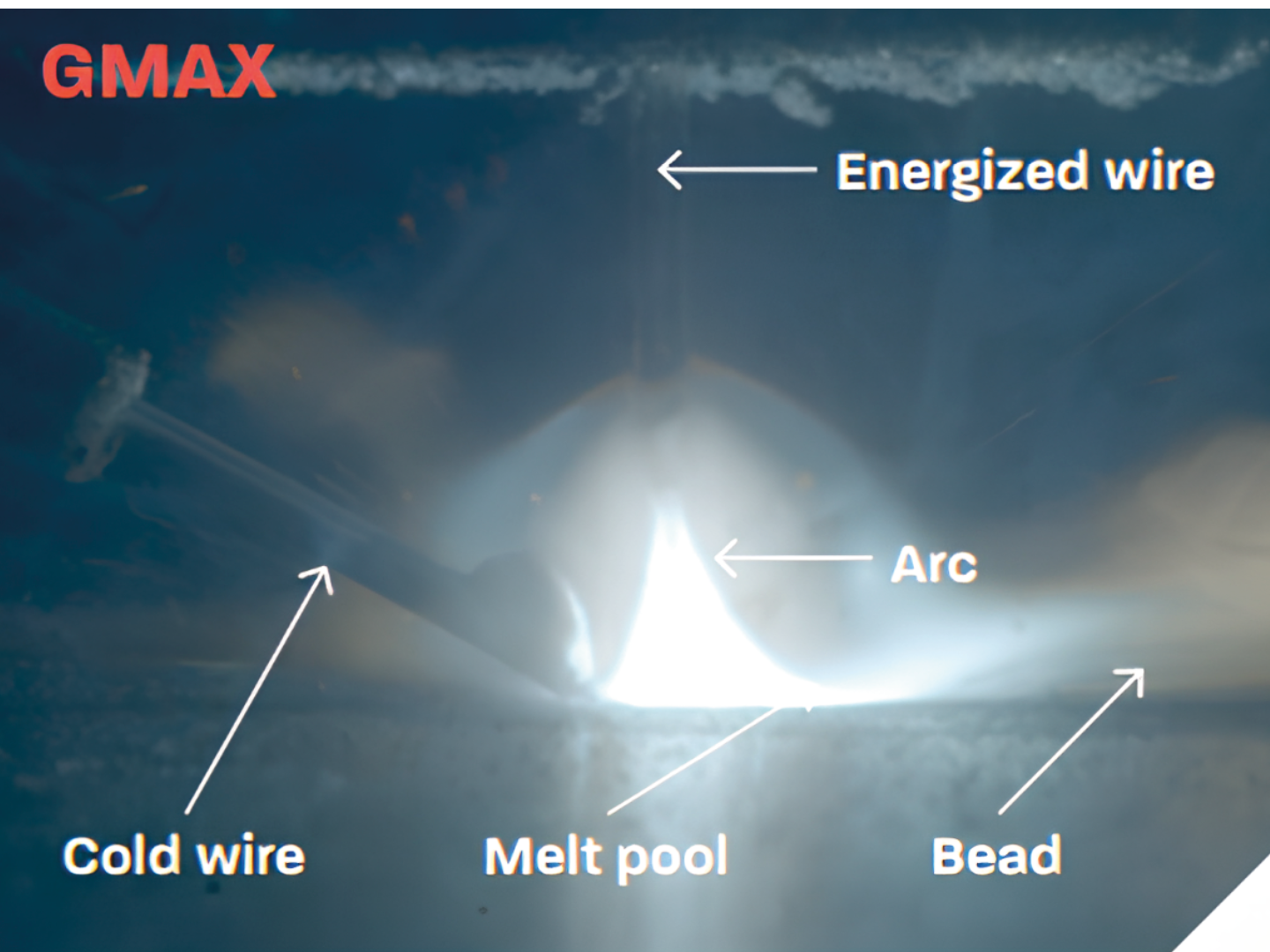
WAAM3D’s GMAX process uses a dual-wire configuration for gas metal arc (GMA) DED, enabling significantly higher deposition efficiency and, consequently, higher deposition rates, and providing independence between material and energy inputs. In this approach (shown in Fig. 10), a second, non-energised wire is introduced into the arc region alongside the primary consumable electrode wire [9]. The additional wire absorbs a significant portion of the arc energy that would otherwise be transferred into the substrate, thereby increasing deposition efficiency and deposition rate without requiring a proportional increase in electrical power.
This is particularly significant because it addresses the main limitation of conventional consumable-electrode wire-arc DED: the tight coupling between material feed and heat input. By introducing cold wire, the process can add more material while limiting the increase in net heat entering the workpiece. The result is a wider operating window, reduced remelting, lower dilution, and less component overheating.
For low-alloy steel, deposition rates well above 10 kg/h and up to around 15 kg/h have been demonstrated in stable operating windows (shown in Fig. 11). That makes the GMAX process particularly compelling for producing large structural components where throughput matters but the user still needs acceptable surface quality and process stability.
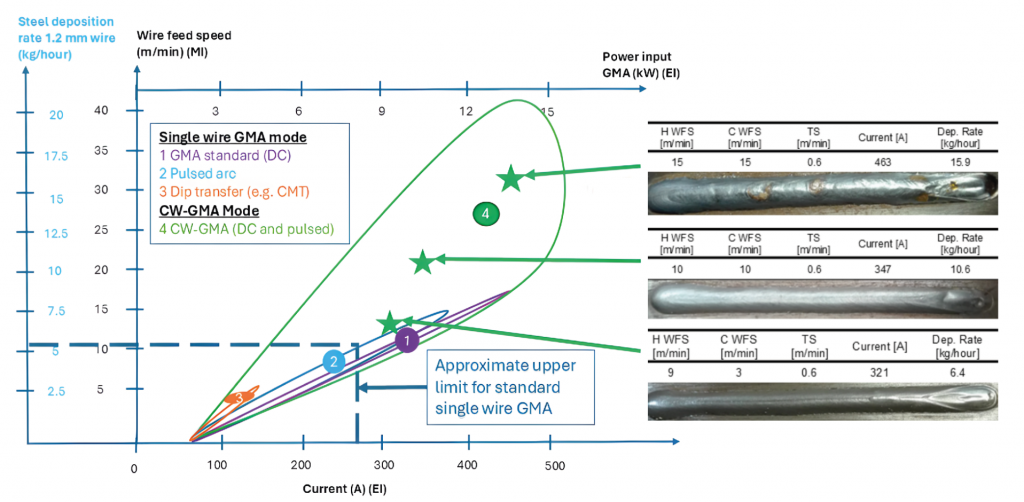
Just as important as the increase in deposition rate is the increase in controllability. Because part of the material is introduced through the unenergised wire, it is now possible to vary the balance between arc power and total material input. This is what allows GMAX to move from merely a faster process to a more capable one.
Independent control strategies in GMAX
Two control concepts are especially useful in GMAX systems [10, 11]. The first is Arc Power Control (shown in Fig. 12). Here, the total wire feed speed is held constant while the ratio between the hot wire and the cold wire is changed. As the proportion of hot wire is reduced, the electrical current and arc power decrease, but the total material input is the same.
![Fig. 12 Arc power control method for the GMAX process, constant Total Wire Feed Speed (TWFS) but varying the ratio of Hot Wire Feed Speed (HWFS) to the Cold Wire Feed Speed (CWFS) at constant Travel Speed (TS). Deposition rate, TS, and energy input indicated [11]](http://www.metal-am.com/wp-content/uploads/sites/4/2026/04/f12-3-e1776172783193-1024x265.png)
The second concept is Travel Speed Control (shown in Fig. 13). In this approach, the hot-wire feed speed is kept constant while the cold-wire feed is increased. Travel speed is then adjusted to maintain the same material input per unit length. The net effect is that material input per unit length is constant whilst energy input varies between >1,000 J/mm and <400 J/mm, a range of >2.5. In practice, this gives the process engineer a broad and useful adjustment range for energy input, thereby controlling bead shape, penetration, and remelting behaviour.
![Fig. 13 Arc power control method for the GMAX process, constant HWFS but varying CWFS and compensating change in TS. Deposition rate, TS and energy indicated [11]](http://www.metal-am.com/wp-content/uploads/sites/4/2026/04/f13-1-e1776172873331-1024x219.png)
These strategies matter because they give GMAX a degree of process flexibility that conventional GMA wire/arc DED lacks. Bead width can be tuned by energy input, while layer height can be tuned by total material input (Fig. 14). That improves the ability to handle changing local geometry, manage wall thickness transitions, and respond to varying thermal mass within a part. It also makes the process better suited to structured production strategies rather than a simple ‘deposit as fast as possible’ approach.
Microstructure and properties
Changes in the balance of material and energy input do more than alter bead shape. They also influence cooling rate, solidification behaviour, reheating history, and, therefore, the microstructure. As observed in PMAX/PTA processes, increasing the material input in the GMAX process while maintaining a fixed energy input promotes grain refinement and reduces strongly columnar growth. This, in turn, helps reduce anisotropy and improves the consistency of mechanical properties, as shown in the example in Fig. 15.
As expected, changes in microstructure alter material properties. Fig. 16 shows the changes in the properties of ER90 from the GMA process to the GMAX process, with increased strength and reduced elongation, along with nearly a doubling of the deposition rate.
![Fig. 16 Mechanical property comparison between conventional GMA and GMAX (CW- GMA) deposits [11]](http://www.metal-am.com/wp-content/uploads/sites/4/2026/04/f16-1024x576.png)
That metallurgical flexibility is important in industrial terms. Users do not buy additive processes only to make metal shapes; they buy them to make components that meet property requirements. A process that combines high productivity with broader microstructural control becomes much more attractive for aerospace, energy, and defence applications, where qualification is inseparable from manufacturability.
Industrial examples and manufacturing strategy
The industrial potential of the high-productivity GMAX process is most visible in large structural components. Oil and gas manifolds, stiffened panels, pressure vessels, mining tools, maritime structures, and large aerospace shells can all involve part masses that make powder-bed processes impractical and subtractive manufacture inefficient. For such parts, the ability to build quickly while limiting the buy-to-fly ratio can be transformative.
One useful manufacturing approach for very large components is the skin-and-core strategy. Here, an outer skin is deposited at a lower deposition rate to maintain good geometric fidelity and surface quality. In comparison, the internal volume is filled at a much higher deposition rate. This approach is especially relevant for the GMAX process because it can combine high fill deposition rates with sufficient control to avoid overflow and maintain wall stability.
This type of deposition strategy reflects a broader truth about industrial AM: no serious manufacturer wants to choose between quality and productivity if a process can deliver both in different zones of the same component. The more adaptable the process, the more realistic its industrial adoption becomes.
The future of large-scale metal AM
Wire-based Directed Energy Deposition is moving beyond the stage where process selection is based solely on broad categories such as ‘laser’, ‘electron beam’, or ‘arc’. Increasingly, the most significant developments are those that reshape the relationship between energy input, material input, and process control, because this relationship is where real industrial value is created.
New approaches such as PMAX and GMAX clearly move in this direction. By increasing deposition efficiency and expanding the process operating window, they improve the economics of large-scale AM while maintaining the level of control required for demanding engineering applications. At the same time, advances in sensing, path planning, thermal modelling, and closed-loop control are making these processes more repeatable and increasingly ready for production environments.
For the wider market, this means wire-based DED is becoming a more differentiated, more capable technology family. Different processes will continue to occupy different positions, and that is healthy. There is no single universal winner. Instead, success will come from matching process physics and system architecture to the real needs of the part, the alloy, and the production environment.
Conclusion
Wire-based DED technologies are rapidly expanding the practical capabilities of large-scale metal Additive Manufacturing. Laser and electron beam-based machines offer high energy control and, in the right applications, excellent part quality. Wire/arc-based processes provide industrial robustness and scalability. Newer variants (PMAX and GMAX processes) build on that foundation by improving deposition efficiency and broadening the range of control available over bead shape, thermal behaviour, and material response.
For manufacturers, the main message is clear: wire-based DED should not be treated as a single process category. The choice of energy source and wire-feeding architecture fundamentally affects productivity, process stability, microstructure control, and industrial practicality. Selecting the right process therefore requires a realistic assessment of application priorities rather than a purely technology-led decision.
As large-scale metal AM continues to mature, the most successful processes will be those that combine high throughput with reliable control of geometry and properties. The latest developments in the PMAX and GMAX processes from WAAM3D suggest that this balance is becoming increasingly achievable, opening the door to broader industrial adoption across aerospace, energy, defence, mining, and other sectors where massive metal parts matter most.
References
[1] Kapil S, Rajput AS and Sarma R (2022) Hybridization in wire arc additive manufacturing. Front. Mech. Eng 8:981846. doi: 10.3389/fmech.2022.981846
[2] Tran, T.Q., Truong, M.N., Nguyen, T.H. et al. An assessment of wire laser additive manufacturing with focus on characteristics research progress and quality improvement. Discov Mechanical Engineering 4, 44 (2025). https://doi.org/10.1007/s44245-025-00133-3
[3] Kaufmann, Florian & Möttingdörfer, Robert & Roth, Stephan & Schmidt, Michael. (2024). Investigation of coupling efficiency in laser beam welding of copper materials using brilliant infrared and green laser radiation. Journal of Manufacturing Processes. 131. 2037-2050. 10.1016/j.jmapro.2024.10.028.
[4] Osipovich, K., Kalashnikov, K., Chumaevskii, A., Gurianov, D., Kalashnikova, T., Vorontsov, A., Zykova, A., Utyaganova, V., Panfilov, A., Nikolaeva, A., Dobrovolskii, A., Rubtsov, V., & Kolubaev, E. (2023). Wire-Feed Electron Beam Additive Manufacturing: A Review. Metals, 13(2), 279. https://doi.org/10.3390/met13020279
[5] Williams, S. W., Martina, F., Addison, A. C., Ding, J., Pardal, G., Colegrove, P. (2016). Wire + Arc Additive Manufacturing, Materials Science and Technology, 32:7, 641-647, DOI:10.1179/1743284715Y.0000000073
[6] Hu, Qingsong & Zhao, Tao & Yan, Zhaoyang & Xiao, Jun & Xiaoyong, Zhang & Jiang, Fan & Wang, Kehong & Xiong, Jun & Chen, S. (2026). Innovative application and trends of multi-electrode arc: State of the art review. Journal of Manufacturing Processes. 157. 623-669. 10.1016/j.jmapro.2025.12.018.
[7] Wang, C., Suder, W., Ding, J., Williams, S. (2021). The effect of wire size on high deposition rate wire and plasma arc additive manufacture of Ti-6Al-4V. Journal of Materials Processing Tech. 288 (2021) 116842
[8] Davis, A.E., Wainwright, J., Sahu, V.K. et al. Achieving a Columnar-to-Equiaxed Transition Through Dendrite Dualning in High Deposition Rate Additively Manufactured Titanium Alloys. Metallurgical and Materials Transactions A, 1765–1787 (2024). https://doi.org/10.1007/s11661-024-07388-7
[9] Wang C, Wang J, Bento J, et al., (2023) A novel cold wire gas metal arc (CW-GMA) process for high productivity additive manufacturing. Additive Manufacturing, Volume 73, July 2023, Article Number 103681
[10] PROCESS FOR ADDITIVE MANUFACTURE AND SURFACE CLADDING PATENT-GB2601784. https://patentimages.storage.googleapis.com/a8/34/e1/cc244374ee2168/GB2601784A.pdf
[11] Bento, J. B., Wang, C., Ding, J., & Williams, S. (2023). Process Control Methods in Cold Wire Gas Metal Arc Additive Manufacturing. Metals, 13(8), 1334. https://doi.org/10.3390/met13081334
About
WAAM3D
7 Thornton Chase, Milton Keynes,
MK14 6FD, UK
LAST MONTH’S MOST-READ ARTICLES