Phase3D and Phillips Federal partner to expand AM inspection in North American defence market
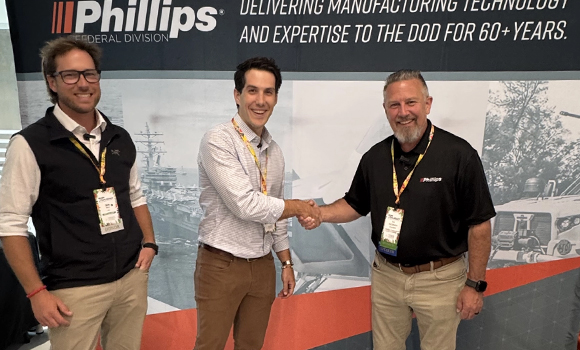
Phase3D, based in Chicago, Illinois, USA, and Phillips Federal, headquartered in Hanover, Maryland, USA, have announced a partnership intended to expand access to Phase3D’s in-situ inspection technology across the North American defence market. Under the agreement, Phillips Federal will serve as Phase3D’s exclusive channel partner for the sector.
Phase3D develops in-situ inspection technology for Additive Manufacturing, with its Fringe Inspection platform designed to detect and quantify defects during the manufacturing process. By identifying potential defects during a build, the technology is intended to reduce material waste and machine time associated with failed parts.

Phillips Federal, a division of Phillips Corporation, supplies advanced manufacturing equipment and services to the US federal government. The company provides equipment sales, contracting, project management, training, service and lifecycle support.
“Phase3D has had good early success in defense, but there is a limit to how many organizations a company our size can reach and support on its own,” stated Michael Brennen, Commercial Director at Phase3D. “Phillips has the relationships, manufacturing experience, and team to help us do that at a much larger scale.”
The partnership builds on Phase3D’s existing work within the US defence sector. The company has previously deployed inspection systems at the US Navy’s Additive Manufacturing Center of Excellence in Danville, Virginia, and the Commonwealth Center for Advanced Manufacturing (CCAM).

According to Phase3D, the agreement with Phillips Federal is intended to extend the availability of its inspection technology to additional defence depots, bases, laboratories and manufacturing programmes.
“Our defense customers are looking for practical ways to increase manufacturing capacity and get critical parts into production faster,” stated Tim McClanahan, President of Phillips Federal. “Real-time inspection gives them greater visibility into the manufacturing process and the ability to catch defects before they consume additional machine time and material.”