Invar 36 powder reuse study challenges cycle limits
Italian researchers from Politecnico di Bari, IMAST (High Tech District on Polymers and Composite Materials Engineering), Sòphia High Tech and CNR-IPCB, National Research Council – Institute of Polymers, Composites & Biomaterials, have published a study in Materials & Design investigating the reuse of Invar 36 powder in metal Laser Beam Powder Bed Fusion (PBF-LB) Additive Manufacturing. The study found that powder condition and resulting part properties may provide a more meaningful basis for reuse decisions than a simple count of completed build cycles.
Invar 36 is widely used in aerospace and other applications requiring dimensional stability because of its exceptionally low coefficient of thermal expansion (CTE). The study examined how repeated powder recovery and refreshing affected both the feedstock and selected properties of PBF-LB specimens.
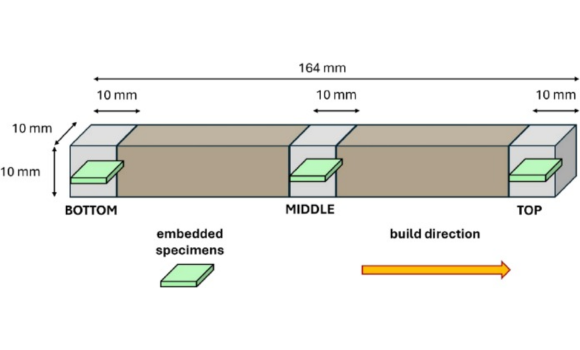
The researchers used gas-atomised Invar 36 powder that was recovered after each build, sieved at 63 µm and refreshed with 10 wt% virgin powder. Three powder conditions were evaluated: the original virgin batch, designated N1; a refreshed batch sampled after ten build–recovery–sieving–refresh cycles, N2; and a batch sampled after twenty cycles, N3.
An ideal-mixing mass balance showed that the nominal reuse-cycle number did not represent the actual exposure history of all particles in the refreshed powder blends. N2 and N3 had predicted mass-weighted build-exposure ages of 5.86 and 7.91 builds, respectively. The researchers calculated that 34.9% of N2 and 12.2% of N3 still originated from the initial powder batch.
“This is the difference between solving a problem and producing knowledge,” IMAST stated in a LinkedIn post. “The paper goes further than confirming the numbers: it shows that counting reuse cycles is the wrong criterion. With continuous refreshing, a powder batch is a mixture of particle ages, so qualification should follow the measured condition of the powder, not a nominal cycle limit. That holds for any alloy and any Powder Bed Fusion line, not only for Invar and not only for one company.”
The findings suggest that the proportion of virgin powder used for refreshing should be regarded as a powder-management variable in its own right. According to the study, nominal cycle count is therefore better treated as a point in the powder-management history rather than as the uniform age of every particle in a batch.
Chemical analysis showed that the Fe–Ni composition remained within the expected range for Invar 36, with nickel contents of 36.2–36.7 wt%. Oxygen content did not increase progressively with reuse, measuring 0.018 wt% in N1, 0.031 wt% in N2 and 0.021 wt% in N3. The N2 value was 0.001 wt% above the supplier-reported maximum. Nitrogen, carbon and sulphur likewise showed no progressive increase with nominal cycle count.
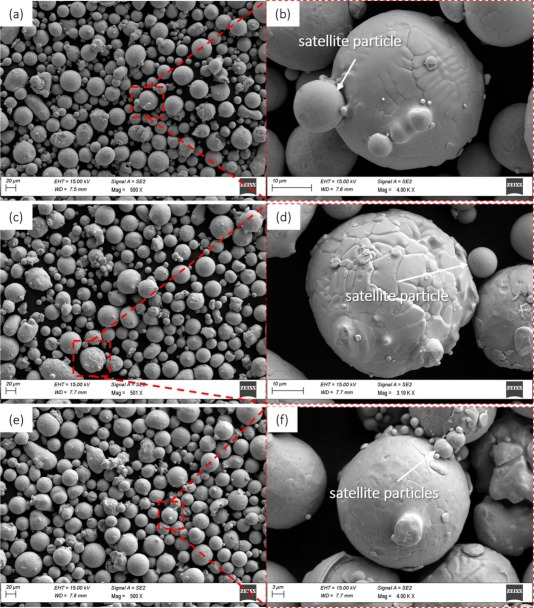
The post-sieving powders remained predominantly near-spherical and showed no monotonic change in particle-size distribution, with D50 values of 34.4–36.7 µm. The refreshed N2 and N3 powders recorded Hall flow times of 13 ± 1 and 14 ± 1 s/50 g, respectively, while the virgin N1 powder did not flow under the same test conditions.

The corresponding PBF-LB/M specimens also showed no significant progressive deterioration in the measured properties. Relative density ranged from 99.38–99.88%, while mean optical porosity was 0.04–0.21%. Surface roughness was position-dependent and non-monotonic, with Ra values of 6.97–8.48 µm, and microhardness remained within a narrow range of 141–145 HV0.3.
Microstructural analysis showed that the specimens retained the columnar-dendritic solidification morphology associated with PBF-LB/M Invar 36. Following heat treatment, the tested specimens also exhibited a low thermal expansion response between –50 and 100 °C. Incremental CTE at 100 °C was reported at 1.04–1.06 × 10⁻⁶ K⁻¹, while the measured curves showed a characteristic change in slope at around 230–250 °C.
Based on the results, the researchers propose a condition- and property-based approach to qualifying refreshed Invar 36 powder. This would combine documented powder recovery and refreshing history with continued monitoring of chemistry, particularly oxygen content, particle-size distribution, post-sieving morphology, flow behaviour and relevant part properties.
The authors stressed that N3 represents only the furthest powder condition investigated during the study and should not be interpreted as establishing a universal twenty-cycle reuse limit for Invar 36. Instead, the work provides a framework for evaluating powder reuse over longer production campaigns and for assessing additional mechanical and thermophysical properties required for specific applications.
The study concludes that powder reuse in PBF-LB Additive Manufacturing of Invar 36 is better assessed by linking the refresh rate, calculated powder history, measured feedstock condition and resulting part properties than by relying on the nominal reuse-cycle count alone.
‘Powder reuse effects on refreshed Invar 36 batches and selected PBF-LB/M part properties’ is available here.