Innospace commercialises support-free titanium AM process

Innospace, headquartered in Sejong, South Korea, claims that it has become the first in South Korea to commercialise an advanced metal Additive Manufacturing process that produces high-precision titanium components without support structures.

The technology is reported to enable the efficient production of complex curved structures, such as spherical and dome-shaped components, reducing both time and cost.
“The advanced metal manufacturing sector is characterised by high technological entry barriers and stringent quality verification standards, making it a strategically important field where securing core technologies directly impacts scalability and profitability,” said Soojong Kim, Founder and CEO of Innospace.
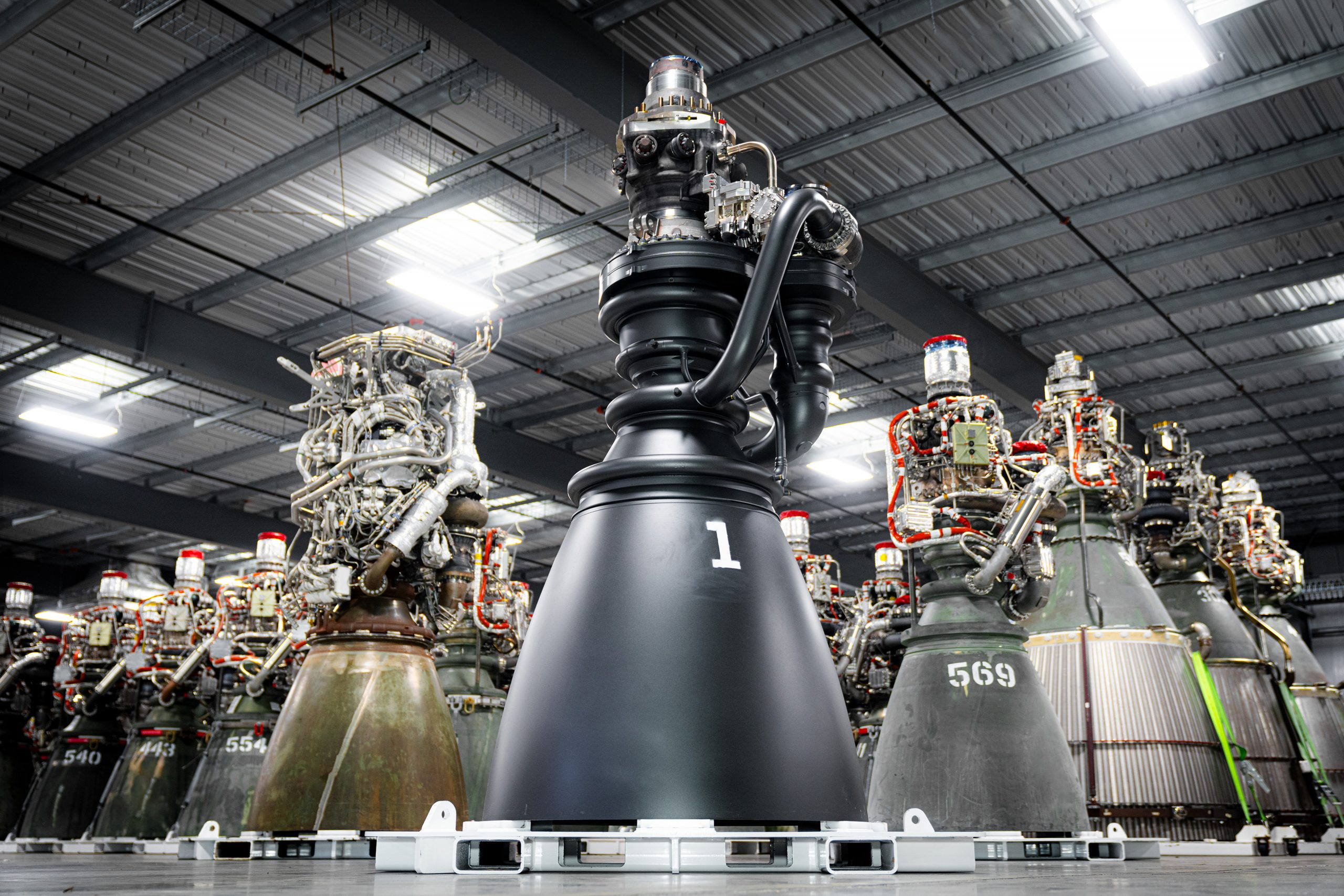
The company expects it to change manufacturing approaches for key aerospace and defence components, including satellite propellant tanks. The development extends the company’s advanced technological capabilities accumulated through the development of its ‘HANBIT’ launch vehicle into commercial manufacturing applications.
“Building on our Additive Manufacturing capabilities developed through launch vehicle programmes, we will accelerate expansion into high-value markets, including aerospace, defence, and satellite structures, and strengthen our competitive position in the global market,” added Kim.
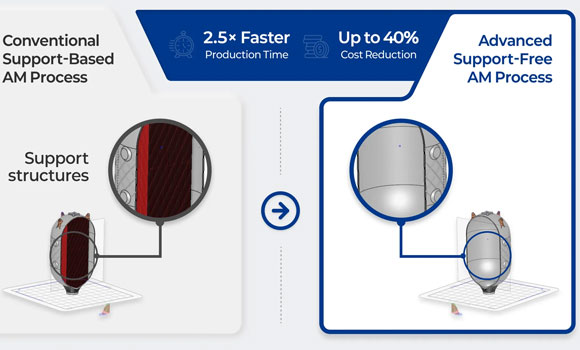
In conventional metal AM processes, internal support structures are typically required to prevent deformation during fabrication. This results in increased post-processing, longer production times, and limitations in design freedom. Innospace states that it has achieved product quality and structural stability without support structures by applying advanced process control technologies, even within standard Laser Beam Powder Bed Fusion (PBF-LB) environments. The company also addressed key technical challenges associated with titanium materials, which are prone to thermal distortion and require highly sophisticated process control.
Innospace supplied high-precision components produced using this process to a domestic aerospace company in December last year, demonstrating real-world application and validation. According to Innospace, the technology reduced manufacturing time by a factor of 2.5 and cut costs by up to 40% by significantly reducing post-processing steps.
Enhanced design freedom also enables lightweighting and performance optimisation, reportedly allowing the company to meet aerospace transportation and defence requirements more consistently.