ETH Zurich researchers develop policy-optimised control for PBF-LB
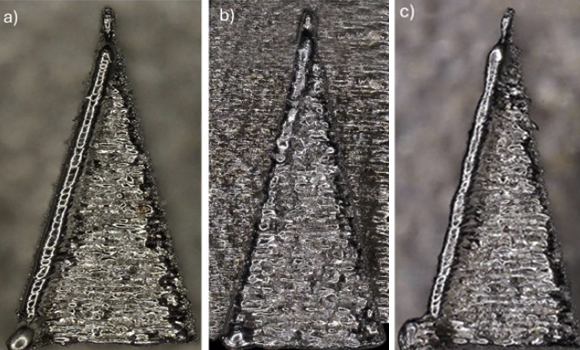
Researchers from ETH Zurich, Switzerland, have published a paper describing a multi-scale closed-loop control strategy for Laser Beam Powder Bed Fusion (PBF-LB) Additive Manufacturing based on policy optimisation.
The researchers developed a dual-loop, data-driven control strategy designed to stabilise surface temperature during the PBF-LB process. Temperature stability is considered critical for reducing the likelihood of build defects such as distortion and cracking, particularly when manufacturing complex geometries.
The proposed approach combines two complementary control methods:
- An in-layer linear output-feedback controller with gains optimised using policy gradient techniques
- A layer-to-layer feedforward controller that integrates temperature trajectory optimisation with iterative learning control
According to the paper, simulation studies showed that the multi-scale controller maintained stable temperature control even in the presence of significant model mismatch and measurement noise. Experimental validation using a simplified version of the controller, adapted to hardware constraints, achieved performance comparable with current in-situ data-driven control methods.
The researchers report that, compared with a Bayesian optimisation-tuned baseline, the controller reduced mean temperature tracking error by 3.4% and decreased mean input-constraint violations by 47.5%. For the experimental PBF-LB validation, the controller was tuned entirely offline using uncontrolled build data collected from a single calibration layer.

The study also identified what the authors describe as a new class of high-frequency excitation dynamics that reduced vector head swelling during the process. The researchers suggest that this observation could provide new opportunities for further investigation into process control for metal Additive Manufacturing.
The authors state that the work represents one of the first successful demonstrations of sim-to-real policy optimisation for PBF-LB Additive Manufacturing, potentially reducing the need for manual controller tuning while improving process robustness.
‘Multi-scale closed-loop melt pool control for LPBF via policy optimization’ is available here.