BAM and University of Birmingham extend Additive Manufacturing research
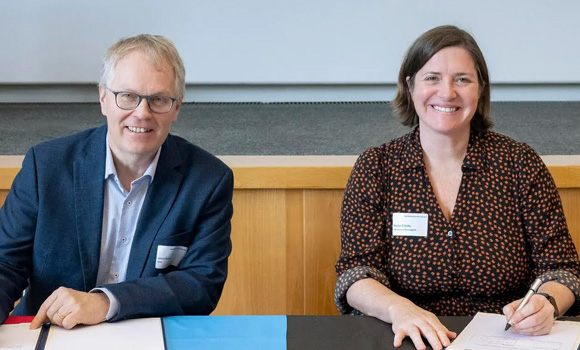
Germany’s Federal Institute for Materials Research and Testing (BAM) and the University of Birmingham, UK, have extended their Memorandum of Understanding (MoU), initially signed in 2018, as a show of commitment to collaborative research and scientific exchange.

“Our partnership with the University of Birmingham is a prime example of international cooperation with real added value – scientifically, socially, and strategically,” stated Professor Dr Ulrich Panne, president of BAM.
Since the beginning of the collaboration, over €9 million in joint funding has been applied for, more than thirty publications have been co-authored, and fourteen funded PhD exchanges have taken place. In addition, the organisations have held over fifty joint workshops, seminars, and professional events.
“International collaboration is central to the University of Birmingham’s mission, and our partnership with BAM reflects this commitment. Bringing together researchers, students, and technical experts enables us to address shared challenges and deliver lasting, meaningful impact through long-term, strategic international cooperation,” added Professor Rachel O’Reilly MBE, Pro-Vice Chancellor (Research) at the University of Birmingham.
The cooperation is based on four thematic research clusters that reflect the shared strengths and interests of both partners: Additive Manufacturing, chemistry and materials, energy, and environmental and life sciences.
The Additive Manufacturing cluster is undertaking research on innovative applications in aerospace and energy technology. A highlight is reported to be the University of Birmingham’s unique systems for processing copper and precious metals using electron beam technology (PBF-EB).
“During my time at BAM, I could access state of the art equipment, which enabled me to perform some of the experiments that I am the proudest of. Both my scientific and professional development were further enhanced by the diverse network of colleagues and collaborators that I met during my time at BAM,” added PhD candidate Joseph Okeke.
In the future, the partners plan to explore interdisciplinary fields, including civil engineering, cultural heritage protection, and non-destructive testing methods.