Boom Supersonic’s XB-1 demonstrator jet featuring AM parts makes successful first flight
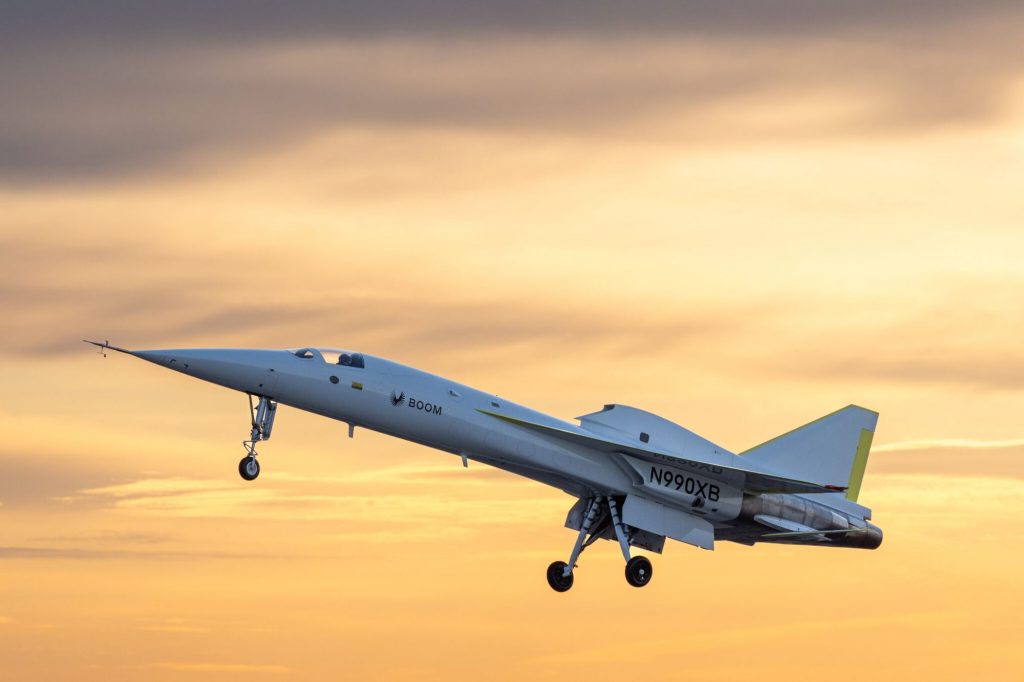
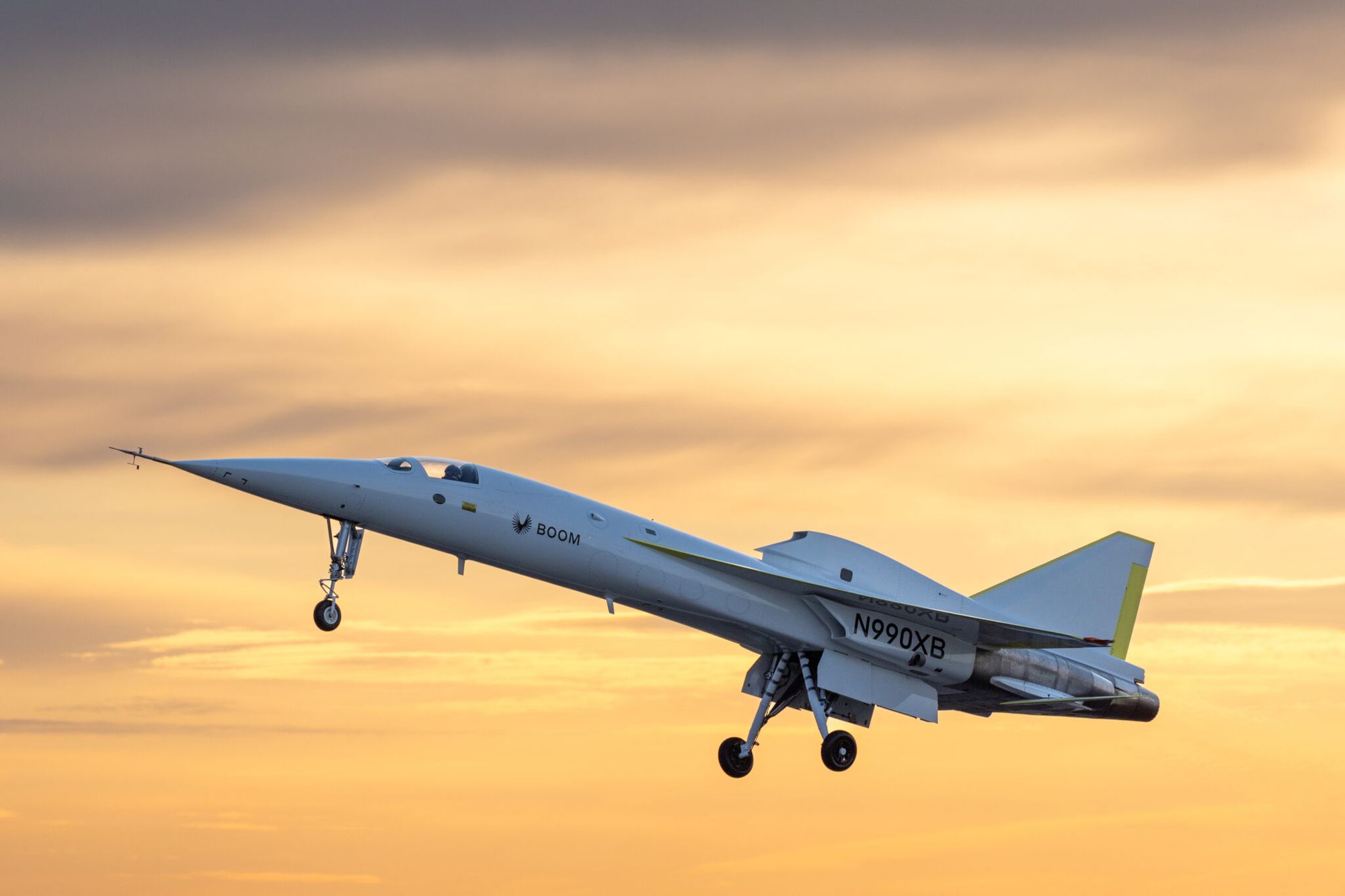
Boom Supersonic has announced the successful first flight of XB-1, reported to be the world’s first independently developed supersonic jet, at the Mojave Air & Space Port in California, USA. The XB-1 is the company’s demonstrator aircraft and features a number of metal additively manufactured parts produced in collaboration with Velo3D, based in Campbell, California, USA.
In line with Overture, Boom’s future supersonic airliner, XB-1 leverages state-of-the-art technologies to enable efficient supersonic flight, including carbon fibre composites, advanced avionics, digitally-optimised aerodynamics, and an advanced supersonic propulsion system.

“Today, XB-1 took flight in the same hallowed airspace where the Bell X-1 first broke the sound barrier in 1947,” said Blake Scholl, founder and CEO of Boom Supersonic. “I’ve been looking forward to this flight since founding Boom in 2014, and it marks the most significant milestone yet on our path to bring supersonic travel to passengers worldwide.”
Additive Manufacturing offers geometric freedom
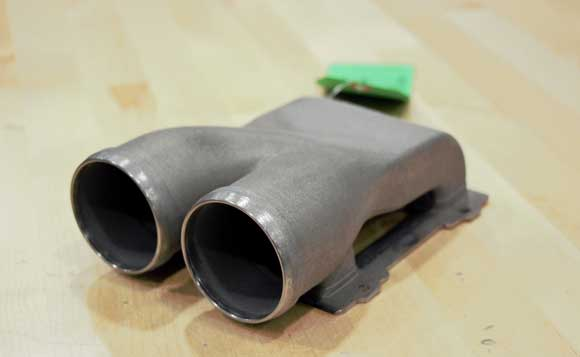
Many of Boom Supersonic’s AM parts are reported to be related to channelling air via complex vanes, ducts and louvres. The geometric complexity of these parts makes Additive Manufacturing an ideal option and, having established a relationship with Velo3D on some trial parts in 2019, the Boom Supersonic team chose the company’s Laser Beam Powder Bed Fusion (PBF-LB) Sapphire machine to produce a number of titanium components located in critical areas of the plane.
These included manifolds for the variable bypass valve (VBV) system that routes air released by the engine compressor to the aircraft’s outer mould line (OML); exit louvres for the environmental control system (ECS) that cools the cockpit and systems bay; louvres that direct the centre inlet’s secondary bleed flow to the OML; and NACA ducts and two diverter flange parts. NACA ducts are frequently used in high-speed aircraft to capture exterior air and channel it into the aircraft to cool the engine bays.
In almost every case, the Sapphire AM machine was able to build parts directly from Boom Supersonic’s CAD data, preserving original design intent. Finished parts were heat treated and/or Hot Isostatic Press (HIP) processed to enhance fatigue life.
Successful test flight
Flown by Chief Test Pilot Bill ‘Doc’ Shoemaker, XB-1 took off from the Mojave Air & Space Port and flew in the same airspace that hosted many historic first flights, including the flights of the Bell X-1, the North American X-15, and the Lockheed SR-71 Blackbird.
“Everyone on the XB-1 team should be incredibly proud of this achievement,” shared Shoemaker. “It has been a privilege to share this journey with so many dedicated and talented professionals. The experience we have gained in reaching this milestone will be invaluable to Boom’s revival of supersonic travel.”
XB-1 is reported to have met all of its test objectives, including safely and successfully achieving an altitude of 2,170 m (7,120 feet) and speeds up to 238 knots (441 kph or 273 mph). While XB-1 was in the air, the team performed an initial assessment of the aircraft’s handling qualities, including airspeed checks with the T-38 chase aircraft, and assessing the aircraft’s stability in the landing attitude (at a high angle of attack).
“I’ve been waiting over twenty years for an environmentally friendly successor to Concorde and XB-1’s first flight is a major landmark towards my dreams being realised. When I last flew Concorde in 2003 I knew that this day would come. The first flight of the XB-1 supersonic demonstrator is a significant achievement toward making sustainable supersonic flight a reality, aboard Overture – my #1 choice as the successor to Concorde,” Captain Mike Bannister, former Chief Concorde Pilot for British Airways, commented. “Congratulations to Blake Scholl, all at Boom and especially its pilot, Bill ‘Doc’ Shoemaker. Having been Concorde’s Chief Pilot I envy his role in this exciting return towards mainstream supersonic flight.”
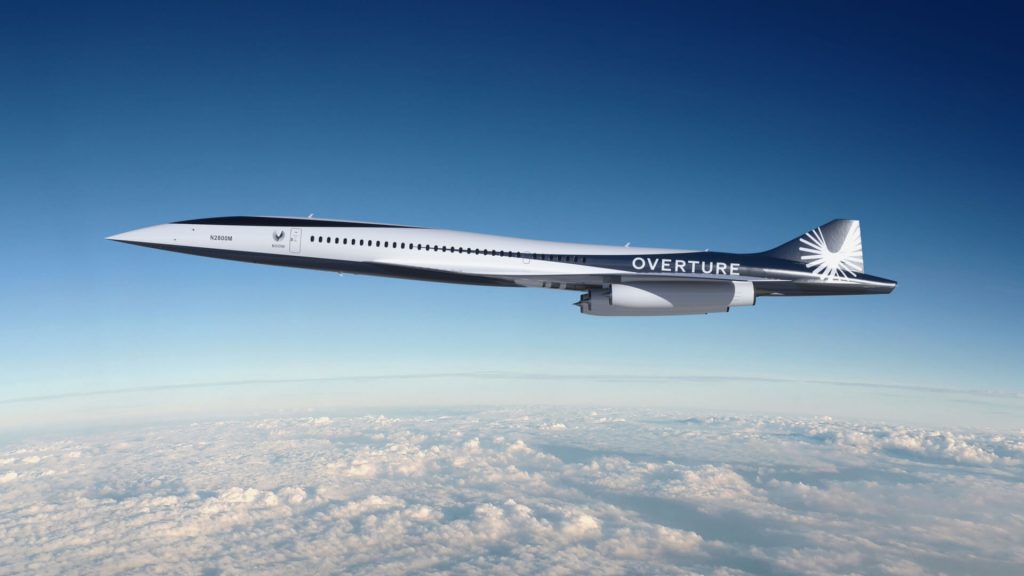
“Boom Supersonic is the first civil business entity to create its own X-plane, a supersonic demonstrator,” stated Ric Parker, Chair of Singapore Aerospace Programme, former Rolls-Royce CTO and Boom Advisory Council member. “This milestone is on the critical path to deliver Overture, the first supersonic transport aircraft to enter service in over half a century. It is such an exciting time to be involved!”
Next step supersonic
Now that XB-1 has successfully completed its first flight, the team will systematically expand the flight envelope to confirm its performance and handling qualities through and beyond Mach 1. When XB-1 is ready for its first supersonic flight, Test Pilot Tristan ‘Geppetto’ Brandenberg will be at the controls.
The inaugural flight of XB-1 takes place as Overture continues to advance toward production, with a growing global network of Tier 1 suppliers and an order book including 130 orders and pre-orders from American Airlines, United Airlines, and Japan Airlines.
“Boom Supersonic’s remarkable achievements are a testament to the power of dreaming and doing,” said Amy Spowart, president & CEO of The National Aeronautical Association. “Like Sir Frank Whittle, Blake, and Boom, achieved what others tried and no other could with XB-1. Congratulations to the XB-1 team, including Chief Test Pilot, Bill ‘Doc’ Shoemaker! The National Aeronautic Association looks forward to celebrating your milestones in the historic fashion of the shoulders on which we all stand.”