Vision-language models investigated for quality assessment in metal AM
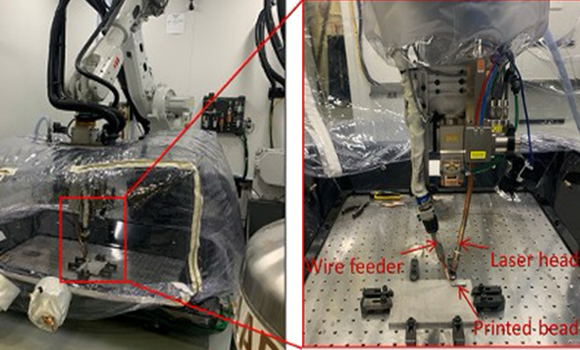
Researchers from Colorado School of Mines, GAC R&D Center Silicon Valley and Georgia Institute of Technology have published a study in JOM investigating the use of vision-language models (VLMs) for quality assessment in metal Additive Manufacturing. The research explores whether VLMs can perform image-based quality assessment without the task-specific model training or fine-tuning typically required by conventional machine learning approaches.
The researchers used in-context learning (ICL) to provide the VLMs with application-specific knowledge using a limited number of examples. The approach was evaluated using Gemini 2.5 Flash and Gemma 3:27b on quality assessment tasks involving wire-laser Directed Energy Deposition (DED).

According to the study, the ICL-assisted VLMs achieved quality classification accuracies comparable to those obtained using specially trained machine learning models, while requiring only a limited number of application-specific samples. Both models also showed improved performance when ICL was used compared with their baseline configurations.
In addition to classifying build quality, the VLMs provided human-interpretable explanations for their decisions. The researchers suggest that this could improve transparency and enhance user trust compared with conventional machine learning classification models, which offer limited insight into their outputs.

To evaluate these explanations, the team introduced two metrics: knowledge relevance, which assesses whether a model applies appropriate application-specific knowledge, and rationale validity, which assesses whether its reasoning correctly interprets image features in support of its quality classification.
‘In-Context-Learning-Assisted Vision-Language Models for Quality Assessment in Metal Additive Manufacturing’ is available here.