AM Europe maps Additive Manufacturing research capabilities across Europe
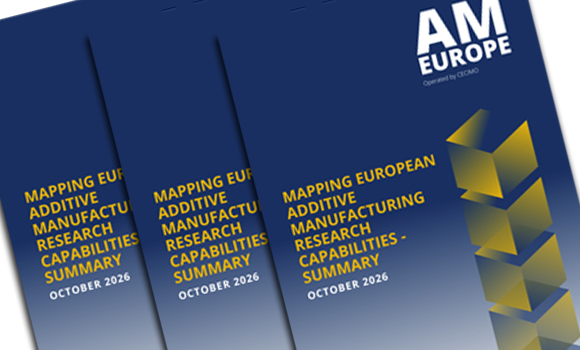
AM Europe, a pan-European initiative bringing together more than 700 companies across the AM value chain, has released a new report, Mapping European Additive Manufacturing Research Capabilities, which examines how Europe can turn research expertise into reliable, commercially viable production.
Covering materials, testing, digital technologies and sector applications, the report maps capabilities that can support the industrial adoption of Additive Manufacturing.
The findings highlight obstacles for smaller businesses, including finding suitable facilities, comparing services and financing qualification. Differences in data formats and testing requirements hinder reuse of results, while lengthy funding applications and limited industrial ownership after public funding ends can slow progress.
The report identifies priorities including more accessible facilities, shared testing, reusable evidence and stronger industry partnerships. Customer trials and sector-specific demonstrators could help establish the business case for adoption.

Turning Europe’s Additive Manufacturing research into industrial capability
The report draws on evidence from 83 research organisations across 18 countries. It examines seven capability areas spanning materials, digital technologies, testing and industrial applications.
Metal AM and advanced materials were identified in 66 organisations. Circularity, repair and industrial uptake were identified in 65, while testing, inspection and quality assurance featured in 63. The mapping also identifies capabilities in aerospace and defence, artificial intelligence, polymers and composites, medical applications and other specialist fields. According to the report, these overlapping categories record evidence of activity rather than the scale or maturity of individual programmes. The findings suggest that Europe has many of the technical foundations needed to support wider adoption. Research centres combine materials development, process monitoring, qualification support and shared equipment. These capabilities can help companies improve resource efficiency, extend component lifetimes and strengthen supply resilience.

However, the report highlights that access remains uneven. It notes that smaller businesses can struggle to identify suitable facilities, compare services and finance qualification. Inconsistent data formats and testing requirements make research results harder to reuse. Lengthy funding applications create further obstacles, while promising demonstrators may lack industrial ownership once public funding ends.
The report points towards a European policy agenda centred on accessible infrastructure, shared testing, reusable evidence and clearer routes from research to production. Sector-specific demonstrators, stronger industrial partnerships and support for customer trials can help establish credible business cases.
AM Europe intends to support this transition by connecting research organisations, companies and policymakers around deployment needs. AM Europe states that the priority is to translate Europe’s research strengths into industrial capability that supports competitiveness, sustainability, defence readiness and medical innovation.
A summary of the report is available here.