Heated printhead enables low-saturation aqueous binder for 316L Binder Jetting
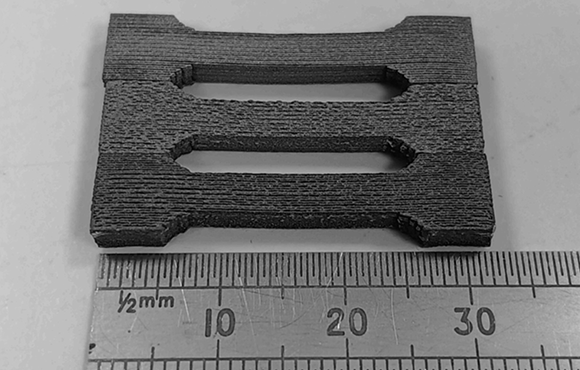
Researchers from the University of Sheffield, UK, have published a study in the Journal of Manufacturing Processes demonstrating the Binder Jetting of 316L stainless steel using a low-saturation aqueous PVA binder delivered through a heated printhead.
The researchers developed a customised Binder Jetting Additive Manufacturing machine and used printhead heating to improve the jettability and wettability of a binder comprising 1 wt.% polyvinyl alcohol (PVA) in deionised water. This enabled parts to be produced at a binder saturation of 20%, with the binder applied solely through the printhead rather than incorporating binder components into the powder feedstock.
Green parts produced using the process achieved a compressive strength of 2.72 MPa, considered sufficient for safe handling. Shrinkage was limited to 15.08% or less.
The researchers also investigated the influence of layer thickness and sintering temperature. The best results were achieved with an 80 μm layer thickness and vacuum sintering at 1,450 °C.
Under these conditions, the sintered 316L parts reached a relative density of 98.66 ± 0.20%, as measured using the Archimedes method, and 99.07 ± 0.12% based on cross-sectional measurements. Hardness reached 156.3 HV, while tensile strength was measured at 517.46 MPa, without the use of Hot Isostatic Pressing (HIP).
The study was motivated in part by the environmental drawbacks associated with resin-based binders, which can release volatile organic compounds and leave carbon residues during processing. The researchers concluded that combining an aqueous PVA binder with a heated printhead and low binder saturation could offer a route towards more sustainable metal Additive Manufacturing while maintaining competitive densification and mechanical properties.
‘Heated printhead binder jetting of 316L stainless steel using a low-saturation aqueous PVA binder’ is available here.