Alstom turns to Wire Arc DED for critical rail component manufacturing
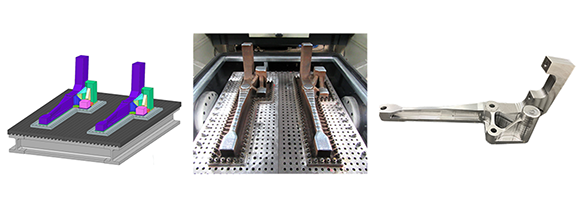
Alstom, based in Mannheim, Germany, announced that it has transitioned to Gefertec’s Wire Arc Directed Energy Deposition (DED) Additive Manufacturing technology to produce components for rail vehicles. Reportedly one of the largest rail vehicle manufacturers, Alstom’s portfolio also includes components, infrastructure solutions, and services – among them the provision and procurement of spare parts over decades.
Spare parts requirements cannot be met through warehousing, especially considering the long service life of rail vehicles and the number of necessary spare parts. To meet contractual obligations, Alstom needed to find an alternate fulfilment approach.
“We suddenly had to procure this type of yaw damper again long after the last production run,” explained Dr-Ing Uwe Jurdeczka, Head of the Innovative Production Technologies Group at Alstom. This damper is a cast steel component located between the bogie and the car body. At high speeds or on curvy routes, yaw dampers ensure vehicle stability.
Reproducing the part using traditional steel casting would have taken too long and involved high costs and complexity: a supplier would have to be found, a casting mold manufactured, all with no guarantee of amortisation. Jurdeczka and his team selected Wire Arc DED to quickly meet the manufacturing requirement.
Feasibility study
In the past, Alstom and Gefertec jointly evaluated the feasibility of converting various parts to Wire Arc DED. In 2020, Gefertec produced the first wheelset bearing cover using DED for Alstom. For the yaw damper, Jurdeczka again approached the Berlin-based company. He explained, “Our positive experience in the past and the competence of Gefertec’s employees were decisive again in this case.”
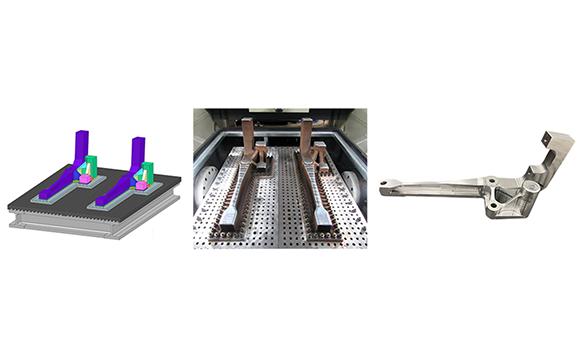
Initially, the Gefertec team created a feasibility study based on the material and geometry data. Alstom stated that this showed that DED could feasibly produce the yaw dampers. The next stage was concrete planning: the material was selected, tool paths for the welding head were defined, and all further production parameters for the yaw dampers were set.
However, the existing design data like additional radii and machining allowances had to be converted into a format suitable for the Additive Manufacturing process. The manufacturing allowances are necessary because the blanks are later milled to produce a smooth surface.
After finishing, the dampers underwent a series of comprehensive static and dynamic tests. Since these components are exposed to extreme loads and the industry regulations are stringent, the testing is extensive. From feasibility study to production and testing, the entire process took just 100 days.
“The originally planned 100 days were an ambitious delivery schedule, especially since this project broke new ground for us,” Jurdeczka stated.“ The transparency during project execution and in the evaluation of tests was convincing. Sharing all results turned out to be uncomplicated.”
Jurdeczka noted that the DED process may represent a real alternative to conventional manufacturing methods for the rail industry – especially in cases where long-term availability and rapid delivery of spare parts pose major challenges. Switching from physical to digital warehousing is possible with DED.
Alstom already offers additively manufactured parts via its StationOne platform. Going forward, Jurdeczka intends to use Design for Additive Manufacturing principles to design components from the outset, especially in view of trends like lightweighting and functional integration.