USAF hosts Additive Manufacturing operator certification course
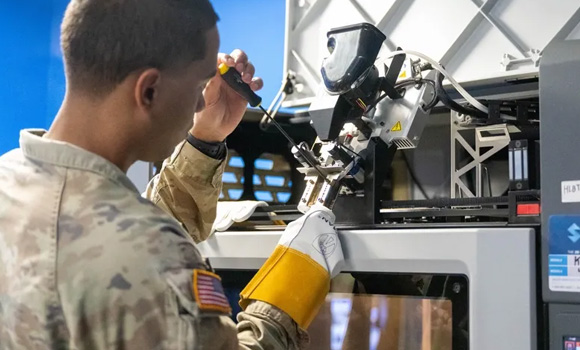
The USA’s Joint Base Pearl Harbor-Hickam, Hawaii, hosted a specialised Additive Manufacturing operator certification course in August, organised by the US Air Force’s 15th Maintenance Squadron. The training marked the first time US Army personnel attended the AM certification course, ensuring the metal technology shop can continue to additively manufacture approved aircraft components on-site for the C-17, F-22 and transient aircraft missions.
The training, facilitated through the Rapid Sustainment Office by an instructor from the University of Dayton Research Institute, is a required prerequisite for Airmen to additively manufacture parts that can go directly on aircraft.
“The biggest advantage is you can take a broken part of unknown dimensions and reverse engineer it and print a prototype to test fit the same day before we spend a week or two manufacturing a part out of metal that potentially otherwise wouldn’t fit,” stated Tech Sgt Jacob Proffer, 15th Maintenance Squadron aircraft metals technology non-commissioned officer in charge.
Hickam’s AM machine has been used for approximately six years, but maintaining its operational impact is dependent on having certified operators. The most recent course was the first time US Army personnel joined the Air Force training as a way for the Army to certify their own operators on Schofield Barracks.
“Before [this training] I did not know how to run this machine at all,” said US Army Sgt Grayson Scott, 25th Division Sustainment Brigade allied trade specialist. “Now I can run this machine from start to finish.”
In addition to enhancing readiness, the capability provides substantial cost and labour savings, as traditional machining often requires purchasing large, expensive blocks of material and cutting them down, creating excess waste.
The Additive Manufacturing machines authorised by the USAF allow the production of high-quality permanent replacement parts on-site. The shop only uses the required amount of material needed for each part, reducing waste, storage requirements and raw material costs instead of traditional subtractive manufacturing. This streamlined process can save time while eliminating the need for multiple logistics steps.