SPEE3D Cold Spray repairs combat support vehicle during exercise

SPEE3D, headquartered in Melbourne, Australia, has reported that the Tennessee Army National Guard, in collaboration with the University of Tennessee, Knoxville, and the DEVCOM Army Research Laboratory, used its deployable Cold Spray Additive Manufacturing technology to repair a combat support vehicle during a live training exercise. The work received the Expeditionary & Tactical Additive Manufacturing Excellence Award at MILAM 2026.

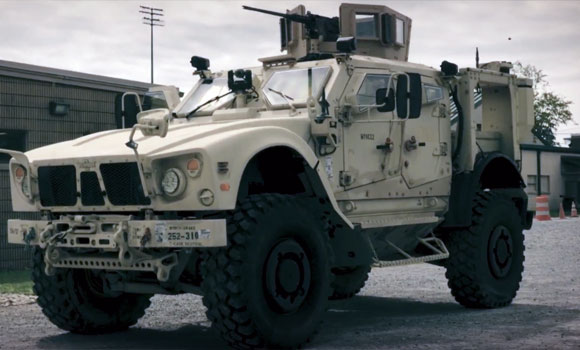
During a training exercise in Tennessee, a Mine-Resistant Ambush Protected (MRAP) vehicle was disabled by the failure of a battle lock handle that forms part of the armoured door’s locking mechanism. Without the component, the vehicle could not safely return to base.
Traditionally, replacing such a component in-situ would require ordering the part from the original equipment manufacturer and transporting it through military logistics networks, a process that can take several weeks.
To demonstrate an alternative approach, the partners deployed SPEE3D’s Expeditionary Manufacturing Unit (EMU), a containerised metal Additive Manufacturing machine. Operated by Tennessee Army National Guard soldiers with support from University of Tennessee engineers, the machine was used to design, manufacture, heat treat and machine a replacement battle lock handle in the field.
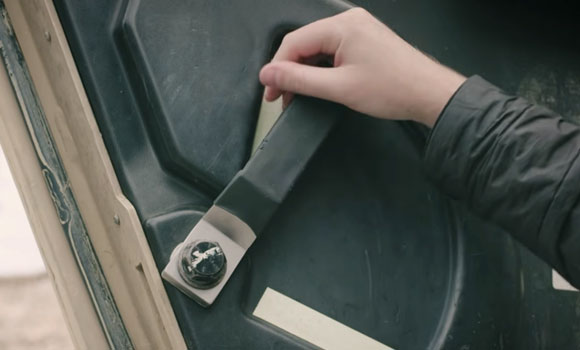
The component was produced and installed in less than ten hours, allowing the vehicle to return to service during the exercise.
In the demonstration scenario, the newly manufactured part was delivered to the stranded vehicle using an unmanned aerial system rather than a conventional convoy. According to the project partners, this compressed a logistics process that could typically take up to six weeks into a single-day operation.
Beyond the battle lock handle, the team also produced additional components during the trial using the EMU, including an exhaust cover for a generator supporting MEDEVAC equipment and mounting brackets for a battlefield display system intended to reduce friendly-fire incidents.
The exercise also provided training for Tennessee Army National Guard personnel, who learned to operate the EMU and produce components despite limited prior experience with Additive Manufacturing.
The University of Tennessee’s Defense Development and Applied Research Center (DARC) plans to use the XSPEE3D expeditionary metal Additive Manufacturing machine for future training scenarios aimed at enabling military personnel to manufacture replacement components in remote or contested environments.

The university has also acquired a TitanSPEE3D metal Additive Manufacturing machine to support research and the production of larger metal components.
In recognition of the project, the University of Tennessee’s DARC, the Tennessee Army National Guard and DEVCOM ARL received the Expeditionary & Tactical Additive Manufacturing Excellence Award during MILAM 2026 in Tampa, Florida.