Researchers improve distortion modelling for metal Binder Jetting
NewsResearch
September 1, 2025
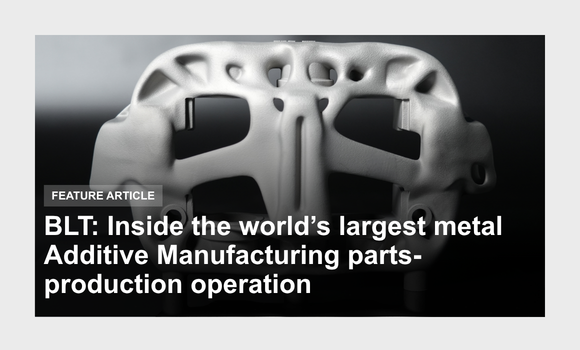
Researchers from the University of Grenoble Alpes and HP have proposed a step-by-step method to predict shape changes during the sintering of 316L stainless steel parts (Courtesy Additive Manufacturing/Elsevier)

Researchers from the University of Grenoble Alpes and HP Inc have proposed a step-by-step method to predict shape changes during the sintering of 316L stainless steel parts made using metal Binder Jetting. The method, detailed in the paper ‘A calibration method to predict shape change during sintering: Application to 316L parts made by Metal Binder Jetting’, combines experimental and numerical techniques.
Metal Binder Jetting requires sintering, which leads to shrinkage due to the initially low green density of the part. Shape distortion can also form due to gravity. The prediction of those deformations is, therefore, paramount to reach near-net shape parts.

In the reported method, the anisotropic linear shrinkage is determined by dilatometry, while the viscous deformations are numerically fitted through a calibration part. The model is implemented in HP’s proprietary 3D Digital Sintering software and tested across various sintering cycles. It was optimised through iterative loops, reducing deviations between predictions and experiments to below 1%.
Article: Inside Nikon’s metal AM strategy
Part 2: Scaling industrial production in Long Beach
Read now

Then, angular sectors exhibiting various degrees of overhang are sintered to assess the performance of the model. Results showed that most predictions exhibit maximum deviations below 5%, with filleted parts exhibiting better predictions.

The study highlights the importance of accurate parameter calibration, noting the influence of sintering temperature, density, and microstructural changes. While this work relied on optimisation routines, future improvements could come from machine learning and multi-scale modelling.

By combining experimental data with simulation, the method offers a path to more reliable metal Binder Jetting. The breakthrough could expand the technology’s use in industries such as aerospace and medical devices, where dimensional accuracy is critical.

The full paper is available here.

www.univ-grenoble-alpes.fr

www.hp.com

GET THIS ISSUE:  PDF  |  VIEW ONLINE  |  BUYER’S GUIDE
NewsResearch
September 1, 2025

TRUSTED CONTENT. TARGETED AUDIENCE

Advertise with Metal AM and access a global base of 50,000+ AM professionals.

Contact Jon Craxford: [email protected]

Request a Media Pack
  • AM machines
  • Process monitoring & calibration
  • Heat treatment & sintering
  • HIP systems & services
  • Pre- & post-processing technology
  • Powders, powder production and analysis
  • Part manufacturers
  • Consulting, training & market data

Don’t miss a thing – register for our newsletter

Don't miss any new issue of Metal AM magazine, and get the latest industry news. Sign up to our twice weekly newsletter.

Register now

Join 40,000+ other AM professionals – follow us online

About Metal Additive Manufacturing magazine

Metal AM magazine, published quarterly in digital and print formats, is read by a rapidly expanding international audience.

Our audience includes component manufacturers, end-users, materials and equipment suppliers, analysts, researchers and more.

In addition to providing extensive industry news coverage, Metal AM magazine is known for exclusive, in-depth articles and technical reports.

Our focus is the entire metal AM process from design to application.

Each issue is available as an easy-to-navigate digital edition and a high-quality print publication.

Discover our magazine archive…

The free to access Metal Additive Manufacturing magazine archive offers unparalleled insight into the world of metal Additive Manufacturing from a commercial and technological perspective through:

  • Reports on visits to leading metal AM part manufacturers and industry suppliers
  • Articles on technology and application trends
  • Information on materials developments
  • Reviews of key technical presentations from the international conference circuit
  • International industry news

All past issues are available to download as free PDFs or view in your browser.

Browse the archive

Share via
Copy link
Powered by Social Snap