Researchers demonstrate Additive Manufacturing of aluminium vapour chambers

Researchers from the UK’s Additive Manufacturing of Functional Materials research group (AMFM) at the University of Wolverhampton, along with engineers at Additive Analytics Ltd, Telford, and Engineering Entropy Ltd, Silverstone, and a researcher from Prince Mohammad Bin Fahd University, Al-Khobar, Saudi Arabia, have published a study demonstrating the feasibility of producing aluminium vapour chambers with integrated lattice wicks directly, potentially opening new opportunities for advanced thermal management devices. The research, published in Applied Thermal Engineering, focused on optimising energy input during the Additive Manufacturing process to create the porous internal structures required for efficient capillary-driven cooling.
“The significance of this work extends beyond vapour chambers,” stated John Robinson, the study’s lead author. “It demonstrates that PBF-LB can be used to manufacture functional internal transport architectures where geometry, process physics and device performance are intrinsically linked. We are moving beyond Additive Manufacturing as a tool for producing parts and towards Additive Manufacturing as a platform for engineering functionality.”
Heat pipes and vapour chambers are widely used passive cooling technologies, with their performance heavily dependent on the geometry and manufacturability of their internal wick structures. Conventional manufacturing methods can limit design flexibility, prompting researchers to investigate whether Additive Manufacturing could enable the direct production of fully integrated devices.
In the study, the team designed a regular orthogonal lattice structure with strut and pore dimensions tailored to capillary performance requirements and the resolution limits of the Laser Beam Powder Bed Fusion (PBF-LB) Additive Manufacturing machine. Using AlSi10Mg, the researchers systematically varied laser power, scan speed and layer thickness to evaluate the influence of localised energy input on lattice formation, pore interconnectivity and capillary structure.
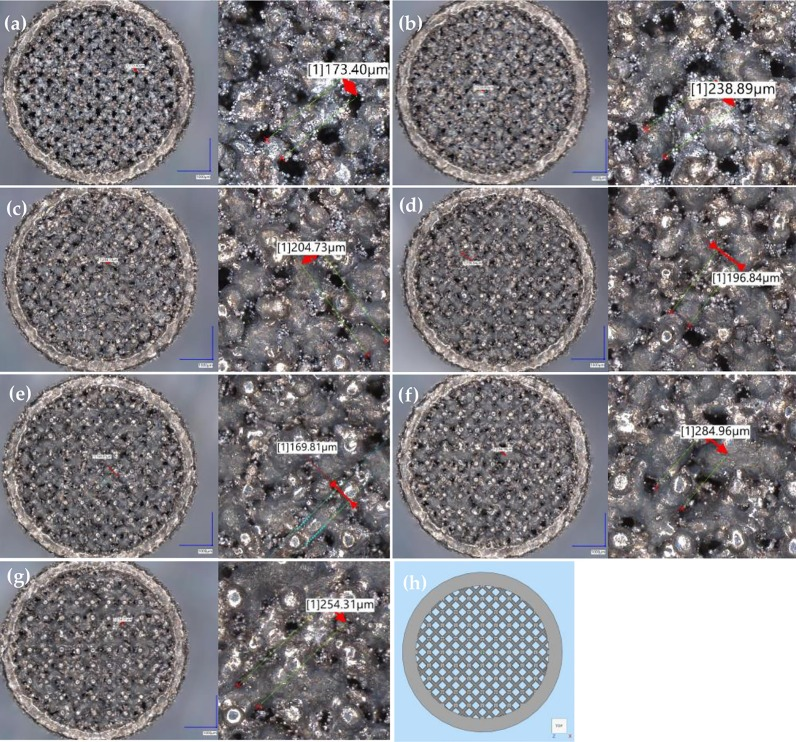
The results showed that standard machine parameters produced dense material rather than the open, porous lattice required for wick functionality. By reducing the energy input, the researchers were able to promote lattice formation, with the most consistent and interconnected pore networks achieved at an energy density of 2.86 J/mm³. Under these conditions, the structures reached approximately 45% porosity.
Building on these findings, the team manufactured complete aluminium vapour chambers incorporating the optimised lattice wick structures. The devices were sealed, charged with acetone as the working fluid and subjected to thermal performance testing.
During evaluation, the vapour chambers demonstrated temperature differences exceeding 70°C at a heat input of 65 W, confirming their ability to function as effective thermal management devices.
According to the researchers, the work demonstrates that optimisation of PBF-LB Additive Manufacturing processing parameters can enable the direct manufacture of wick-based cooling devices. The study also establishes the functional performance of fully integrated Additive Manufacturing vapour chambers and highlights the potential for producing advanced thermal management systems directly through Powder Bed Fusion technology.
‘Optimisation of energy input in laser powder bed fusion of porous wick structures for functional vapour chambers’ is available here.