PSI scales up boron nitride coating process for 316L powders
Phoenix Scientific Industries Ltd (PSI), Hailsham, East Sussex, UK, has reported the successful development and scale-up of a process for coating 316L stainless steel powders with boron nitride nanoparticles for Additive Manufacturing applications.

According to PSI, its work addresses a longstanding challenge in powder engineering: achieving the uniform dispersion and application of nanoparticles onto metal powder surfaces at an industrially relevant scale. Nanoparticles have attracted interest for their potential to modify material properties and processing behaviour, but their tendency to form agglomerates has limited wider industrial adoption.
The company explained that initial investigations found commercially available boron nitride nanopowder exhibited significant agglomeration, requiring the development of specialised pre-processing methods prior to coating.
Several preparation routes were evaluated. PSI reported that low-energy ball milling increased agglomeration rather than reducing it, producing larger particle clusters. More promising results were achieved using a solution-based dispersion approach that combined controlled stirring and liquid-media processing. This reportedly reduced agglomerate sizes to approximately 1–2 µm and enabled subsequent coating operations.
A range of coating technologies was then assessed. While alternative methods provided useful process data, PSI stated that many resulted in uneven coatings or the formation of separate nanoparticle clusters rather than effective adhesion to the powder surface.

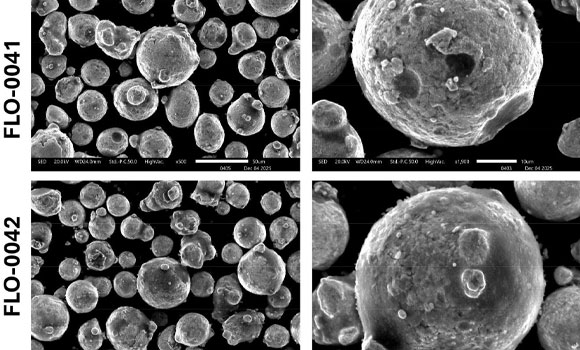
The company ultimately identified a fluidised bed reactor (FBR) process as the most effective coating route. By optimising gas flow, nanoparticle injection and fluidisation conditions, PSI reported achieving a uniform boron nitride coating on 316L stainless steel powder particles. Optical microscopy and scanning electron microscopy (SEM) analyses were said to confirm the presence of the coating layer through changes in particle surface appearance and reflectivity.
PSI also highlighted the successful scale-up of the process from laboratory to industrial production. Using a larger retort system, the company produced two 20 kg batches of coated powder while maintaining fluidisation behaviour, nanoparticle delivery and coating quality comparable to laboratory trials.
The company reported that its technology could support the development of advanced powder systems, including oxide dispersion-strengthened (ODS) alloys, high-temperature materials and wear-resistant components. PSI added that further work will focus on Laser Beam Powder Bed Fusion (PBF-LB) Additive Manufacturing and mechanical property evaluation of components produced using the coated powders.