Phase3D launches two large-format in-situ inspection systems for metal AM
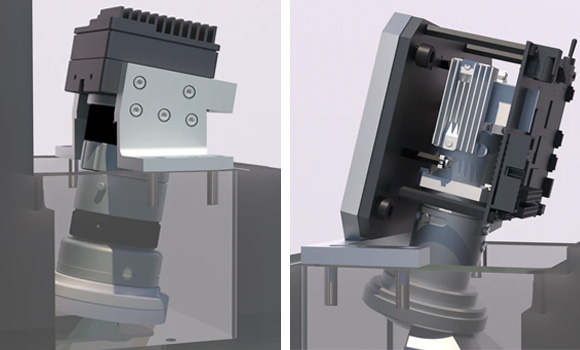
Phase3D, based in Chicago, Illinois, USA, has announced the release of two new large-format Fringe Inspection machines for metal Additive Manufacturing: Large Format Fringe Inspection and Large Format Fringe Inspection Hi-Rez.

This in-situ inspection technology is intended to support the EOS M 400 series of machines and other large-format platforms such as the Nikon SLM NXG product line. Both Phase3D machines can also be retrofitted to be compatible with Additive Manufacturing machines featuring build areas up to 600 × 600 mm.
Fringe Inspection is an in-situ structured light inspection machine that delivers unit-based, quantitative measurements during the Additive Manufacturing process. Using structured light projection and proprietary calibration, the systems achieve ±10 µm vertical accuracy, 60 µm spatial resolution, and repeatability of 5 µm at the calibration plane. These measurements provide real-time information on layer height, deposition consistency, and melt surface quality, all critical for detecting anomalies such as short feeds, chatter, protrusions, over-melting, and recoater interference.
Both new configurations provide full build plate coverage for large PBF-LB Additive Manufacturing machines while maintaining NIST-traceable calibration and optimised performance for speed, repeatability, and integration flexibility.
Phase3D has recently published and presented results showing a causal link between in-situ layerwise surface roughness measurements and specimen density, enabling immediate prediction of final part quality based on porosity. This discovery allows manufacturers to connect in-situ data directly to part integrity and accelerate qualification workflows.

Enabling efficient delta qualification
The Large-Format Fringe Inspection machines introduce a new capability for efficient delta qualification across Additive Manufacturing machines. Using deterministic height map data, AM users can now compare build and part quality between single and multi-laser machines of different brands and build sizes without requiring full requalification campaigns.
This approach enables organisations to demonstrate process equivalency and machine conformance through direct, unit-based measurement, significantly reducing qualification timelines and costs. The result is intended as a path toward cross-platform qualification, allowing production to move between machines while maintaining dimensional and material integrity.
Adoption by aerospace prime contractor
According to Phase3D, aerospace prime contractor has adopted the large-format machine to address challenges in CT scanning of large, dense metal components, a process often limited by material attenuation and geometry. By using Fringe Inspection, the customer can now leverage in-situ height-based data to verify build quality and mitigate CT requirements.
In the next phase, the same dataset will support qualification and certification efforts, correlating layer-wise measurement data with mechanical performance and meeting standards such as SAE AMS7032.
“Scaling Fringe Inspection to large-format systems demonstrates our commitment to enabling qualification through direct measurement, not inference,” stated Dr Niall O’Dowd, founder and CEO of Phase3D. “Aerospace manufacturers are realising that in-situ data with units, accurate to microns, can replace the uncertainty of post-build inspection. This is how qualification moves from months to minutes.”