NMSU $3 million grant for molten metal jetting AM research
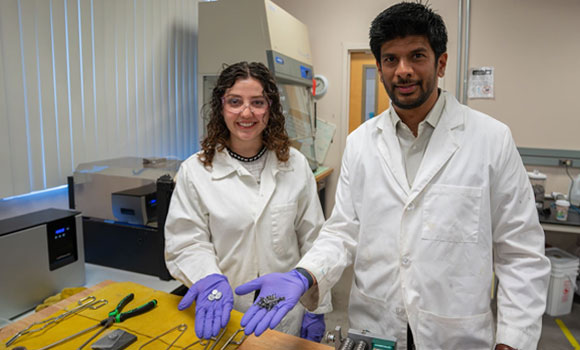
Researchers at New Mexico State University (NMSU), USA, are developing a metal Additive Manufacturing process that could enable aluminium scrap and other recycled feedstocks to be converted into high-quality components.

The project focuses on Molten Metal Jetting (MMJ), an Additive Manufacturing process in which millions of molten metal droplets are deposited and fused as they cool. While existing systems already employ this method, the researchers believe their new approach could directly compete with modern industry practice by reducing material waste and enabling the use of recycled metals.
Chaitanya Mahajan, Assistant Professor of Industrial Engineering at NMSU, is co-principal investigator on a nearly $3 million National Science Foundation grant awarded to the Rochester Institute of Technology.
“Many traditional metal 3D printers require highly specialized, expensive and potentially hazardous spherical metal powders,” Mahajan stated. “These powders have a limited shelf life, absorb moisture, and present severe explosion and inhalation risks, making them incredibly difficult to transport and store in harsh environments.”
Unlike many metal AM technologies that melt material during the build process, the team’s approach separates melting from deposition. According to the researchers, this enables faster production rates and allows a broader range of feedstocks to be used, including low-cost recycled materials such as machining scrap.
“For me, transforming aluminium scrap into high-precision parts redefines the limits of Additive Manufacturing. This project demonstrates that the future of mass production lies in bridging the gap between circular sustainability and next-generation engineering,” Mahajan added.

The researchers are also seeking to overcome limitations associated with single-nozzle molten metal droplet jetting systems. Single-nozzle architectures can restrict build rates and are susceptible to clogging, which can interrupt production.
By combining multiple nozzles with advanced modelling techniques, the team aims to increase production throughput while maintaining part quality. The approach could also facilitate the direct reuse of scrap metal, converting waste material into high-performance components.
Mahajan said the ability to produce components from scrap metal could have significant implications for commercial and defence supply chains. In environments where raw materials are difficult to obtain, the technology could provide a cost-effective method for manufacturing critical components on demand.
“The ability to create cost-effective 3D printed components will be essential when creating multi-material smart structures,” Mahajan continued. “Allowing manufacturers to print embedded wiring and data components into structures, eliminating the weight and clutter of traditional external wiring harnesses.”