NCAME partners with Amaero and Austal to accelerate defence AM development
The National Center for Additive Manufacturing (NCAME) at Auburn University, Alabama, USA, has partnered with Amaero Ltd, McDonald, Tennessee, to develop the use of AM within defence sectors such as aerospace and maritime.

In 2025, Amaero tasked NCAME researchers to assess the performance characteristics of its Nb-C103 and Ti-6Al-4V powder products developed for Additive Manufacturing. Nb-C103 has a very high melting point compared to Ni-based superalloys, making it well-suited to applications associated with extreme heat. However, its high cost – reportedly up to $4,000 per kg – can make the material difficult to acquire for assessment, particularly in a research setting.
“We’ve developed a high-throughput, iterative process development approach allowing Amaero to provide NCAME with minimal material and get a quick picture of the process-structure-property relationships,” stated Scot Carpenter, NCAME research engineer. “The target is for us to be able to turn this around in a matter of weeks so that the next iteration isn’t slowed by the need to send samples out to multiple laboratories to assess these relationships. The enabler here is that NCAME has the full fabrication to data value chain within our control, enabling us to expedite the printing, testing and characterisation to meet the needs of the AM industry.”
Amaero aims to respond decisively to small- and large-volume powder orders. NCAME was able to act as an extension of its development team, reportedly executing programmes that generated build parameters and mechanical properties faster than many commercial companies.
“Additive Manufacturing offers many solutions to our nation’s industrial capacity, but this can be diminished by having to engage multiple specialised laboratories to fully evaluate the process-structure-property relationships,” said Nima Shamsaei, Phillips WestPoint Distinguished Professor and Director of NCAME. “This partnership specifically leverages NCAME’s expertise and capabilities to provide answers within weeks, as opposed to months or years if outsourced.”
Austal USA
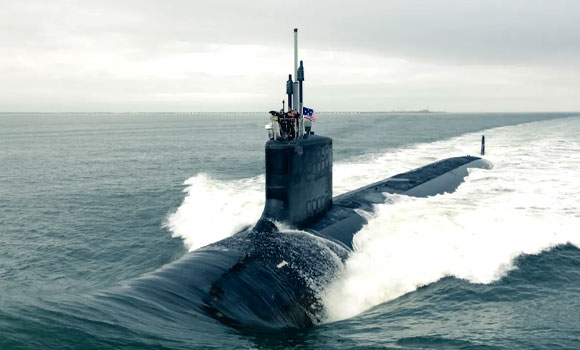
The need for rapid development also extends to military readiness at sea. Austal USA, a shipbuilding company with multiple ship construction and maintenance contracts with the US Navy and Coast Guard, is also partnering with NCAME in an effort to overcome challenges associated with limited access to conventional manufacturing capabilities.
The lead time for many forged or cast parts can be one to two years, especially for the low volumes typically needed by the Department of Defense. Additive Manufacturing offers not only a near term solution for these parts but wider design freedom and often better mechanical performance compared to casting.
“The ultimate goal of this project is to establish the correlation between in-situ sensing data and the resulting defect/micro-structure,” said Connor Headley, research engineer for Austal USA.
NCAME is working to assist Austal USA to build material allowables (statistically derived data sets of mechanical properties for relevant materials). These numbers can be crucial for design and performance predictability, something which factors in the adoption of Additive Manufacturing for structural applications.
“Our applied research division within NCAME allows us to provide tremendous value to the end use case, establishing specification minimums for AM parts, while also exploring how these conventional validation approaches can be improved upon with modern manufacturing techniques such as in-process monitoring,” Shamsaei concluded.