Metalysis to produce ’Tanbium’ tantalum-niobium alloy powder for ESA project
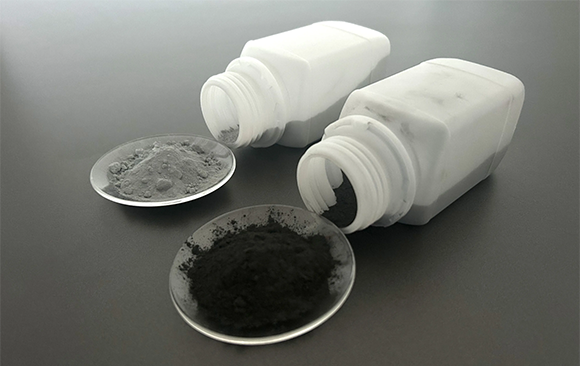
Metalysis, based in Rotherham, UK, has been selected by Skyrora, headquartered in Cumbernauld, UK, to develop and supply the Tanbium refractory alloy for use in rocket engine components, specifically for nozzles and combustion chambers, in a European Space Agency (ESA)–funded programme. Tanbium is a novel alloy consisting of tantalum and niobium.
The partnership forms part of Skyrora’s award from ESA’s General Support Technology Programme (GSTP). Phase one will run for nine months and focus on de-risking the material production and testing its application via Additive Manufacturing. The developed Refractory Complex Concentrated Alloy (RCCA), Tanbium, will be manufactured by Metalysis and demonstrated in rocket engine components using Skyrora’s in-house Additive Manufacturing machine, Skyprint 2.
This programme stage is intended to raise the technology readiness level (TRL), with subsequent phases targeting TRL 6 for full-scale prototype testing in relevant environments. The other project partner is Thermo-Calc Solutions AB, which has designed and developed Tanbium using Integrated Computational Materials Engineering (ICME). ThermoCalc Solutions intends to optimise Tanbium’s composition to Skyrora’s performance requirements in the project.
Upper rocket stage and satellite thruster components are typically made from Niobium Hafnium C103 or Inconel 718, but these materials have limitations in burn time, oxidation resistance, reusability, and weight. Thermo-Calc Solutions AB has computationally designed Tanbium to deliver higher-temperature strength, improved ductility, enhanced oxidation resistance, and better laser processability than incumbent alloys, with predictions that it can extend component lifetime and burn time, while reducing weight with no effect upon performance. European space component production forecasts indicate demand for around 20,000 kg of alloy powder over the next five years for space launch and satellites, based on C103 usage.
Skyrora reportedly chose Metalysis due to its experience demonstrating niche alloy and novel high-entropy alloy (HEA) powders, as well as its proven ability to deliver custom refractory alloys with precise physical and chemical characteristics. Metalysis’ patented FFC Cambridge electrolysis process enables the production of bespoke materials in the solid state, overcoming the alloying limitations found in traditional melting. This capability allows metals with very different chemical and physical properties to be combined, creating advanced alloys such as Metalysis’ lightweight HEA offering. Furthermore, since the natural form of the alloy is a powder, it is suited to downstream consolidation techniques such as Additive Manufacturing.
As a UK midstream metal and alloy producer, Metalysis operates from both its Discovery Centre at the Advanced Manufacturing Park, and its Manufacturing Centre in the Dearne Valley, both located in South Yorkshire. Its process outputs range from R&D grammes to tens of tonnes of industrial production. Metalysis employs nearly fifty people including scientists, trained operators and engineers.
Nitesh Shah, CEO Metalysis, shared, “Metalysis is very excited to be participating in this ESA funded project – utilising our alloy and high entropy alloy experience to produce the new alloy Tanbium, which is predicted to significantly enhance space component lifetimes. Skyrora came to us as the advanced materials partner because only our solid-state process can produce such a vast range of novel alloys. We look forward to successfully completing stage 1 of this project and moving to stages 2 and 3, and so making a real impact within the space propulsion market”.
Derek Harris, Director of Business Development and Communications, Skyrora, added, “This project reinforces Skyrora’s commitment to sovereign launch capability and materials innovation. The UK and Europe are currently heavily dependent on the US for C103 alloy, which is used across aerospace propulsion. Tanbium will enable full domestic sourcing with the powder produced by Metalysis, and components printed and tested by Skyrora, which will be simulated by Thermo-Calc to optimise material behaviour before physical testing. As a European launch vehicle manufacturer, not only will Tanbium align with our long-term vision for sustainable, high-performance space hardware, but it will also contribute to the ESA’s Net Zero Space ambitions.”
Dr Ida Berglund, Managing Director of Thermo-Calc Solutions, stated, “Scaling up refractory alloy powder production requires precision and quality. This project, and Metalysis experience and expertise in producing high quality refractory powders, help us bring Tanbium to the space propulsion market faster.”
Simon Hyde, European Space Agency (ESA) Technical Officer, commented, “Ultra-high temperature capable materials for rocket motor applications are a key item in the ESA work plans. This project addresses the challenge in an outstanding way: It combines bespoke alloy design with a unique production approach. These technologies are perfectly wedded to laser powder bed fusion, Additive Manufacturing. Using this, Tanbium alloy, the consortium are addressing a critical challenge for ultra-high temperature applications in Europe. They are opening a potentially rich seam for space applications and providing Europe with a resilient supply chain.”