MBDA achieves missile system flight with complex multifunctional AM part
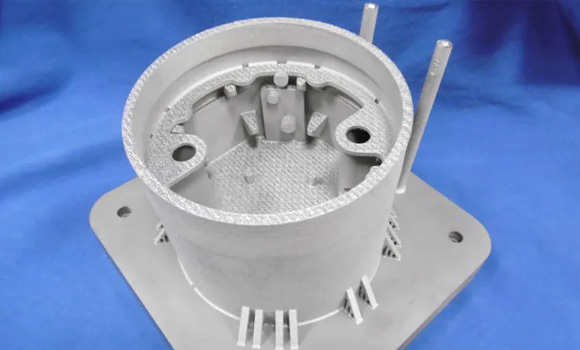
MBDA, headquartered in Le Plessis-Robinson, France, has additively manufactured a complex multifunctional component used to house vital electronic equipment in next-generation missile systems. Believed to be the first use of AM for this application, the company reported that the missile recently concluded its successful maiden flight.

Produced in titanium alloy using Laser Beam Powder Bed Fusion (PBF-LB), the innovative component provides a range of new functionalities in addition to its essential structural role. Additive Manufacturing has enabled the integration of electronic boards directly into the body, optimising assembly and improving performance.
Another significant benefit of using Additive Manufacturing, highlighted by MBDA, is its capability to optimise thermal management. By creating a double-skin structure, the design provides thermal insulation, reducing internal temperature rise by up to 70%. This approach also allows MBDA to dramatically reduce mass and optimise the component’s volume.

The design and development of the component resulted from collaboration between MBDA’s Mechanical Engineering and Industrial departments, underpinned by advanced digital simulation tools tailored for Additive Manufacturing processes. More than fifty prototypes were produced and underwent comprehensive tests to validate fatigue resistance, thermomechanical stability, and firing performance – critical elements for military applications.
The next phase of the project consists of part qualification and transition to series production, said to be enabled by a dedicated industrial roadmap focused on AM. This strategy includes developing robust supply chains and investing in new, larger, and more efficient AM machines.