MariLight 2.0 completes second phase, proving AM’s maritime potential
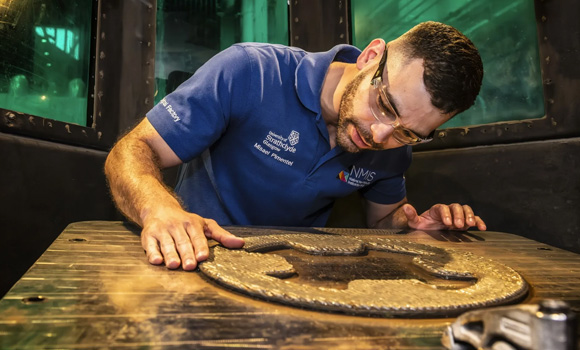
The Marine Vessel Lightweighting (MariLight) 2.0 project, led by Malin Marine Consultants (MMC) based in Glasgow, Scotland, has evaluated the use of Direct Energy Deposition (DED) metal Additive Manufacturing to produce large-scale marine components. With support from the National Manufacturing Institute Scotland (NMIS), operated by the University of Strathclyde, the project has now completed its second phase, with results showing strong potential to reduce greenhouse gas emissions, secure supply chains and deliver significant economic benefits for the maritime sector.

The MariLight 2.0 project builds on an initial feasibility study aimed at shifting the sector away from traditional manual fabrication towards automated, flexible, and environmentally friendly manufacturing approaches. To demonstrate the potential of AM, the team redesigned and topology-optimised a metal tapping ring component used to reinforce openings cut into vessel decks or tanks and provide secure access points. Following successful testing, the team delivered a 10% reduction in emissions, cut lead times by 90% and reduced vessel weight by 13%.
“MariLight 2.0 showcases the real-world potential of large-scale Additive Manufacturing in the maritime sector,” stated Misael Pimentel, MariLight 2.0 project lead at NMIS. “By combining advanced digital processes with rigorous certification protocols, we’ve demonstrated how this technology can support more sustainable, efficient production methods. This project highlights NMIS’s ability to help industry transition to cleaner, more agile manufacturing and helps Scotland progress towards net zero ambitions.”
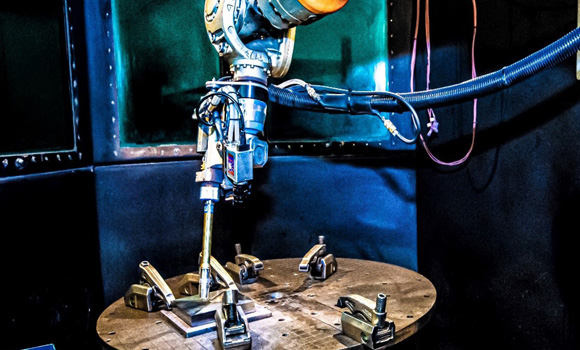
The redesigned part was additively manufactured at NMIS’s Digital Factory. The AM process allows for more efficient use of material, enhancing structural performance while reducing weight. Once built, the tapping ring then underwent rigorous hydrostatic and leak testing under sustained pressure, which project partner Lloyd’s Register witnessed to ensure independent verification of the tests – a crucial step towards wider sector adoption.
“Additive Manufacturing has enormous potential to assist shipbuilding in becoming more sustainable,” added Adam Saxty at Lloyd’s Register. “As the MariLight 2 project demonstrates, the technology can manufacture highly efficient, topology-optimised components. The results of the testing completed so far are encouraging. Lloyd’s Register is pleased to support the continued development of these advanced manufacturing techniques as they progress toward wider adoption in the industry.”
Other project partners included BAE Systems, Caley Ocean Systems (part of the Pryme Group), Siccar, Altair, and Hexagon Manufacturing Intelligence (HMI). Altair produced the topology-optimised design for the tapping ring using its design optimisation software (Altair Inspire and Altair Optistruct). HMI provided advanced computational modelling solutions, simulating the DED process and assessing factors such as temperature gradients and distortion prediction. Siccar delivered a secure data-sharing platform, enhancing supply chain transparency through data traceability and real-time access to verified information.
Chris Dunn, managing director of MMC, concluded, “MariLight 2 represented a major step forward in the validation of Additive Manufacturing, and its potential impact on more sustainable, efficient manufacturing methods within the maritime sector. Having Lloyd’s Register present at the trials, and to then certify the tapping ring greatly enhances confidence in the commercial deployment of these innovative components. As a core member of the project consortium, NMIS played a key role in this, harnessing their technical expertise to manufacture an optimised tapping ring using DED-Arc technology.”
MariLight 2.0 was funded by the UK’s Department for Transport’s Clean Maritime Demonstration Competition (Round 4) and is expected to support the UK’s commitment to achieving net-zero maritime emissions by 2050.
malingroup.com/malin-marine-consultants