Laser shock peening study shows improved wear resistance of AM nickel superalloys
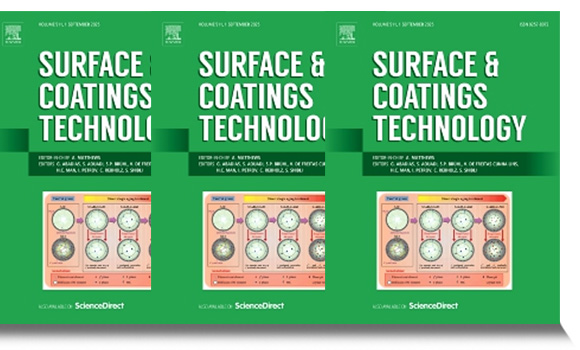
Researchers from Chang’an University, Xi’an Shiyou University, the Technology Monitoring Center of PetroChina Changqing Oilfield Compa ny, Haute Intelligent Manufacturing Co., Ltd., and Air Force Engineering University, have published an article in Surface and Coatings Technology investigating the impact of laser shock peening (LSP) on the dry sliding wear performance of Electron Beam Powder Bed Fusion (PBF-EB)-fabricated IN738 superalloys at 600 °C.
LSP introduces a millimetre-scale work-hardened layer through the formation of high-density dislocation structures, including dislocation pairs, stacking faults, and Lomer-Cottrell (L-C) locks, without causing grain refinement or texture changes. Notably, the LSP-treated sample using laser energy of 5 J exhibited the most pronounced hardening effect and demonstrated the most significant improvements in wear resistance, with an average coefficient of friction (COF) and wear rate reduced by 23.6% and 73.6%, respectively, compared to the as-received sample. This improvement is primarily attributed to the synergistic effects of the work-hardened layer and compressive residual stress (CRS).
Additionally, LSP-induced dislocation structures provide a fast pathway for inward oxygen diffusion, facilitating the formation of a uniform oxide layer that protects the surface from wear mass loss and lowers the COF through self-lubricating effects. As a consequence, LSP treatment shifts the wear mechanism from adhesive wear in the untreated samples to a combination of abrasive and oxidative wear in LSP-treated samples. This study provides valuable insights into the role of the LSP-induced surface-strengthening effect in enhancing wear resistance and highlights the potential of combining surface-strengthening technologies with Additive Manufacturing for the production of high-performance aerospace components.
This study applied LSP to enhance PBF-EB IN738 superalloys, aiming to elucidate the effects of deformation-induced microstructural evolution on the alloy’s tribological performance at 600 °C. The high-temperature wear mechanisms before and after LSP treatment are comprehensively examined. The results indicate that LSP generates a plastically deformed surface layer of significant thickness (~1 mm), concomitant with a marked increase in surface microhardness. LSP-induced compressive residual stress (CRS) demonstrated by finite element analysis is believed to benefit the adhesion of the oxide scale at elevated temperatures, thereby enhancing wear resistance. The investigation offers novel insights into the high-temperature wear behaviour of IN738 alloys and establishes a theoretical basis for deploying LSP-strengthened PBF-EB IN738 components in aerospace applications.
Read the full article here.