Honeywell-led consortium awarded £14.1M for AI-driven Additive Manufacturing in aerospace

A consortium led by Honeywell has received UK Government funding for a project that aims to revolutionise how critical aerospace technologies are manufactured in the UK using Artificial Intelligence and Additive Manufacturing.

The £14.1 million research and development project, funded through the UK Aerospace Technology Institute’s ATI Programme, will explore how AI and other technologies can drive simulations and modelling that could lead to accelerated innovation cycles. It will also explore opportunities to increase efficiency, reduce Scope 3 emissions and help address supply chain challenges through qualified aerospace parts produced using Additive Manufacturing.
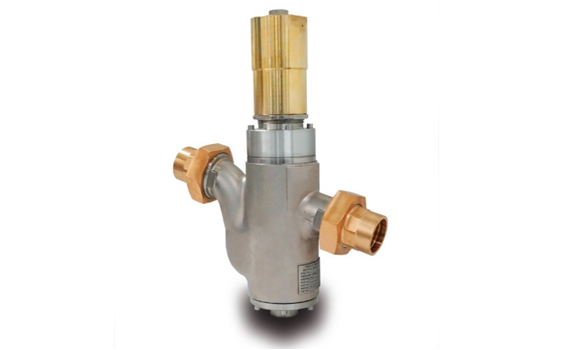
Project STRATA will focus on the development of five innovative components within Environmental Control Systems (ECS) and Cabin Pressure Control Systems (CPCS) aboard aircraft. These complex technologies manage the cabin environment and ensure safety and comfort.
STRATA will also advance thermal management technology for next-generation aircraft, which aims to reduce the amount of energy required for the heating and cooling of aircraft and fuel consumption, in line with STRATA’s goal of supporting net-zero aerospace manufacturing and broader environmental objectives.
Sarah Jones, Minister of State for Industry, shared, “This is great news for Honeywell, and a good example of how government and business can work together to help keep the UK at the forefront of innovation in our world-class aerospace sector. We’re doubling down on this support through our modern Industrial Strategy – giving business the confidence it needs to invest in UK advanced manufacturing and delivering on our Plan for Change.”
Jacqueline Castle, Chief Technology Officer, Aerospace Technology Institute, stated, “Additive Manufacturing has the ability to deliver both high-performance optimised components and the consolidation of complex assemblies into a single part, which can lower manufacturing costs, reduce waste and deliver new efficiencies in manufacturing.”
“STRATA will bring this capability to critical aircraft systems, utilising advanced simulation technologies to transform the design process. This project aligns well with the ATI’s strategy and roadmap for Additive Manufacturing for advanced systems, which sees Additive Manufacturing contributing significantly to the sector’s future sustainability,” Castle added.
Anthony Florian, President, Honeywell Aerospace Technologies EMEAI, commented, “STRATA represents a commitment to take the UK’s aerospace manufacturing leadership to new levels through the use of cutting-edge technology. This is an exciting opportunity to bring our deep experience in driving cross-sector aerospace research and local engineering capabilities to accelerate the development of more efficient aircraft components in the UK.”
The project represents a significant shift in aerospace component design and manufacturing to provide benefits for manufacturers, operators and their passengers, including:
- Improved aircraft efficiency through the development of technologies that reduce fuel use and emissions.
- Faster, cost-effective Additive Manufacturing that reduces production time and material waste through demonstrating the lifecycle carbon analysis, a method used to evaluate the total environmental impact of a product or service through its life cycle.
- AI-driven modelling and simulation to review opportunities to accelerate innovation cycles to boost manufacturing performance.
- UK Additive Manufacturing supply chain development, reinforcing the UK’s global aerospace leadership.
As part of the consortium, Honeywell is bringing together industry leaders, including small- and medium-sized enterprises and academic institutions, such as:
- 3T Additive Manufacturing: 3T has scaled metal Additive Manufacturing into series production through their vertically integrated capability. 3T will implement low-cost digital tools, federated to achieve a ‘factory level digital twin’ with automation, energy reduction initiatives and part-level lifecycle carbon analysis to achieve a highly efficient, cost-effective advanced manufacturing capability.
- BeyondMath: BeyondMath will work on physics simulations to help empower engineers to optimise designs, reducing development time and costs while improving performance, leveraging expertise from Formula 1 and other high-performance industries.
- Qdot Technology: Leading innovators in thermal management solutions for the most challenging environments, Qdot is developing additively manufactured heat exchanger technology for aerospace, motorsport and other demanding applications. This enables the design and production of compact, high-efficiency components, lowering manufacturing costs and enhancing overall heat transfer performance whilst reducing weight and drag.
- Oxford Thermofluids Institute, a part of the University of Oxford: A global leader in heat transfer research, Oxford ensures STRATA benefits from the latest scientific advancements in aerospace thermal management.
The ATI Programme funds research into advanced civil aerospace technologies and is delivered in partnership between the Aerospace Technology Institute (ATI), the Department for Business & Trade and Innovate UK.
Drawing upon many years of experience in aerospace research and development programmes across Europe (through the SESAR Joint Undertaking, Clean Aviation Joint Undertaking and Innovate UK), Honeywell will lead STRATA from its facility in Yeovil, UK, home to a team of more than 500 engineers.