High-temperature aerospace focus drives Taniobis’s AM niobium alloy portfolio
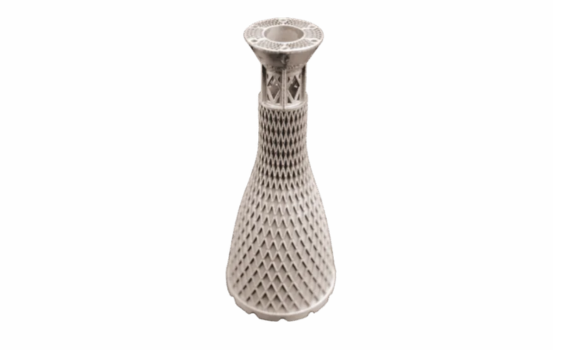
Taniobis GmbH, based in Goslar, Germany, has been working to develop its portfolio of custom niobium-based alloy powders to meet the rising demands of aerospace systems. Its portfolio includes AMtrinsic C-103 and AMtrinsic FS-85, both used in Additive Manufacturing.
As conventional nickel-based alloys reach the limit of their mechanical stability at about 1050ºC, niobium’s strength at higher temperatures has been attracting increasing attention in the aerospace industry. Nickel-based alloys are already in use in applications where structural components must perform reliably under extreme thermal conditions and are well-suited to the manufacture of demanding components such as jet engine nozzles, control segments, and satellite thrusters.
According to Taniobis, NASA’s recent research project – ‘Elevated Temperature Mechanical Performance of Historical Niobium Alloys’ – served to underscore the importance of niobium alloys in these high-temperature applications.
During the project, NASA’s Glenn Research Center in Cleveland, Ohio, additively manufactured niobium alloys C-103, FS-85, Cb-752, and WC‑3009 and examined their mechanical strength at elevated temperatures. The results showed that FS-85 and Cb-752 outperformed C-103 in respect of mechanical strength as well as creep performance at high temperatures.
This study notes the advantage of these less-common niobium alloys and their potential for use in demanding aerospace environments such as thermal protection components or thermally stressed areas of propulsion systems.
“Our AM alloys are specifically engineered to meet such challenging requirements,” stated Dr Bahar Fayyazi, Product Manager at Taniobis. “From precise satellite thrusters through to reusable space launch systems, niobium alloys combine high-temperature stability with mechanical integrity, thus offering a material base for new space missions.”
www.taniobis.com