Fraunhofer ILT to present latest AM innovations at Formnext 2025
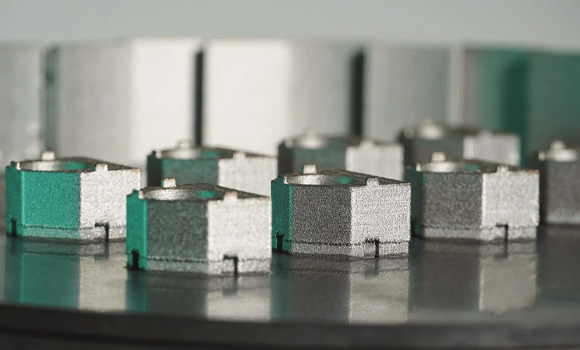
The Fraunhofer Institute for Laser Technology ILT (Fraunhofer ILT), located in Aachen, Germany, has announced that it will showcase its innovations in metal Laser Beam Powder Bed Fusion (PBF-LB) Additive Manufacturing at Formnext 2025, scheduled to take place November 18-21, 2025.
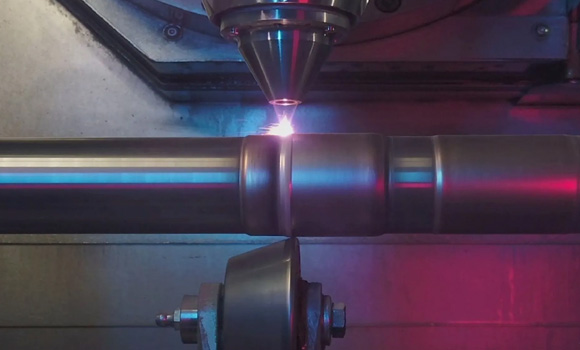
Fraunhofer ILT is developing AM to help reduce costs, save rework, and make components more robust. In particular, the institute noted its manufacture of high-strength tungsten components and multi-material approaches for extremely stressed components in fusion applications, productive simultaneous coating and finishing processes, and features such as AM sensors that make metal components smart.
“Whether we develop a demonstrator or a production series, we focus our R&D at Fraunhofer ILT on making processes faster, more robust and ensuring high component quality,” stated Dr Tim Lantzsch, head of the Laser Powder Bed Fusion (LPBF), Fraunhofer ILT.
The exhibits at Formnext 2025 will include an Al-Sc manifold housing for fuel cells, an optical carrier for satellites manufactured via PBF-LB Additive Manufacturing, a 2 kW LCoS test setup for freely formable beam profiles, and PBF-LB structures with adjustable porosity.
“We think about Additive Manufacturing from the perspective of component function, combining material, process, and data, reducing costs per part, and increasing quality and availability. We see ourselves as problem solvers and process developers, from the initial idea to stable production at our industrial partners,” Lantzsch added.
Tungsten components for fusion energy
Plasma-exposed components in fusion reactors, such as the reinforcement of the reactor wall, must withstand cyclic heat loads of up to around 20 MW/m² and high radiation; pure tungsten may be the only practical material suitable for these extreme conditions. However, the material can only be made in simple geometrical shapes, which then must be joined in a complex manner. Different thermal expansion causes soldered joints to fail under thermal cycles, reducing service life and plant availability.
This is where the DURABLE project comes in: Additive Manufacturing processes enable industry to manufacture monolithic or multi-material components of tungsten and copper alloy with a continuous heat path instead of a critical joint zone. As process control is crucial, the project’s resultant technology and parameter windows for metal PBF-LB lead to what the researchers have stated are ‘virtually crack-free, high-density tungsten structures’. This makes it possible to manufacture complex geometrical shapes with conformal cooling.
“The benefits lie in longer component life, less rework, and lower risk at joining points, which is a prerequisite for extending maintenance intervals and reducing costs per operating hour,” says Niklas Prätzsch, group manager LPBF – Process & Systems Engineering at Fraunhofer ILT.
www.ilt.fraunhofer.de