First Light Fusion scales fusion energy amplifier production with Croom Medical’s tantalum Additive Manufacturing
First Light Fusion, located in Oxford, UK, has announced that additively manufactured tantalum Pressure Amplifier components, produced by Croom Medical, based in Limerick, Ireland, have matched the performance of traditionally machined components under shock compression up to pressures of five million atmospheres. The company’s results have been published in The Journal of Applied Physics.

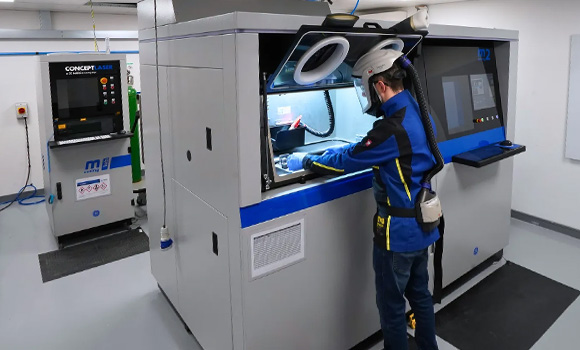
Croom Medical used its TALOS Laser Beam Powder Bed Fusion (PBF-LB) Additive Manufacturing technology. The successful study means First Light will be able to deploy a faster, cheaper, and more productive way of manufacturing its amplifier technology, and with less waste.
“We’re proud and excited to support First Light Fusion by applying our recently launched TALOS Additive Manufacturing platform to such a groundbreaking application,” stated Shane Keaveney, R&D Manager at Croom Medical. “Tantalum is an exceptionally challenging material to process, and this project demonstrates how our technology can unlock its full potential in cutting-edge applications where high-performance in extremely high-pressure environments is required.”

To date, pressure amplifier devices have been manufactured from tantalum blocks using hard machinery, including drills and mills, which is labour-intensive. This breakthrough is seen as critical in the pursuit of fusion energy and in answering other real-world problems in industries such as space travel, defence, and materials science.
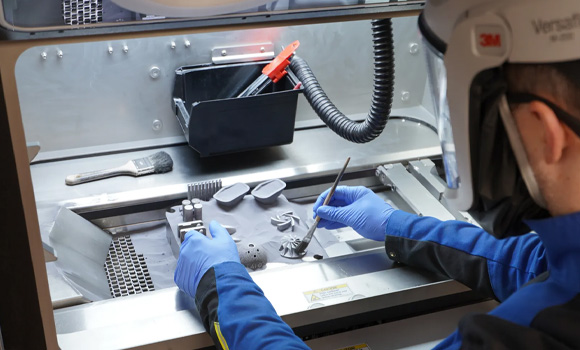
First Light has gone on from the successful manufacturing step to conduct its first fully integrated tests of additively manufactured amplifiers at its two-stage light gas gun test facility in Yarnton, Oxford. The results will be published in the coming months.
“3D printing tantalum gives us a reliable, cost-effective path to mass-produce our amplifiers – unlocking wide-ranging applications outside of inertial fusion, from materials research to defence,” added Martin Gorman, Lead Shock Scientist at First Light Fusion.