Fastech and Meltio showcase DED to US defence sector during opening event
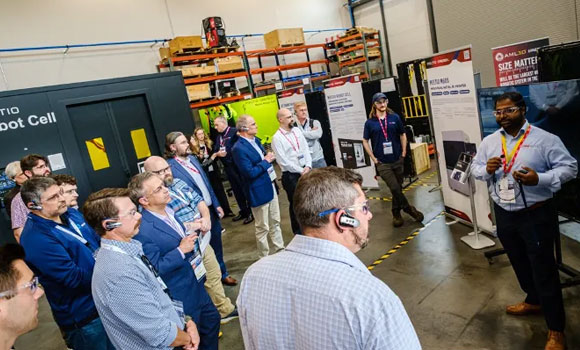
Fastech, located in Danville, Virginia, USA, was named the first US-based reference site for Spanish Additive Manufacturing machine maker Meltio earlier this year, after it acquired a Meltio M600 and the Meltio Engine Integration Kit for industrial robots. The company has now officially opened the facility, with a joint event titled ‘Ready For Action: Accelerating Readiness, Sustaining the Future,’ which examined the role of Directed Energy Deposition (DED) Additive Manufacturing in the defence and industrial sectors.
“Readiness and sustainment are more than industry goals: they’re national imperatives,” stated Alan Pearce, CEO at Fastech. “Partnerships like this one show how regional collaboration can have a global impact.”
The event, hosted by The Institute for Advanced Learning and Research (IALR), welcomed ninety-seven in-person attendees from the US Department of Defense, prominent manufacturing companies, universities, and regional economic organisations. The programme featured a lineup of speakers representing the defence, energy, research, and manufacturing sectors, including:
- Matthew Sermon, Assistant Secretary of the US Navy for R&D and Acquisition
- Michael Pecota, Additive Manufacturing SME for the Department of Defense
- Telly Tucker, IALR President
- Andrew Medla, Head of Additive Manufacturing for the Americas at Siemens Energy
- Chris Beeson, Additive Manufacturing Lead at ExxonMobil
- Giorgio Olivieri, Head of Applications Engineering at Meltio
Each presentation offered a perspective on the role of Additive Manufacturing in strengthening industrial capability and defence readiness. Sermon and Pecota highlighted the Navy and DoD’s ongoing focus on accelerating readiness through advanced production technologies. Tucker underscored the importance of collaboration between industry and research to drive workforce innovation, while Medla and Beeson explored how the private sector is integrating DED systems into high-demand production environments. Olivieri presented Meltio’s global vision for wire-laser metal deposition and its growing relevance to both Defense and commercial manufacturing ecosystems.
A panel discussion, ‘Adoption of Wire DED’, brought together a group of experts, including Steven Floyd from Floyd Technology Consulting LLC, Scott Kasen from Austal USA, Sam Evans from Virginia Tech, Tyler Dolmetsch from Florida International University, and Yash Bandari from Fastech as host. Together, they explored the technical, logistical, and cultural shifts required for broader adoption of Additive Manufacturing across the defence and energy sectors. Audience engagement was said to have remained high throughout the session, with attendees actively participating in Q&A discussions and expressing strong interest in follow-up collaborations.
Live demonstrations
According to the organisers, one of the event’s highlights was the series of live demonstrations that showcased Meltio’s M600 and Robot Cell Blue Laser machines operating in real time. Supported by Meltio’s on-site engineering team, these demonstrations offered guests an up-close look at how laser-wire DED Additive Manufacturing technology can transform metal manufacturing, from complex defence applications to aerospace components.
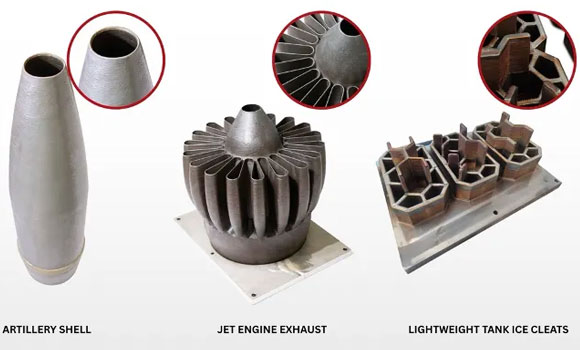
The first demonstration, performed on the Meltio M600, featured the production of an artillery shell. The part measured 161 x 161 x 606 mm, with a total weight of 7.80 kg, built using SS-316LSi combined with marine bronze. The process ran under argon shielding gas at a flow rate of 15 litres per minute, with a layer height of 1 mm, reportedly achieving a total build time of 22 hours, 47 minutes, and 33 seconds. This live build was intended to demonstrate the precision and repeatability of the M600 AM machine in producing high-strength, corrosion-resistant components with complex geometries.
The second demonstration highlighted the capabilities of the Meltio Robot Cell Blue Laser machine, where attendees watched the creation of a jet engine exhaust component designed for aerospace use. This large-scale part measured R167 x 355 mm and weighed 11.91 kg, built in SS-316LSi with a variable deposition layer height averaging 0.6 mm at the base. The process also utilised argon gas at 10 litres per minute and required a total build time of 38 hours and 50 minutes. The robot cell’s flexibility and precise laser control was intended to illustrate how DED Additive Manufacturing may support the production and repair of complex, high-performance metal parts vital for sustainment and repair operations in defence and aviation.
Throughout both demonstrations, the Fastech engineering team guided attendees using wireless headsets, ensuring everyone could follow the commentary and understand each phase of the process.