Effect of heat input on mechanical properties of PBF-EB titanium alloy
Researchers from the University of Science and Technology Beijing and Chengdu Advanced Metal Materials Industry Technology Research Institute Co, China, have published ‘Electron beam melting fabrication of titanium alloy with ultra-fine basketweave structure: Effect of heat input on mechanical properties during construction’ in Journal of Alloys and Compounds.
The Ti-5.5Al-1.5Zr-1.5Sn-1.5Nb-2.5Mo-1Cr titanium alloy is a structural material known for its high damage tolerance and high temperature resistance. It is widely used in the aviation industry, particularly for components like compressor disks.

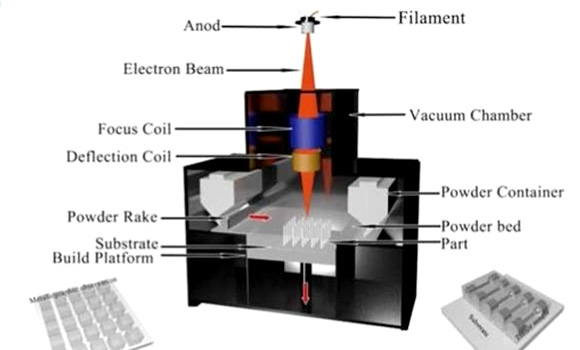
When fabricated by Additive Manufacturing techniques with faster cooling rates (e.g. Laser Beam Powder Bed Fusion, or PBF-LB), this alloy generally exhibits issues with crack formation. Electron Beam Powder Bed Fusion (PBF-EB) can effectively reduce stress and the tendency for crack initiation through preheating. In this study, bulk samples and tensile samples were prepared using PBF-EB.
The relationship between microstructure and mechanical properties under varying energy inputs was investigated. As the energy input decreased, the α phase size diminishes from 0.28 μm to 0.17 μm, the strength increases from 1118 MPa to 1187 MPa, and the elongation decreases from 14.3 % to 11.15 %. Simulation results indicate that the morphology of the molten pool varies with different energy inputs. Heat accumulation due to energy input influenced the β to α transition interval, and the phase transformation process follows the Burgers orientation relationship (BOR), resulting in the refinement of the α phase.
A crack-free Ti alloy with 1187 MPa strength was achieved by PBF-EB with controlled heat input and microstructure refinement. Molten pool temperature, variant selection, and mechanical properties were successfully correlated.
The paper is available here.