Canada’s HI-AM 2025 conference highlights progress in AM, HI-AM 2.0 network launched
The organisers of the HI-AM Conference 2025 – held July 23-24 in Waterloo, Ontario, Canada, as part of the Holistic Innovation in Additive Manufacturing Network (HI-AM 2.0) – have reported on the event’s successful outcome.
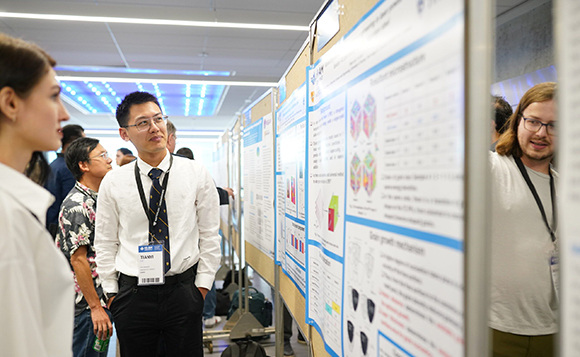
Now in its eighth year, the event welcomed over 170 researchers, industry leaders, government representatives, and students to explore emerging innovations and persistent challenges in Additive Manufacturing. This year’s technical programme included fifty oral presentations and two poster sessions featuring over thirty research projects, highlighting the latest work in process modelling, in-situ monitoring, qualification strategies, Design for Additive Manufacturing (DfAM), novel alloy development, and innovations in non-metal AM processes.
Two keynote presentations, delivered by Ante Lausic, Lead Process Engineer – Metal AM at General Motors, and Behrang Poorganji, VP of Technology at Nikon, provided overviews of the challenges facing the industrial scale-up of Additive Manufacturing. Through real-world case studies and insights into current capabilities, both speakers aimed to provide valuable perspectives for students, early-career researchers, and industry veterans alike.
Beyond the technical sessions, attendees participated in networking events, a conference dinner, and guided tours of the University of Waterloo’s Multi-Scale Additive Manufacturing Laboratory, which offered a firsthand look at ongoing research and capabilities.
The launch of HI-AM 2.0
HI-AM Conference 2025 also celebrated the official launch of HI-AM 2.0, the next phase of the NSERC-funded research network. HI-AM 2.0 builds on the foundation of the original network (2017-2024), with an expanded mandate to address critical needs in sustainability, reliability, and commercialisation of metal AM technologies.
“HI-AM 2025 showcased the excellent momentum in Additive Manufacturing research in Canada, uniting academia and industry to tackle critical challenges in sustainability and scalability,” stated Professor Ehsan Toyserkani, HI-AM 2.0 Director and conference co-chair.
“This conference continues to be a catalyst for innovation, fostering collaborations that will shape the future of Additive Manufacturing in Canada and beyond.”
HI-AM conference 2025 student winners
At the closing ceremony, student achievements were celebrated with awards recognising the best oral presentations, posters, and abstracts.

Best Presentation Award
- First Place Winner: Nicholas Kirschbaum, University of Michigan, Topic: Feedforward control of the cooling rate in laser powder bed fusion using a physics-based thermal model
- Second Place Winner: Rene Lam, University of Waterloo Topic: Tailoring mechanical performance of Ti-6Al-4V structures using porous architectures
- Third Place Winner: Ajay Talbot, University of Toronto Topic: Design of new NiCoCr alloys for Additive Manufacturing through high-throughput experiments
Best Poster Award
- First Place: Winner: Alexandra Darroch, University of Waterloo Topic: Assessing the impact of binder saturation on print quality of binder jetted green samples of regular and irregular morphologies
- Second Place Jorge Luis Dorantes Flores, University of Guelph Topic: Thermal cycling of laser powder bed fusion tooling steels used for high-pressure die casting
- Third Place:
- Winner 1: Rahele Jafari, University of Waterloo Topic 1: Piezo-pneumatic jetting of highly viscous soldering paste
- Winner 2: Farshad Malekpour, Concordia University Topic 2: Sustainable Additive Manufacturing: Evaluating the mechanical and thermal degradation of recycled PEKK
Best Abstract Award
- First Place Winner: Shaojia Wang, University of Toronto Topic: Machine learning assisted multi-material 3D printing of hierarchical composite with low stiffness and high strength
- Second Place Winner: Alex Inoma, University of Alberta Topic: An integrated computational framework for strut, plate and TPMS-type lattice design
- Third Place Winner: Anushree Shah, The University of British Columbia: Topic: A shape error evaluation study of geometry produced using Directed Energy Deposition
Planning is already underway for HI-AM 2026, which is scheduled to take place in June 22-23 Banff, Alberta, Canada.