Automation Acoustics launches online licensing for ACOUXIA acoustic monitoring software
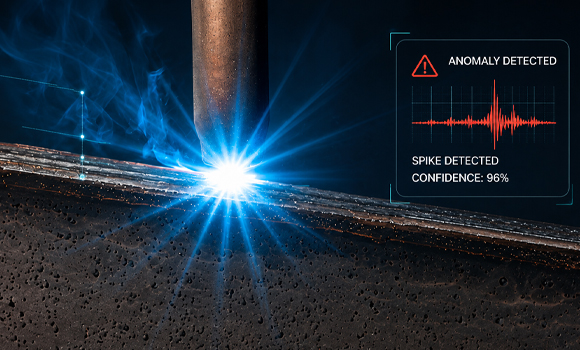
Automation Acoustics, Melbourne, Australia, has made its ACOUXIA acoustic process monitoring software available for online licensing to manufacturers in the EU, USA and Australia. The software uses AI models trained on eight years of acoustic data collected in production environments to monitor manufacturing processes and alert operators to changes in sound within 100 milliseconds.
ACOUXIA requires a single microphone per machine, with no modifications to the manufacturing equipment. It simultaneously monitors the machine for collisions, wear and failing components; the process for changes in gas flow, wire feed, nozzle blockages and process parameters; and the part being manufactured for changes in its acoustic signature that may indicate defects forming during production.

Manufacturing processes generate characteristic acoustic signatures, with changes in sound often providing an early indication of equipment faults or process deviations. While experienced operators can recognise these changes, continuous monitoring across multiple machines and shifts is difficult. Traditional digital signal processing (DSP) approaches rely on engineer-defined rules and typically require calibration for individual conditions.
To address this limitation, Automation Acoustics has developed proprietary machine-learning models designed to detect and diagnose multiple conditions simultaneously, issue alerts and enable rapid retraining as new data becomes available.
According to the company, its models have been used in production since 2021, with original equipment manufacturer (OEM) and government customers since 2024. The technology has been demonstrated in Wire Arc Additive Manufacturing (WAAM), Directed Energy Deposition (DED) and Cold Spray Additive Manufacturing. Automation Acoustics states that the software could also be applied to other manufacturing processes in which the release of energy produces sound.

“Experienced operators have always known that a process sounds different when something goes wrong,” stated Anthony Lele, CEO of Automation Acoustics. “We have spent eight years learning to capture what they hear. ACOUXIA puts that in the hands of any manufacturer whose process makes a sound, starting with a single machine.”
Manufacturers using Additive Manufacturing processes other than WAAM, DED and Cold Spray AM can also enquire about custom applications through the company’s website.