ASTRO America awarded $1.66M to lead defense AM inspection project
The Applied Science & Technology Research Organization of America (ASTRO America), based in Bethesda, Maryland, USA, has announced its selection as project lead for a $1.66 million award under the Quality Test and Inspection Methods Expediency (QTIME) project call from America Makes and the National Center for Defense Manufacturing and Machining (NCDMM).

Funded by the Office of the Under Secretary of Defense, Manufacturing Technology Office (OSD ManTech), the initiative aims to accelerate the adoption of metal Additive Manufacturing by advancing rapid, cost-effective inspection and qualification methods for complex additively manufactured parts.
“Projects like QTIME highlight the invaluable contributions of our members, who steadily advance and mature Additive Manufacturing,” said Ben DiMarco, Technology Transition Director at America Makes. “We are honoured to collaborate with them and confident that their work will enable future innovations in both in-situ and ex-situ monitoring and inspection, accelerating AM progress across the Department of Defense, the Federal Aviation Administration, and NASA.”
ASTRO’s project focuses on Laser Beam Powder Bed Fusion (PBF-LB), which can create highly complex lattice and thin-walled structures that are ideal for aerospace and defence applications. While these designs offer significant advantages in weight savings, stiffness, and efficiency, inspection challenges have slowed their adoption.
Dr Abdalla Nassar, Vice President & General Manager, ASTRO America, shared, “This award will allow us to focus on breaking one of the biggest bottlenecks in metal 3D printing: inspection. By integrating real-time, layer-wise monitoring with advanced modelling and analysis, our team will deliver a framework that reduces inspection time and cost while giving industry the confidence to scale.”
The ASTRO-led team will pursue in-situ, layer-by-layer inspection of lattice structures, enabling near-real-time flaw detection and deformation prediction during the build process. If successful, the approach will reduce inspection times from hours of CT scanning to under one hour, cutting costs by up to 90%.
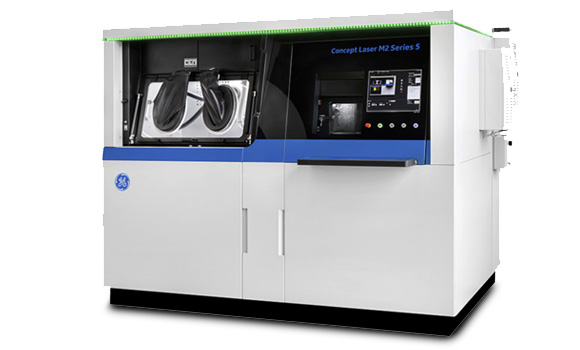
ASTRO America will oversee component fabrication in Inconel 718 and integrate sensor technologies into a commercial PBF-LB machine, the Colibrium M2 Series 5. The project will run over a twelve-month technical period, followed by three months of reporting.
Key partners include:
- Applied Optimization (Dayton, OH): High-resolution, melt-pool-scale imaging and predictive stress/distortion modelling
- Penn State Applied Research Lab: Automated CT defect detection and neural-network-based image analysis
- Florida State University: Flaw-informed deformation modelling and translation of composites toolsets to metals
- Colorado School of Mines: Materials characterisation and validation of deformation models
- Honeywell Aerospace: Lead system integrator providing geometries, NDE services, and engineering authority
- Lockheed Martin: Advisory support at no cost to the programme
By addressing a critical barrier to adoption, the programme will pave the way for confident use of complex lattice designs across defence and aerospace. Applications range from lightweight structural components to advanced heat exchangers, with implications for flight, energy, and naval platforms.
ASTRO and its partners are also committed to ensuring the project’s findings are commercialised, including mentorship for small businesses to help them integrate these technologies into supply chains that support the US defence industrial base.