Apple’s iPhone Duo adds multi-million-part titanium AM application

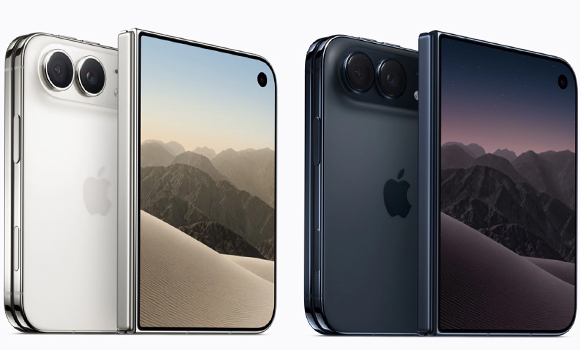
In its latest product launch, Apple has confirmed the use of metal Additive Manufacturing in its new iPhone Duo. The foldable iPhone includes an additively manufactured titanium hinge cover as part of the device’s folding mechanism. The application adds a multi-million-unit programme to Apple’s growing use of metal AM and further underlines the technology’s shift into ultra-high-volume production.
Unveiled on September 9, the iPhone Duo is Apple’s first foldable iPhone. The device features a Grade 5 titanium (Ti-6Al-4V) enclosure and an additively manufactured hinge cover with a contrasting micro-blasted finish. The hinge mechanism comprises more than 100 components and is designed to control opening and closing while supporting the centre of the display when the device is open.
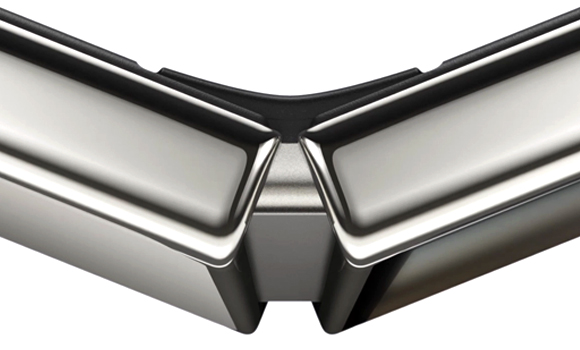
Apple has not specified the Additive Manufacturing process used for the hinge cover, or whether any other components within the hinge are additively manufactured. The company has, however, previously used Laser Beam Powder Bed Fusion (PBF-LB) for its additively manufactured titanium Apple Watch cases.
Apple first publicly confirmed its use of metal AM in consumer products in autumn 2025, when it announced that all Apple Watch Ultra 3 cases and titanium Apple Watch Series 11 cases were additively manufactured. In detailing the development programme at that time, Apple said one of the challenges had been establishing whether Additive Manufacturing could produce “millions of identical enclosures” to its required standards.

The newly announced next generation of these watches, Apple Watch Ultra 4 and titanium Apple Watch Series 12, continue this approach, with their cases still additively manufactured from 100% recycled aerospace-grade titanium powder. The same recycled titanium powder and AM process were also used for the titanium USB-C port enclosure in the iPhone Air, enabling Apple to produce the geometry required for the device’s thin design.
The iPhone Duo is expected to be a significantly higher-volume product and will substantially increase Apple’s requirements for metal AM production. Counterpoint Research forecasts shipments of up to six million iPhone Duo models in 2026 alone, giving Apple around 25% of the global foldable smartphone market.

If shipments develop at anything close to this level, the iPhone Duo would establish another metal AM programme requiring several million titanium components annually. Combined with Apple’s existing Watch production, this would put the company’s use of metal Additive Manufacturing firmly into a production regime measured in tens of millions of parts rather than thousands.
Material efficiency has also been an important factor in Apple’s adoption of the technology. The company previously estimated that its move to AM for titanium Watch cases would save more than 400 metric tonnes of raw titanium during 2025. The iPhone Duo hinge cover is likewise produced from 100% recycled titanium, continuing the use of recycled feedstock across Apple’s metal AM applications.
Past successes for metal AM in phone hinges
Apple is not the first smartphone manufacturer to apply metal AM to the hinge of a foldable device. In 2023, Metal AM reported on the Honor Magic V2, whose titanium hinge shaft cover was manufactured via PBF-LB. At the time, the application was reported to be the first use of Additive Manufacturing in final production for a high-volume 3C device. Around one million Magic V2 phones had reportedly been ordered when Metal AM covered the application.
The technology has since become increasingly established in foldable smartphones. OPPO’s Find N5, launched in 2025, incorporated additively manufactured Grade 5 titanium components within its hinge system. Xi’an Bright Laser Technologies Co., Ltd (BLT), China, subsequently confirmed that it had worked with OPPO on the development and production of these components, including the titanium hinge cover and wing plate.
The collaboration continued with the OPPO Find N6, where BLT confirmed that Additive Manufacturing was used to consolidate a wing-plate assembly that would conventionally consist of as many as thirteen machined components into a single titanium structure. The component incorporated complex geometries and lattice features while reducing part count and weight.
Foldable smartphone hinges are proving to be a particularly suitable application for metal AM, combining the need for thin, lightweight structures with complex geometries, high mechanical performance and increasingly large production volumes. With Honor and OPPO already using the technology, Apple’s adoption brings another potentially very high-volume application.
For the metal AM industry, the scale of these applications is particularly significant. Apple has already developed its Watch production around the ability to manufacture millions of identical additively manufactured enclosures. With iPhone Duo shipments forecast in the millions, its adoption adds further momentum to the growing use of metal AM in high-volume consumer electronics.