AMGTA report calls for broader AM evaluation
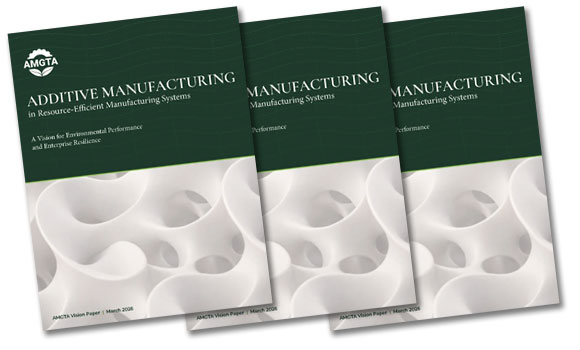
Following its 2026 Annual Member Summit, AMGTA has released Additive Manufacturing in Resource-Efficient Manufacturing Systems, an independent report outlining how Additive Manufacturing should be evaluated, communicated and deployed across part, machine and enterprise levels.

“The technology is proven. But the current adoption curve doesn’t reflect it—and one major reason is that the industry has been evaluating AM against a standard that was never designed to capture what AM actually changes,” said Sherri Monroe, Executive Director of AMGTA. “This report is the result of six years of watching that gap play out across industries, applications, and geographies. It is the argument the industry has needed and that only an organisation with no commercial interest could make.”
According to the Additive Manufacturing in Resource-Efficient Manufacturing Systems, standard cost comparisons between Additive Manufacturing and conventional manufacturing typically assess direct production costs while excluding factors such as upfront tooling investment, inventory carrying costs, minimum order quantity waste and obsolescence write-offs. It suggests that this omission introduces a structural bias that may make Additive Manufacturing appear less cost-effective than a more comprehensive evaluation would indicate.
The report characterises this as a framing and measurement issue rather than a limitation of the technology, and proposes an evaluative structure intended to support more complete comparisons across the levels at which Additive Manufacturing creates value.
The AMGTA report argues that evaluation of Additive Manufacturing should extend beyond the part level to include system- and enterprise-level impacts, where its advantages in resource efficiency, supply chain resilience and capital allocation may be realised. It draws on six years of observation across both technology developers and manufacturing users. The report is intended to support investor presentations, policy discussions, procurement activities and organisational decision-making.

These findings were presented to AMGTA’s global membership at the 2026 Annual Member Summit, held in Boston on April 13, alongside the organisation’s Strategy 2030 document.
AMGTA states that, as an independent organisation focused on the intersection of Additive Manufacturing and resource-efficient manufacturing machines, it is positioned to address both technology development and industrial application perspectives. It adds that the report reflects input from across the Additive Manufacturing value chain.
“When I founded AMGTA, the goal was to create something the industry didn’t have: an independent, non-commercial voice that could make the case for AM’s value in the rooms where the real decisions get made,” stated Brian Neff, Chair of the AMGTA Board of Directors. “This report is that voice. It makes the argument we’ve been building toward – complete, rigorous, and designed to hold up under scrutiny from finance, procurement, and policy. This is what six years of membership made possible.”
The report is available at the organisation’s website. The companion Strategy 2030 document, What We Do and Why Membership Matters, is available to AMGTA members.