AMCRC launches to boost Australia’s Additive Manufacturing sector
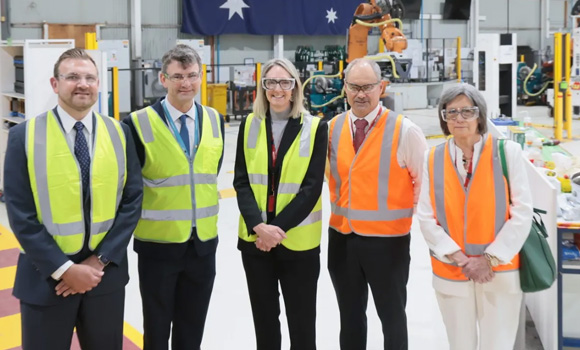
Australia’s Additive Manufacturing Cooperative Research Centre (AMCRC) celebrated its official launch on October 22, 2025. Established with $57.5 million in Commonwealth Government funding through the Department of Industry, Science and Resources, AMCRC brings together thirteen leading Australian universities, CSIRO, and over sixty industry and membership organisations. Over the next seven years, the partner base will invest an additional $200 million to build a world-class AM ecosystem that enhances industry capacity across the country.

AMCRC aims to translate Australian research into commercial outcomes, accelerate innovation, explore high-growth business models, enable sustainable supply chains, and reinvigorate local manufacturing through new technological capabilities. For businesses, this means local production that’s faster, more responsive and better tailored to customers’ needs.
The CRC’s research ambitions are said to be structured around four core programmes:
- Sustainable and environmentally friendly manufacturing
- Advanced materials development, including critical mineral processing and feedstock enhancement to upcycle local production
- New technology and certified process development
- Enhanced finishings and surface technologies for medtec and defence applications.
AMCRC will also focus on developing a skilled, future-ready workforce, ensuring widespread adoption of AM technologies and strengthening Australia’s manufacturing resilience and competitiveness.
“AMCRC represents a unique opportunity to position Australia as a global leader in Additive Manufacturing innovation,” stated AMCRC Chair, Susan Jeanes. “By uniting industry, researchers and government behind a shared agenda, we will drive research, fast-track commercialisation, and build sovereign capability – delivering new materials, technologies and production solutions that improve productivity, efficiency and local capacity.”
The official launch, held in partnership with Boeing Aerostructures, was attended by industry partners, research organisations and government representatives, including The Hon Colin Brooks, Victorian Minister for Industry and Advanced Manufacturing and Federal Senator Lisa Darmanin, representing Senator the Hon. Tim Ayres, Minister for Industry and Innovation, Minister for Science.
Nicholas Mulé, Director of Additive Manufacturing at Boeing, stated, “We have a long history of investing in Australian innovation and recognise the increasing role Additive Manufacturing can play in aerospace production. Together with the AMCRC, we look forward to deepening our collaboration with Australian researchers and local companies to explore novel applications that enhance safety, quality and technology in our operations.”
Two industry partners already set to commence projects with AMCRC are entX, a South Australian nuclear engineering and technology company developing advanced energy solutions with applications across defence and space exploration, and Rosebank Engineering, an Australian aerospace maintenance, repair, and overhaul provider.
AMCRC Managing Director, Simon Marriott, added, “Today marks the start of seven years of industry-led research collaboration to advance Australia’s Additive Manufacturing capabilities. Additive Manufacturing is no longer limited to targeted prototyping, it is transforming industrial processes and supply chains, enabling a new era of efficient and sustainable manufacturing. Through AMCRC, we’re ensuring Australian industry not only keeps pace but leads.”
Following the official launch event, AMCRC hosted an Additive Manufacturing Forum bringing together local manufacturers and researchers to explore how AM can drive innovation and growth. The forum featured a keynote from Terry Wohlers, Distinguished Fellow of Advanced Manufacturing at Wohlers Associates, who shared insights on global AM trends and emerging opportunities for Australia, and two industry roundtables that explored the potential of AM when applied in the unmanned aerial vehicle industry and the benefits of artificial intelligence.