LaserBond explores alternatives to tungsten carbide coatings for mining equipment
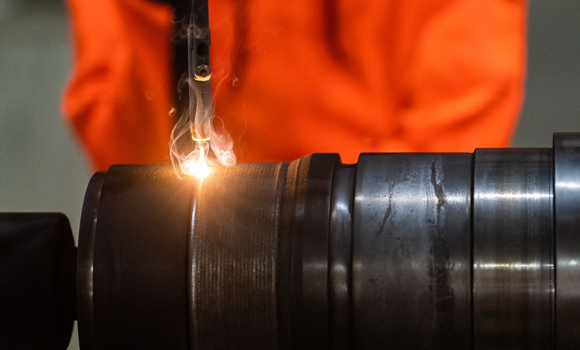
LaserBond, a surface engineering company based in Smeaton Grange, New South Wales, Australia, has partnered with Adelaide University and Swinburne University of Technology to launch a research project supported by A$150,000 (approximately $99,000) in funding from the Additive Manufacturing Cooperative Research Centre (AMCRC).
The project will investigate titanium carbide (TiC) and alternative tungsten carbide composites as potential replacements for fused tungsten carbide in wear-resistant laser claddings used in mining equipment. The research aims to reduce reliance on increasingly constrained global tungsten supplies.

“Our customers rely on these coatings to protect critical assets operating in some of the harshest conditions, so simply waiting for global supply to stabilise isn’t an option,” said Dr Surinder Singh, R&D Engineer and project lead, LaserBond. “This project gives us an opportunity to develop alternatives that provide customers with greater supply certainty while potentially reducing costs and strengthening manufacturing capability here in Australia.”
The project builds on earlier research using TiC as an alternative to conventional tungsten carbide coatings. The use of TiC could diversify raw material supply and reduce costs. Agglomerated tungsten carbide composites will also be investigated.
“The coating also has to perform, be deposited crack-free at production speed and withstand demanding operating environments,” added Industry Professor Colin Hall, Adelaide University’s research lead for the project.
Initial development will focus on wear-prone mining components. Candidate coatings will undergo abrasion, corrosion, impact and erosion testing and be benchmarked against LaserBond’s existing hardfacing materials and hard chrome.

Swinburne University of Technology will lead early materials and cladding development, with the most promising solutions progressing to industrial-scale trials at LaserBond’s facility in Cavan, South Australia. A digital acoustic monitoring system will also be deployed at the facility to detect cracking during laser cladding. Combined with higher deposition rates, the monitoring is expected to accelerate coating optimisation and the progression of promising materials towards industrial production
“By moving quickly from material development into rigorous testing and simulated field trials, we can identify the solutions with the strongest pathway into industry,” commented Associate Professor Andrew Ang, lead researcher, Swinburne.
The collaboration aims to develop cost-competitive, wear-resistant coatings while reducing Australian industry’s reliance on constrained tungsten supply chains.
As reported by Metal AM in October, the AMCRC is also supporting a research project to develop a certifiable Laser Beam Directed Energy Deposition (DED-LB) repair process for high-value aerospace alloys, with Swinburne again involved.