Circular Refining develops AM electrodes for ammonia-to-hydrogen electrolyser
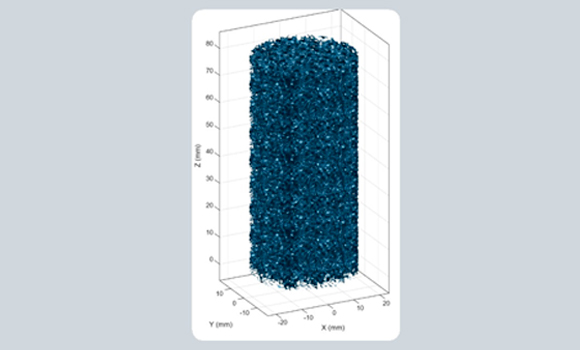
Circular Refining, Manchester, UK, has developed an additively manufactured electrode architecture for Rune Breaker, its point-of-use liquid ammonia-to-hydrogen electrolyser, in collaboration with the University of Manchester’s School of Engineering under Dr Kamal Qazi.
The development focused on reactor geometry and scalable UK manufacturing, addressing the gas bubble entrapment and high precious metal costs associated with conventional flat-plate electrodes.
The electrodes are manufactured from Inconel 718 nickel-based superalloy using Laser Beam Powder Bed Fusion (PBF-LB). The triply periodic minimal surface (TPMS) gyroid lattice geometry is designed to maximise the active electrochemical surface area and facilitate rapid gas bubble removal.
The anode is electroplated with a catalyst comprising 75% platinum (Pt) and 25% ruthenium (Ru), intended to accelerate electron transfer while minimising precious metal loading.
The electrolyser features an asymmetrical cell configuration comprising three cathodes and one anode, with a polyether ether ketone (PEEK) bubble sheath for gas isolation. The cell is housed within a 316 stainless steel vessel, which reportedly underwent structural testing to a safety factor of 4.742 at a continuous pressure of 20 bar.
The modular electrolyser is intended to demonstrate how UK Additive Manufacturing and materials science can support the production of durable electrochemical hardware at scale. Physical laboratory trials are planned for late 2026 and early 2027.