Pratt & Whitney uses metal Additive Manufacturing in new Valox jet engines
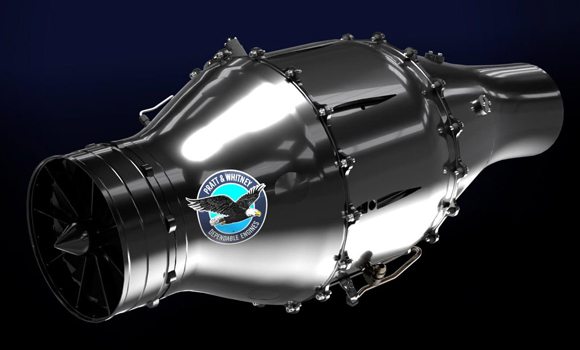
Pratt & Whitney, an RTX business headquartered in East Hartford, Connecticut, USA, reports it is using metal Additive Manufacturing in the development of its Valox family of small jet engines for autonomous aircraft and other defence applications.
The Valox engines incorporate components produced using Laser Beam Powder Bed Fusion (PBF-LB) Additive Manufacturing. According to the company, parts that might traditionally take more than a year to manufacture can now be produced in less than a week. Once validated, digital build files can also be shared between suppliers to enable simultaneous production of components.

“You’re enabling your designers to think more aspirationally,” said Lawrence Binek, a Pratt & Whitney technical fellow for Additive Manufacturing. “What’s really cool is, you start seeing design engineers thinking radically different, embracing what Additive Manufacturing is capable of.”
Across the Valox range, engineers are combining traditionally manufactured parts with additively manufactured components for the hot and cold sections to enable new engine configurations. The engines are designed to offer 2.2–8.0 kN (500–1,800 lbf) of thrust and power airframes ranging from small munitions to large uncrewed aircraft.

Earlier this year, Pratt & Whitney completed demonstration testing of a TJ150 engine that consisted of nearly 60% additively manufactured parts by volume. Current versions of the engine power Raytheon’s MALD decoy and other smaller systems, while the new configuration could enable additional applications.
Pratt & Whitney also signed a Technology Development Agreement with GKN Aerospace in July to jointly explore the use of Additive Manufacturing for large structural components for the F135 engine, which powers the F-35 Lightning II.